Evaluating Rancho Building Materials Inc for Your Next Project
A comprehensive contractor's guide to sourcing from Rancho Building Materials Inc, covering inventory, pricing, logistics, and supply chain strategies.

The Regional Supplier Advantage in Modern Construction
When planning commercial builds or large-scale residential developments in the Western United States, general contractors frequently face a critical sourcing decision: rely on national big-box retailers or partner with specialized regional distributors. Rancho Building Materials Inc has established itself as a pivotal node in the regional supply chain, particularly for masonry, structural lumber, and specialized exterior envelope products. Unlike national chains that prioritize high-volume consumer retail, regional yards optimize for contractor workflows, offering bulk pricing tiers, specialized will-call staging, and direct-to-jobsite flatbed deliveries.
As we navigate the construction landscape in 2026, material volatility and localized supply chain bottlenecks require contractors to build resilient sourcing networks. According to ongoing industry monitoring by the National Association of Home Builders (NAHB), regional suppliers often provide superior buffer stock for heavy, freight-intensive materials like concrete block and stucco, which national chains frequently treat as special-order items. This guide breaks down the core inventory, pricing dynamics, and logistical frameworks required to effectively leverage Rancho Building Materials Inc for your next project.
Core Inventory Breakdown: Specifications and Standards
Rancho Building Materials Inc maintains a deep inventory tailored to the specific architectural and structural demands of regional building codes. Understanding the exact specifications of their stock allows estimators and project managers to write precise submittals and avoid costly jobsite substitutions.
Masonry, Stucco, and Hardscape Systems
The masonry yard is typically the highest-volume sector for regional suppliers due to the prohibitive freight costs of shipping concrete products cross-country. Rancho stocks a comprehensive range of Concrete Masonry Units (CMUs) and plastering materials:
- Standard CMUs: 8x8x16 inch hollow blocks meeting ASTM C90 standards. Standard gray units weigh approximately 38 lbs each and are palletized in 90-unit cubes (roughly 3,420 lbs per pallet). Expect 2026 pricing to range between $2.85 and $3.40 per block depending on volume tiers.
- Architectural Block: Split-face, ground-face, and slump block in integral colors. These are typically manufactured by regional partners like Angelus Block or Orco Block and require a 3-to-4 week lead time for custom color runs.
- Stucco and Plaster: Full 3-coat and 1-coat systems. Inventory includes LaHabra Pro-Tex base coats, Merlex Portland cement, and fiberglass alkali-resistant lath. For 1-coat systems, they stock proprietary blends that require specific water-to-mix ratios to achieve the mandated 1-hour fire rating.
Structural Lumber and Engineered Wood
Framing packages require precise moisture content and grading to pass municipal inspections. Rancho Building Materials Inc focuses on structural grades rather than appearance grades, catering directly to framers and structural engineers.
- Dimensional Lumber: Primary stock consists of #2 & Btr Douglas Fir-Larch (DF-L) and Hem-Fir. Crucially, interior framing lumber is stocked as S-DRY (Surface Dry, 19% moisture content or less) to prevent drywall nail pops and truss uplift, while exterior/exposed timber may be S-GRN (Surface Green).
- Engineered Wood Products (EWP): Stock includes Weyerhaeuser Trus Joist TJI® joists, Laminated Veneer Lumber (LVL) beams, and Parallam® PSL columns. EWP requires specialized storage; Rancho maintains covered, climate-buffered warehousing to prevent the moisture-induced swelling that can compromise the structural integrity of I-joist webs.
When ordering DF-L sill plates and top plates for multi-story wood-frame construction, always factor in cross-grain shrinkage. If Rancho supplies S-GRN timber for the ground floor sill plate, a 2x6 can shrink up to 1/8th of an inch as it acclimates to the interior environment. Specify S-DRY or KDAT (Kiln-Dried After Treatment) for all continuous structural load paths to prevent drywall cracking at the ceiling lines.
Logistics and Cost Matrix: Regional Yard vs. Big Box Retail
Choosing where to procure materials is rarely just about the unit price; total landed cost and jobsite efficiency dictate the true value. The following matrix compares the operational realities of sourcing heavy materials from a specialized regional supplier like Rancho Building Materials Inc versus a national retail chain.
| Operational Metric | Rancho Building Materials Inc (Regional) | National Big-Box Retailer |
|---|---|---|
| Pricing Structure | Tiered volume pricing; negotiated quote per project phase. | Fixed retail shelf price; Pro Desk discounts cap at ~8-12%. |
| Delivery Minimums | Flatbed delivery typically requires $1,500 - $2,500 minimum. | Box truck delivery often available for $500+ minimums. |
| Will-Call Efficiency | Dedicated contractor staging lanes; forklift loads directly to truck. | Mixed retail/consumer traffic; manual cart loading common. |
| Credit Terms | Net-30 or Net-60 terms available with approved commercial credit. | Revolving store credit card; high interest if not paid monthly. |
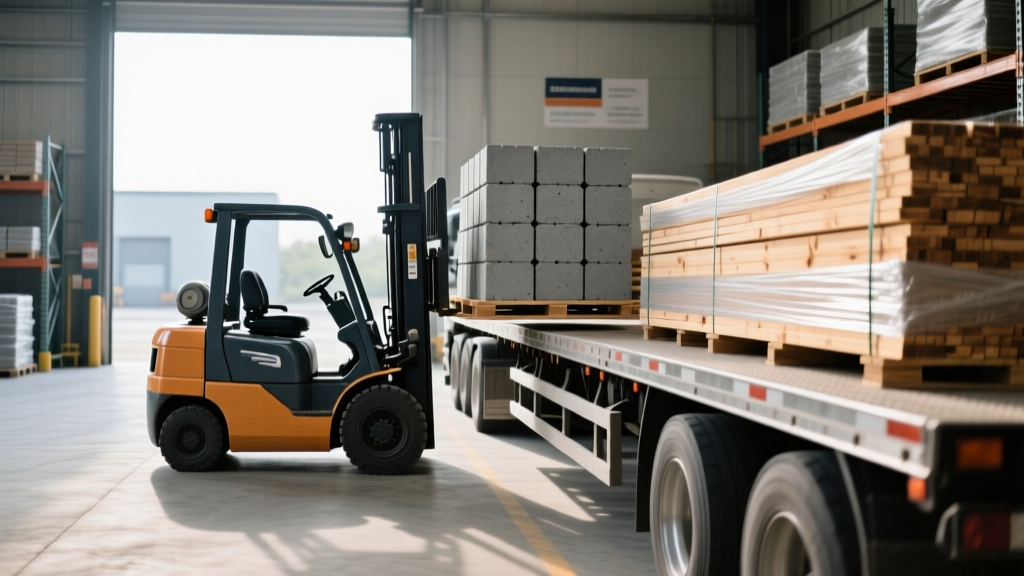
| Heavy Freight Handling | Truck-mounted Moffett forklifts for curbside pallet drops. | Pallet jack only; requires flat, paved unloading zones. |
Navigating 2026 Supply Chain Realities and Substitutions
Despite improvements in global logistics, localized shortages of specific SKUs remain a reality in 2026. When working with Rancho Building Materials Inc, proactive project managers utilize substitution protocols to keep critical path schedules intact.
"The most successful contractors don't just submit a single material spec; they submit a primary spec alongside two pre-approved, code-compliant alternatives. When a specific brand of mineral wool insulation faces a six-week regional backorder, having an approved fiberglass batt alternative already signed off by the architect prevents costly RFI delays." — Regional Procurement Best Practices, American Wood Council Guidelines
Actionable Substitution Strategies:
- Thermal Envelope Swaps: If Roxul (ROCKWOOL) Comfortbatt is on backorder, consult Rancho's inventory for Owens Corning Thermafiber. Ensure the fire-blocking and sound transmission class (STC) ratings match the original architectural submittal.
- Fastener and Hardware Equivalents: Simpson Strong-Tie connectors are the industry standard, but if specific joist hangers (e.g., LUS210) are depleted, Rancho can often source equivalent USC or HUC series hangers. Always verify the alternate hanger's allowable load tables against the structural engineer's plans before installing.
- Masonry Color Matching: Integral color CMUs vary slightly by batch. If Rancho's primary block supplier cannot match a previous batch, request a physical sample cube and perform a dry-stack test on-site under natural sunlight before authorizing a full pallet delivery.
Contractor Checklist for Onboarding and Credit Setup
Establishing a commercial account with a specialized supplier requires more documentation than opening a retail credit card. To ensure seamless purchasing and delivery privileges, have the following documentation ready before initiating your first major order with Rancho Building Materials Inc:
- State Contractor’s License: A current, active copy of your state-issued contractor's license (e.g., CSLB in California) matching the business entity name.
- Certificate of Insurance (COI):strong> General liability and workers' compensation insurance certificates. Many regional yards require a minimum of $1M/$2M general liability to allow your crews to enter the yard for will-call pickups.
- Trade References: At least three trade references from other material suppliers or equipment rental companies that can verify your payment history over the last 24 months.
- Tax Exemption Certificate: If you are purchasing materials for a tax-exempt municipal, educational, or non-profit project, provide the specific job-number-linked tax exemption form to avoid paying point-of-sale sales tax on bulk masonry and lumber.
- Jobsite Delivery Parameters: A documented map or set of instructions for your active jobsites, detailing overhead wire clearances, curbing restrictions, and designated flatbed staging zones to prevent delivery refusal fees.
By treating your material supplier as a strategic partner rather than a simple vending service, you secure better pricing, priority allocation during shortage periods, and the technical support necessary to resolve jobsite discrepancies before they impact your bottom line. Leveraging the deep inventory and logistical capabilities of Rancho Building Materials Inc ensures your structural and envelope packages are delivered accurately, keeping your 2026 build schedules firmly on track.
Written by
Marcus ChenMarcus Chen is a licensed structural engineer (PE) and building materials analyst with over 12 years of experience across residential, commercial, and industrial construction. He holds a Master of Science in Civil Engineering from UC Berkeley and spent six years at Thornton Tomasetti before transitioning to independent consulting and technical writing. Marcus specializes in material selection for seismic-prone regions, concrete reinforcement strategies, and lifecycle cost analysis. His work has been cited by the American Concrete Institute (ACI) and the Structural Engineers Association of California (SEAOC). When he is not on a job site or at his desk, you will find him hiking the Sierra Nevada or restoring a 1920s craftsman bungalow in Oakland, CA.
More from Marcus Chen
View all
Construction Cost
How Much Did the Eiffel Tower Cost to Build?
How much did the Eiffel Tower cost to build in 1889? We adjust for inflation and compare its budget to modern skyscraper construction.
Aug 4, 2026

Fire Resistance
What Is a Fire Resistant Material? Testing & Certification Guide
Discover what is a fire resistant material through ASTM and UL testing. Learn how fire ratings, certifications, and assemblies work in construction.
Aug 4, 2026

Construction Cost
How Much Did the Burj Khalifa Cost to Build?
How much did the Burj Khalifa cost to build? We break down the $1.5B project and extract 5 money-saving strategies for your next build.
Jul 30, 2026