2026 Cost Analysis: Choosing the Right Road Building Materials
Compare 2026 costs for asphalt, concrete, and aggregate road building materials. Discover lifecycle pricing, installation rates, and budget frameworks.
2026 Material Cost Landscape: Beyond the Sticker Price
Procuring road building materials in 2026 requires navigating a complex matrix of volatile commodity indexes, carbon compliance premiums, and regional freight surcharges. The days of relying solely on initial bid prices per ton or cubic yard are over. Municipal engineers and private developers must now evaluate materials through the lens of Life Cycle Cost Analysis (LCCA), factoring in 40-year maintenance cadences, subgrade stabilization requirements, and evolving environmental mandates.
- Bitumen Indexing: Liquid asphalt prices remain tightly coupled with global crude oil markets, fluctuating between $550 and $720 per short ton depending on the region and season.
- Cement Kiln Fuel Costs: Portland cement production faces elevated energy costs and new 2026 carbon intensity regulations, pushing Type I/II cement prices up 8-12% year-over-year.
- Freight and Mobilization: With diesel prices stabilizing at higher baselines, hauling aggregate and hot mix beyond a 25-mile radius adds a severe premium to the delivered cost.
Direct Unit Costs: HMA vs. PCC vs. Aggregate Base
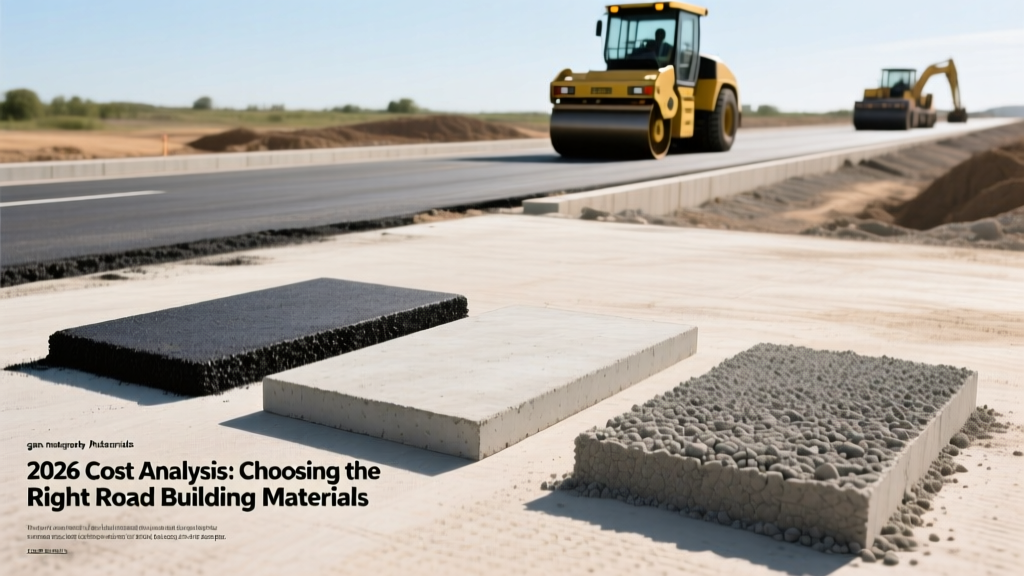
When estimating initial capital expenditure, the choice between Hot Mix Asphalt (HMA), Portland Cement Concrete (PCC), and specialized aggregate bases dictates the baseline budget. The following matrix reflects Q1-Q2 2026 national average pricing for heavy-duty municipal and highway applications.
| Material Type | Specification / Grade | 2026 Delivered Unit Cost | Installed Cost (per Sq. Ft.) | Primary Application |
|---|---|---|---|---|
| Hot Mix Asphalt (HMA) | PG 64-22 Binder, 19mm N70 | $125 - $155 / ton | $3.80 - $5.50 | Arterial roads, overlays, suburban streets |
| Portland Cement Concrete | Jointed Plain (JPCP), 4000 psi | $165 - $215 / cubic yard | $7.50 - $11.00 | Interstates, heavy industrial corridors, intersections |
| Aggregate Base Course | Crushed #57 Stone, 21A Blend | $22 - $38 / ton | $1.20 - $2.10 | Sub-base structural support, unpaved rural roads |
| Warm Mix Asphalt (WMA) | PG 64-22 with Organic Additive | $130 - $162 / ton | $4.00 - $5.80 | Urban centers, night paving, ESG-mandated projects |
| Full-Depth Reclamation | Pulverized base + 4% Cement | N/A (Process cost) | $4.50 - $6.50 | Rehabilitation of failed rural and county roads |
Life Cycle Cost Analysis (LCCA): The 40-Year Horizon
According to guidelines published by the Federal Highway Administration (FHWA), initial construction costs represent only 30% to 40% of a roadway's total lifecycle expense. To make an accurate financial decision between asphalt and concrete, you must model the Net Present Value (NPV) of future interventions using a standard discount rate (typically 3.5% to 4.5% in 2026).
Asphalt Pavement Maintenance Cadence
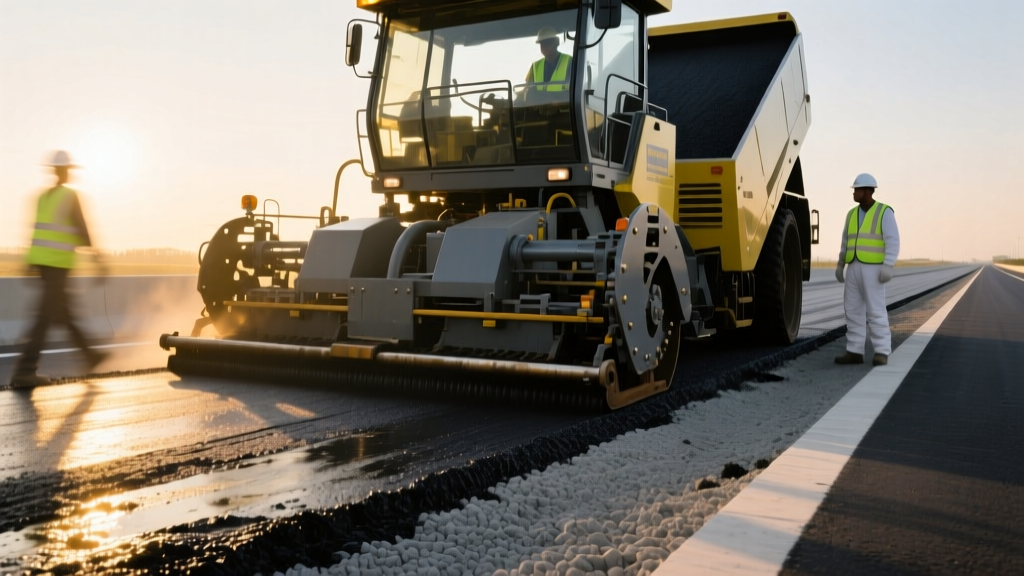
Asphalt is often viewed as the cheaper initial option, but it requires a strict, funded maintenance schedule to reach a 40-year design life without catastrophic structural failure.
- Years 1-7: Routine crack sealing ($0.75 - $1.20 per linear foot). Neglecting this allows moisture infiltration, leading to base stripping.
- Year 10-12: First mill-and-fill overlay (1.5 inches). Cost: $14.00 - $18.50 per square yard. This corrects surface rutting and restores ride quality.
- Year 22-25: Structural overlay (3 to 4 inches) or full-depth patching in wheel paths. Cost: $28.00 - $42.00 per square yard.
- Failure Mode Risk: Reflective cracking from underlying rigid structures or poor drainage can accelerate the need for year-12 overlays by up to 5 years, severely skewing the NPV.
Concrete Pavement Rehabilitation Realities
Concrete demands a higher upfront capital outlay but shifts the financial burden away from frequent maintenance. However, when interventions are required, they are highly specialized.
- Years 1-15: Joint resealing every 7-10 years ($1.50 - $2.50 per linear foot). If joints fail, incompressible materials cause spalling under thermal expansion.
- Year 15-20: Diamond grinding to restore smoothness and correct faulting at transverse joints. Cost: $3.50 - $5.50 per square yard. This removes only 1/8 to 1/4 inch of the slab surface.
- Year 25-30: Dowel bar retrofit (DBR) for load transfer restoration at failing joints. Cost: $80 - $120 per joint. This is a critical intervention to prevent slab faulting.
- Failure Mode Risk: Alkali-Silica Reaction (ASR) or D-cracking from freeze-thaw cycles in susceptible aggregates. If ASR occurs, grinding is ineffective, and slab replacement ($150+ per square yard) becomes mandatory.
Subgrade and Base Course: The Hidden Budget Killers
The most common cause of budget overruns in road construction is unforeseen subgrade failure. The American Road & Transportation Builders Association (ARTBA) frequently notes that inadequate soil preparation leads to exponential increases in surface material requirements.
If geotechnical borings reveal a California Bearing Ratio (CBR) below 5, you cannot simply add more asphalt or concrete to compensate. You must stabilize the subgrade. Failing to do so will result in fatigue cracking within 36 months of opening the road to traffic.
Subgrade Stabilization Cost Matrix
| Stabilization Method | Best Soil Type | 2026 Installed Cost (per Sq. Yd.) | Depth of Treatment |
|---|---|---|---|
| Lime Slurry Injection | High-plasticity clays (PI > 25) | $4.50 - $6.50 | 12 - 18 inches |
| Cement Treated Base (CTB) | Sandy or silty soils | $8.00 - $12.00 | 6 - 8 inches |
| Biaxial Geogrid Installation | Soft, wet subgrades (CBR 2-4) | $2.20 - $3.50 | Placed at aggregate interface |
| Fly Ash Stabilization | Silty clays (where permitted) | $3.80 - $5.50 | 12 inches |
Decision Framework: Matching Materials to Traffic Load
Selecting the correct road building materials requires calculating the projected Equivalent Single Axle Loads (ESALs) over the 40-year design life. Using the wrong material for the traffic class guarantees premature failure and wasted capital.
- Low Volume (Under 1 Million ESALs): Rural access roads and residential subdivisions. Recommendation: Thin asphalt overlay (2-3 inches) over a 6-inch crushed aggregate base, or a chip seal over a full-depth reclaimed base. Concrete is financially unjustifiable here.
- Medium Volume (1 Million to 10 Million ESALs): Urban arterials and collector streets. Recommendation: Perpetual asphalt pavement design (5-7 inches of HMA with a rich bottom binder layer to prevent bottom-up fatigue cracking) or an 8-inch Jointed Plain Concrete Pavement (JPCP) if intersection stopping/starting is frequent.
- High Volume (Over 10 Million ESALs): Interstates, freight corridors, and port access roads. Recommendation: 10-to-12-inch JPCP with dowel bars, or a heavily engineered composite pavement (concrete base with a 3-inch asphalt wearing course for noise reduction and easy milling). The Asphalt Institute provides specific thickness design charts for these extreme load scenarios.
Strategic Procurement and Budgeting Tactics
To protect your 2026 budget from mid-project volatility, implement the following procurement strategies during the bidding and contracting phases:
- Mandate Liquid Asphalt Indexing: Never accept a fixed-price bid for large asphalt projects in a volatile oil market. Contractors will pad their bids with a 10-15% risk premium. Instead, use an OPIS (Oil Price Information Service) indexing clause that adjusts the binder cost monthly based on actual regional terminal prices. This lowers the initial bid and ensures you only pay for actual market movements.
- Specify Anti-Strip Additives for HMA: Require 1% to 1.5% hydrated lime or liquid anti-strip agents in all asphalt surface mixes. This adds roughly $1.50 to $2.50 per ton to the material cost but prevents moisture-induced stripping, which is the leading cause of premature potholing and raveling in freeze-thaw climates.
- Leverage Winter Aggregate Stockpiling: If your project breaks ground in late spring, purchase and stockpile your #57 stone and 21A aggregate base during the winter months. Quarry production slows in winter, but stockpiled material is often discounted by 5-8%, and you avoid the massive spring rush delivery delays that cost contractors thousands per day in idle equipment fees.
- Account for ESG Premiums: If your municipality requires green procurement, budget a 2% to 4% premium for CarbonCure-injected concrete or Warm Mix Asphalt (WMA). WMA allows paving at temperatures 30°F to 50°F lower than traditional HMA, reducing plant fuel consumption and allowing for longer haul distances without the mix cooling below compaction thresholds.
By shifting the focus from initial unit pricing to total lifecycle performance, subgrade integrity, and strategic contract indexing, project owners can accurately forecast the true cost of road building materials and deliver infrastructure that survives both the elements and the balance sheet.
Written by
Priya KapoorPriya Kapoor is a real estate market analyst and construction economics researcher with expertise in housing affordability, development feasibility, and infrastructure investment. She holds a Master of Regional Planning from Cornell University and previously worked as a senior analyst at CBRE's Investment Properties group, where she modeled returns for $4B in mixed-use development pipelines. Priya now runs an independent research practice advising developers, municipalities, and REITs on construction cost forecasting and market timing. She publishes the quarterly "BuildMat Market Pulse" report tracking material price indices across 12 commodity categories. Based in Austin, TX, Priya serves on the board of Habitat for Humanity Austin and is a marathon runner.
More from Priya Kapoor
View all
Construction Cost
Cost to Build a 1600 Sq Ft Home in 2026: Full Breakdown
Accurate 2026 cost to build a 1600 sq ft home—material, labor, and regional pricing breakdowns included. Plan your budget with real-time estimates.
Aug 11, 2026

Wood & Lumber
Name the Types of Wood for Pressure Treatment and Preservation
Learn how to name the types of wood best suited for pressure treatment. Compare species treatability, chemical retention levels, and 2026 preservation costs.
Aug 4, 2026

Stone & Masonry
Stone Veneer Suppliers Lindenhurst: 2026 Cost Analysis
Analyze 2026 stone veneer costs in Lindenhurst, NY. Compare local supplier pricing, delivery fees, and Suffolk County installation labor rates.
Aug 4, 2026