A Builder's Selection Guide to Non Toxic Building Materials
Discover how to specify non toxic building materials for healthier indoor air quality. Compare VOC limits, certifications, and top product picks.

The Hidden Cost of Off-Gassing: Why Material Selection Matters
Indoor air quality (IAQ) is increasingly driving building codes and client demands. According to the Environmental Protection Agency (EPA), indoor concentrations of volatile organic compounds (VOCs) are routinely two to five times higher than outdoor levels, primarily due to off-gassing from conventional construction materials. For general contractors and architects, specifying non toxic building materials is no longer a niche premium—it is a baseline requirement for WELL-certified projects, high-end residential builds, and healthcare facilities.
However, navigating the landscape of "green" claims requires rigorous technical scrutiny. A product labeled "low odor" is not inherently non-toxic, and "zero-VOC" paints can still emit hazardous air pollutants (HAPs) once colorants are added. This selection guide provides a technical framework for sourcing, verifying, and budgeting genuinely non-toxic materials across critical building envelopes.
Decoding Certifications: What Actually Guarantees Low Toxicity?
Relying solely on manufacturer data sheets is insufficient. Third-party verification is mandatory to avoid greenwashing. Below is the hierarchy of trusted certifications for non-toxic material selection, ranked by stringency.
| Certification | Issuing Body | Strictness & Scope | Best Use Case |
|---|---|---|---|
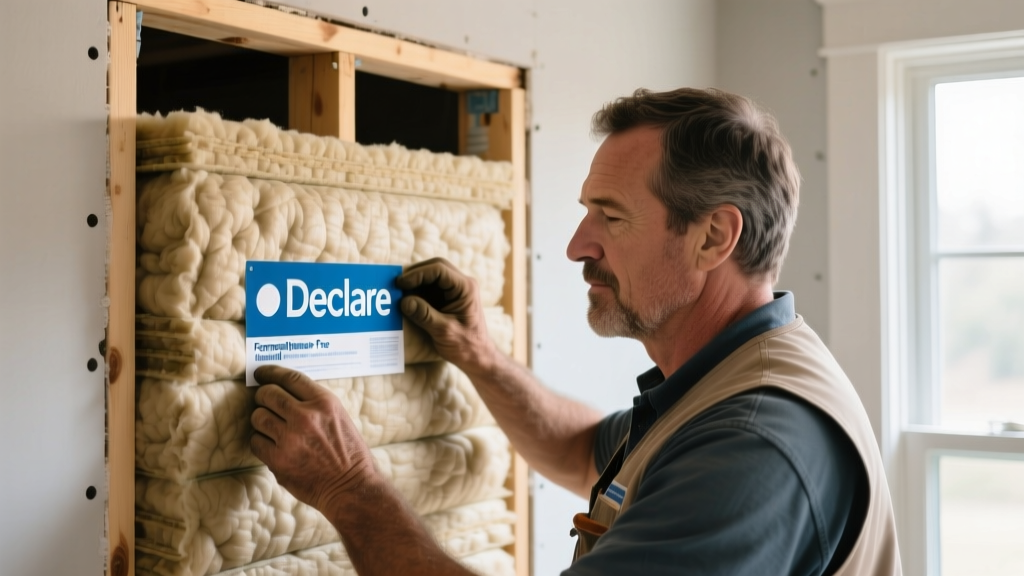
| Declare Label | ILFI | Extremely High. Requires 100% ingredient disclosure down to 100 ppm. Screens against the Red List. | Living Building Challenge, premium residential, healthcare. |
| GREENGUARD Gold | UL Solutions | High. Strict limits on VOC emissions (not just content) tested in dynamic environmental chambers. | Schools, commercial offices, LEED v4.1 compliance. |
| Health Product Declaration (HPD) | HPD Collaborative | Variable. Standardized reporting format for ingredients and hazards, but does not inherently "certify" safety. | Large-scale commercial procurement and transparency reporting. |
| Cradle to Cradle (C2C) | C2C PII | High. Assesses material health, circularity, and social fairness across the supply chain. | Flooring, ceiling tiles, and structural materials. |
Category-by-Category Selection Framework
1. Insulation and Wall Cavities
Traditional fiberglass batts often utilize urea-formaldehyde or phenol-formaldehyde binders to hold the glass fibers together. While many major manufacturers have phased out formaldehyde in standard residential lines, the acrylic binders can still off-gas trace acetic acid and ammonia during curing.
- Mineral Wool (e.g., Rockwool Safe'n'Sound): Naturally inert, spun from basalt rock and slag. Contains no formaldehyde binders and offers superior fire resistance (non-combustible up to 2,150°F). Cost: ~$0.85 to $1.10 per square foot (R-4.2 per inch).
- Recycled Denim (e.g., Bonded Logic UltraTouch): Treated with a non-toxic borate solution for fire and pest resistance. Completely off-gas free and offers excellent acoustic dampening. Cost: ~$1.25 per square foot.
- Avoid: Open-cell spray polyurethane foam (SPF) in occupied spaces unless strictly necessary for air sealing, as the isocyanate catalysts pose severe respiratory risks during installation and can off-gas if the mixing ratio is improperly calibrated on-site.
2. Paints, Primers, and Sealants
To achieve genuinely non-toxic interiors, specifications must move beyond standard latex. Mineral silicate paints and advanced acrylics formulated without alkylphenol ethoxylates (APEs) and phthalates are the standard.
- Mineral Paints (e.g., Romabio, Keim): Potassium silicate-based paints that chemically bond to masonry and drywall. They are naturally mold-resistant, vapor-permeable, and contain zero VOCs or biocides. Ideal for high-humidity areas like bathrooms.
- Zero-VOC Acrylics (e.g., ECOS Paints): Specifically formulated for chemically sensitive individuals. ECOS eliminates the "new paint smell" entirely by omitting masking fragrances and traditional coalescents.
3. Flooring and Adhesives
Luxury Vinyl Tile (LVT) and sheet vinyl rely on polyvinyl chloride (PVC) and plasticizers—often ortho-phthalates or DOTP—to maintain flexibility. These plasticizers are not chemically bound to the polymer matrix and leach into household dust over time, acting as known endocrine disruptors.
- Bio-Based Linoleum (e.g., Forbo Marmoleum): Composed of oxidized linseed oil, pine rosin, wood flour, and jute backing. It is naturally bacteriostatic, highly durable (25+ year lifespan), and entirely free of PVC and phthalates.
- FSC-Certified Engineered Hardwood: Ensure the core ply uses soy-based or polyurethane adhesives rather than urea-formaldehyde. Look for products with NAF (No Added Formaldehyde) or ULEF (Ultra-Low Emitting Formaldehyde) designations.
- The Adhesive Trap: The flooring material might be non-toxic, but the glue is often the primary source of indoor VOCs. Specify silane-terminated polymer (STP) adhesives (e.g., Bostik GreenForce) or reactive polyurethane systems that cure without releasing solvents. For subfloor prep, use gypsum-based self-levelers rather than solvent-cut asphalt cutbacks.
Cost Premium Analysis: Budgeting for Healthier Builds
Transitioning to non toxic building materials inherently carries a cost premium, primarily driven by specialized manufacturing processes, third-party testing fees, and lower economies of scale. Below is a realistic cost breakdown for a standard 2,500 sq. ft. residential build in 2026.
| Material Category | Conventional Option | Non-Toxic Alternative | Est. Cost Premium |
|---|---|---|---|
| Wall Insulation | Standard Fiberglass Batts | Mineral Wool / Recycled Denim | + 40% to 65% |
| Interior Paint | Premium Low-VOC Latex | Mineral Silicate / Zero-VOC | + 25% to 50% |
| Hard Surface Flooring | LVT (Luxury Vinyl Tile) | Bio-Linoleum / NAF Hardwood | + 15% to 30% |
| Cabinetry & Millwork | Standard MDF (CARB2) | NAF Particleboard / Plywood | + 10% to 20% |
Note: While material costs increase by an average of 15-30% across these categories, the overall impact on total hard construction costs is typically between 1.5% and 3.5%, a highly justifiable premium for high-performance and wellness-focused real estate.
Procurement and Site Management Checklist
Specifying non-toxic materials is only half the battle. Poor site management can compromise these materials before the building is even occupied. Implement the following protocols to protect your IAQ specifications:
- Seal Ductwork During Construction: Mandate that all supply and return duct registers are sealed with heavy-duty mastic tape during drywall sanding and painting. If dust and VOCs enter the HVAC system, they will recirculate for years.
- Implement a "Flush-Out" or "Bake-Out" Protocol: Before occupancy, run the HVAC system at 100% outside air for a minimum of 14 days (or conduct a building flush-out with high-volume fans) to purge residual construction VOCs.
- Material Storage Sequencing: Absorbent materials (acoustic ceiling tiles, insulation, drywall, and carpet) must be delivered after all wet trades (painting, drywall mudding, concrete sealing) are complete and fully cured. Storing porous materials in a high-humidity, high-VOC environment turns them into chemical sponges.
- Strict Substitution Clauses: Include explicit language in Division 01 specifications prohibiting "or equal" substitutions for adhesives, sealants, and paints without prior written approval and submission of a matching HPD or GREENGUARD Gold certificate.
Final Considerations for the Specification Writer
Transitioning to non toxic building materials requires a shift from prescriptive, habit-based purchasing to performance-based verification. By anchoring your specifications to rigorous third-party standards like the Declare Label and GREENGUARD Gold, and by scrutinizing the hidden toxins in adhesives, colorants, and sealants, you protect both the end-user's health and the firm's liability. Always demand the most current Health Product Declarations during the submittal phase, as manufacturers frequently reformulate products to meet evolving chemical regulations.
Written by
Sarah WhitfieldSarah Whitfield is a chartered quantity surveyor (MRICS) and construction cost analyst with 15 years of experience in material pricing, procurement strategy, and project budgeting. She earned her degree in Construction Management from the University of Reading (UK) and has worked on projects ranging from $2M custom homes to $180M mixed-use developments across North America and Europe. Sarah currently leads cost estimating for BuildMat Insight, maintaining a proprietary database of 4,000+ material price points updated quarterly. She is a frequent contributor to RSMeans cost data panels and has presented at the International Cost Engineering Council (ICEC) congress. Based in Denver, CO, Sarah is an avid trail runner and volunteer mentor for Women in Construction.
More from Sarah Whitfield
View all
Wood & Lumber
What Are the Different Types of Wood? A Builder's Guide
Compare structural softwoods, finish hardwoods, and engineered lumber. Analyze Janka ratings, MOE values, and 2026 pricing for construction.
Aug 4, 2026

Walls & Panels
Steel Framing vs Wood Framing: Corrosion and Moisture Defense
Compare steel framing vs wood framing for moisture resistance. Learn about galvanized coatings, condensation risks, and corrosion protection strategies.
Jul 21, 2026

Stone & Masonry
How to Cut Stone Veneer: Wet Saw vs Grinder Comparison
Compare the best tools for cutting stone veneer. We review wet saws, angle grinders, and chop saws to help you achieve clean, chip-free cuts.
Jul 21, 2026