Selecting White Building Materials: 2026 Design Guide
Discover the best white building materials for 2026 interiors and exteriors. Compare costs, LRV values, and maintenance for siding, quartz, and oak.

The Complexity of White: Beyond the Paint Swatch
Specifying white building materials is rarely as simple as selecting a single color code. In modern architecture, white is a spectrum defined by Light Reflectance Value (LRV), undertone temperature, and substrate chemistry. As we move through 2026, the industry has decisively shifted away from the sterile, cool-toned clinical whites of the early 2020s toward warm, organic whites that mimic natural limestone, bleached timber, and limewash. However, selecting the right white materials requires navigating significant differences in durability, UV stability, and maintenance across exterior and interior applications.
Light Reflectance Value (LRV) measures the percentage of light a material reflects on a scale of 0 (absolute black) to 100 (pure white). For exterior cladding in high-sun environments, specifying a material with an LRV above 85 can cause severe glare and reflect enough thermal radiation to warp adjacent vinyl components or damage landscaping. For exteriors, target an LRV between 70 and 82. For interiors, an LRV of 80+ maximizes ambient light diffusion.
Exterior Cladding: Durability Meets High Albedo
The exterior envelope takes the brunt of UV exposure, thermal expansion, and biological growth. White materials here must resist dirt retention and organic staining while maintaining their specific undertone.
Fiber Cement Siding: The Industry Standard
For white exterior cladding, pre-finished fiber cement remains the dominant choice in 2026. James Hardie HardiePlank Lap Siding in their "Arctic White" ColorPlus finish offers an LRV of approximately 78, providing a crisp but not blinding facade. The factory-applied acrylic topcoat is baked on, offering superior resistance to chalking and UV degradation compared to field-painted cementitious boards.
- Installed Cost: $9.50 to $14.00 per square foot (varies by regional labor rates).
- Failure Mode: Field-painting white fiber cement with low-grade elastomeric paints can trap moisture, leading to spalling in freeze-thaw climates. Always use factory finishes or high-permeability acrylics.
- Maintenance: Requires a low-pressure wash annually to prevent green algae growth on the north-facing elevations.
Limewashed vs. Painted Brick
While painting brick in a solid white (like Sherwin-Williams Pure White SW 7005) creates a uniform, opaque facade, it traps moisture within the masonry and requires repainting every 7 to 10 years. Limewashing, conversely, uses a slaked lime and water mixture that calcifies into the brick pores. It allows the masonry to breathe and naturally wears over time, creating a highly sought-after European patina. Limewash costs roughly $3.50 to $6.00 per square foot to apply professionally but must be refreshed every 5 years in high-rainfall zones.
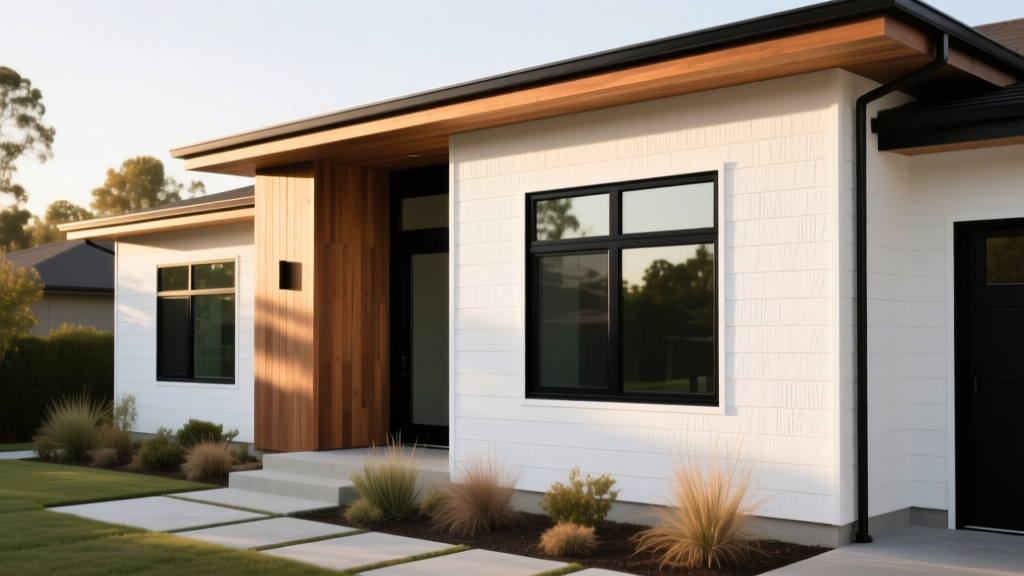
Comparative Matrix: Exterior White Materials
| Material | Estimated LRV | Lifespan (Color/Fade) | Installed Cost (per sq ft) | Best Application |
|---|---|---|---|---|
| Fiber Cement (Arctic White) | 78 | 15-20 Years | $9.50 - $14.00 | Primary residential facades |
| White Synthetic Stucco (EIFS) | 82 | 10-15 Years | $11.00 - $16.00 | Commercial, curved walls |
| Limewashed Clay Brick | 65-75 (Varies) | 5-7 Years (Refresh) | $3.50 - $6.00 (Retrofit) | Historical, transitional homes |
| White PVC Trim / Fascia | 88+ | Lifetime (No fade) | $4.00 - $7.00 | Corner boards, soffits, window casings |
Interior Substrates and Surfaces
Interior white materials are judged by their tactile quality, stain resistance, and how they interact with artificial lighting temperatures (measured in Kelvin).
The Countertop Dilemma: Quartz vs. Marble
White marble, such as Carrara or Calacatta, is notorious for etching when exposed to acidic substances like lemon juice or wine. In 2026, high-traffic kitchens heavily favor engineered white quartz. Caesarstone's "1111 Pure White" or "5141 Statuario Maximus" offer the aesthetic of natural stone with a Mohs hardness of 7, making them virtually impervious to scratching and etching. However, not all white quartz is created equal.
Cheaper, imported white quartz slabs often use polyester resins rather than high-grade epoxy or polyurethane binders. Polyester resins are highly susceptible to UV degradation. If your white quartz countertops sit in direct, unfiltered sunlight from a south-facing window, the polyester resin will oxidize and turn a sickly yellow within 24 to 36 months. Always verify the resin composition and UV-stability warranty with the fabricator before purchasing white quartz for sunlit areas.
The Canvas: Drywall and Substrates
The backdrop for all interior materials is the drywall. Standard white primed drywall can look flat and lifeless. Upgrading to Level 5 finishes on USG Sheetrock UltraLight panels ensures that when natural light rakes across the wall, no joint imperfections disrupt the pristine white aesthetic. For ceilings, specifying a flat-finish white paint (LRV 90+) hides imperfections while bouncing maximum light down into the living space.
Flooring: Bleached and White-Washed Oak
White oak flooring treated with a two-part bleach and water-based polyurethane (such as Bona Traffic HD) creates a bright, airy foundation that resists the ambering (yellowing) associated with traditional oil-based polyurethanes. Expect to pay between $12.00 and $18.00 per square foot for premium wide-plank white oak, including the specialized bleaching and finishing labor. The critical failure point here is using oil-based sealers over bleached wood, which will immediately reintroduce warm, yellow undertones, ruining the intended cool-white aesthetic.
Maintenance Realities of White Materials
White materials demand rigorous maintenance protocols. Ignoring these will result in premature aging and costly replacements.
- White Grout in Wet Areas: Never use standard cementitious grout in white-tiled showers. It is porous and will absorb body oils and soap scum, turning gray within a year. Specify 100% solid epoxy grout (like Laticrete SpectraLOCK PRO) which is non-porous and colorfast, despite being 3x more expensive to install.
- Exterior Siding Wash Cycles: White fiber cement and stucco show pollen and dirt accumulation rapidly. Implement a bi-annual soft-wash cycle using a 1:10 bleach-to-water solution to kill microscopic algae spores before they manifest as green streaks.
- Hardware Pairing: White materials amplify the visual weight of hardware. In 2026, matte black and unlacquered brass are the preferred pairings. Avoid polished chrome with warm whites, as the high contrast creates a dated, commercial appearance.
Decision Framework: Choosing Your White Palette
Before finalizing your material schedule, apply this three-step framework to ensure cohesion across your project:
- Step 1: Identify the Dominant Undertone. Are your primary fixed elements (like a stone fireplace or existing roof) warm (yellow/red/pink) or cool (blue/green/gray)? Your white materials must share this underlying temperature.
- Step 2: Test in Situ. Order physical 8x10 samples of your chosen siding, quartz, and paint. View them outside at 10:00 AM and 4:00 PM. Artificial showroom lighting masks the true LRV and undertone shifts that occur in direct sunlight.
- Step 3: Establish the Contrast Ratio. A "white-on-white" design fails without textural contrast. If your walls, trim, and cabinets are all white, you must introduce varying sheens (e.g., matte walls, satin trim, semi-gloss cabinets) and heavy textural contrasts (fluted wood panels, honed stone) to prevent the space from looking flat and unfinished.
"The biggest mistake specifiers make with white materials is assuming 'white is white.' A cool-toned white quartz countertop placed next to a warm-toned white oak floor will make one of the materials look dirty or flawed. You must map the exact LRV and undertone of every material in the elevation before procurement."
Frequently Asked Questions
Does white siding increase cooling costs?
Yes, white exterior materials have high solar reflectance (albedo). According to building science principles, a white roof or siding can reflect up to 80% of solar radiation, significantly reducing the cooling load on your HVAC system during summer months compared to dark gray or charcoal materials.
Can I use interior white quartz outdoors?
No. Even high-grade engineered quartz is not rated for exterior, freeze-thaw, or direct UV exposure. The resins will degrade, and the slab can crack. For white exterior countertops, specify white concrete, porcelain slabs, or ultra-compact surfaces like Dekton.
Written by
David NakamuraDavid Nakamura is a licensed architect (AIA) and construction technology writer focused on sustainable building methods, mass timber engineering, and high-performance building envelopes. He holds a Master of Architecture from the University of Washington and is a certified Passive House Consultant (CPHC). David spent eight years at the Seattle firm Mithun, where he led the design of three LEED Platinum projects, before founding his own practice specializing in net-zero residential design. He serves on the editorial advisory board of GreenBuilder Magazine and has authored peer-reviewed papers on cross-laminated timber (CLT) connections for the Journal of Structural Engineering. In his spare time, David teaches woodworking at Pratt Fine Arts Center and kayaks the Puget Sound.
More from David Nakamura
View all
Construction Cost
Labor Cost to Build a Deck Per Sq Ft: 2026 Installation Guide
Discover the exact labor cost to build a deck per sq ft in 2026. This installation guide breaks down contractor rates, complexity factors, and hidden fees.
Aug 4, 2026

Construction Cost
How Much Does It Cost to Build a 3 Bedroom House? Financing Guide
Learn exactly how much it costs to build a 3 bedroom house and explore 2026 financing options, construction loan types, and budget frameworks for your build.
Aug 4, 2026

Construction Cost
Cost to Build a Tennis Court: 2026 Guide
How much does it cost to build a tennis court in 2026? Breakdowns for asphalt, concrete, and synthetic surfaces plus fencing and lighting.
Jul 30, 2026