Best Pneumatic Conveying Systems for High-Temp Materials 2026
Compare the best pneumatic conveying systems for high-temperature materials in 2026. Expert analysis on dense phase, costs, and critical component specs.
The Thermal Challenge in Bulk Material Handling
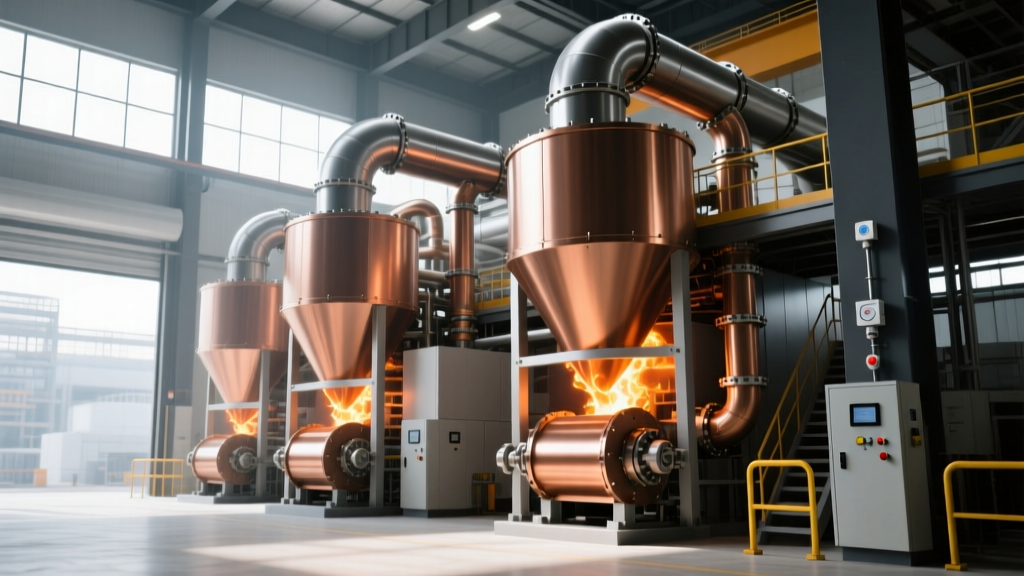
Conveying construction and industrial materials like cement clinker, calcined bauxite, hot foundry sand, and refractory powders introduces severe thermal and mechanical stresses that destroy standard pneumatic setups. Materials ranging from 150°C to over 600°C cause rapid thermal expansion in carbon steel pipelines, degrade standard elastomer seals, and induce thermal shock in ceramic linings. When specifying the best pneumatic conveying systems for high-temperature materials in 2026, engineers must prioritize thermal compensation, advanced metallurgy, and low-velocity dense phase architectures to prevent catastrophic pipeline burn-through and rotary valve seizure.
Standard dilute phase systems rely on high-velocity air (15–30 m/s), which accelerates abrasive wear exponentially when combined with high heat. According to data from the Engineering Toolbox, the wear rate in pneumatic pipelines increases proportionally to the square or even cube of the conveying velocity. Therefore, high-temperature applications almost exclusively demand dense phase technology, where material moves in slugs or a fluidized bed at 3–12 m/s, drastically reducing friction and heat transfer to the outer pipe wall.
Dense Phase vs. Dilute Phase: High-Temperature Comparison Matrix
Selecting the wrong conveying mode for hot materials guarantees premature failure. The matrix below outlines why dense phase dominates high-temperature construction material handling.
| Parameter | Dense Phase (Low Velocity) | Dilute Phase (High Velocity) |
|---|---|---|
| Air Velocity | 3 – 12 m/s | 15 – 30 m/s |
| Line Pressure | High (2.0 – 6.0 bar) | Low (0.5 – 1.5 bar) |
| Abrasive Wear at Bends | Minimal (Slug flow reduces impact) | Severe (High kinetic energy impact) |
| Heat Transfer to Pipe Wall | Low (Air acts as insulating barrier) | High (Turbulent mixing transfers heat) |
| Best Suited Materials | Hot clinker, calcined bauxite, slag | Cooled fly ash, ambient temp powders |
Top System Configurations for High-Temp Construction Materials
Based on 2026 industrial deployments, three primary system architectures lead the market for handling extreme-temperature bulk solids.
1. FLSmidth FK-Series Screw Pumps with Water-Cooled Jackets
Best For: Cement clinker and granulated blast furnace slag (200°C – 350°C).
The FK-Series screw pump utilizes a tapered shaft and a weighted flapper valve to create a natural material seal, eliminating the need for high-maintenance rotary airlocks at the injection point. For high-temperature applications, the pump housing is fitted with an integrated water-cooling jacket that maintains the bearing temperature below 80°C, even when conveying 350°C clinker.
- Capacity: Up to 650 TPH over short distances (typically under 150m).
- Capital Cost: $280,000 – $350,000 (including cooling water circuit).
- Advantage: Continuous conveying with no pulsation, reducing stress on downstream ceramic-lined bends.
- Limitation: High power consumption per ton conveyed compared to blow tank systems.
2. Clyde Process High-Pressure Dense Phase Blow Tanks
Best For: Calcined bauxite and refractory aggregates (150°C – 400°C).
Clyde Process utilizes high-pressure blow tanks equipped with specialized fluidizing cones. For high-temp materials, the tanks are lined with 12mm high-alumina refractory castables to protect the ASME-coded carbon steel pressure vessel. The system conveys material in dense slugs, which acts as a thermal insulator, keeping the outer steel shell below 120°C.
- Capacity: 50 – 150 TPH over long distances (up to 1,500m).
- Capital Cost: $320,000 – $450,000.
- Advantage: Exceptional long-distance capability with minimal air consumption.
- Limitation: Batch conveying process creates pulsation; requires robust pipe supports to handle slug-induced momentum shifts.
3. Schenck Process Multi-Compartment Thermal Blow Tanks
Best For: Hot fine powders and specialty cementitious additives (up to 250°C).
Industry resources like Powder and Bulk Solids highlight the necessity of specialized air management for fine, hot powders. Schenck's multi-compartment design allows one chamber to pressurize while the other fills, creating a semi-continuous flow. The system features thermal expansion joints at every 20-meter interval to absorb the axial growth of the pipeline.
- Capacity: 20 – 80 TPH.
- Capital Cost: $250,000 – $380,000.
- Advantage: Semi-continuous flow reduces the severe pressure spikes associated with single-chamber batch systems.
- Limitation: Complex valve sequencing requires advanced PLC programming and specialized maintenance training.
Critical Component Upgrades: Where Standard Systems Fail
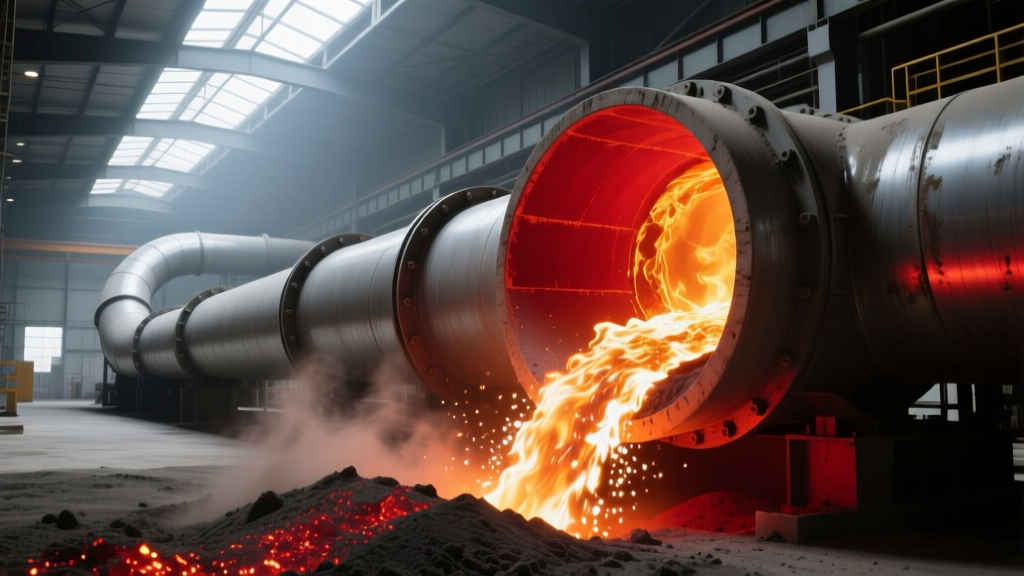
Even the best primary conveying vessel will fail if the auxiliary components are not rated for thermal expansion and abrasive heat. Pay strict attention to these two failure points.
Standard rotary valves are machined with clearances of 0.10mm to 0.15mm. When conveying 300°C material, a standard cast-iron rotor expands radially. Using the thermal expansion formula ($\Delta L = \alpha \cdot L \cdot \Delta T$), a 400mm rotor will expand by over 1.3mm. If the housing does not expand at the exact same rate, the rotor seizes, shearing the drive shaft. Solution: Specify high-temperature rotary valves with machined clearances of 1.5mm to 2.0mm, or utilize water-cooled rotors to maintain dimensional stability.
Pipeline Bends and Linings
At the bends, the material impacts the pipe wall. High temperatures soften standard carbon steel, accelerating wear. You must specify engineered linings:
- 96% Alumina Ceramic Tiles (12mm - 25mm): Bonded with high-temperature epoxy (e.g., Epibond 84, rated to 200°C). Best for abrasive materials like calcined bauxite. Failure mode: Thermal shock cracking if exposed to sudden cold air blasts during system purging.
- Cast Basalt Linings: Excellent for high-temperature slag and clinker. Basalt maintains structural integrity up to 400°C and resists thermal shock better than alumina.
- ASTM A335 P11 Alloy Steel: If internal lining is impossible due to space constraints, upgrade the outer pipe material from standard A106 carbon steel to P11 chrome-moly alloy, which retains yield strength at temperatures exceeding 450°C.
Capital and Operational Cost Breakdown (50 TPH, 100m Line)
Budgeting for high-temperature conveying requires looking beyond the initial equipment purchase. The table below models a 50 TPH system handling 250°C material over a 100-meter route with two 90-degree bends.
| Cost Category | Standard Dilute Phase (With Cooling) | Dense Phase (Thermally Rated) |
|---|---|---|
| Capital Equipment (Vessels, Pumps) | $110,000 | $240,000 |
| Pipeline & Specialized Bends | $85,000 (Cooled jacketed pipe) | $130,000 (Ceramic-lined) |
| Installation & Commissioning | $45,000 | $75,000 |
| Total Initial CAPEX | $240,000 | $445,000 |
| Annual Maintenance (Linings/Valves) | $65,000 (High wear replacement) | $12,000 (Minimal wear) |
| Annual Energy Cost (Compressed Air) | $42,000 (High volume air) | $28,000 (High pressure, low volume) |
Analysis: While the dense phase system requires an 85% higher initial capital expenditure, the operational savings in maintenance and energy typically yield a return on investment (ROI) within 3.5 to 4 years of continuous operation.
Decision Framework: Selecting Your Conveying Architecture
Use this diagnostic flowchart to finalize your system specification based on your specific material profile and plant layout.
- Assess Material Temperature:
- Below 150°C: Standard carbon steel with dilute or dense phase is viable. Focus primarily on abrasion resistance.
- 150°C – 350°C: Dense phase is mandatory. Specify alumina-lined bends and thermal-clearance rotary valves.
- Above 350°C: Requires pre-cooling (e.g., grate coolers for clinker) before conveying. If conveying hot is unavoidable, specify water-cooled pipelines and ASTM A335 alloy steel pressure vessels.
- Assess Conveying Distance:
- Under 150m: Continuous screw pumps (e.g., FLSmidth FK-Series) offer the lowest maintenance footprint.
- Over 150m: High-pressure blow tanks (e.g., Clyde Process) are required to maintain slug integrity over long distances.
- Assess Material Abrasiveness:
- High Abrasion (Bauxite, Slag): Mandate 96% alumina or basalt linings at all directional changes. Ensure conveying velocity does not exceed 8 m/s to prevent ceramic tile delamination.
- Low Abrasion (Fly ash, fine powders): Hardened iron bends with thermal expansion joints are sufficient, reducing capital costs by 15-20%.
Specifying the best pneumatic conveying systems for high-temperature materials requires a fundamental shift from standard bulk handling paradigms. By prioritizing dense phase architectures, engineering for thermal expansion at the component level, and selecting appropriate refractory linings, facility operators can eliminate the chronic downtime associated with hot material transport.
Written by
Priya KapoorPriya Kapoor is a real estate market analyst and construction economics researcher with expertise in housing affordability, development feasibility, and infrastructure investment. She holds a Master of Regional Planning from Cornell University and previously worked as a senior analyst at CBRE's Investment Properties group, where she modeled returns for $4B in mixed-use development pipelines. Priya now runs an independent research practice advising developers, municipalities, and REITs on construction cost forecasting and market timing. She publishes the quarterly "BuildMat Market Pulse" report tracking material price indices across 12 commodity categories. Based in Austin, TX, Priya serves on the board of Habitat for Humanity Austin and is a marathon runner.
More from Priya Kapoor
View all
Construction Cost
Cost to Build a 1600 Sq Ft Home in 2026: Full Breakdown
Accurate 2026 cost to build a 1600 sq ft home—material, labor, and regional pricing breakdowns included. Plan your budget with real-time estimates.
Aug 11, 2026

Wood & Lumber
Name the Types of Wood for Pressure Treatment and Preservation
Learn how to name the types of wood best suited for pressure treatment. Compare species treatability, chemical retention levels, and 2026 preservation costs.
Aug 4, 2026

Stone & Masonry
Stone Veneer Suppliers Lindenhurst: 2026 Cost Analysis
Analyze 2026 stone veneer costs in Lindenhurst, NY. Compare local supplier pricing, delivery fees, and Suffolk County installation labor rates.
Aug 4, 2026