What Is the Best Material for a Mortar and Pestle? A Geologist's Guide
Discover what is the best material for a mortar and pestle. We analyze granite, basalt, and marble using Mohs hardness, porosity, and compressive strength.
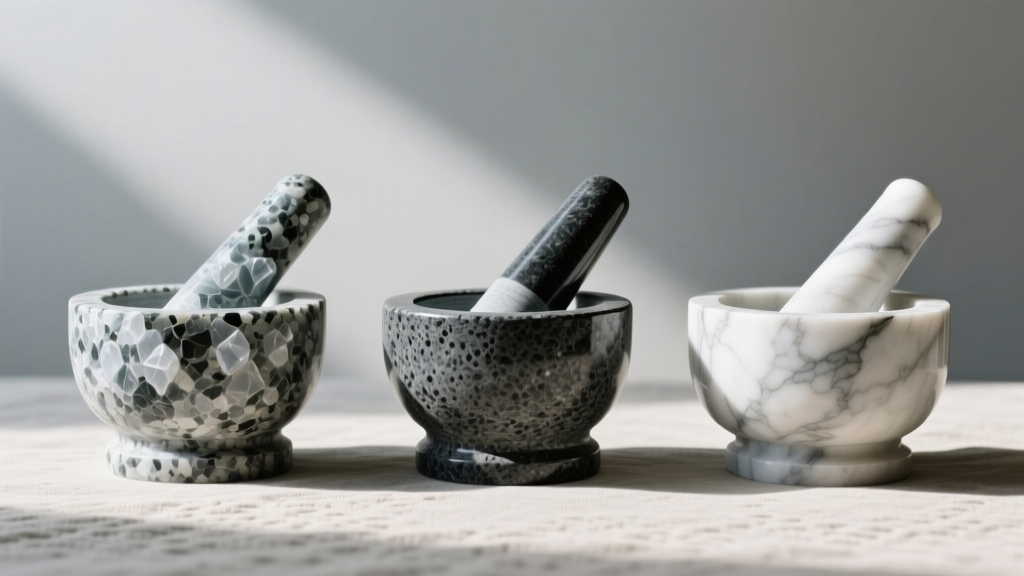
The Material Science of Grinding: Why Stone Properties Matter
When evaluating culinary tools through the lens of construction and material science, a mortar and pestle is essentially a micro-milling facility. The forces involved—compressive stress, shear friction, and localized impact—demand specific geological properties. To determine what is the best material for a mortar and pestle, we must look beyond aesthetics and examine the Mohs scale of mineral hardness, compressive strength (measured in Megapascals, or MPa), and capillary porosity.
In 2026, the market is saturated with resin-bonded composite stones and polished decorative marbles that fail catastrophically under grinding loads. True performance requires an unpolished, naturally abrasive surface topology that maintains its friction coefficient over decades of use.
The Quick Verdict
Best Overall: Unpolished Thai Granite (Mohs 6-7, low porosity).
Best for Wet Pastes & Salsas: Vesicular Volcanic Basalt / Molcajete (High surface area, traditional friction).
Best for Laboratory/Dry Chemicals: Vitrified Porcelain (Zero water absorption, chemically inert).
Materials to Avoid: Marble (acid reactive, too soft) and polished stones (zero friction).
Surface Topography and the Polishing Trap
In architectural stone fabrication, granite and marble are typically honed or polished using diamond abrasives up to 3,000 grit, closing the stone's natural pores and creating a reflective, frictionless surface. This is highly desirable for countertops but disastrous for a mortar. A polished mortar will simply push ingredients around the bowl without applying the necessary shear force to rupture plant cell walls or crush crystalline spices.
The ideal mortar features a bush-hammered or naturally cleft finish. This exposes the crystalline matrix of the stone—specifically the interlocking quartz and feldspar grains—providing microscopic cutting edges that degrade spices rather than merely bruising them.
Evaluating the Contenders: Geological & Structural Breakdown
1. Unpolished Granite (The All-Around Champion)
Granite is an intrusive igneous rock composed primarily of quartz (Mohs 7), orthoclase feldspar (Mohs 6), and plagioclase. Its compressive strength typically ranges from 130 to 250 MPa, making it virtually indestructible under manual grinding forces. The best granite mortars originate from Thailand, where the stone is carved from solid blocks and left unpolished on the interior.
- Porosity: Extremely low (0.4% to 1.5%), meaning it resists absorbing pungent oils from garlic or cumin.
- Abrasion Resistance: Exceptional. The exposed quartz crystals act as permanent, self-renewing micro-blades.
- Weight: High density (approx. 2.75 g/cm³) provides a stable base, preventing the mortar from walking across the counter during aggressive pounding.
2. Vesicular Basalt (The Traditional Molcajete)
Basalt is an extrusive igneous rock. According to the USGS Volcano Hazards Program, basalt forms from the rapid cooling of magnesium and iron-rich lava. When used for a traditional Mexican Molcajete, the basalt is highly vesicular—meaning it contains numerous gas bubbles (vesicles) trapped during rapid cooling.
- Porosity: High (5% to 12% due to vesicles). This creates an incredibly high surface area and aggressive friction profile, ideal for grinding wet ingredients like tomatoes, chilies, and avocados into emulsified pastes.
- Compressive Strength: Solid basalt boasts 200-300 MPa, but the vesicular nature of a Molcajete reduces its structural density, making it more prone to chipping if dropped.
- The Catch: The porous nature requires a rigorous initial 'seasoning' process to grind away loose silicate grit before culinary use.
3. Marble (The Aesthetic Trap)
Marble is a metamorphic rock composed of recrystallized carbonate minerals, most commonly calcite or dolomite. While it looks beautiful on a kitchen island, it is fundamentally unsuited for grinding.
- Hardness: Calcite ranks at a mere 3 on the Mohs scale. It is softer than many dried spices and seeds, leading to rapid wear of the pestle and the introduction of calcium carbonate dust into your food.
- Chemical Reactivity: Marble is highly susceptible to acid etching. Grinding acidic ingredients (lime juice, tamarind, tomatoes) causes a chemical reaction that dissolves the surface, creating a pitted, efflorescent texture that harbors bacteria.
4. Vitrified Ceramic and Porcelain
Often featuring a ridged interior and a wooden pestle, ceramic mortars (like the traditional Japanese Suribashi or European Wedgwood styles) are made from kaolin clay fired at temperatures exceeding 1200°C. This vitrification process reduces water absorption to near zero, compliant with strict NSF food safety standards for non-porous surfaces. They are ideal for pharmacy use, crushing pills, or grinding small quantities of delicate, dry botanicals, but lack the sheer mass and impact resistance needed for fibrous roots or hard seeds.
Comparative Matrix: Hardness, Porosity, and Strength
| Material | Primary Mineral | Mohs Hardness | Compressive Strength (MPa) | Avg. Porosity (%) | Acid Resistance |
|---|---|---|---|---|---|
| Unpolished Granite | Quartz / Feldspar | 6.0 - 7.0 | 130 - 250 | 0.4% - 1.5% | Excellent |
| Vesicular Basalt | Plagioclase / Pyroxene | 6.0 | 150 - 200 (Vesicular) | 5.0% - 12.0% | Good |
| Marble | Calcite | 3.0 - 4.0 | 70 - 140 | 0.5% - 2.0% | Poor (Etches) |
| Vitrified Porcelain | Mullite / Quartz | 7.0 - 8.0 | 400 - 500 | < 0.1% | Excellent |
| Olive Wood | Cellulose / Lignin | N/A (Janka: 2,710 N) | N/A | Variable | Moderate |
The Curing Protocol: Seasoning Porous Building Stones
If you select a high-porosity material like a basalt Molcajete or a raw sandstone mortar, you must perform a surface preparation protocol analogous to abrading a concrete substrate before applying an epoxy coating. Newly carved volcanic stone contains loose, unconsolidated silicate particles that will contaminate food.
Step-by-Step Silicate Removal
- Hydration: Submerge the mortar and pestle in water for 12 hours to loosen surface dust and open the capillary pores.
- Abrasive Milling: Add 1/2 cup of hard, uncooked white rice. Grind in a circular motion, applying downward compressive force, until the rice turns into a fine powder. The rice acts as a sacrificial abrasive, binding to loose stone grit.
- Inspection: Discard the rice dust. If it appears gray or brown, repeat the process with fresh rice until the powder remains pure white.
- Aromatic Sealing: Grind 4 cloves of garlic, a handful of coarse kosher salt, and a tablespoon of cumin seeds into a paste. This forces aromatic oils into the micro-vesicles, creating a natural hydrophobic barrier. Rinse with warm water (never soap) and air dry.
Maintenance and the Danger of Construction Sealers
A common mistake made by professionals in the building trades is applying stone enhancers, siloxane water repellents, or acrylic concrete sealers to culinary stone tools to 'protect' them. Never apply petrochemical or silane-based masonry sealers to a mortar and pestle. These compounds are not food-safe and will leach toxic solvents into high-fat ingredients like sesame seeds, peanuts, or olive oil.
For low-porosity stones like granite, no sealing is required. Simply wash with hot water and a stiff natural-bristle brush. For high-porosity basalt, occasional rubbing with food-grade mineral oil will prevent the stone from drying out and developing micro-fissures over years of thermal cycling.
Expert Verdict: Specifying the Right Tool
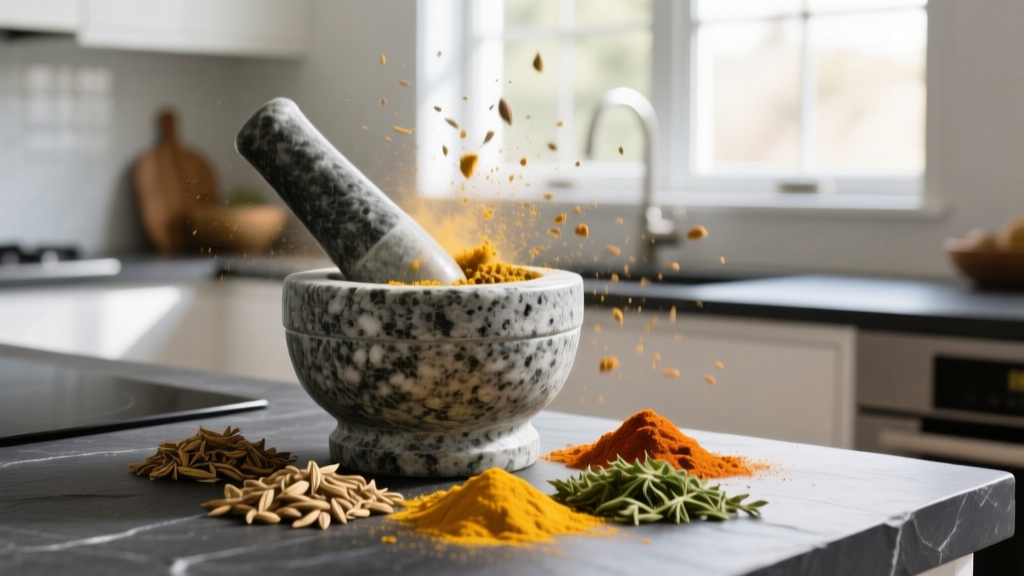
If you are outfitting a kitchen and need a single, high-performance tool, specify an unpolished Thai granite mortar weighing a minimum of 4 kilograms. Its geological composition provides the perfect intersection of high Mohs hardness for fracturing crystalline spices, and low porosity for easy sanitation. If your primary application involves wet, fibrous salsas or emulsified pastes, the high-friction topology of a vesicular basalt Molcajete is structurally superior, provided you invest the time in the initial abrasive curing process. Avoid marble entirely; its mineralogical softness and acid reactivity make it a decorative liability rather than a functional tool.
Written by
Elena RodriguezElena Rodriguez is a civil engineer and technical writer specializing in concrete technology, masonry systems, and ASTM/ACI compliance. She earned her B.S. in Civil Engineering from Texas A&M University and spent a decade at a materials testing laboratory, performing over 2,000 concrete compressive strength tests and masonry prism evaluations. Elena is an ACI-certified Field Testing Technician (Grade I) and a member of ASTM Committee C12 on Natural Building Stone. She currently consults on forensic engineering cases involving concrete failures and moisture intrusion. Based in San Antonio, TX, Elena is a proud member of the Society of Women Engineers (SWE) and coaches her daughter's FIRST Robotics team.
More from Elena Rodriguez
View all
Walls & Panels
Cost Analysis: Light Gauge Steel Framing Advantages and Disadvantages
Evaluate light gauge steel framing advantages and disadvantages through a strict cost analysis lens, comparing material, labor, and lifecycle expenses.
Aug 4, 2026

Walls & Panels
Gypsum Board Types: Exact Specifications, Thickness & Dimensions
Compare standard, Type X, and moisture-resistant gypsum board types. Get exact specifications, thicknesses, dimensions, and ASTM standards for your project.
Aug 4, 2026

Fire Resistance
Best Fire-Resistant Outdoor Decking Materials: 2026 Buyer Guide
Discover the best fire-resistant outdoor decking materials for 2026. Compare Class A PVC, aluminum, and hardwood options for WUI compliance and safety.
Aug 4, 2026