What Is the Best Material for a Kitchen Sink? Pro Comparison
Discover what is the best material for a kitchen sink based on gauge, Mohs hardness, and thermal shock resistance. Expert specs and installation tips.
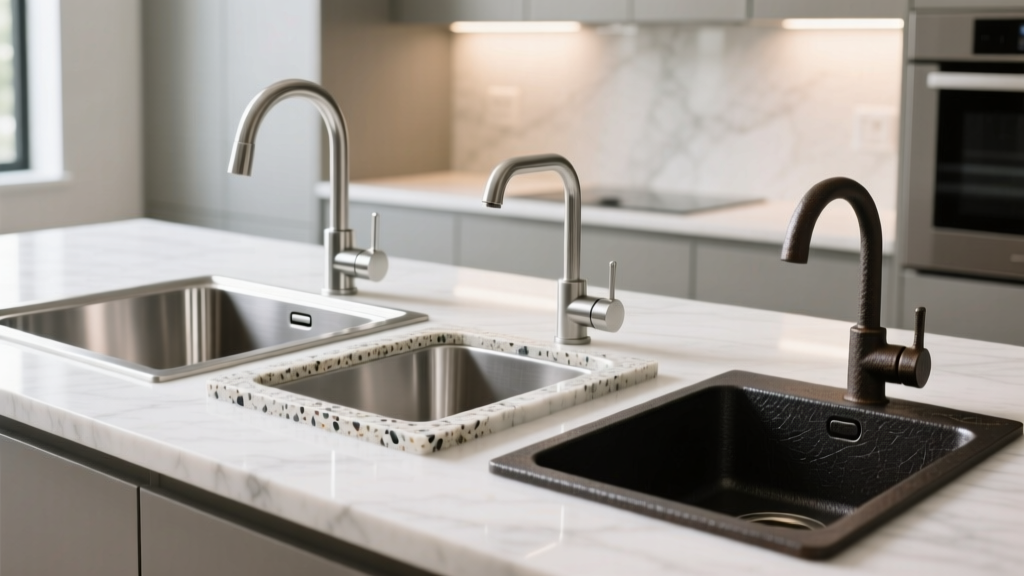
The Short Answer: Matching Material to Kitchen Workflow
There is no single universal answer to what is the best material for a kitchen sink; the correct choice depends entirely on your household's abrasion tolerance, thermal shock exposure, and acoustic requirements. A commercial prep kitchen demands different metallurgical properties than a luxury bake station. Below, we break down the exact specifications, failure modes, and installation best practices for the top sink materials to help you make an informed, long-term decision.
Quick Decision Matrix
- Heavy Cookware & High Heat: 16-Gauge T304 Stainless Steel
- Farmhouse Aesthetics & Stain Resistance: Fireclay
- Scratch Resistance & Color Matching: 80/20 Quartz Composite
- Budget & Traditional Drop-In: Enameled Cast Iron
Stainless Steel: The Commercial Standard
When evaluating stainless steel, the critical metrics are gauge thickness and alloy composition. The best material for a kitchen sink in this category is T304 stainless steel (18/10 chromium-nickel). The 18% chromium provides rust resistance, while the 10% nickel enhances corrosion resistance and luster.
Spec Sheet: 16-Gauge vs. 18-Gauge
Many big-box stores sell 20-gauge or 22-gauge sinks, which are prone to denting from dropped cast-iron skillets and vibrate loudly under running water. Professional best practices dictate a minimum of 18-gauge, with 16-gauge being the premium standard for residential and commercial applications.
| Specification | 16-Gauge (Premium) | 18-Gauge (Standard) | 22-Gauge (Avoid) |
|---|---|---|---|
| Thickness | 0.0598 inches | 0.0478 inches | 0.0312 inches |
| Dent Resistance | Excellent | Good | Poor |
| Acoustic Profile | Low resonance | Moderate resonance | High resonance |
| Average Cost | $400 - $900 | $200 - $450 | $80 - $150 |
Acoustic Dampening Best Practices
Do not rely on spray-on asphalt undercoating. According to This Old House, premium sinks utilize heavy butyl rubber soundproofing pads covering at least 70% of the sink's underside, combined with a thick rubberized base mat to prevent cabinet vibration and eliminate the 'tinny' sound of running water.
Fireclay vs. Enameled Cast Iron: The Heavyweight Contenders
Fireclay and cast iron are frequently confused, but their manufacturing processes result in vastly different performance profiles. Fireclay is formed from clay and glaze, then kiln-fired at temperatures exceeding 2,900°F. This fuses the glaze into the clay, creating a non-porous, highly impact-resistant surface. Enameled cast iron, conversely, is a cast iron shell sprayed with a porcelain enamel and baked. The enamel is essentially glass, making it susceptible to chipping if struck by a heavy pot edge.
Failure Modes and Edge Cases
- Fireclay: Can crack under extreme, localized thermal shock (e.g., placing a 500°F Dutch oven directly from the oven onto a cold, wet fireclay base without a trivet). However, it will not chip easily from dropped utensils.
- Enameled Cast Iron: Highly resistant to thermal shock due to the iron core's heat dissipation, but the glass-like enamel will chip if subjected to point-impact trauma, exposing the underlying iron to rust.
Quartz & Granite Composites: The Modern Alternative
Composite sinks are engineered from roughly 80% crushed quartz or granite dust and 20% acrylic resin. The primary advantage is a Mohs hardness rating of 7, making them virtually immune to scratching from standard stainless steel cutlery (Mohs 5.5). They also offer superior sound deadening compared to bare metals.
Warning on Resin Degradation: Cheap composite sinks use lower-grade resins that degrade under sustained UV exposure or repeated boiling water dumps, leading to a chalky, faded appearance. Always verify the manufacturer's maximum thermal threshold; premium composites withstand up to 536°F (280°C) without warping or discoloration.
Copper & Natural Stone: High-Maintenance Luxury
Copper sinks (typically 14-gauge or 16-gauge) offer natural antimicrobial properties, killing 99.9% of bacteria within two hours. However, they require a living finish that patinas over time. Acidic foods like lemons or tomatoes will strip the patina instantly, leaving bright spots that take weeks to re-oxidize. Natural stone sinks, carved from solid granite or soapstone, are incredibly heavy (often exceeding 300 lbs) and require reinforced cabinetry. Soapstone is non-porous and chemically inert, but it scratches easily and requires regular mineral oil applications to maintain a dark, uniform hue.
Installation Best Practices: Undermount Support Systems
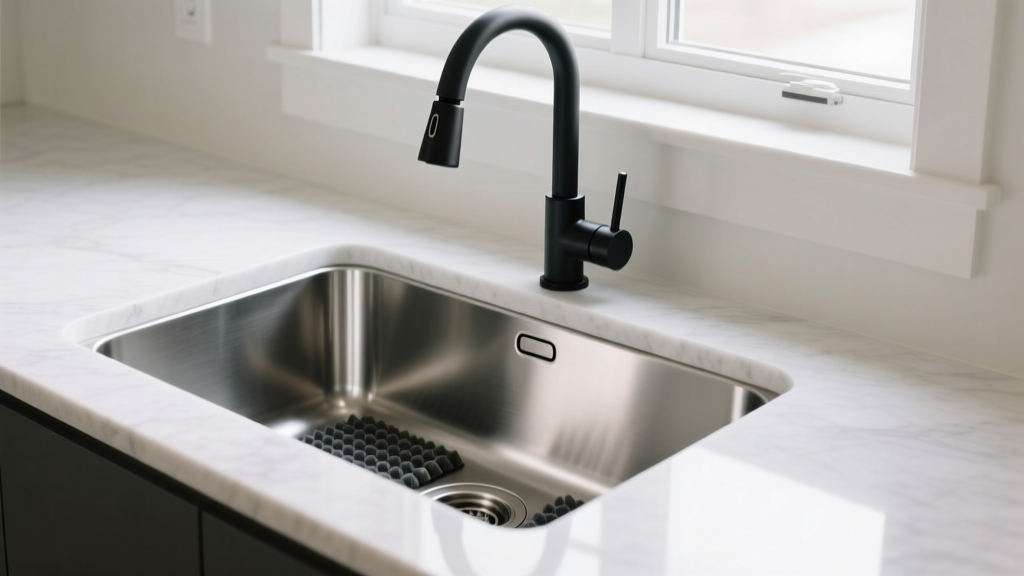
The best material for a kitchen sink will fail if the mounting hardware is inadequate. Undermount sinks, particularly heavy fireclay or cast iron models weighing over 100 lbs, require more than just silicone adhesive and standard metal clips.
The Wooden Cradle Protocol
- Adhesive Selection: Use a 100% silicone sealant (not polyurethane or acrylic) between the sink rim and the countertop. Silicone retains flexibility and prevents water wicking into particleboard or MDF sub-counters.
- Clip Placement: Install stainless steel undermount clips every 8 to 10 inches around the perimeter. Pre-drill holes using a diamond-tipped bit if drilling into quartz or granite to prevent micro-fractures.
- Structural Support: For sinks exceeding 80 lbs, build a 2x4 or 3/4-inch plywood cradle inside the base cabinet. The cradle should bear the sink's dead load directly, with the clips serving only to pull the sink flush against the countertop.
Frequently Asked Questions
Can I use abrasive cleaners on T304 stainless steel?
No. Abrasive powders or steel wool will destroy the passive chromium oxide layer that prevents rust. Use a non-scratch nylon pad and a dedicated stainless steel cleaner, always wiping in the direction of the grain to maintain the brushed finish.
What is the best material for a kitchen sink if I have hard water?
Avoid matte black composites or dark enameled cast iron, as calcium and magnesium deposits will show instantly. Brushed stainless steel or glossy white fireclay are the most forgiving surfaces for hard water environments, as recommended by the National Kitchen & Bath Association (NKBA) for low-maintenance designs.
Does a zero-radius sink drain better than a rounded corner sink?
Functionally, no. Zero-radius (sharp 90-degree corners) sinks are purely aesthetic and actually make manual cleaning more difficult, as debris traps in the corners. Sinks with a 10mm to 15mm corner radius offer the modern look while allowing easy sponge access and better water flow toward the drain.
Written by
James ThorntonJames Thornton is a construction industry veteran with 25 years of hands-on experience in wood framing, lumber grading, and residential building codes. He started as a framing carpenter in rural Oregon, earned his ICC Residential Building Inspector certification, and eventually became a senior plan reviewer for the City of Portland Bureau of Development Services. James holds a B.S. in Wood Science & Technology from Oregon State University and is a certified lumber grader through the West Coast Lumber Inspection Bureau (WCLIB). He has inspected over 3,000 residential construction sites and authored the city's internal guide on advanced framing techniques (2x6 at 24" O.C.). James lives in Bend, OR, where he builds custom timber-frame cabins and competes in lumberjack sports.
More from James Thornton
View all
Insulation
Best Home Insulation Materials: Complete 2026 Guide
Compare top home insulation materials for 2026. Find R-values, installed costs per square foot, and best uses for fiberglass, spray foam, and mineral wool.
Aug 4, 2026

Sustainable Building
Certify Your Green Building Material for LEED and WELL
Step-by-step guide to certifying a green building material for LEED v5 and WELL v2. Master EPDs, HPDs, and VOC limits for 2026 project specifications.
Aug 4, 2026

Stone & Masonry
Veneer Stacked Stone Panels: Interior Design & Style Showcase
Discover how veneer stacked stone panels transform interiors. Explore modern design profiles, material pairings, and technical installation specs.
Aug 4, 2026