Best Materials for Boar Traps: Heavy-Duty Steel & Mesh Guide
Discover the best materials for boar traps, including heavy-duty welded wire gauges, T-post specifications, and corrosion-resistant gate hardware.
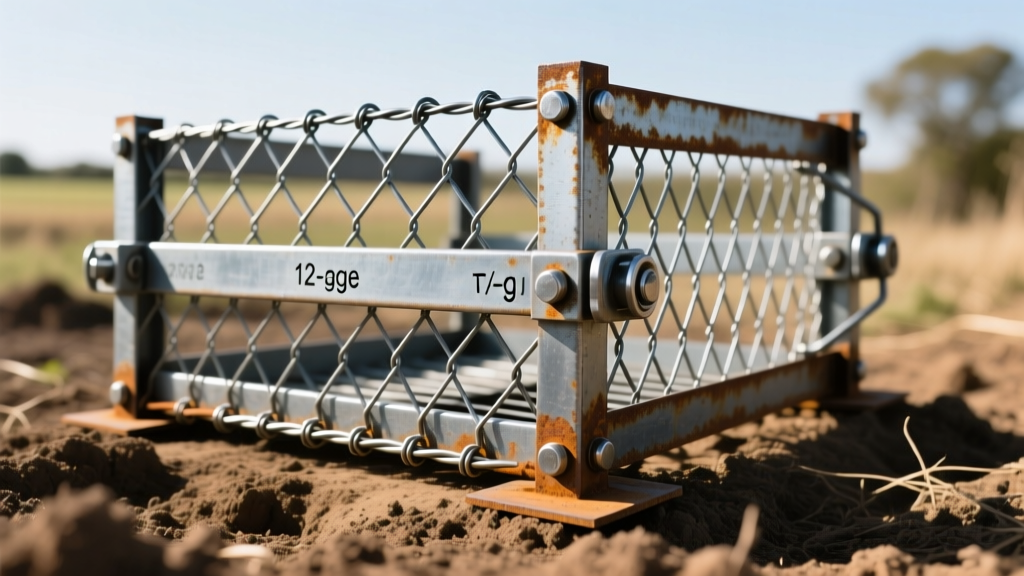
The Biomechanical Challenge of Feral Swine Containment
Feral swine possess a bite force exceeding 800 PSI and can weigh upwards of 300 pounds, allowing them to effortlessly dismantle poorly constructed enclosures. According to USDA APHIS, these animals cause over $2.5 billion in agricultural and environmental damage annually in the United States. Constructing an effective corral trap is not merely a fencing project; it is an exercise in structural engineering and material science. Selecting the best materials for boar traps requires prioritizing high-yield tensile strength, deep-penetration corrosion resistance, and rigid anchor systems that withstand both blunt force impact and persistent rooting.
The Core Framework: Welded Wire Mesh Specifications
The primary failure point in most amateur boar traps is the wire mesh. Standard agricultural field fence or lightweight poultry netting will collapse under the lateral pressure of a panicked sounder (group of pigs). You must specify heavy-duty welded wire mesh.
Gauge and Wire Diameter
For wild boar containment, 4-gauge (0.225-inch diameter) wire is the absolute minimum requirement. While 6-gauge wire is cheaper and easier to manipulate, it lacks the structural rigidity to prevent a 250-pound boar from bending the grid and creating an escape route. Premium commercial traps often utilize a hybrid approach: 4-gauge wire for the bottom four feet (the impact zone) and 6-gauge wire for the upper section to reduce overall weight and cost.
Mesh Aperture Sizing
A uniform 4x4 inch mesh is standard, but it presents a critical flaw: juvenile pigs (shoats) can easily slip through. The optimal configuration is a 2x4 inch rectangular mesh for the bottom 36 inches of the trap, transitioning to a 4x4 inch mesh above. This prevents piglet escapes without unnecessarily increasing the steel weight of the upper panels.
Coating and Corrosion Resistance
Traps are typically set in high-moisture, high-acidity soil environments. The zinc coating process dictates the lifespan of your mesh.
- Galvanized Before Weld (GBW): The wire is coated prior to welding. The intense heat of the welding process burns off the zinc at the joints, leaving bare steel exposed to immediate rust.
- Galvanized After Weld (GAW): The entire welded panel is submerged in a molten zinc bath after fabrication. This encapsulates the vulnerable weld nodes, providing superior corrosion resistance. Always specify GAW for permanent or semi-permanent boar traps.
Ensure your mesh meets ASTM A641 standards for zinc coating. For severe outdoor environments, specify a Class 3 coating (minimum 0.80 oz/ft² of zinc), which provides up to 15 years of rust protection in humid, soil-contact scenarios.
Structural Anchoring: T-Posts and Ground Sleeves
The mesh is only as strong as the posts holding it upright. Wooden posts rot and snap under lateral boar pressure. Steel T-posts are the industry standard, but weight and spacing are critical variables.
T-Post Weight and Driving Depth
Do not use standard 1.25 lb/ft T-posts sold at big-box hardware stores. You must source 1.85 lb/ft or 2.0 lb/ft U-channel steel T-posts. The heavier posts possess a thicker web and wider flanges, preventing them from twisting when a boar throws its body weight against the mesh. Posts should be driven a minimum of 18 inches into the ground, leaving 5 to 6 feet above grade.
Post Spacing and the Rooting Apron
Space your T-posts exactly 8 feet apart. Wider spacing allows the mesh to bow outward when pushed. Texas A&M AgriLife Extension emphasizes that boars will attempt to root under the trap walls rather than break through them. To counter this, install a "rooting apron."
Extend a 12-inch to 18-inch flap of 4-gauge mesh outward along the entire exterior base of the trap. Pin this apron to the ground using 18-inch landscaping staples every 2 feet. When a boar attempts to dig at the base of the trap, its front hooves will stand on the apron, using the animal's own body weight to seal the gap and prevent escape.
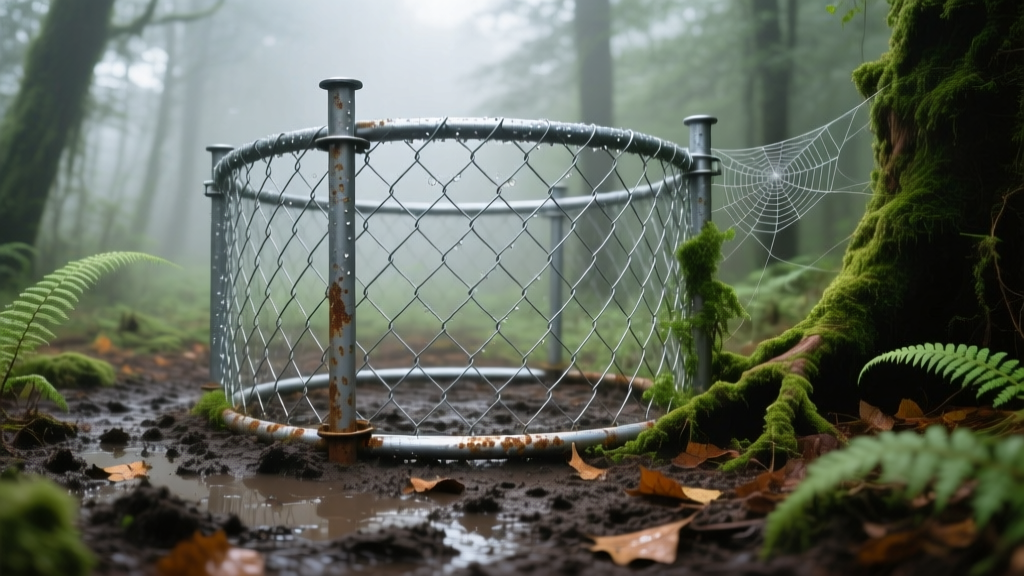
Gate Mechanisms and Hardware Materials
The gate is the most mechanically complex component of the trap. Whether you are building a saloon-style gate (which pigs push open to enter) or a guillotine drop-gate (which falls to trap them), the hardware must withstand violent kinetic impacts.
Guillotine Gate Construction
A guillotine gate requires a rigid frame that will not warp when dropping into the guide channels. Construct the gate frame using 1.5-inch x 1.5-inch 11-gauge square steel tubing. Fill the frame with the same 4-gauge GAW mesh. Avoid using expanded metal for the gate itself; while strong, the sharp edges can injure the animals, causing them to thrash and damage the guide rails.
Trigger Cables and Pivot Pins
The trigger mechanism relies on tension. Standard hardware store wire rope will fray and snap after repeated weather exposure and tension cycles.
- Trigger Cable: Use 1/8-inch 7x19 strand galvanized aircraft cable. The 7x19 configuration offers high flexibility, allowing it to route through pulleys without suffering metal fatigue or internal wire breakage.
- Pivot Pins: Use 1/2-inch 304 stainless steel clevis pins secured with stainless steel cotter keys. Mild steel pins will rust into the pivot brackets within a single season, causing the gate to bind and fail to drop.
Fasteners, Ties, and Mesh Connections
Connecting the mesh to the T-posts and joining the panels together requires specialized fasteners. Standard baling wire is entirely insufficient.
| Fastener Type | Specification | Application in Boar Trap |
|---|---|---|
| Hog Rings | 10-gauge, galvanized steel, 1-inch crown | Securing mesh panels to T-posts (placed every 12 inches vertically). |
| Spear Ties / J-Bolts | 3/8-inch galvanized J-bolts with nuts | Bolting overlapping mesh panels together at the seams for structural continuity. |
| Heavy-Duty Zip Ties | UV-stabilized nylon, 175 lb tensile strength, 3/8" wide | Temporary panel alignment during construction; never use as primary load-bearing ties. |
Cost Breakdown: 35-Foot Diameter Corral Trap
Building a commercial-grade 35-foot diameter corral trap (approximately 960 square feet of coverage) requires a significant upfront investment, but it eliminates the recurring costs of replacing failed lightweight traps. Below is a realistic material cost estimate for 2026.
| Material Component | Quantity | Estimated Cost |
|---|---|---|
| 4-gauge GAW Welded Wire (50ft rolls, 5ft high) | 3 rolls | $450 - $525 |
| 1.85 lb/ft Steel T-Posts (7ft length) | 15 posts | $180 - $225 |
| Guillotine Gate Kit (Frame, mesh, rails) | 1 kit | $250 - $350 |
| 7x19 Aircraft Cable, Pulleys, & SS Hardware | 1 lot | $60 - $85 |
| Hog Rings, J-Bolts, and Landscaping Staples | 1 lot | $40 - $60 |
| Total Estimated Material Cost | -- | $980 - $1,245 |
Frequently Asked Questions
Can I use chain link fencing instead of welded wire mesh?
No. Chain link fencing is designed to flex and absorb impact, which is ideal for residential yards but disastrous for boar traps. When a boar pushes against chain link, the diamond pattern stretches and distorts, creating large gaps at the top and bottom of the fence line. Furthermore, the knuckled edges of chain link can easily catch on a boar's tusks, allowing the animal to leverage its neck muscles and tear the fence from the posts. Rigid welded wire maintains its structural geometry under lateral loads.
How do I prevent the trap gate from freezing shut in winter?
Gate binding in freezing temperatures is a common failure mode in northern climates. To prevent ice from locking the guillotine gate into the guide channels, line the inside of the steel guide sleeves with UHMW (Ultra-High Molecular Weight) polyethylene tape. This material has an incredibly low coefficient of friction and is hydrophobic, meaning ice will not readily adhere to it. Additionally, pack the upper pulley mechanisms with a synthetic, water-resistant marine grease rather than standard lithium grease, which stiffens and fails in sub-zero temperatures.
What is the best bait strategy for a newly constructed steel trap?
Because new steel and galvanized wire carry a strong metallic scent that makes feral swine highly suspicious, you must "pre-bait" the trap for 7 to 10 days before setting the trigger. Use whole shelled corn fermented in water and strawberry gelatin, or commercial strawberry-scented commercial hog baits. Leave the gate tied open during this period to allow the sounder to habituate to entering the steel structure without triggering their neophobia (fear of new objects).
Written by
Marcus ChenMarcus Chen is a licensed structural engineer (PE) and building materials analyst with over 12 years of experience across residential, commercial, and industrial construction. He holds a Master of Science in Civil Engineering from UC Berkeley and spent six years at Thornton Tomasetti before transitioning to independent consulting and technical writing. Marcus specializes in material selection for seismic-prone regions, concrete reinforcement strategies, and lifecycle cost analysis. His work has been cited by the American Concrete Institute (ACI) and the Structural Engineers Association of California (SEAOC). When he is not on a job site or at his desk, you will find him hiking the Sierra Nevada or restoring a 1920s craftsman bungalow in Oakland, CA.
More from Marcus Chen
View all
Construction Cost
How Much Did the Eiffel Tower Cost to Build?
How much did the Eiffel Tower cost to build in 1889? We adjust for inflation and compare its budget to modern skyscraper construction.
Aug 4, 2026

Fire Resistance
What Is a Fire Resistant Material? Testing & Certification Guide
Discover what is a fire resistant material through ASTM and UL testing. Learn how fire ratings, certifications, and assemblies work in construction.
Aug 4, 2026

Construction Cost
How Much Did the Burj Khalifa Cost to Build?
How much did the Burj Khalifa cost to build? We break down the $1.5B project and extract 5 money-saving strategies for your next build.
Jul 30, 2026