Best Materials for Building a DIY Kite Kit: Structural Guide
Discover the best materials for building a DIY kite kit. Explore structural spars, aerodynamic sailcloths, and adhesives for professional-grade kite construction.

The Engineering of Lightweight Tensile Structures
Constructing a high-performance kite requires the same fundamental understanding of load paths, tensile strength, and aerodynamic forces as large-scale architectural tensile structures. When selecting the best materials for building a DIY kite kit, builders must balance weight, stiffness, and tear resistance. A kite operates in a high-stress, dynamic environment where the frame must resist bending moments while the sail must maintain an aerodynamic profile without stretching or tearing. This guide details the exact material specifications, grades, and structural components required to engineer a professional-grade kite from scratch.
Selecting the Optimal Spar Materials
The spars (the frame or skeleton) dictate the kite's flight characteristics, wind range, and structural resilience. The primary engineering challenge is maximizing the stiffness-to-weight ratio while maintaining enough flexibility to absorb wind gusts without catastrophic failure.
Roll-Wrapped Carbon Fiber vs. Pultruded
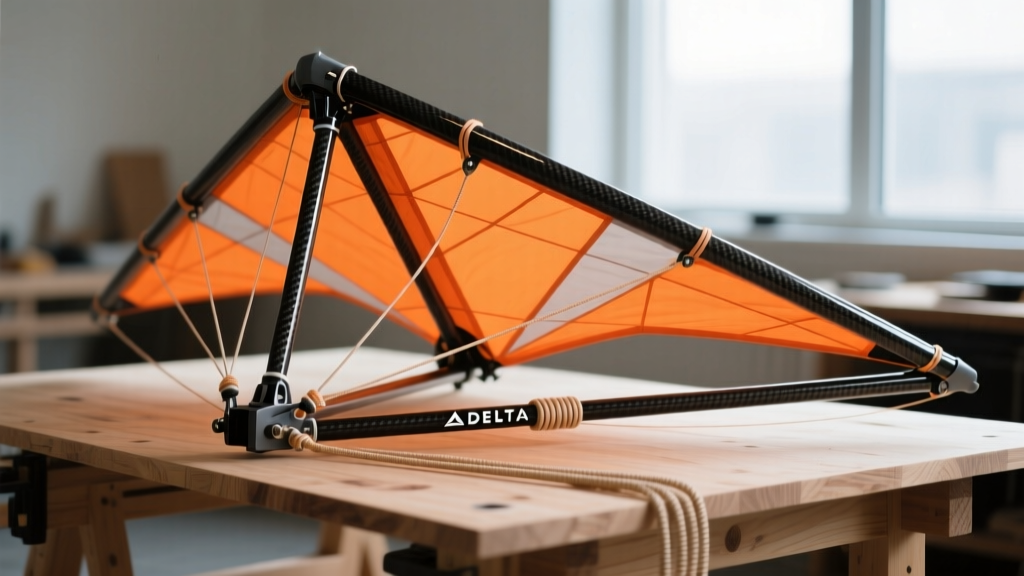
Carbon fiber is the premier choice for performance kite spars, but the manufacturing process drastically alters its structural properties. Pultruded carbon fiber consists of unidirectional fibers pulled through a resin bath. While highly resistant to longitudinal bending, it lacks torsional rigidity and is prone to longitudinal splitting under uneven lateral loads. Roll-wrapped carbon fiber, conversely, is wrapped around a mandrel with a multi-directional weave (often a 0/90 and +/-45 degree layup) and cured under high pressure. This weave provides exceptional torsional rigidity and prevents splintering. For a standard delta or box kite, specify roll-wrapped carbon tubes with an outer diameter (OD) of 4mm to 6mm and a wall thickness of 0.5mm to 1.0mm. For a comprehensive breakdown of composite layups and structural properties, refer to the DragonPlate carbon fiber engineering guide.
Solid Fiberglass and Traditional Hardwoods
For high-wind applications where extreme flex is required to depower the kite, solid fiberglass rods (typically 3mm to 5mm in diameter) are ideal. Fiberglass has a lower modulus of elasticity than carbon, allowing it to bend into deep parabolic curves without snapping. Traditionalists building vintage or box kites should opt for Sitka Spruce or Tonkin Cane (Bamboo). Sitka Spruce offers a superior strength-to-weight ratio among woods but requires precise tapering and grain-sealing with polyurethane to prevent moisture-induced warping.
| Material | Form Factor | Stiffness (Modulus) | Failure Mode | Best Application |
|---|---|---|---|---|
| Roll-Wrapped Carbon | Hollow Tube (4-8mm OD) | Very High | Brittle snap under extreme point-load | Performance Deltas, Stunt Kites |
| Pultruded Carbon | Solid Rod / Tube | High (Unidirectional) | Longitudinal splintering | Straight leading edges, spreaders |
| Fiberglass | Solid Rod (3-5mm) | Medium | Gradual delamination, bending fatigue | High-wind flex spars, parafoils |
| Sitka Spruce | Carved / Tapered Strip | Low-Medium | Snapping along the grain, moisture warp | Traditional Box Kites, Rokkaku |
Sailcloth and Skin Materials
The sail material must capture wind efficiently while resisting the tearing forces concentrated at the spar attachment points. Porosity is the critical metric: a sail that allows air to pass through will suffer from reduced lift and unstable flight dynamics.
Ripstop Nylon (The Aerospace Standard)
Ripstop nylon remains the gold standard for kite sails due to its exceptional tear resistance and lightweight properties. The 'ripstop' grid, typically woven at 5mm to 7mm intervals, localizes tears and prevents catastrophic structural failure mid-flight. For most DIY kits, specify 0.75 oz/yd² (ounce per square yard) calendared ripstop nylon. Calendaring is a mechanical process that flattens the yarns, reducing the fabric's porosity to near zero without adding heavy chemical coatings. For heavy-lift kites or high-wind environments, upgrade to 1.5 oz/yd² polyurethane-coated ripstop, which offers complete zero-porosity and UV resistance.
Tyvek and Mylar Alternatives
For rigid, framed kites or budget-friendly prototyping, DuPont Tyvek (spunbound polyethylene) is an outstanding alternative. Specifically, source Type 1443R (the softer, textile-like variant) rather than the stiff Type 1073R used in construction envelopes. Tyvek is completely waterproof, immune to UV degradation, and cannot be torn by hand, though it is vulnerable to puncture. According to the official DuPont Tyvek material specifications, its high strength-to-weight ratio makes it highly suitable for lightweight structural skins. For micro-kites or indoor low-wind kites, 0.5 mil Mylar (polyester film) provides the necessary rigidity and near-zero stretch, though it is highly susceptible to creasing and puncture.
Adhesives, Connectors, and Bridle Hardware
The intersection points of a kite's frame and sail endure the highest localized stress concentrations. Selecting the correct adhesives and hardware is non-negotiable for structural longevity.
- Cyanoacrylate (CA) Glue: For bonding carbon fiber or fiberglass spars to 3D-printed or molded plastic connectors, use a medium-viscosity CA glue paired with an aerosol accelerator (kicker). This creates an instant, rigid bond that resists the vibration of high-frequency wind gusts.
- Double-Sided Transfer Tape: For hemming ripstop nylon without the weight and drag of sewn seams, use 3M 9485PC or 3M 467MP acrylic transfer tape. These tapes offer shear strengths exceeding 100 lbs per inch and remain flexible in sub-zero temperatures.
- Thread: If sewing structural reinforcements or bridle attachment points, abandon standard cotton or polyester thread. Use Tex 40 Dacron (polyester) thread or Tex 60 bonded nylon, which resist UV degradation and possess high tensile strength.
- Bridle Line: The bridle transfers the aerodynamic load to the flyer. Use Spectra or Dyneema (UHMWPE) line rated for 50 lb to 90 lb test. These lines have a near-zero stretch coefficient, ensuring immediate steering response and preventing the dangerous 'snap-back' effect associated with elastic nylon lines.
Cost Breakdown for a Professional-Grade DIY Kit
Building a high-performance kite requires an initial investment in specialized materials, but the cost per unit drops significantly when cutting multiple sails from a single yard of fabric.
| Component | Specification | Estimated Cost (USD) |
|---|---|---|
| Main Spars (Leading Edges) | 6mm Roll-Wrapped Carbon Tube (x2) | $24.00 - $30.00 |
| Spreader / Keel Spar | 4mm Solid Fiberglass Rod | $3.50 - $5.00 |
| Sailcloth | 0.75 oz/yd² Calendared Ripstop (1 Yard) | $12.00 - $16.00 |
| Adhesives & Tape | 3M 467MP Tape & Medium CA Glue | $14.00 - $18.00 |
| Bridle & Flying Line | 90lb Dyneema Line (150 ft on winder) | $15.00 - $22.00 |
| Total Estimated Cost | Complete Premium Material Kit | $68.50 - $91.00 |
Frequently Asked Questions
Can I use PVC pipe for the kite frame?
No. Standard PVC (Schedule 40) is far too heavy and lacks the necessary flexural strength, making it prone to shattering under impact or cold-weather stress. If a hollow plastic tube is required, use thin-walled fiberglass or carbon fiber composites.
How do I prevent the carbon fiber spars from wearing through the sailcloth?
Carbon fiber is highly abrasive. Any point where a spar contacts the ripstop nylon must be reinforced. Apply a 2-inch square patch of 1.5 oz/yd² Dacron (polyester) fabric using 3M transfer tape, or install a brass or nylon grommet at the spar tip insertion points to distribute the point-load and prevent puncture.
What is the ideal bridle angle for a standard delta kite?
The optimal towing angle (the angle between the bridle line and the kite's spine) typically falls between 25 and 30 degrees for standard wind conditions (8-15 mph). A steeper angle (closer to 35 degrees) increases lift for low-wind flying, while a shallower angle (closer to 20 degrees) flattens the kite for high-wind stability and faster forward drive.
Written by
Priya KapoorPriya Kapoor is a real estate market analyst and construction economics researcher with expertise in housing affordability, development feasibility, and infrastructure investment. She holds a Master of Regional Planning from Cornell University and previously worked as a senior analyst at CBRE's Investment Properties group, where she modeled returns for $4B in mixed-use development pipelines. Priya now runs an independent research practice advising developers, municipalities, and REITs on construction cost forecasting and market timing. She publishes the quarterly "BuildMat Market Pulse" report tracking material price indices across 12 commodity categories. Based in Austin, TX, Priya serves on the board of Habitat for Humanity Austin and is a marathon runner.
More from Priya Kapoor
View all
Construction Cost
Cost to Build a 1600 Sq Ft Home in 2026: Full Breakdown
Accurate 2026 cost to build a 1600 sq ft home—material, labor, and regional pricing breakdowns included. Plan your budget with real-time estimates.
Aug 11, 2026

Wood & Lumber
Name the Types of Wood for Pressure Treatment and Preservation
Learn how to name the types of wood best suited for pressure treatment. Compare species treatability, chemical retention levels, and 2026 preservation costs.
Aug 4, 2026

Stone & Masonry
Stone Veneer Suppliers Lindenhurst: 2026 Cost Analysis
Analyze 2026 stone veneer costs in Lindenhurst, NY. Compare local supplier pricing, delivery fees, and Suffolk County installation labor rates.
Aug 4, 2026