Neuvillette Build Materials: Hydro-Resistant Studio Guide
Compare the best neuvillette build materials for hydro-themed studios. Expert analysis on moisture-resistant substrates, membranes, and millwork.

The "Neuvillette" Architectural Archetype: Engineering a Hydro-Themed Space
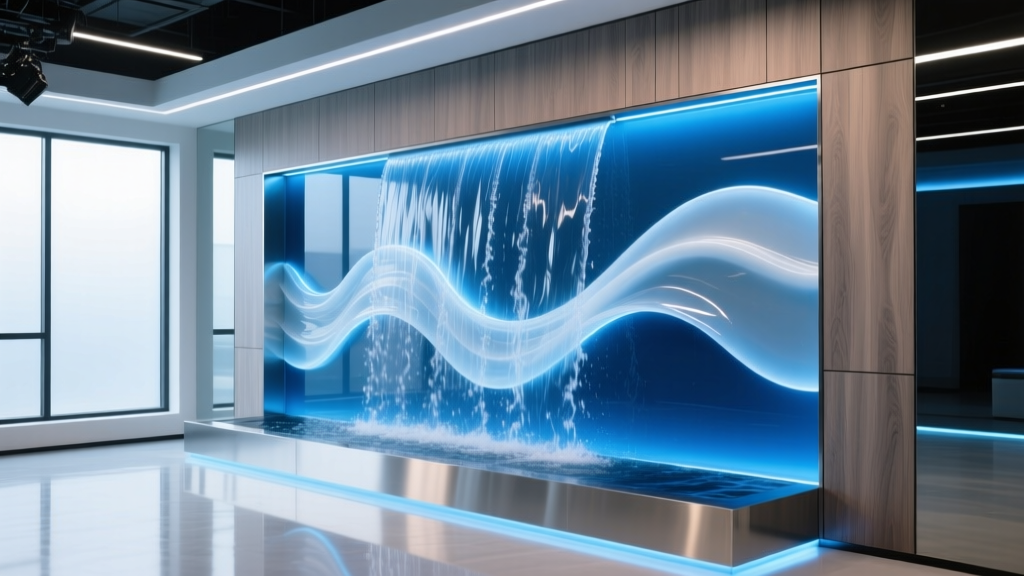
Designing a physical space inspired by hydro-centric, elegant aesthetics—often referred to in niche design communities as a "Neuvillette build"—presents unique structural challenges. These themed studios, gaming rooms, or architectural features rely heavily on indoor water elements, deep blue and white color palettes, and ornate classical millwork. However, introducing ambient moisture and decorative water features into an interior environment requires rigorous material selection to prevent mold, structural rot, and acoustic degradation.
When sourcing neuvillette build materials, contractors and DIY builders must prioritize hydrophobic substrates, impermeable vapor barriers, and closed-cell decorative elements. This comparison review evaluates the top-performing moisture-resistant materials available in 2026, breaking down their technical specifications, cost-efficiency, and ideal applications for high-humidity themed builds.
Substrate Selection: Mold-Resistant Gypsum vs. Cementitious Backer
The foundation of any hydro-themed interior build is the wall substrate. Standard drywall will rapidly degrade in environments with ambient humidity exceeding 60% or where direct water splash zones are present.
Option A: Fiberglass-Faced Mold-Resistant Gypsum
Products like USG Securock UltraLight or Georgia-Pacific DensArmor Plus replace the traditional paper facing with fiberglass mats. The core is treated with antimicrobial agents. These panels are lightweight (approx. 1.6 lbs/sq ft for 1/2-inch) and easy to score and snap, making them ideal for the upper walls and ceilings of a themed studio where direct water contact is minimal but ambient humidity is high.
Option B: Cementitious Backer Boards
For areas directly behind indoor waterfalls, custom aquariums, or hydro-feature walls, cement boards like James Hardie HardieBacker or USG Durock are mandatory. Composed of Portland cement and reinforced with glass mesh, they are completely impervious to water damage. The trade-off is weight and workability; Durock weighs nearly 3.0 lbs/sq ft and requires carbide-tipped blades for cutting, generating significant silica dust during installation.
Waterproofing Membranes: Sheet vs. Liquid-Applied
According to the EPA's guidelines on indoor moisture control, preventing liquid water and vapor from penetrating wall cavities is critical to maintaining indoor air quality. In a Neuvillette-inspired build, the decorative water wall must be isolated from the framing.
| Membrane Type | Permeability (Perms) | Cost per Sq Ft (2026) | Best Application |
|---|---|---|---|
| Sheet (e.g., Schluter-Kerdi) | 0.90 | $1.85 - $2.30 | Flat, expansive water-feature walls |
| Liquid Elastomeric (e.g., RedGard) | 0.45 (at 30 dry mils) | $0.90 - $1.20 | Complex curves, basin interiors, corners |
| Peel-and-Stick Bituthane | 0.05 | $2.50 - $3.10 | Sub-floor basins, heavy load-bearing pools |
For the signature indoor water elements, Schuter Systems' sheet membranes provide a consistent, foolproof thickness that liquid membranes struggle to match. Liquid elastomerics rely heavily on the installer's ability to apply a uniform 30-mil wet coat; if applied too thinly, the perm rating spikes, allowing vapor transmission. For complex, curved basin interiors often found in classical Fontaine-inspired architecture, liquid-applied membranes remain the superior choice due to their ability to conform to non-standard geometries without seams.
Millwork and Trim: Polyurethane vs. MDF
The "Neuvillette" aesthetic relies heavily on ornate, classical molding—think elaborate crown moldings, wainscoting, and corbels. In standard construction, Medium Density Fiberboard (MDF) is the go-to for paint-grade millwork. However, MDF acts like a sponge in high-humidity environments, swelling and failing at the joints.
- High-Density Polyurethane (HDPU): Brands like Fypon produce closed-cell polyurethane millwork that is entirely impervious to moisture. It will not rot, warp, or harbor mold. While HDPU costs roughly 30-40% more than MDF upfront, it eliminates the need for yearly caulking and repainting in a humid studio environment.
- PVC Trim (e.g., Azek): Ideal for baseboards and lower wall panels where accidental splashing from the water feature might occur. PVC can be routed and shaped, though it lacks the ultra-fine detail resolution of HDPU for ornate classical rosettes.
- Marine-Grade Plywood: If custom built-ins are required for streaming desks or display cabinetry, marine-grade plywood (using waterproof phenolic resins) faced with a high-pressure laminate (HPL) is mandatory. Standard particleboard will delaminate within 18 months in a room with a dedicated water feature.
HVAC and Climate Control Integration
Building the physical shell is only half the battle. A hydro-themed room introduces gallons of evaporating water into the air daily. Relying on a standard central HVAC system is insufficient and will lead to condensation on cold surfaces (like exterior windows or uninsulated ductwork).
If your hydro-feature wall utilizes natural stone or porous masonry veneer, high ambient humidity combined with temperature fluctuations will cause efflorescence (white salt deposits) and internal spalling. Always seal natural stone with a breathable, silane-based penetrating sealer rather than a topical acrylic, which traps moisture inside the stone.
To maintain the 40-50% relative humidity required to protect electronics and acoustic treatments in a streaming studio, integrate a dedicated commercial-grade dehumidifier. Units like the Aprilaire E100 (capable of removing 100 pints per day) can be ducted directly into the room's return air plenum. Ensure all HVAC supply registers are fitted with insulated flex-ducting (R-8 minimum) to prevent exterior condensation drip, a common failure point in themed basement builds.
Acoustic Treatments in High-Humidity Environments
Standard fiberglass acoustic panels and open-cell foam will absorb ambient moisture, becoming heavy, losing their Noise Reduction Coefficient (NRC) rating, and eventually growing mold. For a Neuvillette build, acoustic management requires hydrophobic alternatives:
- PET Felt Panels: Made from recycled polyethylene terephthalate, these panels are completely moisture-resistant. They can be CNC-cut into ornate, classical patterns to match the baroque aesthetic while providing an NRC of 0.85.
- Micro-Perforated PVC Foils: Often used in commercial natatoriums, these can be stretched over rigid, moisture-resistant mineral wool cores to create seamless, elegant acoustic ceilings that mimic plaster.
- Sealed Wood Diffusers: Quadratic residue diffusers made from marine-grade plywood, sealed with a two-part catalyzed polyurethane clear coat, provide essential sound scattering for vocal recording without degrading in humid air.
Cost Breakdown: 12x12 Hydro-Themed Studio Build
Below is an estimated material cost matrix for upgrading a standard 12x12 room into a fully moisture-proofed, hydro-themed architectural space (excluding labor and the mechanical water pump/plumbing systems).
| Material Category | Specification | Estimated Cost |
|---|---|---|
| Substrate (Walls/Ceiling) | Fiberglass-faced 5/8" Gypsum | $850 - $1,100 |
| Waterproofing (Feature Wall) | Sheet membrane + liquid corners | $350 - $450 |
| Millwork & Trim | HDPU Crown & Baseboards | $1,200 - $1,800 |
| Acoustic Treatments | Custom CNC PET Felt Panels | $900 - $1,400 |
| Climate Control | Dedicated 70-pint Dehumidifier | $1,100 - $1,300 |
Constructing an elegant, water-centric environment requires moving beyond standard residential building practices. By selecting closed-cell trim, impermeable membranes, and hydrophobic acoustic treatments, builders can achieve the opulent, hydro-themed aesthetic without compromising the structural integrity or air quality of the space. Always consult local building codes regarding indoor water features and electrical clearances before finalizing your material procurement.
Written by
Priya KapoorPriya Kapoor is a real estate market analyst and construction economics researcher with expertise in housing affordability, development feasibility, and infrastructure investment. She holds a Master of Regional Planning from Cornell University and previously worked as a senior analyst at CBRE's Investment Properties group, where she modeled returns for $4B in mixed-use development pipelines. Priya now runs an independent research practice advising developers, municipalities, and REITs on construction cost forecasting and market timing. She publishes the quarterly "BuildMat Market Pulse" report tracking material price indices across 12 commodity categories. Based in Austin, TX, Priya serves on the board of Habitat for Humanity Austin and is a marathon runner.
More from Priya Kapoor
View all
Construction Cost
Cost to Build a 1600 Sq Ft Home in 2026: Full Breakdown
Accurate 2026 cost to build a 1600 sq ft home—material, labor, and regional pricing breakdowns included. Plan your budget with real-time estimates.
Aug 11, 2026

Wood & Lumber
Name the Types of Wood for Pressure Treatment and Preservation
Learn how to name the types of wood best suited for pressure treatment. Compare species treatability, chemical retention levels, and 2026 preservation costs.
Aug 4, 2026

Stone & Masonry
Stone Veneer Suppliers Lindenhurst: 2026 Cost Analysis
Analyze 2026 stone veneer costs in Lindenhurst, NY. Compare local supplier pricing, delivery fees, and Suffolk County installation labor rates.
Aug 4, 2026