How Much Does It Cost to Build a Geothermal Plant in 2026?
Discover how much it costs to build a commercial geothermal plant in 2026. Explore drilling, pipe insulation, and heat pump capital expenses per ton.

Baseline Capital Costs for Commercial Geothermal Plants
When commercial developers and facility managers ask how much does it cost to build a geothermal plant, they are typically referring to a central Ground-Source Heat Pump (GSHP) plant or a district geothermal energy network. Unlike standalone residential systems, these commercial plants centralize the heating and cooling load for multiple buildings, large campuses, or industrial complexes. In 2026, the capital expenditure for a commercial geothermal plant ranges from $2,800 to $5,500 per ton of heating/cooling capacity. For a standard 500-ton commercial plant, total project costs typically fall between $1.4 million and $2.75 million.
2026 Quick Cost Estimator
- Small Commercial (100 Tons): $320,000 – $480,000
- Mid-Size Campus (500 Tons): $1.4M – $2.75M
- Large District Plant (2,000+ Tons): $5.2M – $9.5M+
- Cost per Linear Foot of Borehole: $18 – $38 (including grouting)
The wide variance in pricing is driven by three primary factors: subsurface geology, the thermal insulation requirements of the distribution network, and the scale of the central plant room mechanicals. According to the U.S. Department of Energy, while upfront capital costs remain higher than conventional HVAC systems, the integration of advanced thermal insulation materials in modern geothermal plants has drastically reduced distribution losses, accelerating the return on investment.
Capital Cost Breakdown: Where the Budget Goes
Building a geothermal plant requires a complex integration of subterranean engineering and above-ground mechanical systems. Below is the typical capital allocation for a 500-ton system installed in 2026.
| Project Phase | Cost Range (500-Ton) | % of Total Budget |
|---|---|---|
| Borefield Drilling & Grouting | $650,000 – $950,000 | 40% - 45% |
| Underground Piping & Insulation | $250,000 – $400,000 | 15% - 20% |
| Central Heat Pumps & Exchangers | $350,000 – $600,000 | 20% - 25% |
| Plant Room Build-out & Controls | $150,000 – $300,000 | 10% - 15% |
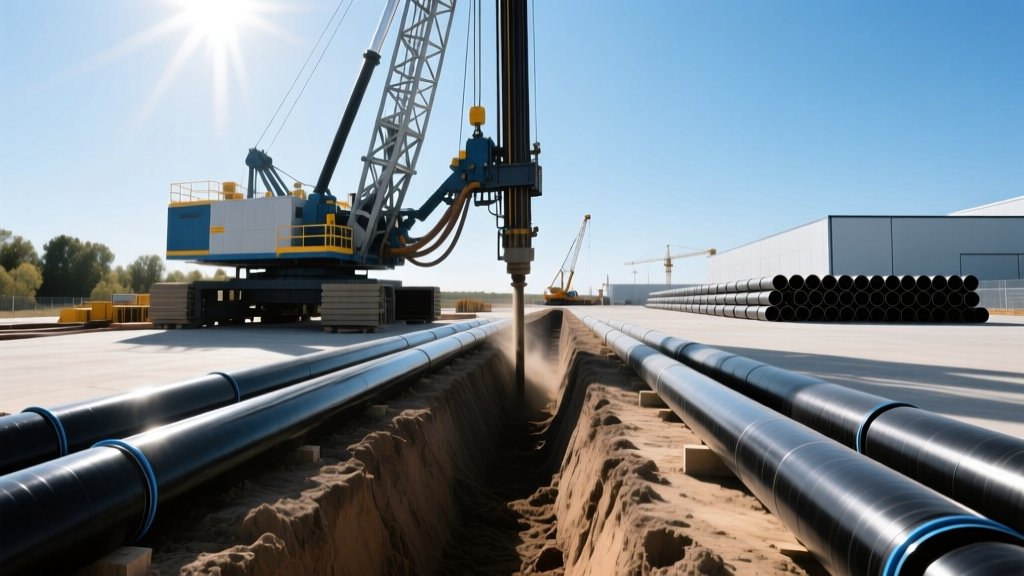
The Hidden Cost Saver: Distribution Piping Insulation
In the context of building materials and energy efficiency, the insulation of the horizontal loop headers and distribution piping is the most critical variable for long-term plant efficiency. If thermal energy is lost in the trench before it reaches the building envelope, the plant's Coefficient of Performance (COP) plummets.
Pre-Insulated PEX-a vs. Steel Carrier Pipes
Modern district geothermal plants have largely abandoned bare high-density polyethylene (HDPE) pipes in favor of pre-insulated PEX-a piping systems. These pipes feature a carrier pipe, a layer of rigid polyurethane (PUR) foam insulation, and an outer HDPE casing.
- Thermal Conductivity: CFC-free PUR foam offers a thermal conductivity of roughly 0.022 W/m·K, minimizing heat transfer to the surrounding soil.
- Cost Premium: Pre-insulated PEX-a costs between $45 and $85 per linear foot, compared to $12 to $18 per foot for uninsulated HDPE. However, the energy savings in a district plant typically yield a payback period of under 3 years.
- Moisture Resistance: The HDPE outer jacket prevents groundwater from infiltrating the foam. Wet insulation loses up to 80% of its R-value, a catastrophic failure mode in high-water-table environments.
Vault and Manifold Insulation: The Aerogel Solution
Where the borefield pipes converge into underground manifold vaults, space constraints make rigid foam impractical. For these tight spaces, engineers specify aerogel insulation blankets (such as Pyrogel or Spaceloft). Aerogel provides an R-value of roughly R-10 per inch, allowing contractors to wrap complex valve assemblies and flanges with just 10mm of material, preventing localized condensation and thermal bridging without requiring massive vault footprints.
Geological Variables That Dictate Drilling Costs
The subsurface environment dictates the speed of drilling, the type of drill bits required, and the thermal conductivity of the grout. The International Ground Source Heat Pump Association (IGSHPA) emphasizes that proper geological surveying is mandatory to prevent budget overruns.
- Soft Clay / Sand: $15 – $22 per linear foot. Fast drilling, but requires specialized bentonite grout to prevent borehole collapse.
- Shale / Limestone: $22 – $28 per linear foot. Ideal thermal conductivity and stable drilling conditions.
- Hard Granite / Quartzite: $32 – $45+ per linear foot. Severe bit wear and slow penetration rates drastically increase rig time and labor costs.
Furthermore, the grout used to seal the boreholes must be thermally enhanced. Standard bentonite grout has a thermal conductivity of about 0.4 Btu/hr·ft·°F. By adding silica sand or graphite to the grout mixture, conductivity increases to 0.8 - 1.2 Btu/hr·ft·°F, effectively reducing the total number of boreholes required and lowering overall plant capital costs.
Plant Room Mechanicals and Thermal Envelope
The central plant room houses the water-to-water heat pumps, buffer tanks, and plate heat exchangers. The insulation materials used inside the plant room differ vastly from the underground trench insulation.
Chilled Water Line Insulation
For plants providing simultaneous heating and cooling, chilled water lines (operating at 40°F to 45°F) are highly susceptible to condensation. If moisture breaches the insulation, it causes severe pipe corrosion and mold growth in the plant room. The 2026 industry standard is closed-cell elastomeric foam (e.g., Armaflex or Rubatex) with a minimum thickness of 1.5 inches. This material features a built-in vapor retarder and a water vapor transmission rate of less than 0.05 perms.
Buffer Tank Insulation
Large geothermal plants utilize 1,000 to 5,000-gallon buffer tanks to decouple the ground loop from the building load. These tanks are typically insulated with 2 to 3 inches of rigid polyisocyanurate (polyiso) board or sprayed closed-cell polyurethane foam (ccSPF), achieving an R-value of R-13 to R-20. This prevents standby thermal losses during low-load periods, ensuring the ground loop only operates when actively recharging the thermal mass.
Calculating ROI: 2026 Utility Rates vs. Capital Expense
To justify the cost to build a geothermal plant, facility managers must compare the capital expenditure against long-term operational savings. With commercial electricity rates in 2026 averaging $0.14 to $0.22 per kWh in major metropolitan areas, the operational efficiency of a geothermal plant is highly attractive.
"A properly insulated commercial geothermal plant operates at a COP of 4.0 to 5.0, meaning it produces 4 to 5 units of thermal energy for every 1 unit of electricity consumed. Compared to high-efficiency gas boilers and VRF air-cooled chillers, a district geothermal plant reduces annual HVAC energy consumption by 45% to 65%."
For a 500-ton system, this translates to $80,000 to $140,000 in annual energy savings. Factoring in the elimination of cooling towers, reduced roof maintenance, and the 30% federal Investment Tax Credit (ITC) available for qualifying geothermal installations, the simple payback period for a mid-sized commercial plant currently sits between 5 and 8 years. Given that the subsurface borefield infrastructure carries a 50+ year lifespan and the pre-insulated piping is rated for 100 years, the lifecycle cost of a geothermal plant is vastly superior to conventional alternatives.
Final Procurement Checklist
When specifying materials for your geothermal plant build, ensure your engineering documents explicitly mandate:
- Thermally enhanced grout (minimum 0.8 Btu/hr·ft·°F) for all vertical boreholes.
- Pre-insulated PEX-a with HDPE jackets and PUR foam for all horizontal trench headers.
- Aerogel blankets for insulated vault manifolds and tight mechanical clearances.
- Closed-cell elastomeric foam with vapor barriers for all above-ground chilled water piping.
Written by
Marcus ChenMarcus Chen is a licensed structural engineer (PE) and building materials analyst with over 12 years of experience across residential, commercial, and industrial construction. He holds a Master of Science in Civil Engineering from UC Berkeley and spent six years at Thornton Tomasetti before transitioning to independent consulting and technical writing. Marcus specializes in material selection for seismic-prone regions, concrete reinforcement strategies, and lifecycle cost analysis. His work has been cited by the American Concrete Institute (ACI) and the Structural Engineers Association of California (SEAOC). When he is not on a job site or at his desk, you will find him hiking the Sierra Nevada or restoring a 1920s craftsman bungalow in Oakland, CA.
More from Marcus Chen
View all
Construction Cost
How Much Did the Eiffel Tower Cost to Build?
How much did the Eiffel Tower cost to build in 1889? We adjust for inflation and compare its budget to modern skyscraper construction.
Aug 4, 2026

Fire Resistance
What Is a Fire Resistant Material? Testing & Certification Guide
Discover what is a fire resistant material through ASTM and UL testing. Learn how fire ratings, certifications, and assemblies work in construction.
Aug 4, 2026

Construction Cost
How Much Did the Burj Khalifa Cost to Build?
How much did the Burj Khalifa cost to build? We break down the $1.5B project and extract 5 money-saving strategies for your next build.
Jul 30, 2026