Choosing the Right Electrical Insulating Material for Buildings
Compare top electrical insulating materials for building wiring. Explore PVC, XLPE, and mica specs, fire ratings, and 2026 installation costs.

The Dielectric Core: Selecting Building Wire Insulation Polymers
The selection of an electrical insulating material in commercial and residential construction extends far beyond basic shock prevention. Modern building codes demand that wire insulation withstand thermal cycling, mechanical pulling tension, chemical exposure in concrete encasements, and strict fire-smoke toxicity limits. In 2026, the transition toward higher-ampacity circuits for EV charging infrastructure and dense data centers has forced contractors to re-evaluate traditional polyvinyl chloride (PVC) in favor of advanced cross-linked polymers.
When specifying conductors under NEC Article 310, the physical properties of the insulation dictate conduit fill ratios, ambient temperature derating, and overall system longevity. Below is a technical breakdown of the primary dielectric polymers used in building wiring.
| Material Type | Common Designation | Max Operating Temp | Dielectric Strength | Relative Cost (per 1,000 ft, 12 AWG) |
|---|---|---|---|---|
| Plasticized PVC + Nylon | THHN / THWN-2 | 90°C (Dry/Wet) | ~45 kV/mm | $140 - $165 |
| Cross-Linked Polyethylene | XHHW-2 | 90°C (Dry/Wet) | ~28 kV/mm | $160 - $190 |
| Ethylene Propylene Rubber | RHH / RHW-2 | 90°C (Dry/Wet) | ~25 kV/mm | $210 - $250 |
| Compacted Magnesium Oxide | MI Cable | 250°C+ (Continuous) | ~15 kV/mm | $800 - $1,200+ |
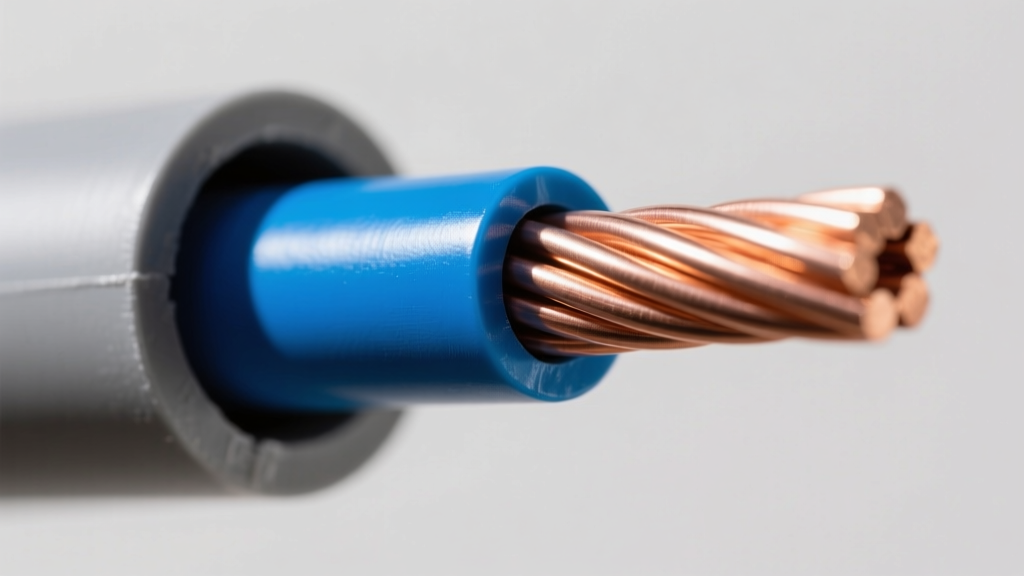
XLPE vs. PVC: The Conduit Fill and Thermal Advantage
For decades, THHN (PVC insulated with a nylon jacket) has been the default electrical insulating material for branch circuits. However, cross-linked polyethylene (XLPE), marketed primarily as XHHW-2, offers distinct engineering advantages that justify its slightly higher upfront material cost.
Because XLPE possesses a higher dielectric breakdown threshold and superior moisture resistance than PVC, it requires a thinner insulation wall. A 12 AWG XHHW-2 conductor has a smaller outside diameter than a 12 AWG THHN conductor. When calculating conduit fill per NEC Chapter 9, you can fit approximately 15% to 20% more XHHW-2 conductors in a standard 1-inch EMT conduit. This reduces the need to upsize conduit or pull additional homeruns, saving significant labor and material costs on large commercial fit-outs.
Thermal Deformation and Short-Circuit Survival
PVC is a thermoplastic; when exposed to the extreme heat generated during a short-circuit event (which can momentarily exceed 200°C), PVC softens, melts, and can flow away from the copper, leading to secondary arcing. XLPE is a thermoset material. The cross-linking process creates a three-dimensional molecular bond that prevents melting. Instead of liquefying, XLPE chars and maintains its physical shape, preserving the dielectric barrier during fault conditions. According to Southwire's technical analysis, this thermoset stability makes XLPE the superior choice for high-fault-current environments like main switchboards and large feeder runs.
Fire-Rated Circuit Integrity: Beyond Standard Polymers
In life-safety systems—such as fire pumps, smoke evacuation fans, and emergency stairwell lighting—the electrical insulating material must maintain circuit integrity while engulfed in flames. Standard PVC and XLPE will fail within minutes under direct fire exposure, triggering ground faults and tripping breakers.
Mica Tape and Mineral Insulation
For fire-resistive cables (UL 2196 listed), manufacturers rely on inorganic insulating materials. Mica, a naturally occurring silicate mineral, is applied as a tape wrap directly over the copper conductor. Mica possesses exceptional dielectric properties and can withstand continuous temperatures up to 1,000°C without melting or off-gassing toxic smoke.
For the most demanding applications, such as nuclear facilities or high-rise emergency risers, Mineral Insulated (MI) copper-clad cable is specified. MI cable uses highly compacted magnesium oxide (MgO) powder as the electrical insulating material, encased in a seamless copper or stainless steel sheath. MgO is completely non-combustible and provides superior thermal conductivity, allowing the heat generated by the conductor to dissipate into the metal sheath.
Never route standard PVC-insulated wiring through HVAC return air plenums without a continuous metallic raceway. When PVC burns, it releases hydrogen chloride gas and dense black smoke. For exposed plenum wiring, NEC Article 300.22 mandates the use of CMP (Communications Multipurpose Plenum) or specialized fluoropolymer-insulated cables (like FEP or PFA), which resist flame propagation and produce minimal smoke. The cost of FEP insulation is typically 3x to 5x that of standard PVC.
Field Failure Modes and Installation Edge Cases
Even the most advanced electrical insulating material will fail if subjected to mechanical abuse during installation. General contractors and electrical subs must monitor the following field conditions:
- The 'Cheese Grater' Effect: When pulling THHN through EMT conduit, the sharp internal edges of improperly reamed couplings can shave off the nylon jacket and slice into the PVC dielectric. This creates a micro-tear that may pass initial megger testing but will eventually track moisture and cause a ground fault. Always use pulling compound and ensure all conduit ends are properly reamed.
- UV Degradation in Solar Arrays: Standard black PVC and XLPE formulations are not inherently UV-stabilized for continuous outdoor exposure. When wiring solar combiner boxes or rooftop HVAC units, specify insulation explicitly rated for sunlight resistance (often marked as 'Sunlight Res' or utilizing a specialized ASA outer jacket), or route all conductors through UV-rated liquid-tight flexible metal conduit.
- Hydrolysis in Wet Conduits: Underground conduit runs frequently accumulate condensation or groundwater. While THWN-2 and XHHW-2 carry a 'W' (Wet) rating, prolonged submersion in highly alkaline water (such as water sitting in concrete-encased ducts) can cause hydrolytic degradation in certain cheaper PVC blends. For direct-burial or wet-duct applications, XHHW-2's cross-linked molecular structure offers vastly superior resistance to chemical and moisture ingress.
Testing Standards and Compliance Framework
Specifying the correct material requires verifying third-party testing marks. The National Fire Protection Association (NFPA) 70 (National Electrical Code) relies heavily on Underwriters Laboratories (UL) standards to certify dielectric performance.
For thermoplastic insulations like PVC, UL 83 dictates the baseline requirements for heat resistance, flammability, and dielectric voltage-withstand. For thermoset materials like XLPE and EPR, UL 44 governs the testing protocols, including rigorous oven-aging and short-circuit endurance tests. When reviewing submittals for a 2026 commercial project, ensure the manufacturer's cut sheets explicitly reference the specific UL standard and confirm the insulation thickness matches the AWG requirements outlined in NEC Table 310.104. Relying on unlisted, imported cables with sub-standard insulation thickness remains a primary cause of premature dielectric failure and electrical fires in modern construction.
Written by
David NakamuraDavid Nakamura is a licensed architect (AIA) and construction technology writer focused on sustainable building methods, mass timber engineering, and high-performance building envelopes. He holds a Master of Architecture from the University of Washington and is a certified Passive House Consultant (CPHC). David spent eight years at the Seattle firm Mithun, where he led the design of three LEED Platinum projects, before founding his own practice specializing in net-zero residential design. He serves on the editorial advisory board of GreenBuilder Magazine and has authored peer-reviewed papers on cross-laminated timber (CLT) connections for the Journal of Structural Engineering. In his spare time, David teaches woodworking at Pratt Fine Arts Center and kayaks the Puget Sound.
More from David Nakamura
View all
Construction Cost
Labor Cost to Build a Deck Per Sq Ft: 2026 Installation Guide
Discover the exact labor cost to build a deck per sq ft in 2026. This installation guide breaks down contractor rates, complexity factors, and hidden fees.
Aug 4, 2026

Construction Cost
How Much Does It Cost to Build a 3 Bedroom House? Financing Guide
Learn exactly how much it costs to build a 3 bedroom house and explore 2026 financing options, construction loan types, and budget frameworks for your build.
Aug 4, 2026

Construction Cost
Cost to Build a Tennis Court: 2026 Guide
How much does it cost to build a tennis court in 2026? Breakdowns for asphalt, concrete, and synthetic surfaces plus fencing and lighting.
Jul 30, 2026