Comparing High Temperature Thermal Insulation Materials
Compare top high temperature thermal insulation materials like ceramic fiber, calcium silicate, and microporous boards for industrial applications.
Defining the Thermal Thresholds in Industrial Insulation
In commercial and industrial construction, the term 'high temperature' is not a monolith. Standard building insulation degrades rapidly above 250°F (121°C). For the purposes of industrial process heating, power generation, and heavy manufacturing, high temperature thermal insulation materials are categorized into two distinct operational tiers:
- Commercial High-Temp (Up to 1,200°F / 650°C): Used for high-pressure steam lines, heat exchangers, and commercial exhaust systems.
- Refractory / Extreme High-Temp (1,200°F to 3,000°F+ / 650°C to 1,650°C+): Required for kilns, foundries, boiler walls, and petrochemical cracking units.
Selecting the wrong material for these tiers doesn't just result in thermal loss; it leads to catastrophic material failure, accelerated corrosion, and severe occupational health hazards. This guide compares the four dominant high temperature thermal insulation materials on the market in 2026, breaking down their thermal properties, mechanical limits, and ideal use cases.
Core Material Profiles & Specifications
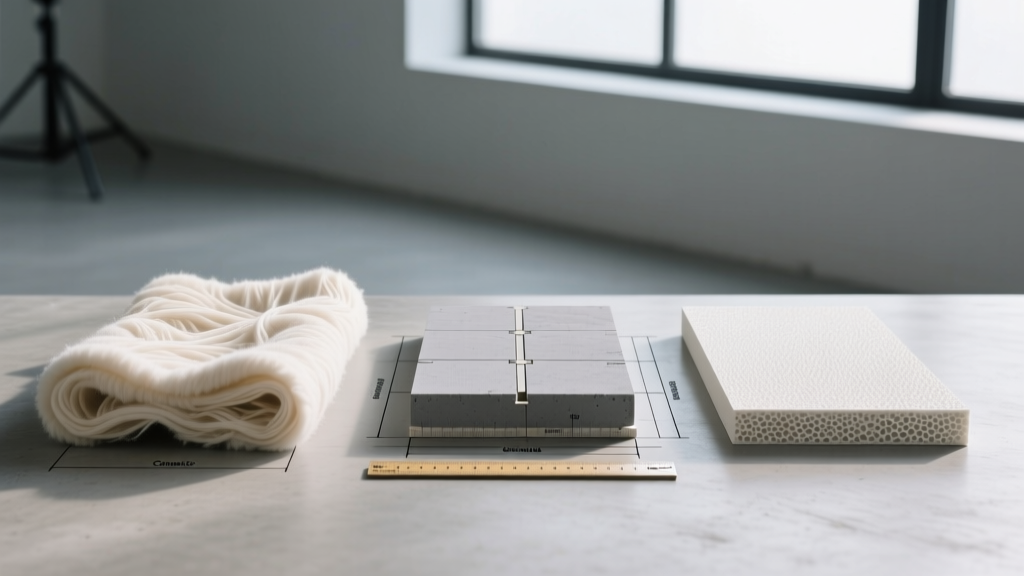
1. Refractory Ceramic Fiber (RCF) & Biosoluble Alternatives
Ceramic fiber blankets and boards have long been the standard for extreme heat. Traditional Refractory Ceramic Fibers (RCF) can withstand continuous temperatures up to 2,600°F (1,425°C). However, RCF is classified as a possible human carcinogen. According to the National Institute for Occupational Safety and Health (NIOSH), strict containment and P100 respiratory protocols are mandatory during installation.
The 2026 Shift: For applications under 2,192°F (1,200°C), the industry has aggressively pivoted to Alkaline Earth Silicate (AES) wools (e.g., Morgan Thermal Ceramics Superwool Plus). AES fibers are biosoluble—they dissolve in lung fluid if inhaled, eliminating the carcinogen hazard while maintaining excellent thermal resistance (k-factor ~0.15 W/m·K at 1,000°F).
2. Calcium Silicate (ASTM C533)
Calcium silicate is a rigid, pre-formed pipe and block insulation prized for its immense structural integrity. Governed by the ASTM C533 standard, it comes in two primary grades:
- Type I: Rated for continuous use up to 1,200°F (650°C).
- Type II: Rated for continuous use up to 1,700°F (925°C).
With a compressive strength exceeding 150 psi, calcium silicate is the undisputed choice for high-traffic industrial corridors where pipes are subject to physical impact, vibration, and maintenance foot traffic. Its primary vulnerability is moisture absorption, which necessitates rigorous metal jacketing to prevent Corrosion Under Insulation (CUI).
3. Microporous Insulation Boards
Microporous boards (e.g., Microtherm, Min-K) represent the pinnacle of space-saving thermal resistance. By utilizing a highly compacted silica matrix with pore sizes smaller than the mean free path of air molecules, they virtually eliminate gaseous thermal conductivity. At 800°F (425°C), microporous boards boast a k-factor as low as 0.022 W/m·K—roughly half that of standard ceramic fiber. They are rated up to 1,832°F (1,000°C) but are highly fragile, requiring careful handling and protective metal cladding.
4. High-Temperature Aerogel Blankets
Aerogel insulation (such as Aspen Aerogels Pyrogel XT-E) consists of silica aerogel particles embedded in a flexible fiber matrix. Rated for continuous use up to 1,200°F (650°C), aerogel is inherently hydrophobic. This makes it the premier choice for mitigating CUI in outdoor or offshore high-heat piping. While it is the most expensive option per square foot, its ultra-thin profile (often just 10mm to 20mm thick) drastically reduces shipping, scaffolding, and labor costs.
Head-to-Head Comparison Matrix
| Material | Max Continuous Temp | k-factor at 800°F (W/m·K) | Compressive Strength | Approx. Cost / Sq Ft (2026) | Primary Vulnerability |
|---|---|---|---|---|---|
| AES Ceramic Fiber Blanket | 2,192°F (1,200°C) | 0.11 | Very Low (Flexible) | $3.50 - $5.00 | Compression loss, tearing |
| RCF Ceramic Fiber Board | 2,600°F (1,425°C) | 0.13 | Low-Medium (Rigid) | $8.00 - $12.00 | Health hazards, brittle |
| Calcium Silicate (Type II) | 1,700°F (925°C) | 0.065 | High (>150 psi) | $7.00 - $10.00 | Moisture wicking, CUI |
| Microporous Board (1 inch) | 1,832°F (1,000°C) | 0.022 | Medium (Fragile edges) | $18.00 - $26.00 | Cracking under vibration |
| Aerogel Blanket (10mm) | 1,200°F (650°C) | 0.025 | Low (Flexible) | $35.00 - $45.00 | Cost, max temp ceiling |
Application-Specific Decision Framework
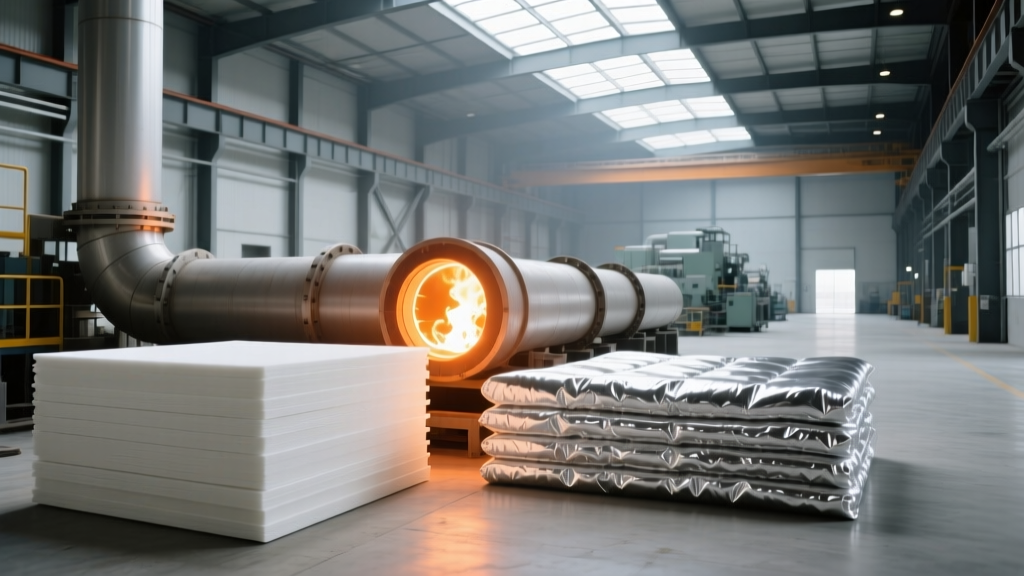
Do not select high temperature thermal insulation materials based solely on maximum temperature ratings. Use this decision matrix to align the material with the physical and environmental demands of your specific project.
Recommendation: AES Ceramic Fiber Blankets (8 lb density). Blankets conform to irregular geometries, absorb high-frequency vibration without fracturing, and can be secured with stainless steel wire mesh. Avoid rigid boards here, as thermal expansion and vibration will shatter them.
Recommendation: Calcium Silicate (Type I or II). The high compressive strength prevents the insulation from crushing when maintenance workers step on the pipes or bump them with equipment. Always pair with an aluminum or stainless steel jacket to prevent water ingress.
Recommendation: Microporous Boards backed by Ceramic Fiber. Use a 1-inch layer of microporous board against the hot face (or as the primary backup layer) to drastically reduce the overall wall thickness of the kiln, followed by a thicker, cheaper layer of ceramic fiber blanket to handle the remaining heat gradient.
Recommendation: Hydrophobic Aerogel Blankets. The North American Insulation Manufacturers Association (NAIMA) frequently highlights moisture management as the leading cause of industrial insulation failure. Aerogel repels liquid water while allowing water vapor to escape, virtually eliminating CUI on pipes operating between 212°F and 1,200°F.
Critical Installation and Safety Gotchas
Even the most advanced high temperature thermal insulation materials will fail if installation physics are ignored. Keep these non-obvious engineering realities in mind:
The Thermal Expansion Gap Mandate
Rigid materials like calcium silicate and microporous boards expand significantly when heated to operating temperatures. If you butt the boards tightly against one another during installation, they will buckle, tent, and shatter once the system reaches 1,000°F+. The Fix: You must leave a 1/8-inch to 1/4-inch expansion gap between all rigid board joints, and tightly pack these gaps with ceramic fiber rope or mineral wool before applying the metal jacketing.
Organic Binder Burn-Off
Many high-temp mineral wools and ceramic fiber products are manufactured with organic binders to maintain their shape during shipping and installation. When the system is first fired up and crosses 400°F (204°C), these binders combust. This produces temporary smoke and an odor, but more importantly, it leaves the insulation slightly more friable. Ensure all indoor HVAC systems are isolated during the initial 'bake-out' phase of a new industrial insulation install to prevent smoke from contaminating the building's air supply.
Galvanic Corrosion with Metal Jacketing
When insulating high-heat stainless steel pipes, never use aluminum or carbon steel jacketing without a dielectric separator. At elevated temperatures, the presence of halides (from sweat, rain, or marine air) can trigger severe galvanic and chloride stress corrosion cracking between the jacketing and the pipe. Always specify a minimum 50-mil thick PVC or polyethylene moisture barrier between the insulation surface and the outer metal jacketing when working in coastal or chemical environments.
Sourcing and 2026 Supply Chain Realities
As of 2026, the supply chain for high temperature thermal insulation materials has stabilized following the geopolitical disruptions of the early 2020s, but pricing disparities remain stark. Traditional materials like calcium silicate and AES ceramic fibers are heavily commoditized and readily available from regional distributors with 1-to-2 week lead times.
Conversely, high-purity microporous boards and specialty aerogel blankets are often manufactured in specialized facilities in Europe and East Asia. Procurement teams should anticipate 6-to-10 week lead times for large-scale microporous orders and factor in potential maritime shipping delays. For critical path projects, value-engineering the design to use microporous only on the most space-restricted flanges and valves—while utilizing AES ceramic fiber on long, straight pipe runs—can optimize both thermal performance and project budgets.
Written by
Elena RodriguezElena Rodriguez is a civil engineer and technical writer specializing in concrete technology, masonry systems, and ASTM/ACI compliance. She earned her B.S. in Civil Engineering from Texas A&M University and spent a decade at a materials testing laboratory, performing over 2,000 concrete compressive strength tests and masonry prism evaluations. Elena is an ACI-certified Field Testing Technician (Grade I) and a member of ASTM Committee C12 on Natural Building Stone. She currently consults on forensic engineering cases involving concrete failures and moisture intrusion. Based in San Antonio, TX, Elena is a proud member of the Society of Women Engineers (SWE) and coaches her daughter's FIRST Robotics team.
More from Elena Rodriguez
View all
Walls & Panels
Cost Analysis: Light Gauge Steel Framing Advantages and Disadvantages
Evaluate light gauge steel framing advantages and disadvantages through a strict cost analysis lens, comparing material, labor, and lifecycle expenses.
Aug 4, 2026

Walls & Panels
Gypsum Board Types: Exact Specifications, Thickness & Dimensions
Compare standard, Type X, and moisture-resistant gypsum board types. Get exact specifications, thicknesses, dimensions, and ASTM standards for your project.
Aug 4, 2026

Fire Resistance
Best Fire-Resistant Outdoor Decking Materials: 2026 Buyer Guide
Discover the best fire-resistant outdoor decking materials for 2026. Compare Class A PVC, aluminum, and hardwood options for WUI compliance and safety.
Aug 4, 2026