2026 Cost Guide: Best Steam Pipe Insulation Material
Compare 2026 costs for calcium silicate, fiberglass, and aerogel steam pipe insulation materials. Find pricing, labor rates, and ROI data.
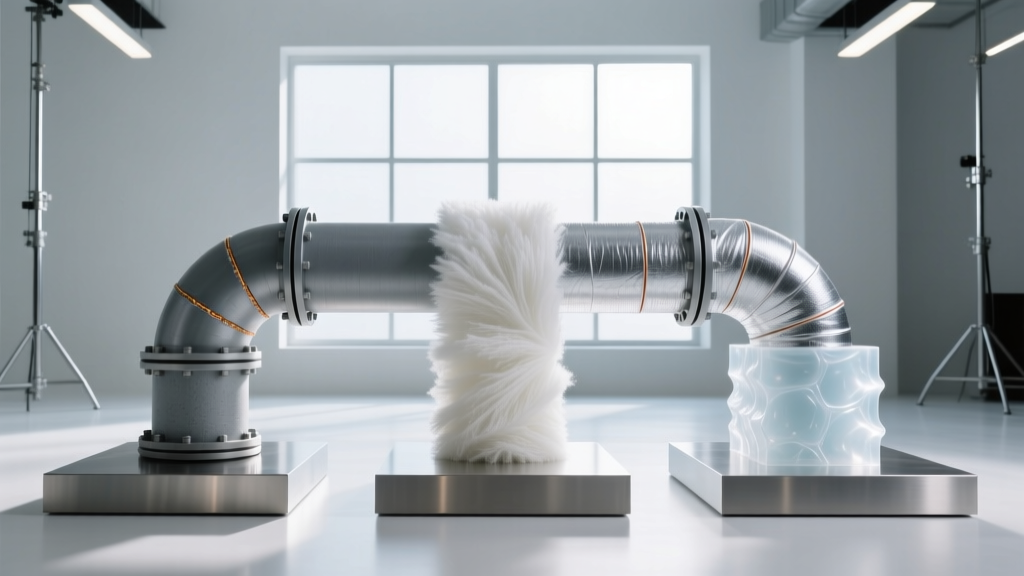
Uninsulated or under-insulated steam distribution lines are among the most expensive energy liabilities in commercial and industrial facilities. A bare 4-inch steam pipe operating at 300°F loses approximately 1,200 BTU per hour per linear foot. Over an 8,000-hour operating year, that equates to nearly $850 in wasted natural gas per 100 feet of pipe. Selecting the correct steam pipe insulation material is not merely a thermal compliance exercise; it is a direct capital expenditure (CapEx) and operational expenditure (OpEx) optimization strategy.
2026 Material Cost Matrix: Steam Pipe Insulation Options
The cost of steam pipe insulation material varies drastically based on thermal limits, compressive strength, and moisture resistance. The pricing below reflects Q1 2026 wholesale material costs for a standard 4-inch nominal pipe size (NPS) with standard wall thicknesses, excluding labor and exterior jacketing.
| Material Type | Common Product Examples | Max Temp Rating | Material Cost (per lin. ft.) | Best Application |
|---|---|---|---|---|
| Fiberglass (Preformed) | Johns Manville Micro-Flex, Knauf Earthwool | 850°F (454°C) | $3.50 - $6.00 | Low-pressure steam, condensate return |
| Mineral Wool | Rockwool ProRox, Thermafiber | 1,200°F (649°C) | $5.50 - $9.00 | Medium-pressure steam, high vibration |
| Calcium Silicate | Johns Manville Thermo-12 Gold | 1,200°F (649°C) | $9.00 - $14.50 | High-pressure steam, high-abuse areas |
| Aerogel Blanket | Aspen Aerogels Pyrogel XT-E | 1,200°F (649°C) | $28.00 - $42.00 | Space-constrained racks, CUI mitigation |
While fiberglass offers the lowest upfront material cost, it is structurally limited. Under high-temperature steam conditions exceeding 850°F, the organic binders in standard fiberglass degrade, leading to sagging and thermal bridging at the top of the horizontal pipe run. For medium and high-pressure steam, calcium silicate or mineral wool are the mandatory baselines.
Total Installed Cost: Labor, Jacketing, and Fittings
Material costs represent only 30% to 40% of the total project budget. The installed cost of steam pipe insulation material is heavily dictated by site logistics, fitting complexities, and the required vapor/moisture barrier systems.
Labor and Fabrication Rates
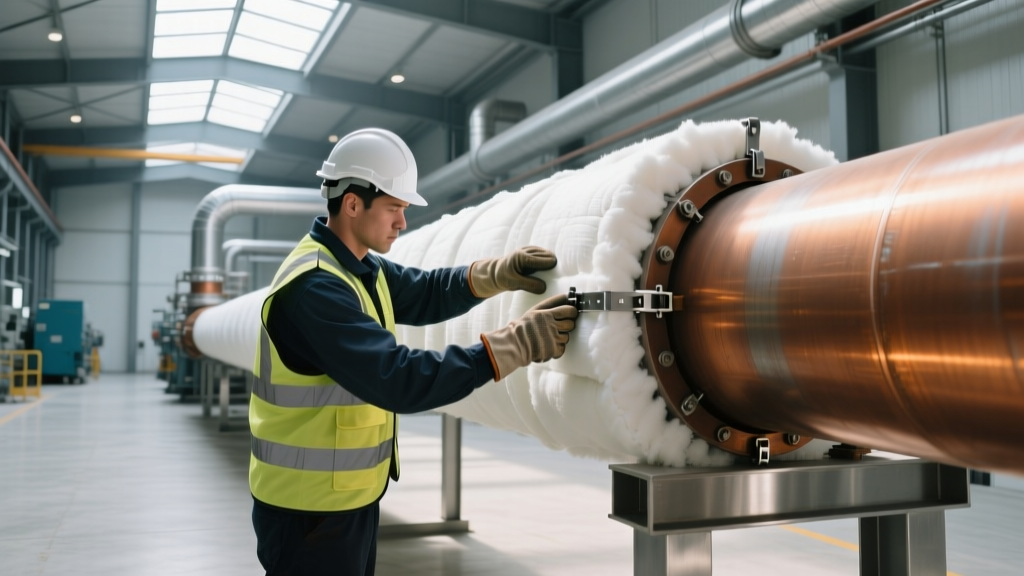
In 2026, specialized mechanical insulation contractors charge between $65 and $110 per hour. For a standard straight-run installation, labor averages $12 to $18 per linear foot. However, steam systems are dense with valves, flanges, traps, and expansion loops. Fabricating removable insulation pads (often called 'turbine blankets' or 'valve jackets') for these fittings costs $85 to $250 per piece, depending on the geometry and the use of PTFE-coated fiberglass cloth for the outer shell.
Jacketing and Weather Barriers
Steam pipes located outdoors or in washdown areas require protective jacketing to prevent moisture intrusion, which destroys thermal resistance and accelerates pipe degradation.
- Aluminum Jacketing (0.024" smooth or stucco embossed): Adds $3.50 to $5.50 per linear foot. The industry standard for outdoor durability and UV resistance.
- PVC/FRP Jacketing: Adds $2.00 to $4.00 per linear foot. Used primarily in indoor chemical processing areas where aluminum would corrode.
- Mastics and Vapor Retarders: Essential for cold condensate return lines to prevent sweating. Adds $1.50 to $2.50 per linear foot in material and labor.
The Hidden Budget Killer: Corrosion Under Insulation (CUI)
⚠️ Critical Warning: CUI Remediation Costs
Corrosion Under Insulation (CUI) occurs when water penetrates the insulation jacket and pools against the carbon steel pipe. In steam systems, CUI is most prevalent at insulation terminations, dead legs, and steam trap stations. Replacing a corroded 4-inch carbon steel steam line costs between $150 and $300 per linear foot (including scaffolding, welding, and system shutdown). Specifying hydrophobic insulation materials like aerogel blankets or utilizing ASTM C795-compliant calcium silicate with specialized corrosion-inhibiting primers mitigates this risk. Never value-engineer the outer jacketing on outdoor steam lines; a $4/ft savings on aluminum jacketing can lead to a $250/ft pipe replacement five years later.
ROI Calculation: 4-Inch Medium-Pressure Steam Line
To justify the CapEx of high-performance steam pipe insulation material to facility stakeholders, use the following baseline ROI framework based on current natural gas pricing and ASHRAE 90.1 thermal efficiency standards.
Scenario: 500 linear feet of bare 4-inch NPS carbon steel pipe carrying medium-pressure steam at 350°F. The facility operates 24/7 (8,760 hours/year) and pays $9.00 per MMBtu for natural gas.
- Bare Pipe Heat Loss: A bare 4-inch pipe at 350°F in a 70°F ambient environment loses roughly 1,600 BTU/hr per linear foot.
- Annual Energy Waste: 500 ft × 1,600 BTU/hr × 8,760 hrs = 7,008,000,000 BTU (7,008 MMBtu).
- Annual Financial Loss: 7,008 MMBtu × $9.00/MMBtu = $63,072 per year in wasted fuel.
- Insulation Upgrade CapEx: Installing 2.5-inch thick calcium silicate (Thermo-12 Gold) with aluminum jacketing costs approximately $32 per linear foot fully installed. Total CapEx = $16,000.
- Post-Insulation Heat Loss: Drops to roughly 85 BTU/hr per linear foot. Annual loss drops to $3,345.
- Simple Payback Period: $16,000 / ($63,072 - $3,345) = 0.26 years (approx. 3.2 months).
According to the U.S. Department of Energy's Advanced Manufacturing Office, insulating bare steam lines consistently yields payback periods of less than six months, making it one of the highest-ROI energy conservation measures available in facility management.
Specification Decision Tree: Matching Material to Steam Pressure
Do not default to a single material across an entire campus. Optimize costs by segmenting the steam distribution network by pressure and temperature.
Low-Pressure Steam & Condensate (Under 15 PSI / 250°F)
- Recommended Material: Preformed Fiberglass (e.g., Johns Manville Micro-Flex).
- Thickness Requirement: 1.5 to 2 inches per ASHRAE 90.1.
- Cost Strategy: Use PVC jacketing indoors to save $1.50/ft compared to aluminum. Ensure all longitudinal seams are sealed with ASJ (All Service Jacket) tape to prevent vapor drive on condensate lines.
Medium-Pressure Steam (15 to 150 PSI / 250°F to 366°F)
- Recommended Material: Mineral Wool or standard Calcium Silicate.
- Thickness Requirement: 2 to 3 inches. For pipes over 4 inches NPS, utilize a double-layer application with staggered seams to eliminate thermal short-circuiting at the joints.
- Cost Strategy: Mineral wool is highly resilient to vibration near pressure reducing valves (PRVs). Use stainless steel banding (minimum 0.020" thick) rather than galvanized wire to secure the insulation, preventing rust stains and structural failure.
High-Pressure / Superheated Steam (Over 150 PSI / 366°F+)
- Recommended Material: High-density Calcium Silicate (ASTM C533 Type I) or Aerogel.
- Thickness Requirement: 3 to 4.5 inches, always applied in multiple layers.
- Cost Strategy: While aerogel carries a massive upfront premium (up to 4x the cost of calcium silicate), it requires half the thickness to achieve the same thermal resistance. In congested pipe racks where increasing the insulation diameter would require structural steel modifications or wider pipe sleepers, aerogel provides a lower total installed system cost despite the higher material price.
Procurement and Compliance Standards
When drafting specifications for steam pipe insulation material, explicitly reference the governing ASTM standards to ensure material integrity. Require calcium silicate to meet ASTM C795 (Standard Specification for Thermal Insulation for Use in Contact with Austenitic Stainless Steel) to prevent chloride-induced stress corrosion cracking on stainless steel tracer lines or specific alloy steam pipes. Furthermore, mandate that all outdoor insulation terminations feature manufactured metal weather caps or properly sloped mastic seals; relying on insulation contractors to 'field-fabricate' end caps from flat aluminum stock is the leading cause of premature water intrusion and subsequent CUI.
Written by
James ThorntonJames Thornton is a construction industry veteran with 25 years of hands-on experience in wood framing, lumber grading, and residential building codes. He started as a framing carpenter in rural Oregon, earned his ICC Residential Building Inspector certification, and eventually became a senior plan reviewer for the City of Portland Bureau of Development Services. James holds a B.S. in Wood Science & Technology from Oregon State University and is a certified lumber grader through the West Coast Lumber Inspection Bureau (WCLIB). He has inspected over 3,000 residential construction sites and authored the city's internal guide on advanced framing techniques (2x6 at 24" O.C.). James lives in Bend, OR, where he builds custom timber-frame cabins and competes in lumberjack sports.
More from James Thornton
View all
Insulation
Best Home Insulation Materials: Complete 2026 Guide
Compare top home insulation materials for 2026. Find R-values, installed costs per square foot, and best uses for fiberglass, spray foam, and mineral wool.
Aug 4, 2026

Sustainable Building
Certify Your Green Building Material for LEED and WELL
Step-by-step guide to certifying a green building material for LEED v5 and WELL v2. Master EPDs, HPDs, and VOC limits for 2026 project specifications.
Aug 4, 2026

Stone & Masonry
Veneer Stacked Stone Panels: Interior Design & Style Showcase
Discover how veneer stacked stone panels transform interiors. Explore modern design profiles, material pairings, and technical installation specs.
Aug 4, 2026