Best Thermal Insulation Material Manufacturers for Sound Control
Evaluate top thermal insulation material manufacturers for sound control. Compare STC ratings, mineral wool vs fiberglass, and acoustic specs.

The Dual-Performance Challenge: Thermal vs. Acoustic Physics
When architects and contractors source building envelopes, they typically prioritize thermal resistance (R-value). However, selecting thermal insulation material manufacturers for projects requiring stringent sound control demands a fundamental shift in material science evaluation. The physical properties that maximize thermal insulation—trapped, stagnant air pockets and low density—are often the exact opposite of what is required for acoustic attenuation, which relies on mass, high density, and viscoelastic damping.
For example, closed-cell spray polyurethane foam (ccSPF) offers an exceptional R-6.5 per inch but performs poorly as a sound barrier because its rigid, adhesive nature mechanically couples drywall to framing, transmitting structural vibrations. Conversely, unfaced mineral wool batts provide moderate thermal resistance (R-4.2 per inch) but excel in acoustic decoupling and sound absorption due to their dense, fibrous matrix. Understanding how leading thermal manufacturers segment their product lines for acoustic performance is critical for meeting modern building codes, particularly the stringent multi-family acoustic mandates introduced in the 2024 and 2026 IECC updates.
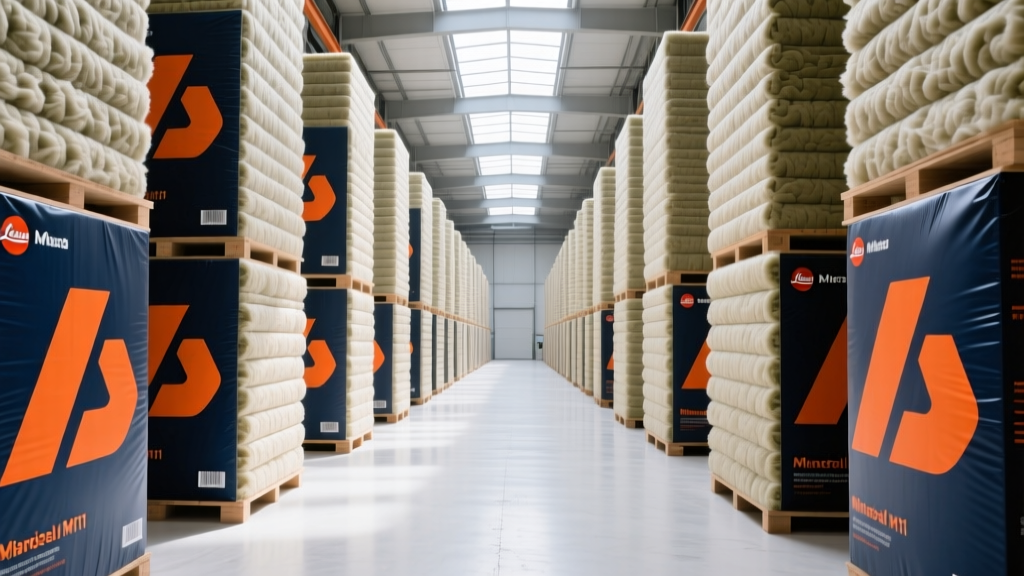
Top Thermal Insulation Material Manufacturers for Acoustics
While dozens of companies produce thermal batts, only a few thermal insulation material manufacturers engineer specific, high-density product lines dedicated to architectural acoustics. Below is an evaluation of the top three manufacturers dominating the dual-performance market.
1. ROCKWOOL (Stone Wool Specialist)
ROCKWOOL leverages basalt rock and slag to create stone wool, a material inherently suited for both fire resistance and sound attenuation. Their acoustic portfolio is the industry benchmark for high-STC (Sound Transmission Class) wall assemblies.
- Safe'n'Sound: An unfaced, high-density stone wool batt specifically engineered for interior partition walls. It does not carry an R-value rating because it is not intended for exterior thermal envelopes, but it delivers an NRC (Noise Reduction Coefficient) of 1.05 and improves standard 2x4 wall STC ratings from 33 to 45.
- Comfortboard 80: A rigid, high-density (8 lb/ft³) exterior continuous insulation board. While primarily used for thermal bridging reduction, its mass significantly improves OITC (Outdoor-Indoor Transmission Class) ratings for buildings near highways or airports.
2. Owens Corning (Fiberglass Innovator)
Owens Corning is traditionally known for pink fiberglass thermal batts, but their specialized acoustic lines utilize varied fiber diameters and binder chemistries to trap sound waves.
- QuietZone Acoustic Batts: Designed for interior floors and walls. These unfaced fiberglass batts feature a slightly higher density than standard R-13 thermal batts, optimizing mid-to-high frequency sound absorption.
- Thermafiber SAFB (Sound Attenuation Fire Blankets): A mineral wool product line acquired and integrated into their commercial portfolio. Thermafiber SAFB 24 and SAFB 40 (denoting 2.5 lb/ft³ and 4.0 lb/ft³ densities) are the standard specifications for commercial steel-stud partition walls requiring STC 50+ ratings.
3. Knauf Insulation (Earthwool Technology)
Knauf’s Earthwool line uses an acrylic, formaldehyde-free binder (ECOSE Technology), making it highly favorable for LEED-certified and WELL Building Standard projects where indoor air quality and acoustics intersect.
- Acoustical Partition Batts: Available in 1.5 lb/ft³ to 3.0 lb/ft³ densities. Knauf’s 3.0 lb/ft³ batts are highly compressible, allowing them to completely fill irregular stud cavities without leaving acoustic gaps, a common failure point in rigid mineral wool installations.
Acoustic Performance Matrix: Manufacturer Comparison
The following matrix compares flagship acoustic products from these thermal insulation material manufacturers based on standard 3-5/8" metal stud assemblies with 5/8" Type X gypsum board on both sides.
| Manufacturer | Product Line | Material | Density (lb/ft³) | Assembly STC | NRC | Approx. Cost / Sq.Ft. |
|---|---|---|---|---|---|---|
| ROCKWOOL | Safe'n'Sound | Stone Wool | 2.8 | 45 | 1.05 | $0.68 |
| Owens Corning | Thermafiber SAFB 40 | Mineral Wool | 4.0 | 52 | 0.95 | $1.15 |
| Knauf | Acoustical Partition (3.0) | Fiberglass | 3.0 | 48 | 1.00 | $0.85 |
| Owens Corning | QuietZone | Fiberglass | 1.5 | 39 | 0.90 | $0.55 |
Note: Pricing reflects Q1 2026 bulk contractor rates. STC ratings assume no flanking paths and proper resilient channel decoupling.
Decoding Acoustic Metrics: Beyond the R-Value
When evaluating product data sheets from thermal insulation material manufacturers, acoustical metrics are frequently misunderstood. The Whole Building Design Guide (WBDG) outlines the necessity of matching the correct metric to the specific noise pollution type.
Metric Selection Framework
- STC (Sound Transmission Class): Measures reduction of airborne sound (speech, television). Crucial for interior demising walls between apartments or offices. Target: STC 50+ for multi-family.
- OITC (Outdoor-Indoor Transmission Class): Measures low-frequency sound transmission (highway traffic, aircraft, HVAC rumble). Crucial for exterior envelopes. Target: OITC 35+ for urban facades.
- NRC (Noise Reduction Coefficient): Measures sound absorption within a room to reduce reverberation. Crucial for home theaters, studios, and open-plan offices. Target: NRC 0.90 or higher.
Application-Specific Manufacturer Selection
Choosing the right manufacturer depends entirely on the acoustic threat profile of the building environment.
Scenario A: Multi-Family Interior Demising Walls
The Threat: Airborne speech and impact noise between units.
The Specification: Owens Corning Thermafiber SAFB 40 or ROCKWOOL Safe'n'Sound. These high-density mineral wools absorb mid-to-high frequency speech. To address low-frequency impact noise (footsteps), the insulation must be paired with a decoupled ceiling assembly using resilient channels and a viscoelastic damping compound (e.g., Green Glue) between drywall layers.
Scenario B: Exterior Envelopes Near Transit Corridors
The Threat: Low-frequency traffic and siren noise (OITC).
The Specification: Standard fiberglass batts fail to trap low-frequency waves. Specify ROCKWOOL Comfortboard 80 as a continuous exterior insulation layer over the sheathing, combined with a mass-loaded vinyl (MLV) barrier. The high mass of the stone wool disrupts the low-frequency wavelength before it reaches the stud cavity.
Scenario C: MEP Shaft and Plumbing Noise
The Threat: Water hammer and HVAC vibration.
The Specification: Knauf Acoustical Partition Batts (3.0 lb/ft³). The compressible nature of Knauf's fiberglass allows it to be tightly packed around irregular PVC and cast-iron plumbing chases, eliminating the air gaps that allow sound to flank through wall cavities.
Critical Specification Mistakes and Failure Modes
Even when specifying premium products from top thermal insulation material manufacturers, installation errors can negate acoustic performance. The Environmental Protection Agency (EPA) notes that environmental noise pollution significantly impacts health, making proper installation a health and safety issue, not just a comfort issue.
Warning: The Closed-Cell Spray Foam Trap
Never specify closed-cell spray polyurethane foam (ccSPF) for interior acoustic partitions. While it provides superior thermal R-values and air sealing, ccSPF hardens into a rigid, structural matrix. It permanently bonds the gypsum board to the wood or steel studs, creating a direct mechanical bridge for structure-borne vibrations. For acoustic cavities, always use unfaced, friction-fit batts that leave the drywall mechanically isolated via resilient channels or sound isolation clips.
Compression and Flanking Failures
A common field mistake is compressing a 5.5-inch batt into a 3.5-inch 2x4 wall cavity to "make it fit." While compressing mineral wool slightly increases its density (marginally improving STC), it destroys the material's thermal R-value and creates gaps at the top and bottom plates. Sound behaves like water; a 1% gap in the insulation cavity can result in a 50% reduction in overall acoustic performance due to flanking. Always match the batt thickness exactly to the cavity depth.
Sourcing and Procurement Strategy for 2026
Supply chain dynamics for specialized acoustic insulation have shifted. High-density mineral wool requires specialized manufacturing lines that are currently operating at near-maximum capacity due to the surge in multi-family and data center construction (which requires massive acoustic attenuation for backup generators).
- Lead Times: Standard fiberglass (QuietZone, Earthwool) typically ships within 2-3 weeks. High-density stone wool (ROCKWOOL Safe'n'Sound, Thermafiber SAFB 40) may require 6-8 week lead times for commercial volumes.
- Moisture Management: Acoustic batts are highly hygroscopic. If mineral wool absorbs moisture during staging on the job site, the fibers mat together, permanently destroying both the NRC and the thermal R-value. Mandate that suppliers deliver acoustic batts in weather-sealed, UV-protected packaging, and enforce strict indoor staging protocols.
- BIM Integration: Leading manufacturers now provide Revit and BIM objects that include both thermal and acoustic data parameters. Ensure your detailing team pulls the acoustic-specific BIM families, as the standard thermal families often omit the necessary clearances for resilient channel decoupling systems.
Summary Decision Matrix
Selecting the right thermal insulation material manufacturer for sound control requires aligning the material's density and binder chemistry with the specific frequency of the target noise. Use mineral wool for high-STC interior partitions and low-frequency exterior blocking, and utilize high-density fiberglass for irregular MEP chases and budget-conscious acoustic upgrades. By prioritizing acoustic metrics (STC, OITC, NRC) over pure thermal R-values in interior assemblies, you ensure compliance with modern acoustic codes and deliver superior occupant comfort.
Written by
Priya KapoorPriya Kapoor is a real estate market analyst and construction economics researcher with expertise in housing affordability, development feasibility, and infrastructure investment. She holds a Master of Regional Planning from Cornell University and previously worked as a senior analyst at CBRE's Investment Properties group, where she modeled returns for $4B in mixed-use development pipelines. Priya now runs an independent research practice advising developers, municipalities, and REITs on construction cost forecasting and market timing. She publishes the quarterly "BuildMat Market Pulse" report tracking material price indices across 12 commodity categories. Based in Austin, TX, Priya serves on the board of Habitat for Humanity Austin and is a marathon runner.
More from Priya Kapoor
View all
Construction Cost
Cost to Build a 1600 Sq Ft Home in 2026: Full Breakdown
Accurate 2026 cost to build a 1600 sq ft home—material, labor, and regional pricing breakdowns included. Plan your budget with real-time estimates.
Aug 11, 2026

Wood & Lumber
Name the Types of Wood for Pressure Treatment and Preservation
Learn how to name the types of wood best suited for pressure treatment. Compare species treatability, chemical retention levels, and 2026 preservation costs.
Aug 4, 2026

Stone & Masonry
Stone Veneer Suppliers Lindenhurst: 2026 Cost Analysis
Analyze 2026 stone veneer costs in Lindenhurst, NY. Compare local supplier pricing, delivery fees, and Suffolk County installation labor rates.
Aug 4, 2026