Stone Veneer Outdoor Kitchen Maintenance: Stain & Sealer Guide
Protect your investment. Learn expert maintenance, grease removal, and sealing techniques specifically for stone veneer outdoor kitchens.

The Unique Abuse of an Outdoor Kitchen Environment
Standard exterior stone veneer faces rain, UV radiation, and freeze-thaw cycles. A stone veneer outdoor kitchen faces all of those, plus airborne grease, acidic marinades, intense localized heat from grills, and hard water splashes from integrated sinks. This combination creates a highly aggressive environment that rapidly degrades improper sealers and stains unsealed porous surfaces. Maintaining the structural integrity and aesthetic appeal of your outdoor culinary space requires moving beyond generic masonry advice and adopting protocols tailored to high-heat, high-grease zones.
Identifying Your Veneer: The Cleaning Divide
Before applying any chemical or mechanical cleaning method, you must definitively identify your veneer type. Using the wrong cleaner will cause irreversible etching or aggregate exposure.
Manufactured Stone Veneer (MSV)
MSV is a Portland cement-based product cast in molds. Because it contains cement and calcium compounds, it is highly reactive to acids. Muriatic acid, vinegar, or harsh citrus-based degreasers will etch the surface, dissolving the cement binder and exposing the inner aggregate. According to the Masonry Veneer Manufacturers Association (MVMA), MSV requires pH-neutral or mildly alkaline cleaners for routine maintenance.
Natural Stone Veneer
Natural stone splits into two categories:
- Calcareous (Limestone, Marble, Travertine): Highly sensitive to acids. A single splash of lemon juice or barbecue sauce can permanently etch the surface.
- Siliceous (Granite, Slate, Sandstone): More acid-resistant, but still vulnerable to oil-based staining and metallic rust marks from nearby grill grates.
For comprehensive testing protocols, the Natural Stone Institute recommends performing a simple water and lemon juice absorption test on an inconspicuous area to determine porosity and acid sensitivity before treating the entire kitchen island.
Step-by-Step Grease and Smoke Stain Removal
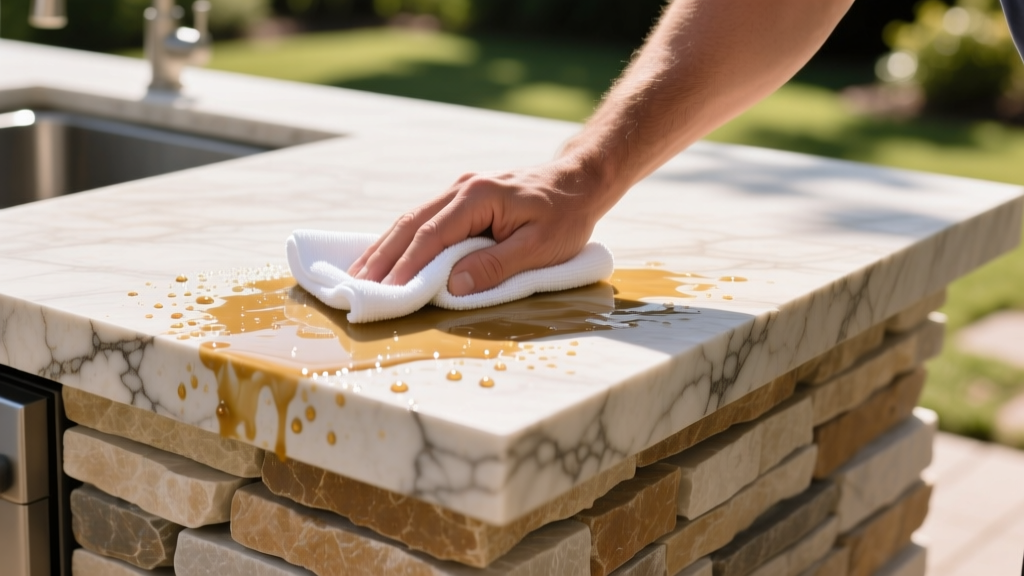
Airborne animal fats and vaporized cooking oils penetrate the microscopic pores of stone veneer, creating dark, shadowy halos around grill stations. Surface wiping only spreads the oil deeper. You must use a poultice to draw the lipid molecules out of the stone matrix.
The Diatomaceous Earth Poultice Method
- Degrease the Surface: Spray the stained area with a pH-neutral, heavy-duty stone degreaser (e.g., Prosoco Sure Klean® Smoke Remover or Simple Green Oxy Solve Concrete & Stone). Allow a 5-minute dwell time, then rinse with low-pressure water.
- Mix the Poultice: Combine food-grade diatomaceous earth (DE) with a commercial stone-safe degreaser or pure acetone until it reaches the consistency of peanut butter.
- Apply: Trowel the mixture over the grease stain to a thickness of 1/4 inch, extending 2 inches beyond the stain's visible edges.
- Cover and Vent: Tape plastic wrap over the poultice, but poke 6 to 8 small holes in the plastic to allow the solvent to evaporate slowly. This evaporation is the engine that pulls the oil out of the stone and into the DE.
- Extract: Leave for 24 to 48 hours. Once the poultice is completely dry and powdery, scrape it off with a wooden or plastic putty knife (never metal, which can scratch the veneer).
Combating Efflorescence and Hard Water Scale
Outdoor kitchens frequently incorporate prep sinks and ice makers. Splashing hard water leaves calcium carbonate deposits, while moisture migrating through the masonry substrate pushes soluble salts to the surface, creating white, powdery efflorescence.
The Golden Rule of Efflorescence: Never use water to clean fresh efflorescence. Water dissolves the salts and drives them back into the veneer pores, guaranteeing the stain will return. Instead, use a stiff, non-metallic nylon brush to dry-scrub the white powder away. Only if the efflorescence has hardened into a crust should you use a specialized, non-acidic efflorescence remover, followed by a thorough low-pressure rinse.
For hard water scale around sink areas, apply a paste of baking soda and distilled water. Let it sit for 15 minutes to gently break down the calcium bonds, then scrub with a soft-bristled brush and rinse.
Sealing Protocols: Breathability is Non-Negotiable
The most common catastrophic failure in stone veneer outdoor kitchens is the application of film-forming sealers (acrylics, urethanes, or epoxies). These sealers create a plastic-like barrier on the surface. When moisture inevitably enters the veneer from the back (through the masonry substrate or mortar scratch coat), it becomes trapped. During winter freeze-thaw cycles, this trapped water expands, causing the face of the stone to pop off—a failure mode known as spalling.
The Solution: Penetrating Silane/Siloxane Sealers
You must use a breathable, penetrating silane/siloxane sealer. These chemicals react with the silica and calcium in the stone and mortar to form a hydrophobic barrier deep within the pores, repelling liquid water and grease while allowing water vapor to escape.
| Sealer Type | Vapor Transmission | Grease Resistance | Verdict for Outdoor Kitchens |
|---|---|---|---|
| Acrylic (Film-Forming) | Poor (Traps Moisture) | High | AVOID. Causes spalling and peeling. |
| Silane/Siloxane (Penetrating) | Excellent (Breathable) | Moderate | RECOMMENDED. Protects against weather and light spills. |
| Fluoropolymer (Penetrating) | Excellent (Breathable) | Very High | PREMIUM CHOICE. Best for heavy grill grease zones. |
Application Specifics: Apply the sealer using a low-pressure pump sprayer, holding the nozzle 12 to 18 inches from the surface. Flood the surface until it glistens, then immediately back-roll with a dry foam roller to push the sealer into the deep grout lines and eliminate drip marks. Two coats, applied wet-on-wet (within 10 minutes of each other), ensure deep penetration.
Seasonal Maintenance Matrix
Routine maintenance prevents the need for aggressive, potentially damaging restoration work. Follow this seasonal checklist to keep your outdoor kitchen veneer in peak condition.
| Season | Primary Action | Specific Tasks |
|---|---|---|
| Spring | Inspection & Wash | Check mortar joints for winter cracking. Wash with pH-neutral stone soap and a soft brush. Reapply silane/siloxane sealer if water no longer beads on the surface. |
| Summer | Grease Management | Spot-clean grill splatter weekly using a dedicated stone degreaser. Do not let animal fats bake into the stone under direct UV exposure. |
| Fall | Debris Clearing | Remove fallen leaves and organic matter immediately. Decaying leaves release tannins that cause deep brown organic stains on porous veneer. |
| Winter | Moisture Protection | Cover the outdoor kitchen with a breathable, waterproof canvas cover. Never use plastic tarps, which trap condensation and promote freeze-thaw damage. |
Troubleshooting Common Failure Modes
Symptom: White Hazing After Sealing
Cause: The sealer was applied to a damp surface, or over-applied, causing the resins to dry on the surface rather than penetrating.
Fix: Wipe the hazed area with a clean rag dampened with the exact same sealer (the solvent in the fresh sealer will re-emulsify the dried residue), then immediately buff dry with a clean microfiber towel.
Symptom: Surface Spalling (Flaking)
Cause: A non-breathable film-forming sealer was used, trapping moisture inside the veneer during freezing temperatures.
Fix: Strip the acrylic sealer using a commercial masonry stripper or a soy-based gel stripper. Allow the stone to dry completely for 72 hours, then reseal exclusively with a breathable silane/siloxane penetrant.
Symptom: Rust Stains Near Grill Grates
Cause: Iron particles from cast iron grates or unsealed steel tools transferred to the stone and oxidized.
Fix: Apply a commercial iron-oxide remover specifically formulated for masonry (containing sodium hydrosulfite). Do not use standard household rust removers, as they often contain hydrofluoric acid, which will severely etch both natural stone and manufactured veneer.
A Note on Pressure Washing
If you must use a pressure washer to rinse your outdoor kitchen veneer, strictly limit the pressure to 1,500 PSI maximum. Always use a 40-degree (white) fan tip, and maintain a minimum distance of 18 inches from the surface. High-pressure streams or zero-degree tips will blow out the mortar joints and erode the soft cementitious face of manufactured stone veneer, causing permanent pitting.
Written by
David NakamuraDavid Nakamura is a licensed architect (AIA) and construction technology writer focused on sustainable building methods, mass timber engineering, and high-performance building envelopes. He holds a Master of Architecture from the University of Washington and is a certified Passive House Consultant (CPHC). David spent eight years at the Seattle firm Mithun, where he led the design of three LEED Platinum projects, before founding his own practice specializing in net-zero residential design. He serves on the editorial advisory board of GreenBuilder Magazine and has authored peer-reviewed papers on cross-laminated timber (CLT) connections for the Journal of Structural Engineering. In his spare time, David teaches woodworking at Pratt Fine Arts Center and kayaks the Puget Sound.
More from David Nakamura
View all
Construction Cost
Labor Cost to Build a Deck Per Sq Ft: 2026 Installation Guide
Discover the exact labor cost to build a deck per sq ft in 2026. This installation guide breaks down contractor rates, complexity factors, and hidden fees.
Aug 4, 2026

Construction Cost
How Much Does It Cost to Build a 3 Bedroom House? Financing Guide
Learn exactly how much it costs to build a 3 bedroom house and explore 2026 financing options, construction loan types, and budget frameworks for your build.
Aug 4, 2026

Construction Cost
Cost to Build a Tennis Court: 2026 Guide
How much does it cost to build a tennis court in 2026? Breakdowns for asphalt, concrete, and synthetic surfaces plus fencing and lighting.
Jul 30, 2026