Top Contemporary Stone Veneer Brands Compared: 2026 Buyer's Guide
Compare top contemporary stone veneer brands for 2026. Analyze Eldorado, Boral, and Coronado profiles, costs per sq ft, and modern installation specs.

The Architectural Shift to Contemporary Profiles
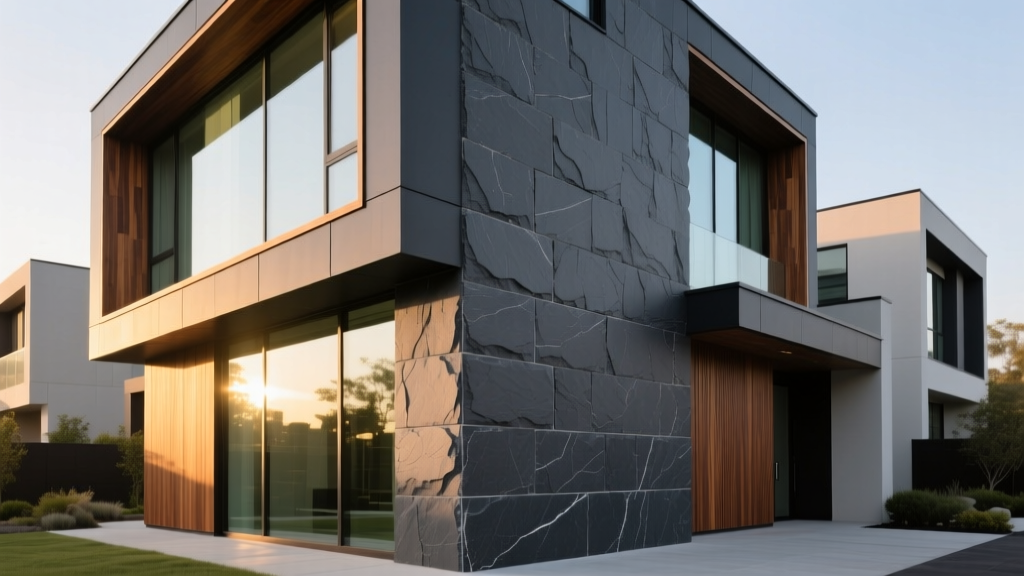
The demand for contemporary stone veneer has fundamentally altered the manufactured and natural thin stone market. Moving away from the heavily textured, rustic cobble and chipped-edge profiles that dominated the early 2010s, 2026 architectural specifications heavily favor clean sightlines, linear ledgestone, honed ashlar, and geometric modular panels. Contemporary stone veneer is now the primary cladding choice for modern farmhouse, mid-century modern, and minimalist commercial builds.
This shift requires a different approach to both material selection and installation. Large-format linear panels and precision-cut ashlar blocks demand stricter substrate tolerances, specialized mortar chemistries to prevent vertical sag, and meticulous jointing techniques. Below, we compare the top three manufacturers leading the contemporary stone veneer category, analyzing their flagship modern profiles, structural weights, and real-world installation variables.
Brand Comparison: Flagship Contemporary Lines
Eldorado Stone: RoughCut and Modern Ashlar
Eldorado Stone has positioned its RoughCut and Modern Ashlar lines as the premium standard for contemporary exteriors and interior feature walls. RoughCut mimics the look of hand-chiseled, linear limestone with varying depths (0.5 to 1.5 inches), while Modern Ashlar provides a strict, geometric grid with minimal mortar joints.
- Dimensions: Linear pieces range from 4x12 inches up to 6x24 inches, allowing for staggered, brick-like running bond patterns.
- Weight: 10.5 to 12 lbs per square foot.
- Color Technology: Eldorado uses an integral iron-oxide pigment base with a secondary acid-staining process during manufacturing. This ensures that if a contemporary linear piece is chipped during installation, the core color remains consistent with the face.
- Best Application: High-end residential facades and large-scale commercial lobby walls where zero-tolerance joint lines are required.
Boral Cultured Stone: IronRock and Dressed Fieldstone
Boral’s Cultured Stone division approaches contemporary design through high-density pumice aggregates. The IronRock profile offers a stark, monochromatic linear ledge profile, while Dressed Fieldstone provides a smoother, more refined interpretation of traditional fieldstone, suited for contemporary transitional homes.
- Dimensions: IronRock features modular heights of 2, 4, and 6 inches with random lengths up to 24 inches.
- Weight: 9.5 to 11 lbs per square foot, making it one of the lighter manufactured options on the market.
- Material Composition: The high pumice content not only reduces weight but provides marginal thermal break properties compared to standard Portland cement mixes.
- Best Application: Retrofits and over-cladding projects where existing wall framing may have strict dead-load limits.
Coronado Stone: Pro-Fit Modular Ledgestone
Coronado Stone’s Pro-Fit system is engineered specifically to solve the labor-intensive nature of installing linear contemporary stone. Instead of individual stones, Pro-Fit utilizes interlocking modular panels (typically 6x24 inches) that feature a built-in alignment lip.
- Dimensions: Modular panels with pre-staggered linear stone faces.
- Weight: 10 lbs per square foot.
- Installation Advantage: The interlocking edges eliminate the need for constant leveling and spacing, reducing professional installation time by up to 30% compared to piece-by-piece ledgestone.
- Best Application: High-volume production housing, DIY installations, and interior fireplace surrounds where rapid deployment is critical.
Cost & Specification Matrix
Pricing for contemporary stone veneer fluctuates based on regional freight costs and the complexity of the color blend. The table below outlines estimated material and installed costs for 2026.
| Brand / Profile | Avg. Weight (lbs/sq ft) | Material Cost (per sq ft) | Labor & Mortar (per sq ft) | Total Installed Cost |
|---|---|---|---|---|
| Eldorado RoughCut | 11.5 | $12.00 - $15.50 | $14.00 - $18.00 | $26.00 - $33.50 |
| Boral IronRock | 10.2 | $10.50 - $13.00 | $13.00 - $16.50 | $23.50 - $29.50 |
| Coronado Pro-Fit | 10.0 | $13.50 - $16.00 | $10.00 - $13.00 | $23.50 - $29.00 |
| Natural Thin Veneer (Basalt) | 13.0 - 15.0 | $18.00 - $24.00 | $16.00 - $22.00 | $34.00 - $46.00 |
Critical Installation Variables: Mortar and Moisture
Installing contemporary stone veneer requires strict adherence to moisture management and mortar chemistry. The clean, tight joints characteristic of modern profiles leave zero margin for error regarding efflorescence or mortar smearing.
Mortar Selection for Large-Format Panels
Traditional ASTM C270 Type S mortar is the baseline for standard stone veneer. However, when installing contemporary large-format linear panels (such as 6x24 inch pieces), the increased surface area and weight create a high risk of vertical sag before the mortar cures. For these specific profiles, installers must use a polymer-modified mortar meeting ANSI A118.4 standards. The polymer additives provide immediate tack and non-sag properties, ensuring the linear sightlines remain perfectly level without the need for temporary bracing pins. For detailed mix ratios, refer to the Portland Cement Association's guidelines on mortar types.
Moisture Management and Weep Screeds
Contemporary designs often feature stone veneer extending close to the ground or integrating with flat-roof parapets. Per ASTM C1063, a weep screed with a minimum 1/4-inch projection must be installed at the base of all exterior adhered veneer systems. In 2026, best practices dictate that the weep screed be placed a minimum of 4 inches above final grade and 2 inches above paved surfaces. Furthermore, the weather-resistive barrier (WRB) must lap over the weep screed flange by at least 2 inches to ensure any incidental moisture behind the metal lath is directed out of the wall assembly, rather than into the foundation sill plate.
Efflorescence Prevention and Sealing Protocols
Efflorescence—the white, powdery salt deposit that migrates to the surface of masonry—is the primary aesthetic failure mode for contemporary dark-colored stone veneers (like charcoal or basalt profiles). It occurs when water-soluble salts within the Portland cement mortar are drawn to the surface by evaporating moisture.
"The most common mistake in contemporary stone installation is the use of film-forming acrylic sealers. These trap moisture inside the wall assembly, leading to catastrophic spalling during freeze-thaw cycles." — Facade Engineering Best Practices, 2025
To protect contemporary stone without altering its natural matte finish or trapping moisture, specify a penetrating silane/siloxane sealer. These breathable sealers line the pores of the stone and mortar, causing water to bead and roll off while allowing internal water vapor to escape. Apply the sealer only after the mortar has fully cured (typically 28 days) and after the wall has experienced at least one rain event to allow initial salts to leach out naturally. For comprehensive sealing and maintenance protocols, consult the Eldorado Stone Installation Guide.
Decision Framework: Selecting Your Contemporary Profile
Choosing the right contemporary stone veneer requires balancing aesthetic tolerance, structural constraints, and labor availability. Use this framework to finalize your specification:
- Choose Coronado Pro-Fit if: You are managing a tight construction schedule, utilizing a less-experienced masonry crew, or executing a DIY interior fireplace surround. The modular interlocking system guarantees a level, contemporary ledge profile with minimal layout mathematics.
- Choose Boral IronRock if: You are over-cladding an existing structure where dead-load limits are a primary concern. The pumice aggregate keeps the weight under 11 lbs/sq ft while delivering a stark, modern linear aesthetic.
- Choose Eldorado RoughCut/Modern Ashlar if: You are building a custom, high-end residential or commercial project where the architect demands deep shadow lines, varied stone depths, and premium integral color consistency.
- Choose Natural Thin Veneer (NTV) Basalt if: The project requires absolute authenticity, extreme freeze-thaw durability, and the budget accommodates the 40% premium in both material and specialized stone-cutting labor.
By aligning the specific physical properties of these contemporary stone veneer lines with your project's structural and labor realities, you can achieve a flawless modern facade that performs structurally and aesthetically for decades.
Written by
Sarah WhitfieldSarah Whitfield is a chartered quantity surveyor (MRICS) and construction cost analyst with 15 years of experience in material pricing, procurement strategy, and project budgeting. She earned her degree in Construction Management from the University of Reading (UK) and has worked on projects ranging from $2M custom homes to $180M mixed-use developments across North America and Europe. Sarah currently leads cost estimating for BuildMat Insight, maintaining a proprietary database of 4,000+ material price points updated quarterly. She is a frequent contributor to RSMeans cost data panels and has presented at the International Cost Engineering Council (ICEC) congress. Based in Denver, CO, Sarah is an avid trail runner and volunteer mentor for Women in Construction.
More from Sarah Whitfield
View all
Wood & Lumber
What Are the Different Types of Wood? A Builder's Guide
Compare structural softwoods, finish hardwoods, and engineered lumber. Analyze Janka ratings, MOE values, and 2026 pricing for construction.
Aug 4, 2026

Walls & Panels
Steel Framing vs Wood Framing: Corrosion and Moisture Defense
Compare steel framing vs wood framing for moisture resistance. Learn about galvanized coatings, condensation risks, and corrosion protection strategies.
Jul 21, 2026

Stone & Masonry
How to Cut Stone Veneer: Wet Saw vs Grinder Comparison
Compare the best tools for cutting stone veneer. We review wet saws, angle grinders, and chop saws to help you achieve clean, chip-free cuts.
Jul 21, 2026