Creative Mines Stone Veneer: Comprehensive Buyer's Guide
Explore our comprehensive buyer's guide to Creative Mines stone veneer. Compare profiles, analyze costs, and learn critical installation specs.

The Creative Mines Difference: Quarry-Direct Natural Veneer
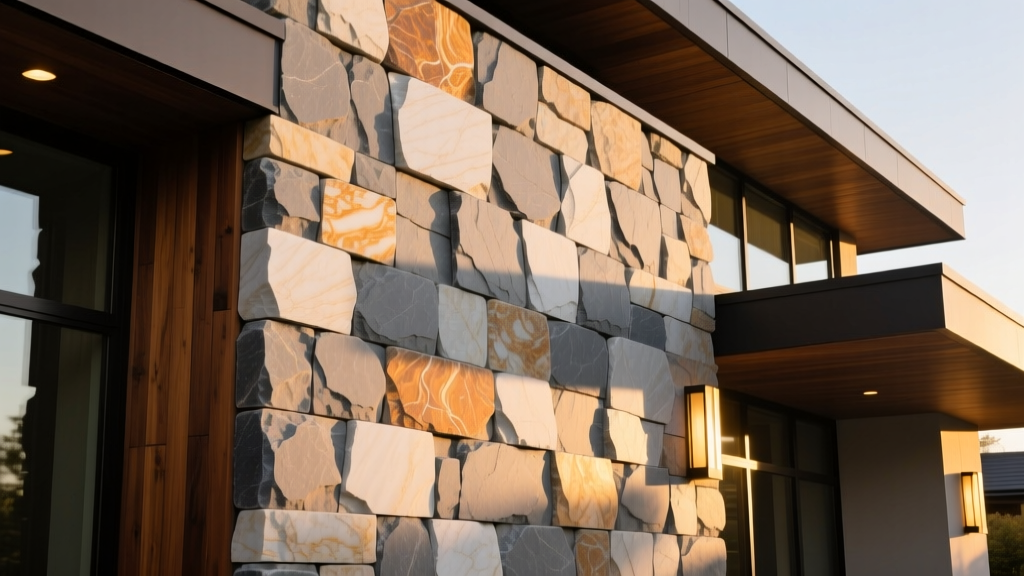
When specifying natural stone for high-end residential and commercial facades, architects and builders increasingly turn to Creative Mines stone veneer for its authentic geological variation and structural integrity. Unlike manufactured concrete alternatives that attempt to mimic natural rock, Creative Mines products are extracted directly from select quarries, hand-split, and calibrated to a veneer thickness of 0.75 to 1.5 inches. This quarry-direct approach preserves the natural mineral strata, oxidation patterns, and textural nuances that synthetic products cannot replicate. For buyers, selecting this natural stone veneer requires a precise understanding of weight loads, substrate preparation, and mortar chemistry to ensure long-term adhesion and aesthetic performance.
Profile Matrix: Selecting the Right Cut and Pattern
Creative Mines stone veneer is categorized by its cutting profile and installation pattern. The choice of profile dictates not only the visual rhythm of the facade but also the installation speed, mortar consumption, and overall weight load. Below is a technical comparison of the primary profiles available in the current catalog.
| Profile Type | Dimensions (H x L) | Avg. Weight (lbs/sq ft) | Mortar Joint Style | Best Application |
|---|---|---|---|---|
| Linear Ledgestone | 2"-6" x 8"-24" | 11.5 - 13.0 | Tight-fit / Dry-stacked | Modern exteriors, fireplace surrounds |
| Squared Ashlar | 4"-12" x 12"-36" | 10.0 - 12.5 | Standard (1/2" - 1") | Traditional estates, wainscoting |
| Irregular Mosaic | Multi-size polygonal | 13.0 - 15.5 | Wide / Recessed (1"+) | Rustic cabins, landscape retaining walls |
| Rounded Fieldstone | 3"-10" variable | 14.0 - 16.0 | Over-grouted / Flush | Colonial revival, chimneys, pillars |
Linear ledgestone remains the highest-volume seller due to its compatibility with tight-fit, dry-stacked installations, which eliminates the need for joint tooling and reduces masonry labor time by up to 20%. Conversely, irregular mosaic and rounded fieldstone profiles demand highly skilled masons capable of managing complex joint lines and heavier individual units.
Cost Analysis: Material, Labor, and Hidden Expenses
Budgeting for natural stone requires looking beyond the per-square-foot material cost. The total installed cost of Creative Mines stone veneer fluctuates based on profile complexity, regional labor rates, and site accessibility. Based on current market data, here is a detailed cost breakdown for a standard 1,000-square-foot exterior project:
- Base Material Cost: $11.00 to $18.50 per square foot, depending on the rarity of the quarry seam and the selected profile. Premium quartzites and slates command the upper end of this range.
- Substrate & Lath Materials: $2.50 to $4.00 per square foot. This includes weather-resistant barriers (WRB), self-furring galvanized metal lath, and corrosion-resistant fasteners.
- Mortar & Accessories: $1.50 to $2.50 per square foot for Type S mortar, bonding agents, and weep screeds.
- Masonry Labor: $16.00 to $28.00 per square foot. Natural stone installation is significantly more labor-intensive than manufactured veneer due to the need for stone selection, on-site trimming with diamond-blade wet saws, and heavier lifting.
- Waste & Overage Factor: Add 10% to 15% to your total material order. Natural stone inherently includes breakage during transit and cutting waste during fitting around corners and fenestrations.
Total Installed Cost Expectation: $31.00 to $53.00 per square foot. While the upfront cost is 30% to 50% higher than high-end manufactured concrete veneer, the lack of UV fading, efflorescence resistance, and permanent structural value yield a superior long-term ROI.
Structural Prerequisites and Substrate Preparation
Proper substrate preparation is the primary defense against veneer delamination. According to guidelines published by the Masonry Society and the Natural Stone Institute, adhered natural stone veneer must be installed over a rigid, code-compliant backing system. The mandatory substrate sequence includes:
- Structural Sheathing: Minimum 1/2-inch exterior-grade OSB or plywood over wood framing (studs spaced maximum 16 inches on center), or 1/2-inch cementitious backer board over steel framing.
- Weather-Resistant Barrier (WRB): Two layers of Grade D building paper or a single layer of a high-performance fluid-applied membrane. The WRB must be integrated with the window and door flashings.
- Weep Screed Installation: A corrosion-resistant weep screed must be installed at the base of the wall, minimum 2 inches above soil grade or 1/2 inch above concrete paving, to allow moisture trapped behind the veneer to escape.
- Metal Lath: Minimum 2.5 lb/sq yd self-furring galvanized steel lath, attached with 1-inch long corrosion-resistant staples or nails, penetrating the structural studs by at least 1/4 inch. Lath must overlap horizontal joints by 1 inch and vertical joints by 2 inches.
- Scratch Coat: A 1/2-inch thick layer of ASTM C270 compliant Type S mortar, scored horizontally to provide a mechanical key for the setting bed.
Mortar Chemistry and Weatherproofing
The mortar used to adhere Creative Mines stone veneer must accommodate both the heavy dead load of the rock and the natural thermal expansion of the substrate. Never use Type N mortar or standard tile thin-set for exterior natural stone applications; they lack the necessary compressive strength and bond retention.
Specify Type S Mortar (a mix of Portland cement, hydrated lime, and masonry sand) which delivers a minimum compressive strength of 1,800 psi. For enhanced adhesion, particularly on low-porosity stones like dense quartzite or slate, integrate a liquid acrylic polymer bonding agent directly into the mixing water. This reduces the water-cement ratio while increasing flexural bond strength by up to 40%.
Before applying the setting bed, always back-butter each stone unit. Natural stone surfaces are often dusty from the splitting process. Wire-brush the back of each stone, dampen it lightly to prevent it from sucking moisture out of the mortar too rapidly, and apply a 1/2-inch layer of mortar to the back of the stone before pressing it firmly into the wall's setting bed.
Procurement Strategy: Batching, Lead Times, and Overage
Because Creative Mines stone veneer is a natural product, color and mineral veining vary not just from quarry to quarry, but from seam to seam within the same quarry. A common and costly mistake made by general contractors is ordering exact square footage or pulling stones from a single pallet during installation, resulting in stark "color banding" across the facade.
"Always order a minimum of 12% overage for natural stone veneer. Upon delivery, mandate that your masonry crew blends stones from at least three to four different pallets simultaneously during installation. This cross-pallet blending is the only way to achieve the natural, randomized aesthetic that justifies the premium cost of quarry-direct stone."
Lead times for custom or high-demand profiles (particularly tight-tolerance ledgestone) can range from 6 to 14 weeks depending on quarry output and seasonal demand. Buyers should finalize profile selections and submit purchase orders during the design development phase, well before framing begins, to ensure materials are on-site and acclimated before the masonry schedule commences. Always request physical, full-size sample boards rather than relying on digital renderings or small 4x4 swatches, as the true scale and shadow lines of natural stone can only be evaluated in full context.
Written by
Marcus ChenMarcus Chen is a licensed structural engineer (PE) and building materials analyst with over 12 years of experience across residential, commercial, and industrial construction. He holds a Master of Science in Civil Engineering from UC Berkeley and spent six years at Thornton Tomasetti before transitioning to independent consulting and technical writing. Marcus specializes in material selection for seismic-prone regions, concrete reinforcement strategies, and lifecycle cost analysis. His work has been cited by the American Concrete Institute (ACI) and the Structural Engineers Association of California (SEAOC). When he is not on a job site or at his desk, you will find him hiking the Sierra Nevada or restoring a 1920s craftsman bungalow in Oakland, CA.
More from Marcus Chen
View all
Construction Cost
How Much Did the Eiffel Tower Cost to Build?
How much did the Eiffel Tower cost to build in 1889? We adjust for inflation and compare its budget to modern skyscraper construction.
Aug 4, 2026

Fire Resistance
What Is a Fire Resistant Material? Testing & Certification Guide
Discover what is a fire resistant material through ASTM and UL testing. Learn how fire ratings, certifications, and assemblies work in construction.
Aug 4, 2026

Construction Cost
How Much Did the Burj Khalifa Cost to Build?
How much did the Burj Khalifa cost to build? We break down the $1.5B project and extract 5 money-saving strategies for your next build.
Jul 30, 2026