2026 Cost Breakdown: Exterior Stone Veneer Panels Installation
Analyze 2026 costs for exterior stone veneer panels. Compare material pricing, labor rates, hidden fees, and ROI for top brands.
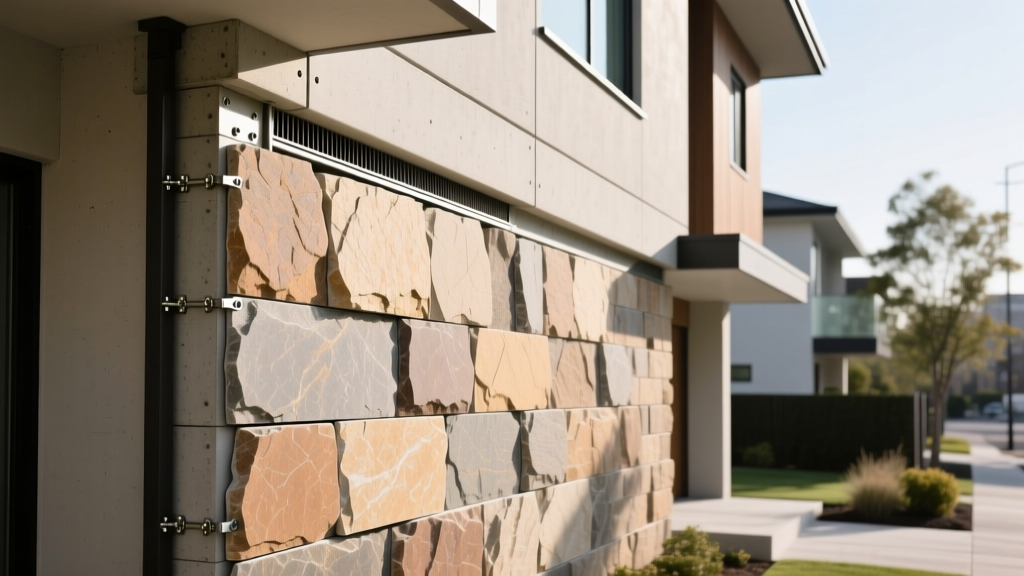
The True Cost of Exterior Stone Veneer Panels in 2026
Upgrading a facade with exterior stone veneer panels delivers immediate architectural weight and durability, but budget miscalculations frequently derail these projects. The national average to install manufactured stone veneer ranges from $14.50 to $28.00 per square foot, encompassing both materials and professional labor. However, this baseline masks extreme variances driven by panel composition, substrate preparation requirements, and architectural complexity.
2026 National Cost Averages (Per Square Foot)
- Material Only: $9.00 - $22.00
- Professional Labor: $5.50 - $14.00
- Total Installed Cost: $14.50 - $36.00
- Typical 500 Sq. Ft. Project: $8,500 - $16,000
According to Angi's stone veneer cost database, regional labor rates and local building code mandates for weather-resistant barriers (WRB) can shift total project costs by up to 25%. Understanding the exact cost drivers across different panel technologies is critical for accurate estimating.
Material Cost Matrix: Manufactured vs. Polyurethane vs. Natural
The term 'stone veneer panels' encompasses three distinct material categories, each with unique manufacturing costs, weight profiles, and installation footprints. The matrix below breaks down the leading panel systems available in 2026.
| Panel System / Brand | Material Type | Material Cost (Per Sq. Ft.) | Weight (Per Sq. Ft.) | Fastening Method |
|---|---|---|---|---|
| Versetta Stone | Mortarless Cementitious | $18.00 - $24.00 | 12 - 15 lbs | Structural Screws to Studs |
| GenStone | High-Density Polyurethane | $11.00 - $14.00 | 1 - 2 lbs | Standard Wood/Metal Screws |
| Evolve Stone | Polyurethane Composite | $13.00 - $16.00 | 1.5 - 2.5 lbs | Finish Nails / Screws |
| Natural Thin Veneer (NSV) | Quarried Stone (Sawn) | $9.00 - $15.00 | 10 - 14 lbs | Type S Mortar & Metal Lath |
| Traditional Manufactured | Portland Cement / Aggregate | $7.00 - $11.00 | 10 - 12 lbs | Type N/S Mortar & Metal Lath |
Substrate Preparation and Structural Load Limits
The most frequently underestimated cost in stone veneer installation is substrate reinforcement. The chosen panel system dictates the structural requirements of the underlying wall assembly.
Mortarless Cementitious Panels (e.g., Versetta Stone)
While mortarless systems eliminate the need for masons and wet trades, they transfer significant sheer load directly to the wall framing. At 15 lbs per square foot, a 10-foot high wall section exerts 150 lbs of sheer load per linear foot. Standard 7/16-inch OSB sheathing cannot safely support this weight without additional fastening. Installers must drive structural screws directly into the wall studs (maximum 16 inches on-center). If existing sheathing is damaged or if the framing is spaced at 24 inches on-center, you must budget $2.50 to $4.00 per square foot for additional horizontal blocking or plywood overlay.
High-Density Polyurethane (HDPU) Panels
Polyurethane panels like GenStone weigh under 2 lbs per square foot. Because they impose negligible sheer load, they can be fastened directly to existing OSB, plywood, or even exterior rigid foam insulation boards. This eliminates substrate reinforcement costs entirely, making HDPU panels the most cost-effective option for retrofitting over existing siding or aging stucco.
Traditional Mortar-Adhered Systems
Adhered manufactured stone masonry veneer must comply with ASTM C1670 standards and International Residential Code (IRC) Section R703.7. This requires a weather-resistant barrier, corrosion-resistant metal lath (minimum 2.5 lbs per square yard), and a scratch coat of Type S mortar. Budget an additional $3.50 to $5.00 per square foot strictly for lath, WRB, and mortar materials before the stone itself is applied.
Hidden Budget Killers: Corners, Flashing, and Waste
Contractor estimates often quote 'field stone' pricing, ignoring the peripheral components that inflate final invoices by 15% to 30%.
The Corner Piece Multiplier
Exterior stone veneer panels require specialized interlocking corner pieces to maintain the illusion of full-depth masonry. While field panels are sold by the square foot, corners are sold by the linear foot. A standard corner piece costs between $35 and $55 per linear foot. A residential facade with 40 linear feet of outside corners will add $1,400 to $2,200 to the material budget alone. Always measure linear corner footage separately from flat square footage during takeoffs.
- Weep Screeds and Flashing: IRC mandates a weep screed at the foundation line to allow moisture escape. Galvanized steel weep screeds cost $1.50 to $2.25 per linear foot. Kick-out flashing at roof-to-wall intersections is mandatory to prevent water intrusion behind the veneer, adding $150 to $300 per intersection for materials and precise integration.
- Waste Factor: Mortar-adhered natural stone requires a 10% to 15% waste factor due to cutting and breakage. Interlocking manufactured panels reduce waste to 5% to 8%, while HDPU panels can achieve waste rates as low as 3% due to the ability to glue and nail off-cuts into recessed areas.
- Sealants and Touch-up Kits: Cementitious panels require color-matched polyurethane sealants for cut edges and fastener heads. Budget $45 per tube, with one tube covering approximately 50 linear feet of joints.
Labor Rates and Installation Timelines
Labor costs are dictated by the skill level required and the speed of installation. In 2026, specialized masonry labor commands a premium due to ongoing trade shortages.
- Traditional Mortar Application: Requires certified masons. Labor rates range from $12.00 to $18.00 per square foot. Installation speed averages 40 to 60 square feet per day per mason. A 500 sq. ft. project will take a two-man crew 4 to 6 days.
- Mortarless Cementitious Panels: Installed by carpenters or specialized siding contractors. Labor rates drop to $8.00 to $12.00 per square foot. Because panels interlock and screw directly to studs, a two-man crew can install 150 to 200 square feet daily.
- Polyurethane Panels: Highly suited for advanced DIY or general handymen. Professional installation labor is minimal, ranging from $4.00 to $7.00 per square foot. Installation speed exceeds 250 square feet per day for a two-man crew.
ROI and Home Value Impact
Exterior stone veneer panels are not merely a sunk cost; they are a high-yield capital improvement. According to Remodeling Magazine's Cost vs. Value Report, manufactured stone veneer consistently ranks among the top exterior upgrades for return on investment. Homeowners recoup an average of 92% to 95% of the project cost upon resale. Furthermore, the Masonry Veneer Manufacturers Association (MVMA) notes that stone facades reduce long-term maintenance liabilities compared to wood clapboard or vinyl siding, which require periodic painting, sealing, or impact repairs.
Decision Framework: Matching Panel Systems to Project Constraints
Select the optimal exterior stone veneer panel system by applying this constraint-based framework to your specific project parameters:
Scenario A: Maximum Budget & DIY Execution
Choose: High-Density Polyurethane (GenStone or Evolve Stone).
Why: Material costs cap at $16/sq ft. Zero structural reinforcement required. Can be cut with standard woodworking saws, eliminating the need for wet masonry saws or diamond blades. Total DIY cost for 200 sq ft remains under $3,500.
Scenario B: Premium Aesthetics & Structural Integrity
Choose: Mortarless Cementitious (Versetta Stone).
Why: Delivers the authentic acoustic and tactile feel of real masonry without the mess of wet mortar. The integrated furring strip creates a natural rainscreen gap, enhancing wall drying. Best for new construction or full-gut rehabs where stud framing is exposed and easily accessible for structural screw placement.
Scenario C: Historic Match & Custom Profiles
Choose: Natural Thin Stone Veneer (NSV).
Why: Manufactured panels repeat patterns every 40 to 60 square feet. If the project requires matching an existing historic stone foundation or demands completely random, non-repeating profiles, quarried NSV is the only viable option. Budget for high masonry labor and a 15% waste factor.
Frequently Asked Questions
Do exterior stone veneer panels require a brick ledge?
No. Unlike full-bed depth natural stone (which weighs 35-40 lbs per sq ft and requires a structural brick ledge on the foundation), adhered and mechanical stone veneer panels are classified as 'adhered' or 'lightweight' cladding. They are supported entirely by the wall framing and sheathing, eliminating the need for costly foundation modifications.
Can stone veneer panels be installed directly over brick?
Yes, but preparation is mandatory. You cannot screw mortarless panels directly into aged mortar joints. You must first attach pressure-treated furring strips or a metal track system to the brick using Tapcon masonry screws, then fasten the panels to the furring strips. For mortar-adhered stone, the existing brick must be cleaned, treated with a bonding agent, and covered with metal lath before applying the scratch coat.
How does climate affect panel selection?
In freeze-thaw climates (USDA Zones 4 and below), cementitious and natural stone panels must be sealed with a breathable, silane-siloxane penetrating sealer to prevent water absorption and subsequent spalling. Polyurethane panels are impervious to water absorption and do not require sealing in freeze-thaw zones, reducing long-term maintenance costs.
Written by
Elena RodriguezElena Rodriguez is a civil engineer and technical writer specializing in concrete technology, masonry systems, and ASTM/ACI compliance. She earned her B.S. in Civil Engineering from Texas A&M University and spent a decade at a materials testing laboratory, performing over 2,000 concrete compressive strength tests and masonry prism evaluations. Elena is an ACI-certified Field Testing Technician (Grade I) and a member of ASTM Committee C12 on Natural Building Stone. She currently consults on forensic engineering cases involving concrete failures and moisture intrusion. Based in San Antonio, TX, Elena is a proud member of the Society of Women Engineers (SWE) and coaches her daughter's FIRST Robotics team.
More from Elena Rodriguez
View all
Walls & Panels
Cost Analysis: Light Gauge Steel Framing Advantages and Disadvantages
Evaluate light gauge steel framing advantages and disadvantages through a strict cost analysis lens, comparing material, labor, and lifecycle expenses.
Aug 4, 2026

Walls & Panels
Gypsum Board Types: Exact Specifications, Thickness & Dimensions
Compare standard, Type X, and moisture-resistant gypsum board types. Get exact specifications, thicknesses, dimensions, and ASTM standards for your project.
Aug 4, 2026

Fire Resistance
Best Fire-Resistant Outdoor Decking Materials: 2026 Buyer Guide
Discover the best fire-resistant outdoor decking materials for 2026. Compare Class A PVC, aluminum, and hardwood options for WUI compliance and safety.
Aug 4, 2026