Stone Veneer for Backsplash: Natural vs Manufactured Comparison
Compare natural and manufactured stone veneer for backsplash installations. Discover weight limits, sealing needs, costs, and best brands for kitchens.

The Core Dilemma: Substrate Limits and Electrical Box Extensions
Standard ceramic or porcelain backsplash tile measures between 1/4 and 3/8 of an inch thick. Stone veneer, whether natural or manufactured, typically projects 1 to 2.5 inches from the wall. This massive increase in depth and weight introduces immediate structural and code-compliance challenges that most standard design guides overlook.
Before selecting a material, you must address the substrate. Standard 1/2-inch drywall cannot support the sheer load of stone veneer, which ranges from 7 to 15 pounds per square foot. The National Kitchen & Bath Association (NKBA) and structural engineers mandate the use of a rigid, moisture-resistant backer. You must either strip the drywall to the studs or mechanically fasten 1/2-inch cement board (such as USG Durock or James Hardie HardieBacker 500) directly into wall studs spaced 16 inches on center using corrosion-resistant backer board screws.
Furthermore, the added thickness of stone veneer pushes the wall surface past standard electrical outlets. To comply with National Electrical Code (NEC) Article 314.20, you cannot simply bury the outlets behind the stone. You must install electrical box extenders, such as the Arlington Industries BE1 or BE2 series, which safely bridge the gap between the recessed junction box and the new stone surface.
Material Matrix: Natural vs. Manufactured Stone Veneer
Choosing between natural and manufactured stone veneer (MSV) for a backsplash requires balancing aesthetic authenticity against installation practicality and maintenance. Below is a direct comparison of their core physical properties.
| Criteria | Natural Stone Veneer | Manufactured Stone Veneer (MSV) |
|---|---|---|
| Weight | 10 - 15 lbs / sq ft | 7 - 12 lbs / sq ft |
| Thickness Profile | 1.0 - 2.5 inches | 0.5 - 2.0 inches |
| Material Cost | $8.00 - $18.00 / sq ft | $6.00 - $12.00 / sq ft |
| Porosity & Sealing | High (Requires impregnating sealer) | Low to Moderate (Factory sealed options) |
| Color Consistency | Variable (Natural veining and shifts) | Highly Consistent (Batch dyed) |
| Edge Detailing | Requires wet saw cutting / chiseling | Pre-cast corner and edge pieces available |
Natural Stone Veneer: High-End Appeal with Strict Maintenance
Natural stone offers unmatched geological authenticity. For backsplashes, the most common format is the ledger panel—pre-assembled Z-pattern interlocking strips of stone glued to a fiberglass mesh backing. Popular options include MSI's Silver Sky Quartzite or Mont Blanc Marble ledger panels.
The Porosity Problem: Sealing Against Kitchen Grease
The primary vulnerability of natural stone in a kitchen environment is porosity. Aerosolized cooking oils, tomato acids, and red wine will permanently stain unsealed limestone, marble, or slate. According to the Natural Stone Institute, calcium-based stones (marble, travertine, limestone) are highly susceptible to etching from acidic spills.
Installation Nuances for Natural Ledger Panels
Natural ledger panels are typically installed using a polymer-modified thinset mortar (ANSI A118.4 or A118.15) rather than traditional masonry mortar. Because the panels are backed with mesh, the thinset must be applied to both the cement board and the back of the panel (back-buttering) to ensure a complete mechanical bond. Failure to back-butter heavy quartzite panels will result in shear failure within the first year.
Manufactured Stone Veneer (MSV): The Practical Contender
Manufactured stone veneer is a Portland cement-based architectural product cast in molds taken from real stone, colored with iron oxide pigments. High-end MSV brands like Eldorado Stone (e.g., the Coastal Reef or Fieldstone profiles) and Coronado Stone produce textures that are virtually indistinguishable from natural rock at conversational distances.
Code Compliance and Material Standards
When sourcing MSV for interior applications, verify that the product complies with ASTM C1670 (Standard Specification for Adhered Manufactured Stone Masonry Veneer). This standard ensures the veneer has passed rigorous freeze-thaw, water absorption, and flexural strength tests. The Masonry Veneer Manufacturers Association (MVMA) provides certification directories to verify compliant products.
The Grout Joint Debate: Dry-Stack vs. Mortared
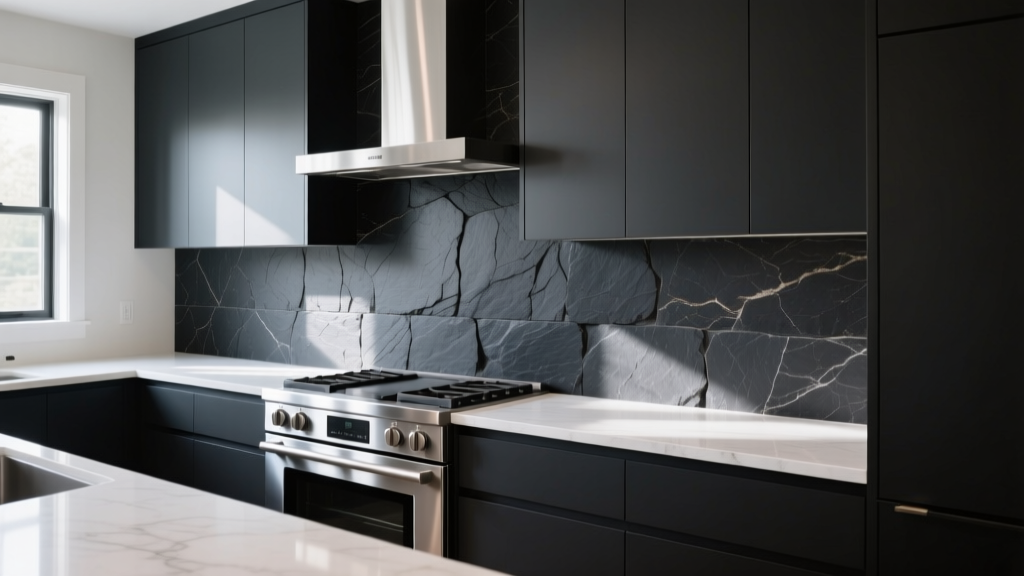
A critical design decision with MSV is the joint treatment. Many homeowners prefer the 'dry-stack' look (no visible mortar between stones) for a modern aesthetic. However, in a kitchen backsplash, dry-stacking creates 1/8-inch to 1/4-inch crevices that act as magnets for grease and dust. For kitchen applications, always specify a flush or slightly raked mortar joint. Using a Type S or Type N masonry mortar tinted to match the stone profile seals the gaps, creating a wipeable surface that meets kitchen sanitation standards.
2026 Cost Breakdown: Material and Labor Realities
Stone veneer installation is highly labor-intensive. Unlike large-format porcelain tiles, stone requires meticulous layout, cutting, and mortar mixing. Below is the current cost matrix for a standard 30-square-foot kitchen backsplash project.
| Cost Category | Natural Stone Ledger Panels | Manufactured Stone Veneer (MSV) |
|---|---|---|
| Material (Stone) | $300 - $540 ($10-$18/sq ft) | $180 - $360 ($6-$12/sq ft) |
| Substrate Prep (Cement board, screws) | $120 - $150 | $120 - $150 |
| Setting Materials (Thinset/Mortar, sealer) | $80 - $120 | $60 - $90 |
| Professional Labor (Demo, prep, install) | $600 - $900 ($20-$30/sq ft) | $750 - $1,050 ($25-$35/sq ft)* |
| Total Estimated Project Cost | $1,100 - $1,710 | $1,110 - $1,650 |
*Note: MSV labor is often higher than natural ledger panel labor because MSV requires mixing masonry mortar, applying a scratch coat, and individually pointing the grout joints, whereas ledger panels are thin-set directly to the wall without joint pointing.
Decision Framework: Which Backsplash Veneer Fits Your Project?
Use this diagnostic framework to finalize your material selection based on your specific project constraints:
- Choose Natural Stone Ledger Panels if: You prioritize a rapid installation timeline, prefer a dry-stack aesthetic (acceptable in low-splash zones like a dry bar or fireplace), and are willing to commit to an annual sealing regimen to protect against oil stains.
- Choose Manufactured Stone Veneer if: You are installing behind a high-splash zone (gas range, primary prep sink), require mortared joints for easy wipe-down cleaning, need specific pre-cast corner pieces to wrap around exposed cabinetry ends, or want to minimize the sheer weight load on older wall framing.
- Choose Neither (Opt for Stone-Look Porcelain) if: Your wall framing cannot support 10+ lbs per square foot, you refuse to use electrical box extenders, or you want a zero-maintenance surface that never requires chemical sealing.
Ultimately, the success of a stone veneer backsplash relies 20% on the material selection and 80% on the substrate preparation and joint detailing. Prioritize rigid backing and proper sealing over the visual differences between natural and manufactured profiles.
Written by
Sarah WhitfieldSarah Whitfield is a chartered quantity surveyor (MRICS) and construction cost analyst with 15 years of experience in material pricing, procurement strategy, and project budgeting. She earned her degree in Construction Management from the University of Reading (UK) and has worked on projects ranging from $2M custom homes to $180M mixed-use developments across North America and Europe. Sarah currently leads cost estimating for BuildMat Insight, maintaining a proprietary database of 4,000+ material price points updated quarterly. She is a frequent contributor to RSMeans cost data panels and has presented at the International Cost Engineering Council (ICEC) congress. Based in Denver, CO, Sarah is an avid trail runner and volunteer mentor for Women in Construction.
More from Sarah Whitfield
View all
Wood & Lumber
What Are the Different Types of Wood? A Builder's Guide
Compare structural softwoods, finish hardwoods, and engineered lumber. Analyze Janka ratings, MOE values, and 2026 pricing for construction.
Aug 4, 2026

Walls & Panels
Steel Framing vs Wood Framing: Corrosion and Moisture Defense
Compare steel framing vs wood framing for moisture resistance. Learn about galvanized coatings, condensation risks, and corrosion protection strategies.
Jul 21, 2026

Stone & Masonry
How to Cut Stone Veneer: Wet Saw vs Grinder Comparison
Compare the best tools for cutting stone veneer. We review wet saws, angle grinders, and chop saws to help you achieve clean, chip-free cuts.
Jul 21, 2026