2026 Price for Stone Veneer: Technical Specs & Cost Matrix
Analyze the 2026 price for stone veneer based on technical specs. Compare manufactured vs. natural stone costs, ASTM standards, and structural loads.

The Engineering Behind the Price for Stone Veneer
The sticker price for stone veneer is rarely just a reflection of aesthetics; it is a direct mathematical result of material density, manufacturing tolerances, and compliance with rigorous structural standards. In 2026, as supply chains for cementitious products stabilize and new thermal testing protocols take effect across North America, understanding the technical specifications that drive both material and labor costs is critical for accurate project budgeting. Whether you are specifying materials for a commercial facade or a residential interior accent, the physical properties of the stone dictate the necessary substrate preparation, structural reinforcement, and specialized mortars required for a lasting installation.
Architects and contractors often encounter severe budget overruns when they select a veneer based solely on visual appeal without accounting for the dead load (measured in pounds per square foot, or psf) and water absorption rates. A heavier, denser natural stone requires robust structural ties and reinforced scratch coats, fundamentally altering the total installed cost compared to a lightweight manufactured alternative. This guide deconstructs the technical variables that determine the true price for stone veneer in the current market.
ASTM Standards and Material Testing Costs
The manufacturing overhead required to achieve specific ASTM certifications heavily influences the base material cost. For manufactured stone masonry veneer (MSV), compliance with ASTM C1670 is the industry benchmark. This standard mandates strict limits on water absorption, compressive strength, and freeze-thaw durability. High-end MSV products that consistently test below a 14% water absorption rate (well under the 22% maximum allowed by the standard) require higher-grade Portland cement blends, specialized lightweight aggregates like expanded shale, and advanced kiln-curing processes. These manufacturing complexities increase the wholesale price for stone veneer by 15% to 25% compared to non-certified or marginal-compliance imports.
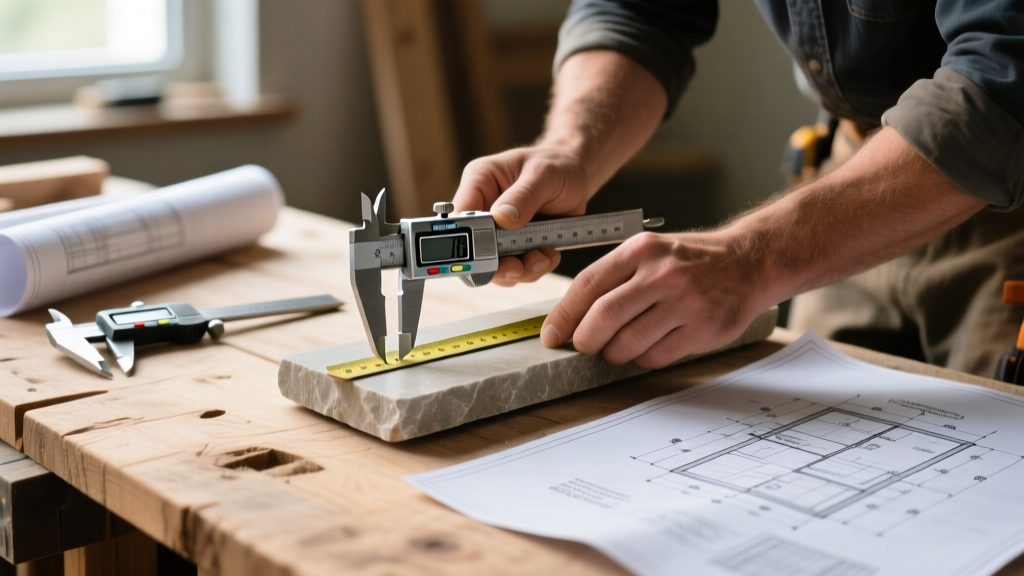
Natural stone veneers are governed by different standards, such as ASTM C616 for sandstone and ASTM C568 for limestone. Quarrying, diamond-wire cutting, and tumbling processes to achieve consistent thickness tolerances (typically +/- 1/8 inch for premium veneers) add significant labor and energy costs. Natural stones with high flexural strength (ASTM C880) command a premium because they can be cut thinner without risking transit or installation fracture, thereby reducing shipping weight and structural support requirements.
Technical Callout: Weight Tolerances and Structural Limits
Standard wood-frame residential construction is typically engineered to support a maximum exterior dead load of 15 psf without additional structural reinforcement. If your specified natural stone veneer exceeds 15 psf (common with thick-cut granite or slate), you must factor in the cost of structural steel angles, heavy-duty masonry ties, and foundation underpinning. Always verify the exact psf rating on the manufacturer's technical data sheet before finalizing your budget.
Cost Matrix: Technical Specs vs. Price for Stone Veneer
The following matrix outlines the 2026 baseline material costs correlated with their defining technical specifications. Note that these figures represent material-only pricing; labor and substrate preparation are detailed in subsequent sections.
| Material Classification | Nominal Thickness | Dead Load (psf) | Water Absorption | 2026 Material Price (per sq ft) |
|---|---|---|---|---|
| High-Density MSV (Premium) | 1.5" - 2.5" | 10 - 12 lbs | < 12% | $11.50 - $16.00 |
| Standard MSV (Builder Grade) | 1.0" - 2.0" | 8 - 10 lbs | 15% - 22% | $7.50 - $10.50 |
| Natural Limestone Veneer | 1.0" - 1.5" | 12 - 15 lbs | Varies (Sealant Req.) | $18.00 - $26.00 |
| Natural Granite/Quartzite | 0.75" - 1.25" | 14 - 18+ lbs | < 2% | $28.00 - $42.00 |
Structural Load Requirements and Hidden Installation Costs
The most frequent budgeting error in masonry veneer projects is underestimating the substrate preparation required to support the material. According to the NCMA's Manufactured Stone Veneer Installation Guide, MSV and natural thin stone cannot be applied directly to drywall, painted surfaces, or uninsulated sheathing. The hidden costs of proper structural preparation often rival the material costs themselves.
Lath, Scratch Coat, and Mortar Specifications
To achieve a mechanical bond capable of supporting 10+ psf of sheer vertical weight, the wall assembly must be built to exact specifications:
- Weather-Resistant Barrier (WRB): Two layers of Grade D building paper or a high-performance fluid-applied membrane are required over wood sheathing. Material cost: $0.85 - $1.50 per sq ft.
- Corrosion-Resistant Metal Lath: Must meet ASTM C847. For exterior applications or interior wet areas, 2.5 lb/yd² galvanized or stainless steel woven wire mesh is mandatory. Self-furring lath is required over solid substrates like concrete or CMU to allow the scratch coat to encapsulate the wire. Material cost: $1.20 - $2.80 per sq ft.
- Scratch Coat: A 1/2-inch thick layer of Type S mortar (ASTM C270) must be applied and horizontally scored to provide a mechanical key. Curing time is typically 24 to 48 hours before veneer application can begin. Labor and material cost: $4.50 - $7.00 per sq ft.
- Setting Mortar: Standard Type N or S mortar is acceptable for many applications, but polymer-modified mortars (ANSI A118.15) are increasingly specified in 2026 for high-vibration zones or extreme freeze-thaw climates. Polymer modifiers increase mortar costs by roughly 40% but drastically reduce the risk of shear failure.
Warning: The Weep Screed Mandate
Building codes strictly require a corrosion-resistant weep screed (minimum 0.019 inch thick) at the base of all exterior veneer installations. The screed must be installed a minimum of 4 inches above grade or 2 inches above paved surfaces to allow trapped moisture to escape. Omitting this $3.50 per linear foot component to save money will result in moisture wicking into the wall assembly, leading to structural rot and inevitable veneer detachment.
Failure Modes: When Cheap Veneer Costs More
Value-engineering the price for stone veneer by selecting non-compliant, high-absorption materials introduces severe long-term liabilities. The primary failure mode for substandard MSV is freeze-thaw spalling, tested under ASTM C666. When a veneer with a water absorption rate exceeding 20% is exposed to cyclic freezing, the trapped water expands by 9% upon crystallization. This internal hydraulic pressure exceeds the tensile strength of low-grade cementitious matrices, causing the face of the stone to pop off or crumble entirely.
Another prevalent failure mode is efflorescence—a white, crystalline salt deposit on the stone surface. While natural stones often contain inherent soluble salts, high-quality manufacturers mitigate this through precise aggregate washing and the inclusion of efflorescence-control admixtures during the batching process. Cheaper veneers lack these admixtures. When moisture migrates through the wall assembly and evaporates at the stone face, it leaves behind unsightly salt deposits that require expensive chemical masonry cleaners (costing $40 to $80 per gallon) and professional power-washing to remediate.
Sourcing and Specification Checklist for 2026
To ensure structural integrity and accurate budgeting, procurement teams and architects should enforce the following technical checklist when soliciting bids and ordering materials. Detailed technical data sheets from reputable suppliers, such as those found in the Cultured Stone Technical Resources Library, should be required prior to approval.
- Verify ASTM C1670 Compliance: Demand third-party testing reports confirming water absorption is below 14% for exterior applications in northern climates.
- Calculate Exact Dead Loads: Obtain the specific psf rating for the selected profile. If it exceeds 15 psf, consult a structural engineer to price in necessary load-bearing reinforcements.
- Specify Flashing Integration: Ensure the architectural drawings detail how the weep screed integrates with the primary WRB and foundation flashing. Budget for Z-flashing at all horizontal terminations (e.g., above windows and doors).
- Mandate Polymer-Modified Mortars for Interiors: For interior applications over cement board or specialized drywall, specify ANSI A118.15 extended-performance modified dry-set mortars to prevent shear failure due to indoor HVAC humidity fluctuations.
- Factor in Waste and Cutting Loss: Technical profiles with complex interlocking shapes (like dry-stack ledgestone) generate up to 15% cutting waste. Add a strict 10-15% overage to your square footage calculations to prevent project delays and color-batch mismatches.
By anchoring your procurement strategy to these technical specifications rather than superficial visual comparisons, you secure a facade that performs flawlessly under environmental stress while maintaining strict control over the total installed price for stone veneer.
Written by
David NakamuraDavid Nakamura is a licensed architect (AIA) and construction technology writer focused on sustainable building methods, mass timber engineering, and high-performance building envelopes. He holds a Master of Architecture from the University of Washington and is a certified Passive House Consultant (CPHC). David spent eight years at the Seattle firm Mithun, where he led the design of three LEED Platinum projects, before founding his own practice specializing in net-zero residential design. He serves on the editorial advisory board of GreenBuilder Magazine and has authored peer-reviewed papers on cross-laminated timber (CLT) connections for the Journal of Structural Engineering. In his spare time, David teaches woodworking at Pratt Fine Arts Center and kayaks the Puget Sound.
More from David Nakamura
View all
Construction Cost
Labor Cost to Build a Deck Per Sq Ft: 2026 Installation Guide
Discover the exact labor cost to build a deck per sq ft in 2026. This installation guide breaks down contractor rates, complexity factors, and hidden fees.
Aug 4, 2026

Construction Cost
How Much Does It Cost to Build a 3 Bedroom House? Financing Guide
Learn exactly how much it costs to build a 3 bedroom house and explore 2026 financing options, construction loan types, and budget frameworks for your build.
Aug 4, 2026

Construction Cost
Cost to Build a Tennis Court: 2026 Guide
How much does it cost to build a tennis court in 2026? Breakdowns for asphalt, concrete, and synthetic surfaces plus fencing and lighting.
Jul 30, 2026