Stone Veneer Cost Per SF: 2026 Complete Material & Installation Guide
Discover the exact stone veneer cost per sf in 2026. Compare natural vs. manufactured materials, labor rates, and hidden installation expenses.
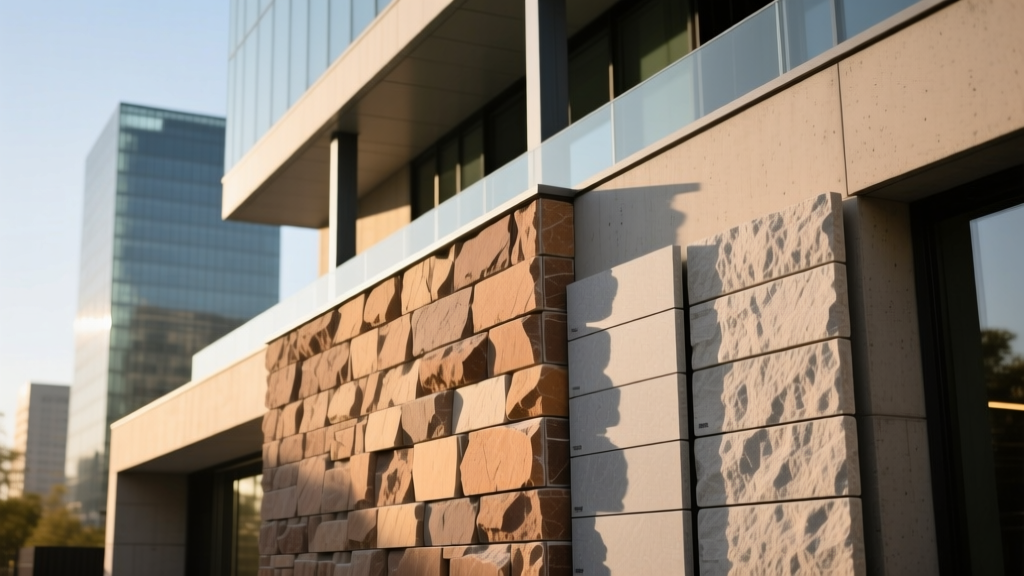
Calculating the true stone veneer cost per sf requires moving beyond the sticker price of the stone itself. In 2026, material costs represent only 35% to 45% of the total project budget, with substrate preparation, specialized mortars, and skilled masonry labor consuming the rest. Whether you are cladding a 400-square-foot exterior accent wall or a 60-square-foot interior fireplace surround, understanding the granular breakdown of these costs prevents severe budget overruns.
2026 Market Breakdown: Material vs. Labor Costs
The following table outlines current national averages for adhered stone veneer systems. These figures assume a standard wood-framed or concrete masonry unit (CMU) substrate requiring standard weather-resistant barriers (WRB) and metal lath preparation.
| Material Category | Material Cost (Per SF) | Labor & Prep Cost (Per SF) | Total Installed Cost (Per SF) |
|---|---|---|---|
| Manufactured Stone Veneer (MSV) | $7.50 - $13.00 | $12.00 - $19.00 | $19.50 - $32.00 |
| Natural Stone Veneer (NSV) | $14.00 - $26.00 | $15.00 - $24.00 | $29.00 - $50.00 |
| Stacked Stone Panels (Interlocking) | $9.00 - $16.00 | $8.00 - $14.00 | $17.00 - $30.00 |
| Polyurethane Faux Stone Panels | $10.00 - $18.00 | $5.00 - $9.00 | $15.00 - $27.00 |
According to industry data tracked by HomeGuide, the national average for professionally installed stone veneer sits at approximately $24.00 per square foot, though high-cost coastal markets frequently push this average above $38.00 per square foot due to prevailing wage requirements and masonry union rates.
Material Deep Dive: Manufactured vs. Natural Systems
Manufactured Stone Veneer (MSV)
MSV is a Portland cement-based product cast in molds taken from real stone. High-end manufacturers like Cultured Stone and Eldorado Stone produce MSV that is virtually indistinguishable from natural rock. Because it is governed by ASTM C1670 standards, compliant MSV must meet strict freeze-thaw durability and compressive strength benchmarks.
- Weight: 10 to 12 lbs per square foot. Rarely requires additional structural footing or foundation reinforcement.
- Installation: Requires a scratch coat, metal lath, and Type S or Type N mortar. Cannot be installed directly over drywall or painted surfaces.
- Cost Advantage: Eliminates the need for heavy machinery and structural engineering reviews required for full-bed natural stone.
Natural Stone Veneer (NSV)
NSV consists of real quarried stone (limestone, slate, fieldstone, or granite) sliced to a 1-inch to 2.5-inch thickness. While the material cost per sf is significantly higher, NSV offers unmatched UV stability and zero risk of pigment fading over decades of direct sun exposure.
- Weight: 15 to 25 lbs per square foot. Structural engineers must verify that roof eaves, cantilevered floors, or non-load-bearing walls can support the dead load.
- Installation: Requires wider mortar joints and heavier 3.4 lb self-furring galvanized lath to support the increased mass during the curing process.
- Cost Disadvantage: Higher material waste (up to 15%) due to irregular shapes and the need to cut thick stone with diamond-tipped wet saws.
Contractors price flat wall areas by the square foot, but corner pieces are priced by the linear foot (LF). Corner pieces typically cost $18.00 to $35.00 per LF. If your 200 SF project includes 30 LF of outside corners, those corners alone will add $540 to $1,050 to your bill. Always calculate the effective stone veneer cost per sf by adding corner LF costs into your baseline material budget before dividing by total square footage.
Hidden Cost Drivers That Inflate Your Budget
Homeowners frequently miscalculate their stone veneer cost per sf by ignoring the mandatory substrate preparation. Adhered veneer systems are only as stable as the surface they bond to.
- Weather-Resistant Barrier (WRB): Exterior applications require two layers of Grade D building paper or a high-performance house wrap like Tyvek CommercialWrap. Budget $0.75 to $1.25 per SF.
- Metal Lath & Fasteners: 2.5 lb self-furring galvanized wire lath is mandatory over wood framing. Over CMU or concrete, lath is only required if the surface is painted or sealed. Budget $1.50 to $2.50 per SF.
- Scratch Coat: A 1/2-inch Portland cement scratch coat must be applied over the lath and cured for 24 to 48 hours before stone installation begins. This adds $2.00 to $3.50 per SF in labor and materials.
- Weep Screeds & Flashing: Code requires a weep screed at the base of exterior veneer to allow trapped moisture to escape. Budget $3.00 to $5.00 per linear foot for the base perimeter.
"Always order a 10% to 15% waste factor for manufactured stone and up to 20% for natural fieldstone. Cutting stones to fit around electrical outlets, HVAC vents, and window casings generates massive amounts of unusable offcuts."
Regional Labor Variations & Contractor Markup
The labor component of your stone veneer cost per sf is highly volatile based on geography and local masonry union density. According to Forbes Home remodeling data, regional disparities can shift the total project cost by up to 40%.
| Region / Market Tier | Average Masonry Labor Rate (Per SF) | Market Characteristics |
|---|---|---|
| Tier 1 (NYC, SF, Boston) | $22.00 - $32.00 | High union density, strict permitting, premium scaffolding requirements. |
| Tier 2 (Chicago, Denver, Seattle) | $16.00 - $22.00 | Mixed union/non-union, strong demand for exterior cladding. |
| Tier 3 (Atlanta, Dallas, Phoenix) | $11.00 - $16.00 | Highly competitive non-union market, lower overhead costs. |
| Tier 4 (Rural / Midwest) | $8.00 - $12.00 | Limited specialized masons, longer lead times, travel fees may apply. |
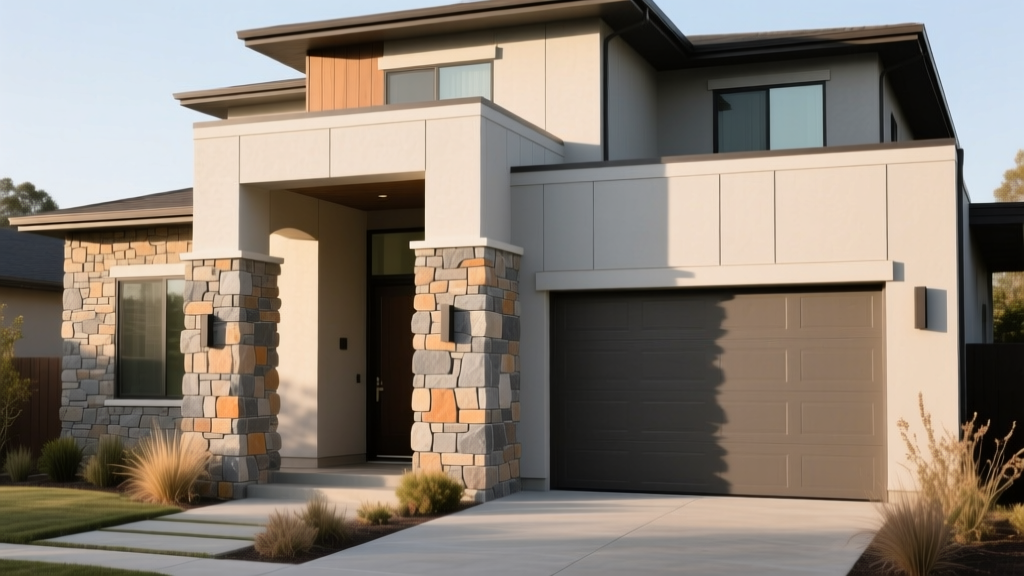
Expert Decision Matrix: Selecting Your Veneer System
Use this framework to determine which material aligns with your structural constraints, budget, and aesthetic requirements.
| Decision Criteria | Manufactured Stone (MSV) | Natural Stone (NSV) | Polyurethane Faux Panels |
|---|---|---|---|
| Budget Allocation | Moderate ($19 - $32/sf) | High ($29 - $50/sf) | Low/Moderate ($15 - $27/sf) |
| Structural Load Limit | Standard framing (12 lbs/sf) | Reinforced framing (25 lbs/sf) | Any surface (1.5 lbs/sf) |
| DIY Feasibility | Advanced (Requires masonry skills) | Expert (Heavy, complex cuts) | Beginner (Screws into studs) |
| Best Application | Full exterior facades, large interior walls | High-end custom homes, historic restorations | Interior accent walls, skirting, rentals |
Mortar Selection: Type S vs. Type N
When calculating material costs, do not default to standard Type N mortar. For exterior stone veneer applications subjected to freeze-thaw cycles and high wind-driven rain, specify Type S mortar. Type S offers a minimum compressive strength of 1,800 PSI (compared to 750 PSI for Type N) and superior lateral flexural strength. While Type S costs approximately 15% more per bag, it drastically reduces the risk of veneer delamination and efflorescence-related joint failure over a 20-year lifecycle.
Written by
Sarah WhitfieldSarah Whitfield is a chartered quantity surveyor (MRICS) and construction cost analyst with 15 years of experience in material pricing, procurement strategy, and project budgeting. She earned her degree in Construction Management from the University of Reading (UK) and has worked on projects ranging from $2M custom homes to $180M mixed-use developments across North America and Europe. Sarah currently leads cost estimating for BuildMat Insight, maintaining a proprietary database of 4,000+ material price points updated quarterly. She is a frequent contributor to RSMeans cost data panels and has presented at the International Cost Engineering Council (ICEC) congress. Based in Denver, CO, Sarah is an avid trail runner and volunteer mentor for Women in Construction.
More from Sarah Whitfield
View all
Wood & Lumber
What Are the Different Types of Wood? A Builder's Guide
Compare structural softwoods, finish hardwoods, and engineered lumber. Analyze Janka ratings, MOE values, and 2026 pricing for construction.
Aug 4, 2026

Walls & Panels
Steel Framing vs Wood Framing: Corrosion and Moisture Defense
Compare steel framing vs wood framing for moisture resistance. Learn about galvanized coatings, condensation risks, and corrosion protection strategies.
Jul 21, 2026

Stone & Masonry
How to Cut Stone Veneer: Wet Saw vs Grinder Comparison
Compare the best tools for cutting stone veneer. We review wet saws, angle grinders, and chop saws to help you achieve clean, chip-free cuts.
Jul 21, 2026