Stone Veneer Entryway Design: Materials, Costs, and Installation
Transform your home's curb appeal with our complete stone veneer entryway guide. Compare materials, costs, and installation methods for a lasting facade.

The Architectural Impact of a Stone Veneer Entryway
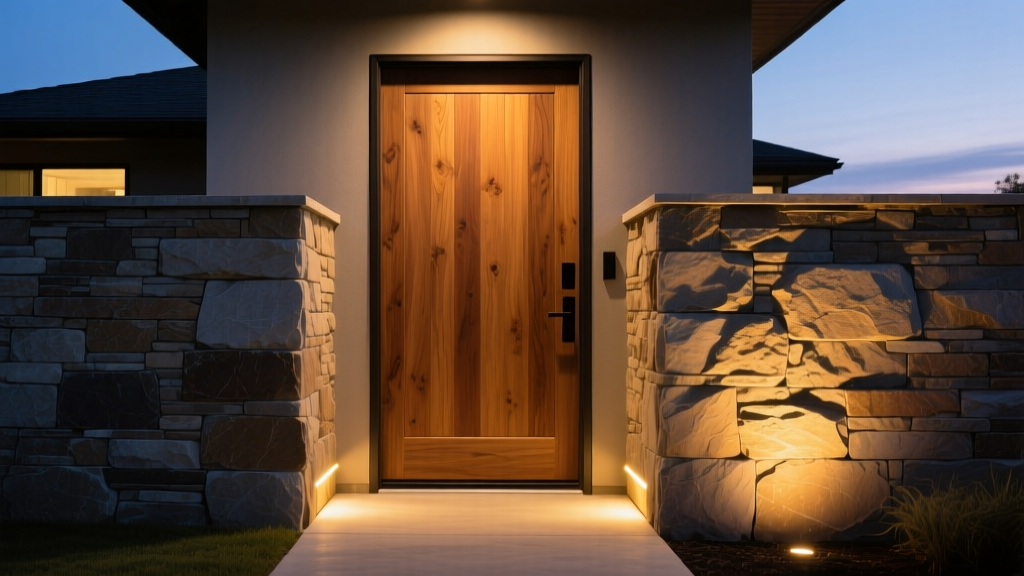
An entryway dictates the initial perception of a home. Applying stone veneer to this focal point elevates the architectural character, bridging the gap between standard vinyl or fiber-cement siding and premium masonry. Unlike full-thickness natural stone, which requires extensive structural footing and specialized masonry labor, stone veneer provides an identical aesthetic profile at a fraction of the weight and cost. This guide dissects the material specifications, structural requirements, and precise cost matrices necessary to execute a flawless stone veneer entryway.
Natural Stone vs. Manufactured Stone Veneer (MSV)
The primary decision for any stone veneer entryway is choosing between natural quarried stone and Manufactured Stone Veneer (MSV). Both offer exceptional durability, but their physical properties dictate different installation methodologies.
| Feature | Manufactured Stone Veneer (MSV) | Natural Thin Stone Veneer |
|---|---|---|
| Weight | 10 – 12 lbs per sq. ft. | 13 – 15 lbs per sq. ft. |
| Thickness | 1.0 – 2.5 inches | 0.75 – 1.5 inches |
| Color Consistency | High (batch-controlled) | Variable (quarry-dependent) |
| Cutting Method | Standard masonry blade or tile saw | Wet saw with diamond blade required |
| Material Cost (2026) | $7.50 – $14.00 / sq. ft. | $14.00 – $28.00 / sq. ft. |
MSV, produced by brands like Eldorado Stone and Cultured Stone, is cast from polyurethane molds of real stone and colored with iron-oxide pigments. It is the dominant choice for residential entryways due to its integrated nailing flanges (in some panelized systems) and uniform thickness, which simplifies the mortar setting bed. Natural thin veneer, sawn from full-bed stone, offers unparalleled authenticity and is preferred for high-end custom builds where unique geological variations are desired.
Selecting the Right Profile for Entryway Architecture
The profile of the stone must complement the architectural style of the home. Mismatched profiles create visual dissonance. Match your entryway veneer to these established design frameworks:
- Ledgestone / Ledge Cut: Long, horizontal, rectangular stones. Best for Modern Farmhouse, Craftsman, and Prairie styles. It emphasizes horizontal lines and widens the visual footprint of a narrow entryway.
- Fieldstone / River Rock: Rounded, irregular, organic shapes. Ideal for Tudor, Cottage, and Rustic styles. Requires a wider mortar joint (1/2 to 1 inch) and highly skilled masons to avoid a 'cluttered' appearance.
- Ashlar / Cut Stone: Rectilinear, precisely cut stones with tight joints. Suits Colonial, Georgian, and Transitional architecture. Provides a formal, structured, and high-end masonry look.
- Stacked Stone (Dry Stack): Tight-fitting stones with no visible mortar joint. Perfect for Contemporary and Mid-Century Modern entryways. Requires precise cutting and a perfectly plumb substrate.
Comprehensive Cost Breakdown
Budgeting for a stone veneer entryway requires accounting for substrate preparation, which is often excluded from basic material quotes. The following matrix reflects current 2026 national averages for a standard 80-square-foot entryway facade (including return corners and waste factor).
| Cost Component | MSV Entryway | Natural Thin Veneer Entryway |
|---|---|---|
| Stone Material (incl. 10% waste) | $880 – $1,540 | $1,680 – $3,080 |
| Lath, WRB, and Mortar | $180 – $250 | $180 – $250 |
| Masonry Labor ($14-$22/sq ft) | $1,120 – $1,760 | $1,440 – $2,160 |
| Total Estimated Cost | $2,180 – $3,550 | $3,300 – $5,490 |
Substrate Preparation and Moisture Management
The most common cause of stone veneer failure is not the stone itself, but catastrophic moisture mismanagement behind the cladding. According to the Building Science Corporation, absorptive claddings like stone veneer store significant solar heat and moisture. When the sun hits a wet stone entryway, it drives moisture inward. Without a proper drainage plane, this water rots the wood framing.
The 5-Step Substrate Protocol
- Weather-Resistive Barrier (WRB): Apply two layers of Grade D asphalt-impregnated building paper or a high-performance non-perforated WRB (e.g., Tyvek CommercialWrap). Lap horizontal seams by 2 inches and vertical seams by 6 inches.
- Corrosion-Resistant Lath: Fasten minimum 2.5 lb self-furring galvanized steel lath (ASTM C847) using 1-inch galvanized roofing nails or staples, penetrating directly into the wall studs every 6 inches. Do not just attach to the sheathing.
- Scratch Coat: Apply a 1/2-inch thick scratch coat of ASTM C270 Type N or Type S mortar. 'Scratch' the surface horizontally with a rake while wet to create a mechanical key for the setting bed. Cure for 24 to 48 hours.
- Weep Screed Installation: Install a corrosion-resistant weep screed (ASTM C1063) at the base of the entryway. The screed must sit a minimum of 4 inches above soil grade or 2 inches above paved surfaces to prevent capillary water uptake and soil splash-back.
- Setting and Pointing: Butter the back of each stone with a 1/2-inch layer of mortar. Press firmly until mortar squeezes out. Tool the joints with a pointing trowel once the mortar becomes thumbprint-hard.
Troubleshooting Common Failure Modes
Even with premium materials, environmental factors can degrade a stone veneer entryway if specific edge cases are ignored during installation.
- Efflorescence (White Powdering): Caused by water-soluble salts migrating to the surface. Fix: Ensure proper roof overhangs above the entryway and avoid using acid-based cleaners on MSV, which can break down the cementitious binder and accelerate salt leaching. Clean only with a stiff bristle brush and water.
- Spalling and Face Delamination: Occurs when water enters the stone's pores, freezes, and expands, blowing the face off the stone. Fix: In northern freeze-thaw climates, apply a breathable, silane/siloxane penetrating sealer (e.g., Prosoco Siloxane PD) 28 days after installation. Never use film-forming acrylic sealers, which trap moisture inside the masonry.
- Mortar Joint Cracking: Hairline cracks in the mortar joints. Fix: This is often caused by using Type M mortar (too rigid) or failing to dampen the stones before setting. Always mist MSV and natural stone with water before applying mortar to prevent the dry stone from sucking the moisture out of the mortar too rapidly.
For comprehensive technical specifications and mortar mix ratios, always consult the Masonry Veneer Manufacturers Association (MVMA) Installation Guide prior to beginning substrate preparation. Executing a stone veneer entryway correctly transforms it from a mere decorative element into a permanent, weather-resistant architectural asset that yields an exceptional return on investment at resale.
Written by
Elena RodriguezElena Rodriguez is a civil engineer and technical writer specializing in concrete technology, masonry systems, and ASTM/ACI compliance. She earned her B.S. in Civil Engineering from Texas A&M University and spent a decade at a materials testing laboratory, performing over 2,000 concrete compressive strength tests and masonry prism evaluations. Elena is an ACI-certified Field Testing Technician (Grade I) and a member of ASTM Committee C12 on Natural Building Stone. She currently consults on forensic engineering cases involving concrete failures and moisture intrusion. Based in San Antonio, TX, Elena is a proud member of the Society of Women Engineers (SWE) and coaches her daughter's FIRST Robotics team.
More from Elena Rodriguez
View all
Walls & Panels
Cost Analysis: Light Gauge Steel Framing Advantages and Disadvantages
Evaluate light gauge steel framing advantages and disadvantages through a strict cost analysis lens, comparing material, labor, and lifecycle expenses.
Aug 4, 2026

Walls & Panels
Gypsum Board Types: Exact Specifications, Thickness & Dimensions
Compare standard, Type X, and moisture-resistant gypsum board types. Get exact specifications, thicknesses, dimensions, and ASTM standards for your project.
Aug 4, 2026

Fire Resistance
Best Fire-Resistant Outdoor Decking Materials: 2026 Buyer Guide
Discover the best fire-resistant outdoor decking materials for 2026. Compare Class A PVC, aluminum, and hardwood options for WUI compliance and safety.
Aug 4, 2026