Stone Veneer for Front of House: The Ultimate Material & Cost Selection Guide
Discover the best stone veneer for front of house exteriors. Compare natural vs. manufactured options, costs, durability, and installation specs.

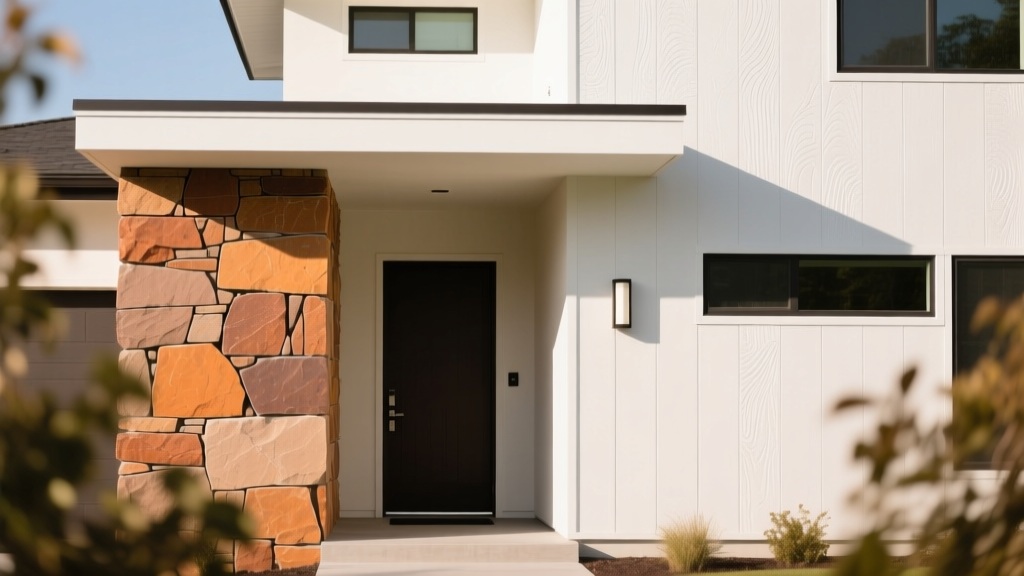
The Curb Appeal ROI: Why Stone Veneer?
Upgrading your home’s exterior is one of the most capital-intensive projects a homeowner can undertake, but few materials offer the immediate architectural transformation of stone. According to industry data tracked by the National Association of Home Builders (NAHB), stone exteriors consistently rank among the top premium finishes for buyer desirability. More importantly, stone veneer for front of house applications routinely yields a return on investment (ROI) of 90% to 95% at resale, outperforming vinyl siding and stucco upgrades. However, the market is flooded with varying profiles, weights, and material compositions. Selecting the wrong product can lead to structural overloading, moisture intrusion, or a disconnected architectural aesthetic. This guide breaks down the exact specifications, costs, and installation frameworks required to make an informed purchase in 2026.
Natural vs. Manufactured: The Weight and Cost Matrix
The most critical fork in the road for any buyer is choosing between natural stone and manufactured (architectural) stone veneer (ASV). While natural stone offers unmatched geological authenticity, manufactured stone has closed the visual gap significantly over the last decade, utilizing high-definition molds and iron-oxide pigments to replicate natural weathering. The primary differentiator for your builder—and your budget—is weight.
| Feature | Natural Stone Veneer | Manufactured Stone Veneer (ASV) | Full-Bed Brick (Comparison) |
|---|---|---|---|
| Weight | 35 - 45 lbs / sq ft | 10 - 15 lbs / sq ft | 38 - 42 lbs / sq ft |
| Thickness | 2.5 - 4 inches | 1 - 2.5 inches | 3.5 - 4 inches |
| Structural Footing | Required (Concrete grade beam) | Not required (Can hang on framed walls) | Required (Concrete grade beam) |
| Material Cost (2026) | $15.00 - $35.00 / sq ft | $7.00 - $14.00 / sq ft | $8.00 - $12.00 / sq ft |
| Color Consistency | Variable (Quarry dependent) | Highly consistent (Batch controlled) | Moderate (Kiln dependent) |
Because manufactured stone weighs roughly 70% less than natural stone, it can be installed directly over properly prepared wood or steel framing without the need for a structural concrete footing. This eliminates thousands of dollars in foundation prep costs for retrofit projects.
Profile Selection: Matching Veneer to Architectural Design
Choosing a stone profile that clashes with your home’s architectural style is a common and expensive mistake. Manufacturers like Eldorado Stone and Cultured Stone categorize their products by profile, which dictates the shadow lines and texture of the facade.
1. Ledgestone and Limestone (Linear / Modern / Craftsman)
Characterized by long, horizontal, rectangular cuts. Ledgestone creates tight, dry-stacked shadow lines that emphasize the horizontal planes of a home. It is the premier choice for contemporary architecture, mid-century modern renovations, and Craftsman-style wainscoting. Buyer Tip: Specify a dry-stack installation (no visible mortar joint) for a cleaner, more modern aesthetic.
2. Fieldstone and River Rock (Organic / Cottage / Traditional)
These profiles feature rounded, irregular, and varied shapes. Fieldstone mimics stones gathered from local riverbeds and fields. It is heavily utilized in French Country, Cottage, and rustic Traditional homes. Warning: Avoid using heavy river rock profiles on modern, boxy builds; the organic curves will visually conflict with sharp rooflines and modern window trims.
3. Ashlar and Cut Stone (Formal / Colonial / Tudor)
Ashlar profiles consist of squared, precision-cut stones of varying lengths but consistent heights, laid in distinct horizontal courses with visible mortar joints. This is the correct specification for Colonial, Georgian, and Tudor exteriors where a formal, masonry-built appearance is required.
The Hidden Cost: Moisture Management and Structural Prep
The most frequent cause of stone veneer failure is not the stone itself, but improper moisture management behind it. Adhered stone veneer is a reservoir cladding system; it absorbs and holds water. If that water cannot drain, it will rot the underlying sheathing and rust the metal lath.
The Masonry Veneer Manufacturers Association (MVMA) mandates a specific drainage plane for all exterior adhered veneer. Your contractor must install two layers of Grade D building paper (or a code-approved Weather Resistant Barrier) over the sheathing, followed by a self-furring metal lath, a 1/2-inch scratch coat, and a weep screed at the base. If your contractor does not plan to install a weep screed to allow trapped water to escape at the bottom of the wall, terminate the contract immediately.
Preventing Efflorescence (The White Hazing Effect)
Efflorescence occurs when water-soluble salts migrate through the mortar and stone to the surface, leaving a white, powdery residue. To minimize this risk:
- Use Type S Mortar: Ensure your mason uses a high-quality Type S mortar mix, which has higher tensile strength and lower permeability than Type N.
- Avoid Acid Washing: Never allow a contractor to clean manufactured stone with muriatic acid. The acid reacts with the Portland cement in the stone, accelerating efflorescence and stripping the iron-oxide pigments.
- Apply a Silane/Siloxane Sealer: After the mortar has fully cured (minimum 28 days), apply a breathable, penetrating silane/siloxane water repellent. This prevents bulk water absorption while allowing water vapor to escape.
2026 Pricing Breakdown: What You Will Actually Pay
Budgeting for stone veneer requires looking beyond the per-box material cost. The following table outlines the fully loaded costs for a standard 500-square-foot front facade accent project (e.g., covering the entryway, garage pillars, and lower wainscoting).
| Cost Component | Manufactured Stone (500 sq ft) | Natural Stone (500 sq ft) |
|---|---|---|
| Material (Stone & Trim) | $4,500 - $7,000 | $8,500 - $15,000 |
| Prep Materials (WRB, Lath, Mortar) | $1,200 - $1,800 | $1,500 - $2,200 |
| Labor (Masonry & Prep) | $6,000 - $10,000 | $9,000 - $14,000 |
| Structural Footing (If required) | $0 (Usually not required) | $2,500 - $5,000+ |
| Estimated Total Project Cost | $11,700 - $18,800 | $21,500 - $36,200 |
Note: Labor rates vary significantly by region. Metropolitan areas with high union masonry rates (e.g., Chicago, New York, Boston) will push labor costs toward the upper end of the spectrum or higher.
The Buyer’s Decision Framework
Use this conditional framework to finalize your material specification based on your specific project constraints:
- IF you are retrofitting an existing home with standard wood framing and no existing concrete ledge THEN you must choose Manufactured Stone Veneer (ASV). The 12 lbs/sq ft weight allows it to hang safely on the wall cavity without foundation reinforcement.
- IF you are building a new custom home and want the absolute highest appraisal value and geological authenticity THEN specify Natural Stone Veneer (like Oklahoma limestone or Pennsylvania fieldstone), but ensure your architect includes a continuous concrete grade beam in the foundation plans to support the 40+ lbs/sq ft dead load.
- IF your home features sharp, modern angles, black metal window frames, and flat rooflines THEN select a linear Ledgestone or Limestone profile in a monochromatic color palette (e.g., slate grey or muted charcoal). Avoid river rock entirely.
- IF you are located in a severe freeze-thaw climate zone (e.g., the Midwest or Northeast) THEN verify that your chosen manufactured stone meets ASTM C1780 standards for freeze-thaw durability, and mandate the use of a weep screed and a breathable siloxane sealer to prevent water entrapment and spalling.
By prioritizing weight constraints, architectural alignment, and rigorous moisture management, you ensure that your stone veneer investment enhances the structural integrity and aesthetic value of your home for decades.
Written by
Sarah WhitfieldSarah Whitfield is a chartered quantity surveyor (MRICS) and construction cost analyst with 15 years of experience in material pricing, procurement strategy, and project budgeting. She earned her degree in Construction Management from the University of Reading (UK) and has worked on projects ranging from $2M custom homes to $180M mixed-use developments across North America and Europe. Sarah currently leads cost estimating for BuildMat Insight, maintaining a proprietary database of 4,000+ material price points updated quarterly. She is a frequent contributor to RSMeans cost data panels and has presented at the International Cost Engineering Council (ICEC) congress. Based in Denver, CO, Sarah is an avid trail runner and volunteer mentor for Women in Construction.
More from Sarah Whitfield
View all
Wood & Lumber
What Are the Different Types of Wood? A Builder's Guide
Compare structural softwoods, finish hardwoods, and engineered lumber. Analyze Janka ratings, MOE values, and 2026 pricing for construction.
Aug 4, 2026

Walls & Panels
Steel Framing vs Wood Framing: Corrosion and Moisture Defense
Compare steel framing vs wood framing for moisture resistance. Learn about galvanized coatings, condensation risks, and corrosion protection strategies.
Jul 21, 2026

Stone & Masonry
How to Cut Stone Veneer: Wet Saw vs Grinder Comparison
Compare the best tools for cutting stone veneer. We review wet saws, angle grinders, and chop saws to help you achieve clean, chip-free cuts.
Jul 21, 2026