Stone Veneer Ledger Panels: 2026 Cost Breakdown & Install Pricing
Analyze 2026 costs for stone veneer ledger panels, including material pricing, labor rates, hidden expenses, and ROI for interior and exterior projects.
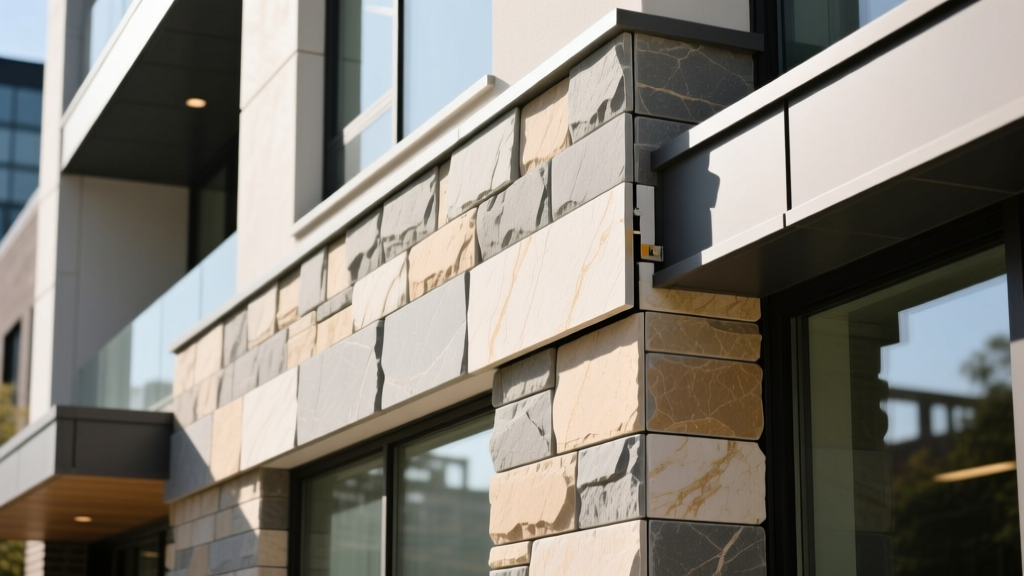
The True Cost of Stone Veneer Ledger Panels in 2026
Stone veneer ledger panels have become the dominant choice for modern fireplace surrounds, accent walls, and exterior wainscoting. Unlike traditional fieldstone or ashlar patterns, ledger panels consist of pre-assembled, interlocking strips (typically 6x24 inches or 12x24 inches) that create a seamless, stacked-stone aesthetic. While they accelerate installation, their unique interlocking edges and specific substrate requirements create a distinct cost profile compared to standard veneer.
In 2026, the national average cost to install stone veneer ledger panels ranges from $14.50 to $23.00 per square foot, fully installed. However, this number fluctuates wildly based on material origin, substrate preparation, and the often-overlooked cost of linear corner pieces. This guide dissects the exact pricing matrices, hidden waste factors, and labor variables you need to budget accurately for your project.
Quick Cost Summary (2026 National Averages)
- Material Only (Manufactured): $5.50 – $9.50 per sq. ft.
- Material Only (Natural Stone): $9.00 – $16.50 per sq. ft.
- Professional Installation Labor: $7.00 – $14.00 per sq. ft.
- Corner Pieces: $9.00 – $18.00 per linear ft.
- Total Installed Cost: $14.50 – $23.00 per sq. ft.
Material Pricing Matrix: Natural vs. Manufactured Ledger Panels
The most significant budget fork in the road is choosing between natural stone (quartzite, slate, sandstone) and manufactured concrete veneer. While natural stone offers unmatched geological variation, manufactured panels from brands like Eldorado Stone or Cultured Stone have achieved near-indistinguishable visual fidelity at a lower weight and cost.
| Material Type | 2026 Cost per Sq. Ft. | Weight (lbs/sq. ft.) | Best Application |
|---|---|---|---|
| Manufactured Concrete (e.g., Cultured Stone) | $5.50 – $8.50 | 10 – 12 lbs | Full exterior facades, high-moisture interiors |
| Natural Quartzite/Slate | $9.00 – $14.00 | 13 – 16 lbs | Interior feature walls, high-end fireplaces |
| Natural Sandstone/Limestone | $11.00 – $16.50 | 14 – 18 lbs | Exterior wainscoting, traditional architecture |
| High-Density Polyurethane (Faux) | $3.50 – $6.00 | 1 – 2 lbs | DIY interiors, non-load-bearing accent walls |
Substrate Preparation: The Hidden Cost Driver
Amateur budgets often fail because they only calculate the stone and the mortar. Proper substrate preparation for exterior and wet-area ledger panels is non-negotiable and accounts for roughly 15% to 20% of the total project cost. According to HomeGuide's installation pricing data, skipping the scratch coat or using the wrong weather barrier leads to delamination within 3 to 5 years.
Exterior and Wet-Area Prep Costs
- Weather-Resistant Barrier (WRB): $0.45 – $0.75 per sq. ft. (e.g., Tyvek or Grade D paper).
- Corrosion-Resistant Metal Lath: $1.20 – $1.80 per sq. ft. (Must be self-furring, 2.5 lb minimum).
- Scratch Coat (Type S Mortar): $0.80 – $1.25 per sq. ft. (Material and labor to apply a 1/2-inch base layer and score it horizontally).
Pro Tip: For interior drywall applications (like a living room TV wall), you can bypass the WRB, lath, and scratch coat, screwing the ledger panels directly to the drywall using a high-polymer modified thinset. This saves approximately $2.50 to $3.80 per square foot in prep costs.
Labor Rates and the 'Interlocking' Premium
Professional masonry labor for ledger panels averages $8.00 to $13.00 per square foot in 2026. While ledger panels are marketed as 'easy to install,' professional masons charge a premium for them compared to random ashlar patterns. Why? Because the interlocking Z-edges or puzzle-cut ends require absolute horizontal precision. If a mason drifts even 1/8th of an inch out of level over a 10-foot run, the interlocking grooves will fail to seat, forcing them to tear down the row and start over.
Furthermore, cutting ledger panels generates significant silica dust. Masons must use wet saws or specialized dust-extraction systems, which adds to the overhead factored into their labor rate. Always verify that your contractor's quote includes cleanup and silica mitigation, as this can be a $300 to $500 hidden fee on interior jobs.
The Waste Factor and Linear Corner Expenses
This is where most contractor estimates clash with homeowner expectations. When calculating material needs, you must account for two specific ledger panel quirks:
1. The Interlocking Waste Factor (12% - 15%)
Standard flat veneer has a 5% to 10% waste factor. Ledger panels, however, require a 12% to 15% waste factor. When you cut a 24-inch panel to fit a 14-inch space near an outlet or window, the remaining 10-inch offcut is usually useless because the interlocking edge has been severed. You cannot simply butt a cut edge against another piece without breaking the visual illusion of the stacked pattern.
2. Corner Pieces Sold by Linear Foot
Corners are never sold by the square foot. They are sold by the linear foot. In 2026, manufactured ledger corners cost $9.00 to $14.00 per linear foot, while natural stone corners run $14.00 to $22.00 per linear foot.
The Math Trap: One linear foot of corner coverage typically requires 1.5 to 2 square feet of actual material surface area. If your project has four 8-foot columns (32 linear feet of corners), you will spend upwards of $450 just on corner pieces, which is a disproportionate hit to a small-project budget.
Natural stone ledger panels (especially limestone and sandstone) are highly porous. If installed on an exterior wall with poor drainage, they will develop efflorescence (white salt deposits). Budget an additional $1.25 to $2.00 per sq. ft. for a high-quality, breathable silane/siloxane penetrating sealer. Do not use film-forming acrylic sealers, which trap moisture and cause the stone face to spall and flake off during freeze-thaw cycles.
Long-Term ROI and Value Retention
Does the premium cost of natural ledger stone pay off at resale? According to historical data tracked by Fixr's stone veneer cost reports and industry remodeling analyses, manufactured stone veneer consistently yields one of the highest returns on investment in exterior upgrades, often recouping 85% to 95% of its cost at resale. Natural stone pushes that ROI slightly higher in luxury markets, but the initial capital outlay is rarely fully recovered dollar-for-dollar. The true value lies in the accelerated time-on-market; homes with high-end architectural stone accents sell significantly faster than those with plain stucco or vinyl siding.
Budgeting Framework: Step-by-Step Cost Estimation
To build an accurate budget for your 2026 ledger panel project, follow this exact calculation sequence:
- Calculate Gross Square Footage: Measure the height and width of all surfaces. (e.g., 10 ft x 8 ft wall = 80 sq. ft.).
- Deduct Openings: Subtract the area of fireplaces, windows, or outlets.
- Calculate Linear Corners: Measure the height of all outside and inside 90-degree corners. Multiply by the linear foot corner price.
- Apply the Waste Factor: Multiply your net square footage by 1.15 (15% waste). Add this to your net square footage to get your total material order.
- Add Substrate Materials: Calculate lath, WRB, and Type S mortar (approx. 1 bag of Type S per 12-15 sq. ft. of scratch coat and setting combined).
- Apply Labor Multiplier: Multiply your net square footage by the local masonry rate ($8 - $13), ensuring they include prep, scratch coat, and setting.
"The biggest mistake homeowners make with ledger panels is ordering exactly the square footage of the wall. Because of the Z-cut interlocking edges, your waste will easily exceed 12%. Always order an extra box of panels from the same dye-lot batch; if you run short and order more later, the color variation between batches will be glaringly obvious under interior lighting."
— Senior Masonry Estimator, Architectural Veneer Specialists
Final Considerations for 2026 Projects
When sourcing your stone veneer ledger panels, always request the manufacturer's technical data sheet (TDS). Verify the ASTM C1670 standard compliance for manufactured stone, which ensures the product has passed rigorous freeze-thaw and compressive strength testing. For interior installations, check the VOC emissions of the adhesive or mortar recommended by the manufacturer, especially if applying directly over drywall in poorly ventilated spaces. By understanding the interlocking waste factors, linear corner pricing, and substrate requirements, you can lock in a precise budget and avoid the change orders that derail masonry projects.
Written by
David NakamuraDavid Nakamura is a licensed architect (AIA) and construction technology writer focused on sustainable building methods, mass timber engineering, and high-performance building envelopes. He holds a Master of Architecture from the University of Washington and is a certified Passive House Consultant (CPHC). David spent eight years at the Seattle firm Mithun, where he led the design of three LEED Platinum projects, before founding his own practice specializing in net-zero residential design. He serves on the editorial advisory board of GreenBuilder Magazine and has authored peer-reviewed papers on cross-laminated timber (CLT) connections for the Journal of Structural Engineering. In his spare time, David teaches woodworking at Pratt Fine Arts Center and kayaks the Puget Sound.
More from David Nakamura
View all
Construction Cost
Labor Cost to Build a Deck Per Sq Ft: 2026 Installation Guide
Discover the exact labor cost to build a deck per sq ft in 2026. This installation guide breaks down contractor rates, complexity factors, and hidden fees.
Aug 4, 2026

Construction Cost
How Much Does It Cost to Build a 3 Bedroom House? Financing Guide
Learn exactly how much it costs to build a 3 bedroom house and explore 2026 financing options, construction loan types, and budget frameworks for your build.
Aug 4, 2026

Construction Cost
Cost to Build a Tennis Court: 2026 Guide
How much does it cost to build a tennis court in 2026? Breakdowns for asphalt, concrete, and synthetic surfaces plus fencing and lighting.
Jul 30, 2026