Wall Stone Veneer Cost Guide: 2026 Material & Installation Prices
Analyze 2026 wall stone veneer costs, including natural vs. manufactured materials, labor rates, hidden expenses, and panelized system ROI.
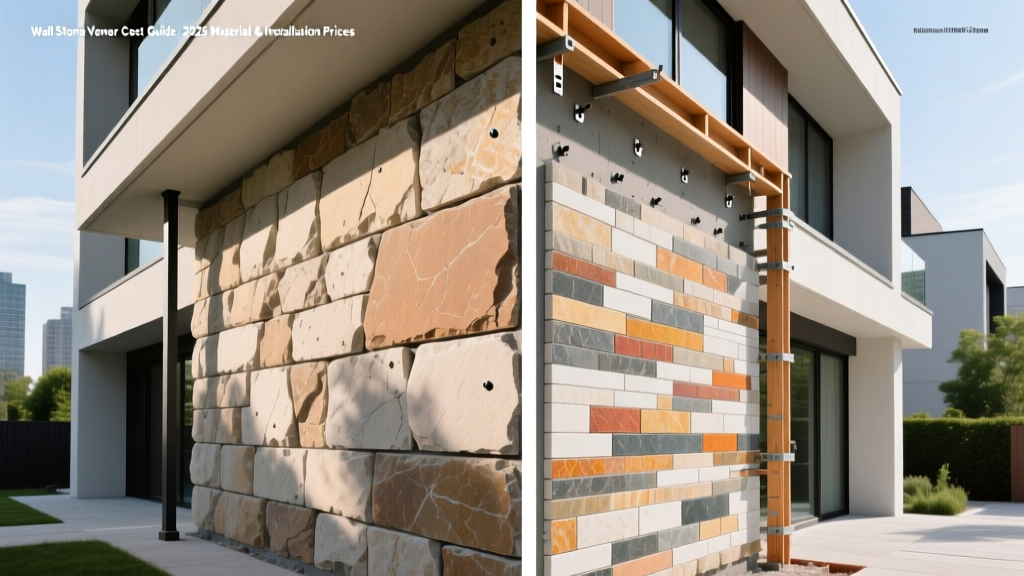
The True Cost of Wall Stone Veneer in 2026
Installing wall stone veneer transforms both interior and exterior elevations, but the financial commitment extends far beyond the sticker price of the stone itself. In 2026, the national average for a fully installed wall stone veneer system ranges from $16 to $34 per square foot. This wide variance is driven by the choice between manufactured and natural stone, the complexity of the substrate preparation, and regional masonry labor rates. According to data compiled by Fixr's 2026 masonry cost index, labor now accounts for 55% to 65% of the total project cost for traditional mortar-set applications, making installation methodology the most critical variable in your budget.
• Manufactured Stone Veneer (MSV): $16 – $24
• Natural Thin Stone Veneer: $22 – $34
• Panelized / Mechanical Fasten Systems: $14 – $21
• Interior Accent Walls (No weatherproofing required): $12 – $20
Material Costs by Veneer Type
The material you select dictates not only the aesthetic but also the structural requirements and waste factors. Manufactured stone veneer (MSV) is governed by ASTM C1670 standards, ensuring consistent weight and freeze-thaw durability, while natural stone offers unmatched geological variation at a premium.
| Material Type | Material Cost (Per Sq.Ft.) | Weight (Per Sq.Ft.) | Waste Factor |
|---|---|---|---|
| Manufactured Stone (Traditional) | $6.00 – $11.00 | 10 – 12 lbs | 10% |
| Natural Thin Stone Veneer | $10.00 – $18.00 | 12 – 15 lbs | 15% |
| Panelized MSV (e.g., Versetta Stone) | $11.00 – $16.00 | 10 – 11 lbs | 5% |
| Polyurethane Faux Stone (e.g., Evolve) | $7.00 – $10.00 | 1 – 2 lbs | 5% |
Labor Breakdown: Where the Budget Actually Goes
Traditional mortar-set wall stone veneer is a multi-day, multi-trade process. Masonry contractors typically charge between $65 and $95 per hour in 2026. The labor cost is not just about sticking stones to a wall; it is about moisture management and substrate integrity. The National Veneer Stone Association (NVMA) strictly outlines the required assembly layers for exterior applications to prevent water intrusion and efflorescence.
The 5-Step Traditional Installation Tax
- Weather-Resistant Barrier (WRB): Applying two layers of Grade D paper or a modern fluid-applied membrane over the sheathing. (Adds $0.50 - $0.80/sq.ft. in labor and materials).
- Weep Screed & Flashing: Installing a code-compliant ASTM C1063 weep screed at the base to allow trapped moisture to escape. Skipping this step is a primary cause of veneer failure and voids manufacturer warranties.
- Metal Lath: Attaching 2.5 lb self-furring galvanized metal lath with corrosion-resistant fasteners penetrating the wall studs. (Adds $1.20 - $1.80/sq.ft.).
- Scratch Coat: Troweling a 1/2-inch layer of Type S mortar over the lath and scoring it horizontally to create a mechanical bond for the setting bed. Requires 24-48 hours of curing time.
- Setting and Pointing: The most labor-intensive phase. Applying mortar to the back of each stone (back-buttering) and pressing it into the setting bed, followed by tooling the joints. (Accounts for 60% of total labor hours).
Hidden Cost Triggers and Edge Cases
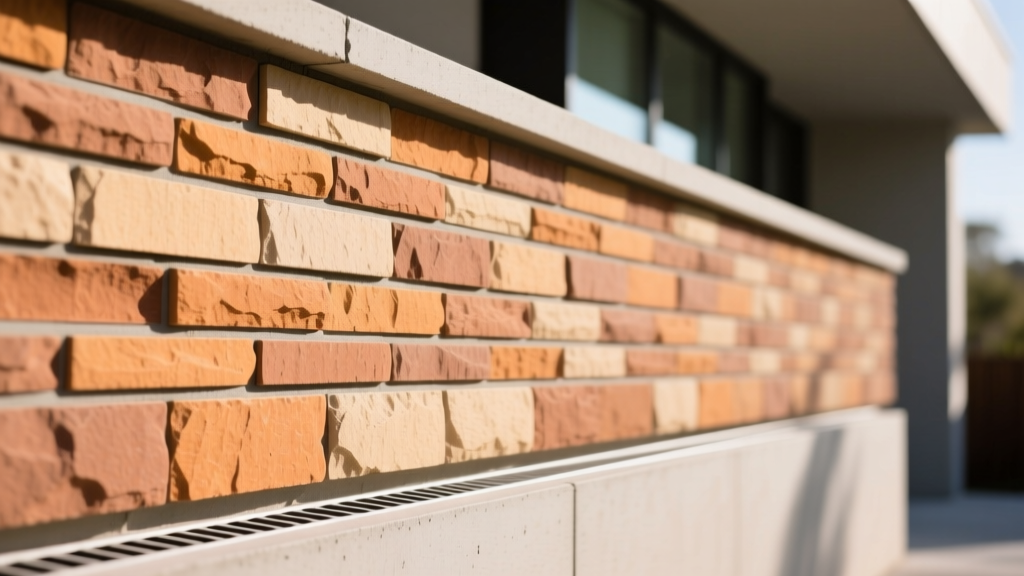
When estimating your wall stone veneer project, general contractors often omit secondary expenses that can inflate the final invoice by 15% to 25%. Factor these into your initial budget to avoid mid-project change orders.
- Scaffolding and Equipment: For exterior walls exceeding 8 feet in height, pump-jack scaffolding or rented boom lifts are required. Expect to add $800 to $2,500 to the project cost depending on the linear footage and duration.
- Structural Reinforcement: While veneer is non-load-bearing, a 1,000 sq.ft. exterior wall clad in natural thin stone can add 12,000 to 15,000 lbs of dead load to the foundation. Older homes may require footing underpinning or structural engineer assessments ($500 - $1,500).
- Corner Pieces and Trim: Corner pieces are sold by the linear foot, not the square foot. They typically cost 2 to 3 times more per linear foot than the field stone costs per square foot. A wall with multiple windows and external corners will drastically increase the material budget.
- Mortar Color Matching and Additives: Custom integral pigments or polymer-modified mortars (like those required for high-wind or freeze-thaw zones) add $0.75 to $1.50 per square foot to the material cost.
Expert Warning: Never install traditional wall stone veneer directly over painted brick, drywall, or un-scored concrete. The mortar will bond to the paint or paper facing, which will eventually peel away from the substrate, causing catastrophic delamination. Always use mechanical lath anchored to the structural framing.
Panelized vs. Mortar-Set: A Cost-Benefit Matrix
To bypass the high cost of masonry labor, many builders in 2026 are pivoting to panelized or mechanically fastened wall stone veneer systems. These systems interlock and screw directly into the substrate or wall sheathing, eliminating the need for lath, scratch coats, and mixing mortar.
| Feature | Traditional Mortar-Set | Panelized / Mechanical System |
|---|---|---|
| Installation Speed | 15 - 25 sq.ft. per man-hour | 40 - 60 sq.ft. per man-hour |
| Skill Level Required | Certified Mason | Carpenter / Advanced DIY |
| Weather Constraints | Cannot install below 40°F (4°C) | Year-round installation |
| Aesthetic Authenticity | High (Custom jointing possible) | Medium (Repeating panel seams) |
| Total Installed Cost | $18 - $34 / sq.ft. | $14 - $21 / sq.ft. |
400 Sq. Ft. Exterior Accent Wall Budgeting Framework
To provide a concrete financial model, consider a standard 400 sq.ft. exterior accent wall (e.g., a front facade wainscot or a retaining wall facing) using a mid-range manufactured fieldstone profile with standard gray Type N mortar.
Estimated Line-Item Breakdown
- Material (440 sq.ft. with 10% waste): $3,520 @ $8.00/sq.ft.
- Corner Pieces (40 linear ft): $600 @ $15.00/lin.ft.
- Substrate Prep (WRB, Lath, Weep Screed, Mortar): $850
- Masonry Labor (3-man crew, 3 days): $4,800
- Scaffolding Rental & Site Cleanup: $650
- Permits & Engineering (if applicable): $250
Total Project Cost: $10,670 ($26.67 per sq.ft. blended average)
Strategic Cost Reduction Tactics
If the projected costs exceed your capital allocation, implement these targeted value-engineering strategies without compromising the structural integrity of the wall stone veneer:
- Limit Natural Stone to High-Impact Zones: Use natural thin veneer strictly at eye-level or on primary focal points (like the main entryway), and transition to color-matched manufactured stone on higher, less visible elevations.
- Opt for Dry-Stack Profiles: Mortar is expensive, and pointing joints is time-consuming. Selecting a 'dry-stack' or 'ledgestone' profile eliminates the need for joint tooling and reduces mortar material costs by up to 80%, significantly accelerating labor times.
- DIY the Substrate Prep: If you are hiring a mason, ask if they will allow you to install the WRB, flashings, and metal lath yourself. Masons prefer to focus on the high-margin stone setting; doing the prep work yourself can shave $1,500 to $2,500 off a medium-sized exterior project.
Accurate budgeting for wall stone veneer requires looking past the showroom samples and calculating the complete assembly. By understanding the labor-intensive nature of traditional masonry and the financial trade-offs of modern panelized alternatives, you can allocate your 2026 construction budget with precision and avoid costly mid-build surprises.
Written by
Sarah WhitfieldSarah Whitfield is a chartered quantity surveyor (MRICS) and construction cost analyst with 15 years of experience in material pricing, procurement strategy, and project budgeting. She earned her degree in Construction Management from the University of Reading (UK) and has worked on projects ranging from $2M custom homes to $180M mixed-use developments across North America and Europe. Sarah currently leads cost estimating for BuildMat Insight, maintaining a proprietary database of 4,000+ material price points updated quarterly. She is a frequent contributor to RSMeans cost data panels and has presented at the International Cost Engineering Council (ICEC) congress. Based in Denver, CO, Sarah is an avid trail runner and volunteer mentor for Women in Construction.
More from Sarah Whitfield
View all
Wood & Lumber
What Are the Different Types of Wood? A Builder's Guide
Compare structural softwoods, finish hardwoods, and engineered lumber. Analyze Janka ratings, MOE values, and 2026 pricing for construction.
Aug 4, 2026

Walls & Panels
Steel Framing vs Wood Framing: Corrosion and Moisture Defense
Compare steel framing vs wood framing for moisture resistance. Learn about galvanized coatings, condensation risks, and corrosion protection strategies.
Jul 21, 2026

Stone & Masonry
How to Cut Stone Veneer: Wet Saw vs Grinder Comparison
Compare the best tools for cutting stone veneer. We review wet saws, angle grinders, and chop saws to help you achieve clean, chip-free cuts.
Jul 21, 2026