Sustainable Decking Materials Low Carbon Footprint: Cost vs Benefit
Analyze the cost vs benefit of sustainable decking materials with a low carbon footprint. Compare pricing, embodied carbon, and lifecycle ROI.
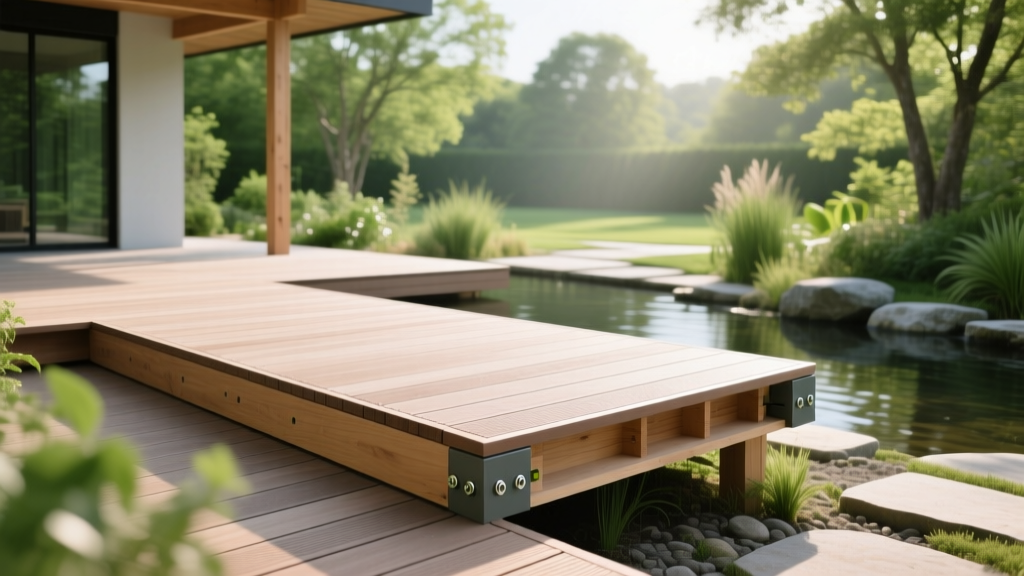
Upfront Capital vs. Lifecycle Dividends
When evaluating sustainable decking materials, low carbon footprint options often present a stark contrast between initial capital expenditure and long-term lifecycle value. In 2026, the premium for eco-friendly decking ranges from 15% to 40% over traditional pressure-treated Southern Yellow Pine (SYP). However, calculating the true return on investment requires moving beyond the lumberyard receipt. You must factor in embodied carbon (the greenhouse gases emitted during extraction, manufacturing, and transport), maintenance labor, chemical treatments, and end-of-life disposal fees.
According to the EPA's Green Building guidelines, the built environment is responsible for nearly 40% of global energy-related carbon dioxide emissions, with material selection playing a pivotal role in reducing embodied carbon. For a standard 500-square-foot residential deck, choosing low-carbon materials can reduce the project's embodied carbon footprint by 2,000 to 4,500 kg of CO2e compared to conventional chemically treated lumber and virgin plastic composites.
Material Matrix: Embodied Carbon and Financial Cost
To make an informed decision, contractors and homeowners must weigh the upfront material cost against the 25-year maintenance burden and the environmental impact. The following matrix breaks down the leading low-carbon contenders available in the current market.
| Material Type | Upfront Cost (per sq. ft.) | 25-Yr Maintenance Cost | Embodied Carbon (kgCO2e/m2) | End-of-Life Profile |
|---|---|---|---|---|
| Pressure-Treated Pine (Baseline) | $3.50 - $5.00 | $1,800 - $2,500 | 12.5 - 15.0 | Landfill (Hazardous due to copper/chemicals) |
| Thermally Modified Ash | $9.50 - $12.50 | $600 - $900 | 4.2 - 6.0 | 100% Biodegradable / Compostable |
| Recycled HDPE/Wood Composite | $8.50 - $11.00 | $200 - $400 | 8.5 - 11.0 | Recyclable (Closed-loop programs) |
| Strand-Woven Bamboo Composite | $7.50 - $9.50 | $400 - $700 | 5.5 - 7.5 | Downcyclable / Biomass fuel |
Note: Embodied carbon metrics are derived from industry-average Environmental Product Declarations (EPDs) and assume a standard 21mm thick decking profile. Maintenance costs include labor and materials for cleaning, sealing, or board replacement over 25 years.
Deep Dive: Top 3 Low-Carbon Contenders
1. Thermally Modified Hardwoods (e.g., Thermory, Kebony)
Thermal modification is a chemical-free process that bakes sustainably harvested hardwoods (like White Ash or Scots Pine) in an oxygen-depleted kiln at temperatures between 212°C and 230°C (413°F - 446°F). This torrefaction process permanently alters the wood's cellular structure, reducing its equilibrium moisture content (EMC) to 4-6%. The result is a highly dimensionally stable, rot-resistant board that rivals tropical hardwoods like Ipe, without the devastating deforestation footprint.
Cost vs. Benefit: The upfront cost is high ($10+ per sq. ft.), but the environmental benefit is massive. The wood acts as a carbon sink, sequestering atmospheric CO2. Furthermore, because it contains no chemical preservatives, it qualifies for USGBC LEED v4.1 Materials and Resources credits. The primary trade-off is UV degradation; while the wood will not rot, it will silver naturally in sunlight unless treated with a pigmented UV-inhibiting oil every 2-3 years, adding to the maintenance ledger.
2. High-Recycled Content Composites (e.g., Trex Transcend Lineage)
Modern capped composites have evolved far beyond the first-generation uncapped boards that suffered from mold and staining. Premium lines now utilize up to 95% recycled materials, blending reclaimed polyethylene plastic film (like grocery bags and stretch wrap) with waste wood fibers from sawmills.
Cost vs. Benefit: At $8.50 to $11.00 per square foot, these boards offer the lowest maintenance cost of any option. They require no sanding, staining, or sealing—just bi-annual washing with soap and water. The carbon footprint is a complex equation: while manufacturing plastic is inherently carbon-intensive, diverting thousands of pounds of plastic film from landfills and replacing virgin PVC creates a net-positive environmental impact. Ensure you select a brand with a verified take-back or closed-loop recycling program to guarantee the boards don't end up in a landfill after their 25-year warranty expires.
3. Strand-Woven Bamboo Decking
Bamboo is a grass that reaches maturity in 3 to 5 years, compared to the 40 to 80 years required for traditional hardwoods. Strand-woven bamboo decking is created by shredding bamboo stalks, compressing them under extreme heat and pressure, and binding them with a phenolic resin.
Cost vs. Benefit: Priced competitively at $7.50 to $9.50 per square foot, bamboo offers exceptional hardness (often exceeding 3,000 on the Janka scale). However, the carbon benefit is partially offset by the energy-intensive manufacturing process and the fossil-fuel-derived resins used to bind the strands. To maximize the eco-benefit, verify that the product uses formaldehyde-free or bio-based resins and holds Forest Stewardship Council (FSC) certification to ensure the bamboo was harvested from responsibly managed plantations, not clear-cut natural forests.
The Hidden Carbon Sinks: Substructure and Fasteners
A critical mistake in sustainable deck planning is obsessing over the decking boards while ignoring the substructure. The joists, beams, and ledger boards account for nearly 60% of the total lumber volume in a deck build.
- Substructure Upgrades: Standard pressure-treated joists are infused with alkaline copper quaternary (ACQ) or micronized copper azole (MCA), which carry high embodied energy and leach heavy metals. Upgrading to FSC-certified Douglas Fir treated with a non-toxic borate solution, or utilizing recycled galvanized steel joists (like those from Deckorators or similar structural systems), can drastically lower the project's overall carbon footprint.
- Fastener Selection: Hidden fastener systems (e.g., Tiger Claw or Camo) use 30% less metal than traditional top-down face screws and eliminate the thousands of screw holes where water intrusion typically initiates rot. While hidden clips add $1.50 to $2.50 per square foot in material costs and increase installation time by roughly 15%, they extend the lifespan of the decking boards by preventing surface splitting and water pooling.
"A deck is only as sustainable as its weakest structural link. Pairing a zero-carbon modified wood surface with chemically treated, high-carbon joists negates the environmental investment of the premium surface material." — Structural Engineering & Sustainable Design Review, 2025.
Decision Framework: Matching Your Profile to the Material
Use the following conditional framework to select the optimal low-carbon decking material based on your specific project constraints, budget, and environmental priorities.
If your priority is absolute lowest lifecycle maintenance...
Choose Recycled HDPE Composite. The higher initial material cost is offset by zero sealing requirements and a 25-to-30-year structural warranty. This is the optimal choice for rental properties, commercial boardwalks, or homeowners who refuse to spend weekends sanding and oiling wood.
If your priority is maximum carbon sequestration and natural aesthetics...
Choose Thermally Modified Ash or Pine. This is the only option that genuinely locks away atmospheric carbon in a usable building material without introducing microplastics or synthetic resins to the ecosystem. Budget for a UV-blocking penetrating oil application every 36 months to maintain the rich brown hue, or embrace the natural silver patina to reduce maintenance to zero.
If you are building on a tight budget but want rapid renewability...
Choose Strand-Woven Bamboo. It bridges the gap between the low cost of pressure-treated wood and the durability of premium composites. Ensure you specify a product with a high-density, water-resistant core and a bio-based binder to keep the chemical footprint as low as possible.
Final Considerations for the 2026 Builder
The transition toward sustainable decking materials with a low carbon footprint is no longer a niche environmental exercise; it is a measurable financial strategy. By evaluating the total cost of ownership—factoring in material longevity, maintenance labor, and end-of-life disposal—low-carbon materials consistently outperform traditional chemically treated lumber over a 20-year horizon. When specifying materials for your next project, demand Environmental Product Declarations (EPDs) from your suppliers to verify embodied carbon claims, and ensure your substructure strategy aligns with your surface material choices to achieve true holistic sustainability.
Written by
Marcus ChenMarcus Chen is a licensed structural engineer (PE) and building materials analyst with over 12 years of experience across residential, commercial, and industrial construction. He holds a Master of Science in Civil Engineering from UC Berkeley and spent six years at Thornton Tomasetti before transitioning to independent consulting and technical writing. Marcus specializes in material selection for seismic-prone regions, concrete reinforcement strategies, and lifecycle cost analysis. His work has been cited by the American Concrete Institute (ACI) and the Structural Engineers Association of California (SEAOC). When he is not on a job site or at his desk, you will find him hiking the Sierra Nevada or restoring a 1920s craftsman bungalow in Oakland, CA.
More from Marcus Chen
View all
Construction Cost
How Much Did the Eiffel Tower Cost to Build?
How much did the Eiffel Tower cost to build in 1889? We adjust for inflation and compare its budget to modern skyscraper construction.
Aug 4, 2026

Fire Resistance
What Is a Fire Resistant Material? Testing & Certification Guide
Discover what is a fire resistant material through ASTM and UL testing. Learn how fire ratings, certifications, and assemblies work in construction.
Aug 4, 2026

Construction Cost
How Much Did the Burj Khalifa Cost to Build?
How much did the Burj Khalifa cost to build? We break down the $1.5B project and extract 5 money-saving strategies for your next build.
Jul 30, 2026