Next-Gen Eco-Friendly Building Materials: 5 Innovations for 2026
Discover 5 next-gen eco-friendly building materials, from mycelium insulation to carbon-sequestering concrete, transforming sustainable construction.

The Shift from Extractive to Regenerative Materials
The construction sector historically accounts for nearly 39% of global carbon emissions, with embodied carbon from material extraction and manufacturing comprising a massive portion of that footprint. As building codes tighten and LEED v4.1 mandates stricter lifecycle assessments, the industry is pivoting away from high-emission staples like Portland cement and petroleum-based foams. The new standard for eco-friendly building materials focuses on regenerative properties—materials that sequester carbon, utilize agricultural waste, and require minimal processing energy.
According to the U.S. Environmental Protection Agency's Sustainable Materials Management guidelines, prioritizing bio-based and recycled-content materials is now critical for reducing the structural carbon intensity of commercial and residential builds. Below, we examine five breakthrough eco-friendly building materials that have moved from laboratory prototypes to commercially viable, code-compliant solutions for modern builders.
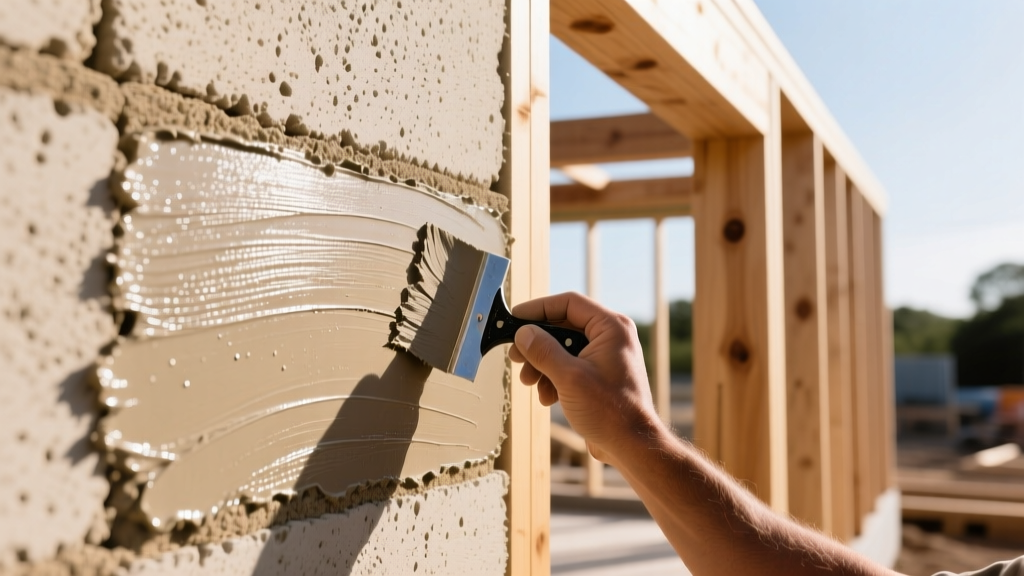
5 Breakthrough Eco-Friendly Building Materials
1. Mycelium-Based Insulation and Acoustic Panels
Mycelium—the vegetative root structure of fungi—is being engineered to replace expanded polystyrene (EPS) and fiberglass batts. Companies like Ecovative Design grow mycelium around agricultural byproducts (like hemp hurds or corn stalks) in custom molds. The biological process takes roughly 7 days, after which the material is baked to halt growth, resulting in a rigid, lightweight panel.
- Thermal Performance: R-3.8 per inch, comparable to standard fiberglass.
- Fire & Acoustic Rating: Achieves ASTM E84 Class A fire rating without chemical retardants. Naturally absorbs mid-to-high frequency sound, making it ideal for interior acoustic baffles.
- Cost & Sourcing: $3.50 to $4.50 per board foot. Lead times are typically 4-6 weeks for custom architectural shapes.
- Failure Mode: Mycelium degrades if exposed to chronic liquid water. It must be used in sealed wall cavities or as interior-finish acoustic treatments, never as below-grade insulation.
2. Carbon-Sequestering Hempcrete (Hemp-Lime)
Hempcrete is a bio-composite mixing the woody core of the hemp plant (hurd) with a lime-based binder (such as St. Astier NHL 5) and water. Unlike traditional concrete, hempcrete is non-load-bearing and requires a structural timber or steel frame. Its primary innovation is its carbon-negative profile: one cubic meter of hempcrete can sequester up to 100 kg of CO2 over its lifecycle through carbonation of the lime binder and the embodied carbon of the hemp.
- Thermal Mass & Permeability: R-value ranges from R-2.4 to R-3.5 per inch depending on density. It is highly vapor-permeable (>10 perms), regulating indoor humidity and preventing mold growth.
- Cost & Sourcing: $150 to $220 per cubic yard for pre-mixed bags. Cast-in-place application adds significant labor costs, pushing total installed wall costs to $35-$45 per square foot.
- Application Limits: Requires a vapor-permeable exterior render (like lime plaster). Applying standard acrylic stucco or cement-based renders will trap moisture, leading to structural rot of the internal timber frame.
3. Bio-Char Infused Structural Timber and Drywall
Bio-char is produced through pyrolysis—heating biomass in a low-oxygen environment. When infused into cross-laminated timber (CLT) adhesives or mixed into gypsum drywall, bio-char locks carbon into the building fabric permanently. Products like Biochar-amended gypsum board offer a direct drop-in replacement for standard Type X drywall.
- Structural & Environmental Impact: Replaces up to 30% of the gypsum or adhesive volume with stable carbon. Enhances the dimensional stability of CLT panels by reducing moisture absorption.
- Cost & Sourcing: Approximately 15-20% premium over standard Type X drywall ($0.65/sq ft vs $0.55/sq ft). Readily available through specialized commercial drywall distributors.
4. Ferrock: The Iron-Rich Concrete Alternative
Invented by materials scientist David Stone, Ferrock utilizes waste steel dust from industrial grinding and silica from ground glass, bound together by a chemical reaction with CO2. Unlike Portland cement, which releases CO2 during calcination, Ferrock actually absorbs carbon dioxide as it cures and hardens.
- Compressive Strength: Up to 5 times stronger than standard Portland concrete (exceeding 10,000 psi in optimized mixes).
- Cost & Sourcing: Currently restricted to regional suppliers near industrial steel hubs. Expect a 30-40% cost premium over standard concrete flatwork.
- Code Compliance: Approved for flatwork, paving, and non-structural masonry units (CMUs). It does not yet have universal ICC-ES approval for high-rise structural columns due to long-term creep data limitations.
5. Algae-Grown Bioplastics for Interior Millwork
Algae-based biopolymers are replacing petroleum-derived MDF and PVC in interior trim, baseboards, and decorative millwork. By cultivating algae in photobioreactors, manufacturers extract biopolymers that can be extruded into rigid profiles. These materials are 100% biodegradable at end-of-life and emit zero volatile organic compounds (VOCs) during installation.
- Durability: Matches the impact resistance of standard PVC trim but lacks UV stability. Must be used strictly for interior applications or painted with opaque, UV-blocking finishes.
- Cost & Sourcing: $4.00 to $5.50 per linear foot for standard baseboard profiles.
Performance and Cost Comparison Matrix
| Material | Primary Application | Embodied Carbon | Installed Cost Estimate | Key Limitation |
|---|---|---|---|---|
| Mycelium Panels | Cavity Insulation / Acoustics | Very Low (Bio-based) | $3.50 - $4.50 / bd ft | Degrades in bulk water |
| Hempcrete | Monolithic Wall Infill | Carbon Negative | $35.00 - $45.00 / sq ft | Non-load-bearing; high labor |
| Bio-Char Gypsum | Interior Wall Finish | Low (Carbon locked) | $0.65 / sq ft | 15-20% material premium |
| Ferrock | Flatwork / Paving / CMU | Carbon Negative | +35% over Portland | Limited structural code approval |
| Algae Bioplastic | Interior Trim / Millwork | Very Low | $4.00 - $5.50 / lin ft | Poor UV resistance |
Sourcing, Code Compliance, and LEED Integration
Integrating these next-generation eco-friendly building materials requires navigating a complex web of building codes and certification standards. For projects targeting LEED certification, materials like hempcrete and mycelium contribute heavily to the Building Life-Cycle Impact Reduction and Environmental Product Declarations (EPD) credits. However, local building officials often require an ICC-ES Evaluation Report or specific ASTM testing data to approve alternative materials.
Procurement is another critical hurdle. While the Department of Energy's Building Technologies Office continues to fund supply chain scaling for bio-based materials, regional availability varies wildly. Builders in the Pacific Northwest and Northeast U.S. will find robust supply chains for hemp and mycelium, whereas sourcing Ferrock may require coordinating direct freight from specialized foundries in the Rust Belt.
Lifecycle Cost vs. Upfront Premium Analysis
The primary barrier to adopting innovative eco-friendly building materials is the upfront cost premium, which typically ranges from 12% to 35% compared to conventional alternatives. However, evaluating these materials through a lifecycle cost analysis (LCCA) reveals significant operational offsets.
For example, the high thermal mass and vapor permeability of a 12-inch hempcrete wall assembly drastically reduce peak HVAC loads. In mixed-humid climates (ASHRAE Zone 4), buildings utilizing hempcrete envelopes have documented a 15% to 22% reduction in mechanical cooling requirements, allowing for the downsizing of HVAC equipment. This mechanical savings often recoups 40% of the material premium before the building even reaches occupancy.
Furthermore, bio-based materials like mycelium and algae bioplastics eliminate the need for chemical fire retardants and off-gassing sealants, reducing interior air-flushing requirements prior to occupancy and accelerating project handover schedules. Builders must shift their estimating frameworks from isolated material-unit costs to whole-assembly performance metrics to accurately capture the financial viability of these sustainable innovations.
Written by
David NakamuraDavid Nakamura is a licensed architect (AIA) and construction technology writer focused on sustainable building methods, mass timber engineering, and high-performance building envelopes. He holds a Master of Architecture from the University of Washington and is a certified Passive House Consultant (CPHC). David spent eight years at the Seattle firm Mithun, where he led the design of three LEED Platinum projects, before founding his own practice specializing in net-zero residential design. He serves on the editorial advisory board of GreenBuilder Magazine and has authored peer-reviewed papers on cross-laminated timber (CLT) connections for the Journal of Structural Engineering. In his spare time, David teaches woodworking at Pratt Fine Arts Center and kayaks the Puget Sound.
More from David Nakamura
View all
Construction Cost
Labor Cost to Build a Deck Per Sq Ft: 2026 Installation Guide
Discover the exact labor cost to build a deck per sq ft in 2026. This installation guide breaks down contractor rates, complexity factors, and hidden fees.
Aug 4, 2026

Construction Cost
How Much Does It Cost to Build a 3 Bedroom House? Financing Guide
Learn exactly how much it costs to build a 3 bedroom house and explore 2026 financing options, construction loan types, and budget frameworks for your build.
Aug 4, 2026

Construction Cost
Cost to Build a Tennis Court: 2026 Guide
How much does it cost to build a tennis court in 2026? Breakdowns for asphalt, concrete, and synthetic surfaces plus fencing and lighting.
Jul 30, 2026