Top Sustainable Deck Materials Compared: 2026 Guide
Compare top sustainable deck materials for 2026. Analyze composite, modified wood, and bamboo costs, lifespan, and LEED credits to choose the best option.
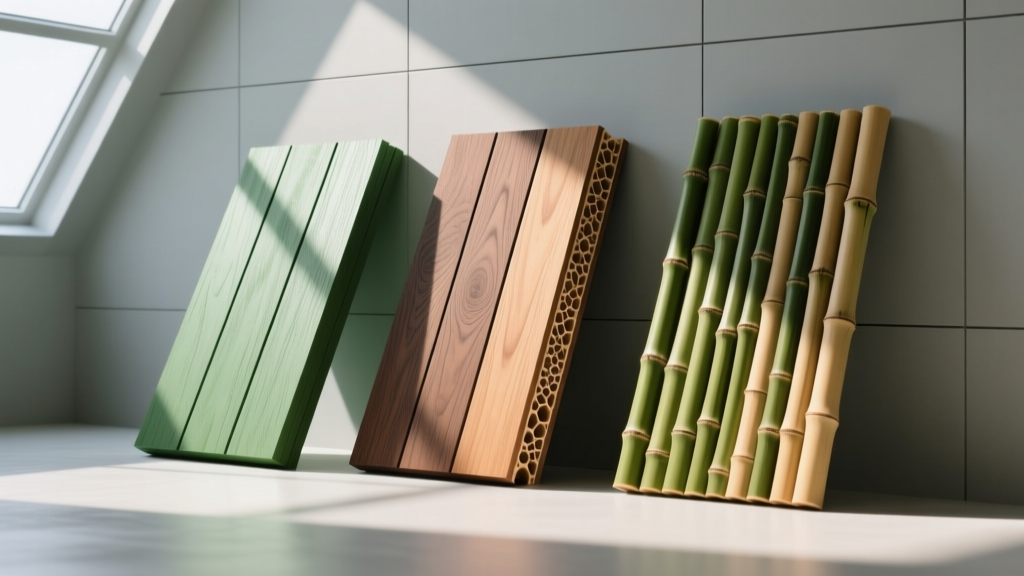
The Shift Toward Low-Carbon Outdoor Living
The outdoor living sector has fundamentally shifted away from virgin pressure-treated lumber and tropical hardwoods. Driven by stricter building codes, LEED v5 material requirements, and a deeper understanding of lifecycle carbon footprints, builders and homeowners are demanding high-performance alternatives. Selecting the right sustainable deck materials requires looking past upfront costs to evaluate 25-year lifecycle expenses, structural limitations, and end-of-life recyclability. This guide dissects the three dominant eco-friendly decking categories—capped composites, modified woods, and high-density bamboo—with exact 2026 pricing, structural specifications, and installation realities.
Material Comparison Matrix: The Big Four
Before diving into specific brands and chemical processes, review the baseline performance metrics for the leading sustainable decking categories. Data reflects 2026 market averages for premium-tier products.
| Material Category | Avg Material Cost (per sq ft) | Expected Lifespan | Maintenance Level | End-of-Life Recyclability |
|---|---|---|---|---|
| Capped Wood-Plastic Composite (WPC) | $11.00 - $13.50 | 25-30 Years | Very Low (Annual wash) | Moderate (Requires specialized facilities) |
| Capped Cellular PVC | $13.00 - $15.50 | 30-50 Years | Very Low (Annual wash) | High (Thermoplastic recycling streams) |
| Acetylated / Furfurylated Wood | $9.00 - $12.00 | 25-30 Years | Low-Medium (Optional oiling) | High (Biodegradable / Compostable) |
| Thermally Modified Wood | $10.00 - $13.00 | 20-25 Years | Medium (Requires UV oil) | High (Biodegradable) |
| High-Density Bamboo | $11.00 - $14.00 | 25+ Years | Medium (End-sealing required) | Moderate (Bio-resin binders complicate) |
Deep Dive: Capped Composite and PVC Decking
Composite decking utilizes a mix of recycled high-density polyethylene (HDPE) and wood flour. The 'capped' designation refers to a co-extruded polymer shell that encapsulates the wood-plastic core, preventing moisture intrusion, mold, and UV fading. Cellular PVC, while technically not a composite, is grouped here due to its similar installation profile and reliance on recycled plastics.
2026 Product Picks and Structural Realities
- Trex Transcend Lineage (WPC): Priced around $12.50/sq ft. Uses a high-performance shell with a highly realistic wood-grain embossment. Installation Gotcha: WPC experiences significant thermal expansion. You must leave a 1/4-inch gap per 10 feet of board length at butt joints. In high-heat climates (e.g., Arizona, Nevada), lighter colors are mandatory to prevent surface temperatures from exceeding 140°F and causing structural sagging between joists.
- TimberTech Landmarks Collection (PVC): Priced around $14.00/sq ft. Made from capped cellular PVC. Installation Gotcha: PVC expands and contracts laterally much less than WPC, but it is highly susceptible to 'oil-canning' (warping) if installed over uneven joists. Joists must be perfectly planar, and hidden fastener systems (like the TimberTech CONCEALoc) are mandatory to allow for micro-movements without binding the board.
While WPC is marketed as 'green' because it uses recycled milk jugs and plastic bags, the fusion of wood fibers and HDPE makes it nearly impossible to separate at end-of-life. True circularity in composite decking currently relies on manufacturer take-back programs rather than municipal recycling. PVC, however, can be re-melted and extruded into new building profiles, giving it a distinct lifecycle advantage if local recycling infrastructure supports it.
Deep Dive: Thermally and Chemically Modified Woods
For architects and homeowners demanding the authentic feel and biodegradability of natural wood without the ecological devastation of harvesting tropical hardwoods like Ipe, modified woods are the premier choice. These processes alter the cellular structure of fast-growing, sustainably harvested softwoods to mimic the rot-resistance of tropical species.
Kebony vs. Thermory: Real-World Performance
Kebony (Furfurylation): Kebony treats sustainably sourced FSC-certified Pine with furfuryl alcohol—a bio-liquid derived from agricultural waste like corn cobs and sugarcane bagasse. The liquid polymerizes inside the wood cell walls, permanently thickening them. This boosts the Janka hardness of Pine from roughly 600 lbf to over 1,100 lbf. Structurally, Kebony retains its bending strength, meaning it can be installed on standard 16-inch on-center (OC) joist spacing. It costs approximately $9.50/sq ft.
Thermory Benchmark Ash (Thermal Modification): Thermory uses intense heat (215°C+) and steam to bake the sugars and resins out of White Ash, rendering it inedible to fungi and insects. While incredibly stable and beautiful, the thermal process reduces the wood's Modulus of Rupture (MOR)—its bending strength—by up to 30%. Critical Structural Rule: Thermory decking must be installed on 12-inch OC joist spacing. Failing to reduce joist spacing will result in board deflection and eventual snapping under dynamic loads.
Deep Dive: High-Density Bamboo Decking
Bamboo is a grass that matures in 4-5 years, sequestering carbon rapidly. However, raw bamboo is highly susceptible to moisture and insects. High-density bamboo decking, such as MOSO Bamboo X-treme ($11.50/sq ft), solves this by crushing bamboo strips, treating them with a bio-based phenolic resin, and thermally compressing them under extreme pressure. The resulting boards boast a Janka hardness exceeding 4,000 lbf—harder than Ipe.
Bamboo X-treme boards are highly prone to 'checking' (end-splitting) if moisture enters the cut ends. Every single cut made on-site must be immediately sealed with a specialized wax-based end-sealer (like Anchorseal) before installation. Furthermore, because the boards are so dense, pre-drilling is mandatory for any face-screwing, though hidden clip systems are highly recommended to avoid surface penetrations entirely.
Lifecycle Cost Analysis (LCCA) Over 25 Years
Upfront material costs rarely tell the full financial story. According to National Renewable Energy Laboratory (NREL) guidelines on Life Cycle Assessment, evaluating building materials requires factoring in installation, maintenance, and replacement over the structure's intended lifespan. Below is a 25-year LCCA per square foot, assuming professional installation and standard regional maintenance rates.
| Material | Material Cost | Install Cost | 25-Yr Maintenance | Total 25-Yr Cost |
|---|---|---|---|---|
| Pressure-Treated Pine (Baseline) | $4.50 | $6.50 | $18.00 (Stain every 3 yrs) | $29.00 |
| Capped WPC (Trex Transcend) | $12.50 | $8.00 | $3.50 (Annual soap wash) | $24.00 |
| Acetylated Wood (Kebony) | $9.50 | $9.00 | $7.50 (Oil every 5 yrs)* | $26.00 |
| High-Density Bamboo (MOSO) | $11.50 | $9.50 | $6.00 (Clean & inspect) | $27.00 |
*Note: Kebony maintenance is optional. If left untreated, it will weather to a silver-gray patina but retains its structural rot-resistance. The $7.50 reflects the cost of UV-inhibiting oil for owners who wish to maintain the original dark brown color.
LEED v5 and Sustainable Sourcing Credits
For commercial projects or high-end residential builds targeting LEED certification, material selection directly impacts point acquisition under the Materials and Resources (MR) category. The EPA's Sustainable Materials Management (SMM) program emphasizes the reduction of environmental impacts across the entire lifecycle of materials.
To maximize LEED points for decking:
- FSC Certification: Specify woods that carry the Forest Stewardship Council (FSC) label. Thermory and Kebony both offer FSC-certified product lines, contributing to the 'Sourcing of Raw Materials' credit.
- Environmental Product Declarations (EPDs): Major composite manufacturers now publish third-party verified EPDs. These documents quantify the exact global warming potential (GWP) of the boards. Specifying products with Type III EPDs is a direct pathway to earning MR optimization credits.
- Regional Materials: While less emphasized in LEED v5 than in previous versions, sourcing modified woods or composites manufactured within a 500-mile radius of the project site still contributes to reduced transportation carbon emissions, a metric heavily scrutinized in net-zero building certifications.
Final Decision Framework
Use this practical matrix to finalize your material selection based on your specific project constraints:
- Choose Capped PVC (TimberTech) if: Zero maintenance is the absolute priority, the deck is near saltwater (PVC is impervious to salt degradation), and budget allows for a $14+ per sq ft material spend.
- Choose Acetylated Wood (Kebony) if: You require the authentic thermal and tactile properties of real wood, want to maximize LEED bio-based material credits, and prefer standard 16-inch joist spacing without structural compromises.
- Choose High-Density Bamboo (MOSO) if: Maximum surface hardness is required (e.g., heavy commercial foot traffic or high scratch-resistance for large dogs) and the design aesthetic favors a dense, exotic-grain appearance.
- Choose Capped WPC (Trex) if: You want a balance of eco-friendly recycled content, high color consistency, and a slightly lower price point than PVC, provided the framing can accommodate standard thermal expansion gaps.
Written by
Marcus ChenMarcus Chen is a licensed structural engineer (PE) and building materials analyst with over 12 years of experience across residential, commercial, and industrial construction. He holds a Master of Science in Civil Engineering from UC Berkeley and spent six years at Thornton Tomasetti before transitioning to independent consulting and technical writing. Marcus specializes in material selection for seismic-prone regions, concrete reinforcement strategies, and lifecycle cost analysis. His work has been cited by the American Concrete Institute (ACI) and the Structural Engineers Association of California (SEAOC). When he is not on a job site or at his desk, you will find him hiking the Sierra Nevada or restoring a 1920s craftsman bungalow in Oakland, CA.
More from Marcus Chen
View all
Construction Cost
How Much Did the Eiffel Tower Cost to Build?
How much did the Eiffel Tower cost to build in 1889? We adjust for inflation and compare its budget to modern skyscraper construction.
Aug 4, 2026

Fire Resistance
What Is a Fire Resistant Material? Testing & Certification Guide
Discover what is a fire resistant material through ASTM and UL testing. Learn how fire ratings, certifications, and assemblies work in construction.
Aug 4, 2026

Construction Cost
How Much Did the Burj Khalifa Cost to Build?
How much did the Burj Khalifa cost to build? We break down the $1.5B project and extract 5 money-saving strategies for your next build.
Jul 30, 2026