Best House Siding Material: 2026 Cost & Durability Comparison
Discover the best house siding material for 2026. We compare fiber cement, engineered wood, vinyl, and metal on cost, ROI, lifespan, and failure modes.

The 2026 Siding Selection Framework
Determining the best house siding material requires moving beyond basic aesthetics and evaluating thermal performance, regional climate stressors, and long-term maintenance liabilities. In 2026, material science has narrowed the field to four dominant exterior cladding systems: fiber cement, engineered wood, insulated vinyl, and architectural metal. Each system interacts differently with weather-resistive barriers (WRB) and structural framing.
- High Moisture / Coastal: Architectural Metal or Fiber Cement
- Extreme Temperature Swings: Insulated Vinyl or Engineered Wood
- Strict HOA / Historic Aesthetics: Fiber Cement (Woodgrain profiles)
- Tight Budget / High R-Value Need: Insulated Vinyl
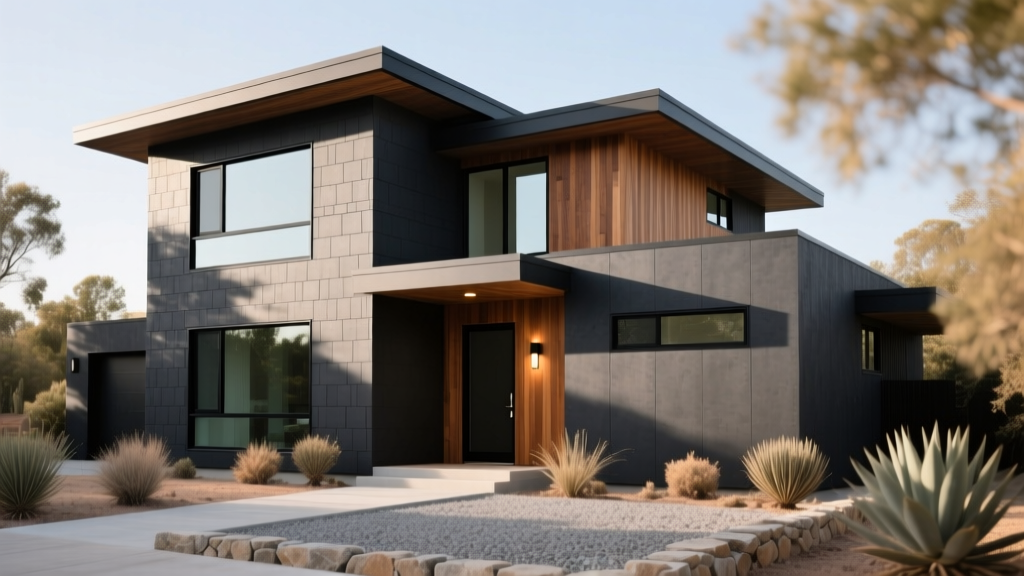
Material Deep-Dive: Top 4 Contenders
1. Fiber Cement (The Durability Standard)
Fiber cement remains the benchmark for impact resistance and fire safety. Composed of Portland cement, silica sand, and cellulose fibers, it is impervious to wood-boring insects and rot. The market leader, James Hardie HardiePlank Lap Siding, utilizes ColorPlus Technology for factory-applied acrylic finishes that resist UV fading for up to 15 years.
- 2026 Installed Cost: $9.50 – $15.00 per sq.ft. (includes tear-off, Tyvek WRB, and labor).
- Lifespan: 40–50 years.
- Maintenance: Requires repainting every 12–15 years; caulking at joints must be inspected annually.
Expert Insight: Fiber cement is highly porous at the cut edges. Installers must seal every field cut with a high-quality masonry primer or use factory-cut lengths to prevent moisture wicking. Furthermore, it requires a minimum 6-inch clearance from soil grade to prevent capillary water absorption.
2. Engineered Wood (The Cost-to-Performance Sweet Spot)
Engineered wood offers the deep shadow lines and authentic texture of real timber without the dimensional instability. LP SmartSide ExpertFinish dominates this category, utilizing a zinc-borate treatment process that makes the wood strands highly resistant to fungal decay and termites. The substrate is bound with exterior-grade resins and pressed under high heat.
- 2026 Installed Cost: $7.50 – $12.00 per sq.ft.
- Lifespan: 30–40 years.
- Maintenance: Repaint every 8–10 years; inspect bottom edges for swelling.
Expert Insight: The primary failure mode for engineered wood is edge swelling. When installers cut panels on-site, the exposed core must be primed immediately. LP mandates a 3/8-inch gap at all end joints to allow for thermal expansion; failing to leave this gap will cause the boards to buckle and force moisture into the substrate.
3. Insulated Vinyl (The Budget & Thermal Upgrade)
Standard hollow-back vinyl is prone to sagging and offers zero thermal resistance. Insulated vinyl, such as CertainTeed CedarBoards, solves this by fusing a contoured expanded polystyrene (EPS) foam backer directly to the PVC panel. This assembly increases the wall's continuous insulation, reduces thermal bridging through wood studs, and provides a rigid, impact-resistant profile that mimics thick wood clapboard.
- 2026 Installed Cost: $5.50 – $9.50 per sq.ft.
- Lifespan: 25–35 years.
- Maintenance: Virtually zero; requires only occasional power washing.
According to the Vinyl Siding Institute, modern insulated vinyl systems can add an R-value of up to R-5 to the exterior wall assembly, which is critical for meeting the stringent 2024 and 2026 IECC energy codes. However, installers must account for significant thermal expansion; panels must be nailed loosely in the center of the nailing hem to allow lateral movement.
4. Architectural Metal (The Modern & Coastal Choice)
Metal cladding—specifically standing seam and flush-wall panels made from 24-gauge steel or .032-inch aluminum—is the ultimate defense against hurricane-force winds and salt spray. ATAS International and McElroy Metal produce PVDF (Kynar 500) coated panels that resist chalking and chalky oxidation even in intense UV environments.
- 2026 Installed Cost: $12.00 – $20.00 per sq.ft.
- Lifespan: 50+ years.
- Maintenance: Inspect fastener washers and sealants every 10 years.
Expert Insight: Galvanic corrosion is a catastrophic risk if dissimilar metals are mixed. Never use standard steel screws on aluminum panels; always use stainless steel or aluminum-matched fasteners with neoprene washers. Additionally, large flat metal panels require strategic stiffening ribs to prevent 'oil canning' (visible rippling caused by thermal stress).
Head-to-Head Comparison Matrix
| Material | Avg. Installed Cost | Wind Rating | Fire Class | Added R-Value |
|---|---|---|---|---|
| Fiber Cement | $9.50 - $15.00 | Up to 130 mph | Class A | 0 |
| Engineered Wood | $7.50 - $12.00 | Up to 115 mph | Class C | 0 |
| Insulated Vinyl | $5.50 - $9.50 | Up to 110 mph | Class C | R-2 to R-5 |
| Architectural Metal | $12.00 - $20.00 | 150+ mph (HVHZ) | Class A | 0 (Requires rigid foam) |
Critical Failure Modes & Installation Gotchas
The best house siding material will fail prematurely if the water management system behind it is compromised. According to FEMA Building Science guidelines, wind-driven rain is the primary culprit for envelope failure. Avoid these common installation errors:
- Missing Rainscreen Gaps: Installing any absorbent siding (fiber cement, wood, engineered wood) directly flat against the WRB traps moisture. Utilizing a 3/8-inch drainage mat (like Keene Building Products Driwall) creates a capillary break and allows the back of the siding to dry.
- Flashing Integration Errors: Siding installers often rely on caulk at window flanges instead of proper step-flashing and sill pans. Caulk has a 7-year lifespan; metal flashing lasts the life of the building. Always integrate siding with self-adhering flashing tapes that overlap the WRB shingle-style.
- Vinyl Thermal Bowing: Dark-colored vinyl siding absorbs significant heat. If installed on a wall with low-E double-pane windows, the reflected solar energy can exceed 165°F, melting and warping the vinyl. Installers must use protective window screens or opt for lighter siding colors on elevations with high solar gain.
Final Verdict: Which is the Best House Siding Material?
There is no single universal winner; the best house siding material depends entirely on your climate zone and budget parameters.
The 2026 Consensus: For homeowners in wildfire-prone or coastal regions prioritizing a 50-year lifecycle, Fiber Cement is the undisputed choice. For budget-conscious renovations in cold climates where boosting wall R-value is necessary to meet energy codes, Insulated Vinyl provides the highest immediate ROI. For modern architectural designs requiring zero maintenance and extreme wind uplift resistance, Architectural Metal justifies its premium upfront cost.
Before signing a contract, require your installer to provide a detailed moisture management plan, specifying the exact WRB brand, flashing tape model, and rainscreen gap methodology. The longevity of your exterior cladding is dictated not just by the panel itself, but by the hidden water-resistive assembly beneath it.
Written by
Sarah WhitfieldSarah Whitfield is a chartered quantity surveyor (MRICS) and construction cost analyst with 15 years of experience in material pricing, procurement strategy, and project budgeting. She earned her degree in Construction Management from the University of Reading (UK) and has worked on projects ranging from $2M custom homes to $180M mixed-use developments across North America and Europe. Sarah currently leads cost estimating for BuildMat Insight, maintaining a proprietary database of 4,000+ material price points updated quarterly. She is a frequent contributor to RSMeans cost data panels and has presented at the International Cost Engineering Council (ICEC) congress. Based in Denver, CO, Sarah is an avid trail runner and volunteer mentor for Women in Construction.
More from Sarah Whitfield
View all
Wood & Lumber
What Are the Different Types of Wood? A Builder's Guide
Compare structural softwoods, finish hardwoods, and engineered lumber. Analyze Janka ratings, MOE values, and 2026 pricing for construction.
Aug 4, 2026

Walls & Panels
Steel Framing vs Wood Framing: Corrosion and Moisture Defense
Compare steel framing vs wood framing for moisture resistance. Learn about galvanized coatings, condensation risks, and corrosion protection strategies.
Jul 21, 2026

Stone & Masonry
How to Cut Stone Veneer: Wet Saw vs Grinder Comparison
Compare the best tools for cutting stone veneer. We review wet saws, angle grinders, and chop saws to help you achieve clean, chip-free cuts.
Jul 21, 2026