How to Choose the Best Home Siding Materials for Your Climate
Master our selection framework for home siding materials. Compare costs, lifespan, and climate performance for vinyl, fiber cement, wood, and metal.
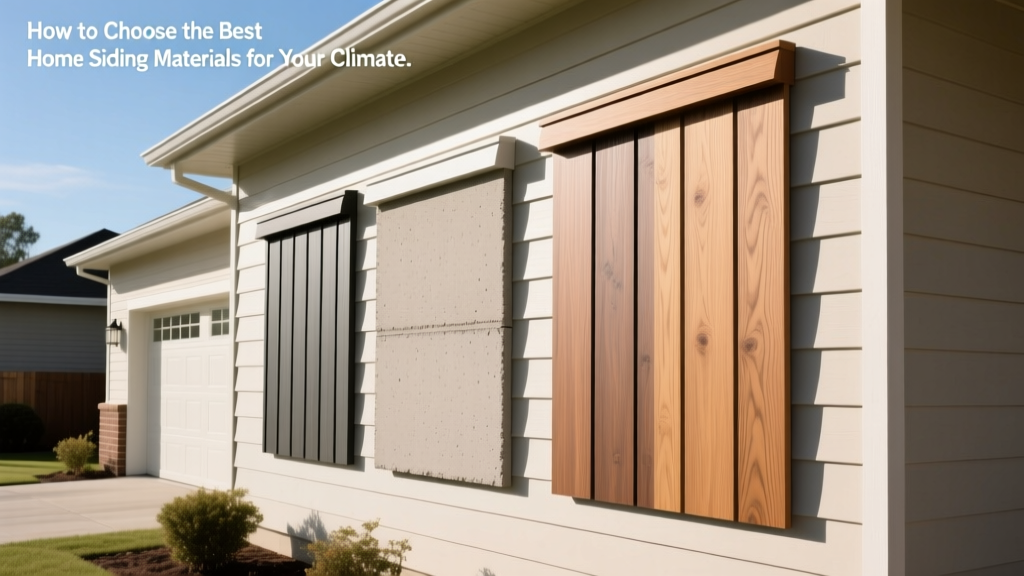
The 4-Pillar Siding Selection Framework
Selecting home siding materials requires balancing upfront capital expenditure against a 50-year lifecycle of environmental abuse. Homeowners and builders frequently make the mistake of choosing exterior cladding based solely on aesthetic preference or initial square-foot pricing. This leads to premature failure, excessive maintenance, and costly remediation. To engineer a durable building envelope, professionals utilize a 4-pillar selection framework: Climate Stressors, Lifecycle Cost, Material Failure Modes, and Architectural Alignment. This guide breaks down this framework to help you specify the exact right cladding for your project.
Pillar 1: Climate & Environmental Stressors
The local microclimate dictates which home siding materials will survive and which will degrade. Environmental stressors fall into three primary categories: thermal fluctuation, moisture intrusion, and UV/wind exposure.
- Thermal Fluctuation Zones (Midwest/Northeast): Materials must withstand extreme expansion and contraction. Vinyl siding can expand up to 5/8 of an inch per 10-foot panel across seasonal temperature swings. If nailed too tightly without expansion gaps, it will buckle and warp.
- High-Moisture & Coastal Zones (Southeast/Pacific Northwest): Constant humidity and driving rain demand highly water-resistant materials with integrated drainage. Fiber cement excels here, particularly when utilizing James Hardie's HardieZone technology, which engineers the siding's density and primer application specifically for wet, freezing, or high-UV environments.
- Wildland-Urban Interface (WUI) Zones (California/Mountain West): Fire resistance is non-negotiable. 2026 building codes in strict WUI zones mandate Class A fire-rated assemblies. This immediately disqualifies standard vinyl and natural wood, leaving fiber cement, stucco, or metal as the only viable options.
Pillar 2: Lifecycle Cost vs. Initial Investment Matrix
Evaluating home siding materials requires looking past the installation invoice. The true cost includes the initial installation, the expected lifespan, and the cumulative maintenance (painting, sealing, repairing) over a 50-year horizon.
| Material Category | Premium Brand Example | 2026 Installed Cost (per sq. ft.) | Expected Lifespan | 50-Year Maintenance Factor |
|---|---|---|---|---|
| Fiber Cement (Lap) | James Hardie Artisan Collection | $12.50 - $17.00 | 50+ Years | Low (Repaint every 15 yrs) |
| Engineered Wood | LP SmartSide ExpertFinish | $9.50 - $14.00 | 30 - 50 Years | Medium (Repaint every 10 yrs) |
| Insulated Vinyl | CertainTeed Cedar Impressions | $8.00 - $12.50 | 30 - 40 Years | Very Low (Wash only) |
| Natural Cedar (Shingles) | Maibec CanExel / Clear Cedar | $16.00 - $26.00 | 25 - 40 Years | High (Stain/seal every 5-7 yrs) |
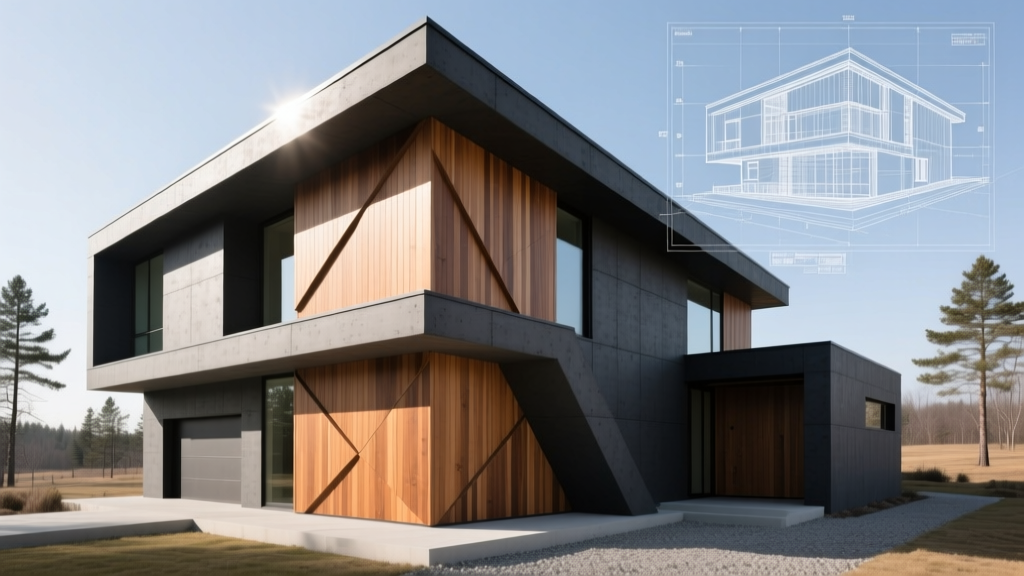
Pillar 3: Material Deep-Dive & Failure Mode Analysis
Every cladding system has a specific Achilles heel. Understanding these failure modes allows you to design details that mitigate them.
Fiber Cement: The Heavyweight Contender
Fiber cement (composed of Portland cement, sand, and cellulose fibers) is highly resistant to rot, fire, and pests. However, it is highly porous at the cut edges and end-joints. Failure Mode: Capillary wicking. If fiber cement is installed less than 2 inches above a roofline or 6 inches above grade, it will wick ground moisture, leading to freeze-thaw spalling and structural delamination. Furthermore, blind-nailing fiber cement without pre-drilling or using specialized ribbed fasteners often results in blowouts and cracked panels.
Engineered Wood: The Cost-Effective Alternative
Products like LP SmartSide use wood strands bound with resins and treated with zinc borate for termite and fungal resistance. They offer the deep shadow lines of wood at a lower weight and cost than fiber cement. Failure Mode: Edge swelling and woodpecker damage. If the factory-applied edge sealant is compromised during cutting on-site, and the installer fails to apply a field-applied sealant to the cuts, moisture will infiltrate the substrate, causing the edges to swell and the paint to peel.
Insulated Vinyl: The Low-Maintenance Workhorse
Modern insulated vinyl siding features a contoured EPS foam backing that increases impact resistance and provides a continuous layer of exterior R-value (typically R-2 to R-3). According to the Vinyl Siding Institute (VSI), this backing also reduces thermal bridging. Failure Mode: Thermal melting from concentrated solar reflection. Low-emissivity (Low-E) double-pane windows can focus reflected sunlight into a concentrated beam that exceeds 165°F, melting and warping adjacent vinyl siding. This requires the installation of anti-reflective window screens or strategic landscaping.
Pillar 4: The "If This, Then That" Decision Flow
Use this rapid decision matrix to narrow down your home siding materials based on your primary project constraint:
- IF your primary constraint is strict budget and low maintenance, THEN specify premium insulated vinyl with a concealed fastening system.
- IF your home is in a historic district requiring authentic profiles, THEN specify fiber cement with a smooth finish and custom-milled PVC trim, or natural cedar if the budget allows.
- IF you are building in a high-wind coastal zone (130+ mph), THEN specify fiber cement or engineered wood rated for high-velocity hurricane zones (HVHZ), ensuring a 1-inch structural rainscreen gap behind the panels.
- IF you want the aesthetic of cedar shakes without the fire risk or maintenance, THEN specify polymer shake siding (like CertainTeed's line) or fiber cement shingles with a Class A fire rating.
Installation Non-Negotiables for Longevity
The most expensive home siding materials will fail prematurely if the weather-resistive barrier (WRB) and drainage plane are incorrectly detailed. Modern building science dictates that no siding should be applied directly flat against the WRB without a drainage gap. As detailed in Building Science Corporation's guidelines on drainage planes, a capillary break is essential to allow bulk water to drain and the wall assembly to dry to the exterior.
For fiber cement and engineered wood, integrating a 3D rainscreen mat (such as Mortairvent or Keene Driwall) creates a 1/4-inch to 3/8-inch air gap. This gap equalizes pressure, prevents wind-driven rain from penetrating the WRB, and dramatically extends the life of the exterior paint by allowing the back of the siding to dry at the same rate as the face. Skipping this $1.50 to $2.50 per square foot upgrade is the most common and costly error in modern residential cladding installation.
"Siding is merely the cladding; the true weather barrier is the drainage plane behind it. Treat the installation of your WRB, flashing, and tape with the same precision as the visible exterior finish."
By applying this 4-pillar framework, you move beyond superficial aesthetics and select home siding materials that are structurally, financially, and environmentally optimized for your specific build.
Written by
Priya KapoorPriya Kapoor is a real estate market analyst and construction economics researcher with expertise in housing affordability, development feasibility, and infrastructure investment. She holds a Master of Regional Planning from Cornell University and previously worked as a senior analyst at CBRE's Investment Properties group, where she modeled returns for $4B in mixed-use development pipelines. Priya now runs an independent research practice advising developers, municipalities, and REITs on construction cost forecasting and market timing. She publishes the quarterly "BuildMat Market Pulse" report tracking material price indices across 12 commodity categories. Based in Austin, TX, Priya serves on the board of Habitat for Humanity Austin and is a marathon runner.
More from Priya Kapoor
View all
Construction Cost
Cost to Build a 1600 Sq Ft Home in 2026: Full Breakdown
Accurate 2026 cost to build a 1600 sq ft home—material, labor, and regional pricing breakdowns included. Plan your budget with real-time estimates.
Aug 11, 2026

Wood & Lumber
Name the Types of Wood for Pressure Treatment and Preservation
Learn how to name the types of wood best suited for pressure treatment. Compare species treatability, chemical retention levels, and 2026 preservation costs.
Aug 4, 2026

Stone & Masonry
Stone Veneer Suppliers Lindenhurst: 2026 Cost Analysis
Analyze 2026 stone veneer costs in Lindenhurst, NY. Compare local supplier pricing, delivery fees, and Suffolk County installation labor rates.
Aug 4, 2026