Most Durable Siding Materials: 2026 Lifespan & Cost Guide
Compare the most durable siding materials for 2026. Analyze fiber cement, metal, and engineered wood lifespans, costs, and extreme weather performance.

The True Cost of Durability: Beyond the Initial Price Tag
Measuring siding durability requires looking past the initial material cost per square foot. True durability encompasses impact resistance, moisture tolerance, thermal expansion coefficients, and the frequency of required maintenance cycles. A material that costs 20% more upfront but eliminates the need for repainting or termite treatments over a 40-year lifespan yields a significantly lower total cost of ownership. According to the U.S. Department of Energy, exterior wall cladding also plays a critical role in managing continuous insulation and moisture drainage planes, meaning material failure often compromises the entire building envelope.
This guide evaluates the most durable siding materials available in 2026, breaking down their material science, exact installation tolerances, and real-world performance under extreme environmental stress.
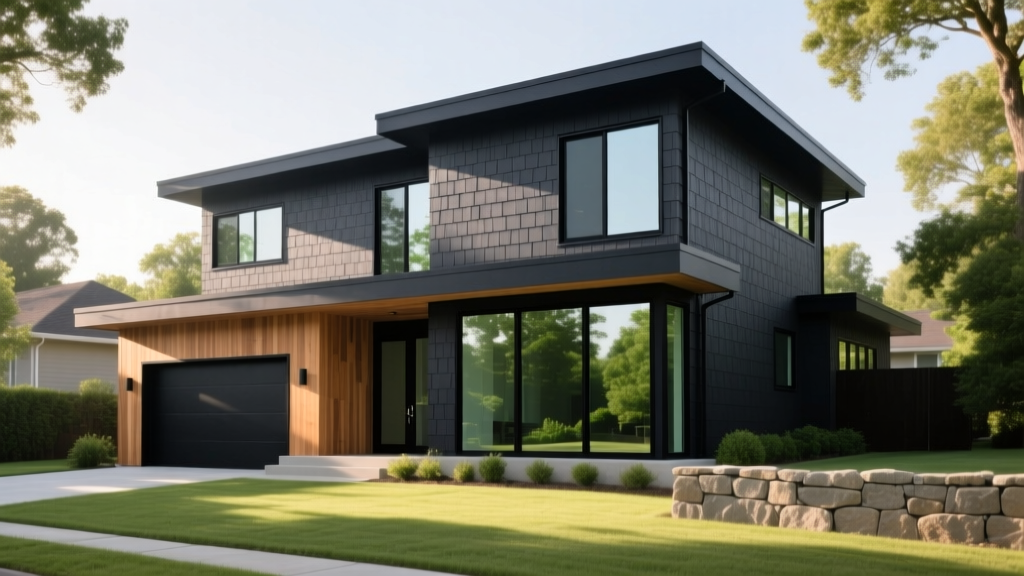
Tier 1: The Heavyweights (50+ Year Lifespan)
Materials in this tier are virtually impervious to biological degradation (rot, termites) and hold Class A fire ratings. They require specialized installation but offer multi-generational lifespans.
Fiber Cement (Autoclave-Cured)
Fiber cement remains the benchmark for residential durability. Composed of Portland cement, silica sand, and cellulose fibers, the mixture is extruded and autoclave-cured under high pressure and steam. This process creates a dense, dimensionally stable matrix that does not warp, rot, or burn.
- Market Leaders: James Hardie (Artisan and ColorPlus Technology lines), Nichiha, Allura.
- Physical Specs: Standard lap siding is typically 5/16-inch thick and 12 feet long, weighing approximately 300 pounds per square (100 sq ft).
- 2026 Installed Cost: $7.50 to $12.50 per square foot.
- Failure Modes: Moisture wicking at end joints if unsealed, and efflorescence if installed in constant contact with soil.
Architectural Steel Siding
While corrugated steel is common in agriculture, architectural flush-wall panels and standing-seam profiles are dominating high-end residential builds. Steel offers the highest impact resistance of any cladding and a zero-combustibility rating.
- Material Specs: 24-gauge steel (0.0239 inches thick) is the residential standard. Thicker 22-gauge is used in high-wind coastal zones.
- Finish Technology: Kynar 500 (PVDF) resin coatings are mandatory for 2026 installations to prevent UV chalking and fading. These finishes carry 30-to-40-year non-prorated fade warranties.
- 2026 Installed Cost: $9.00 to $15.00 per square foot.
- Failure Modes: Galvanic corrosion if steel panels are fastened with incompatible metals (like copper or untreated aluminum) or if the protective zinc/aluminum alloy coating (Galvalume) is deeply scratched during installation.
| Material | Thickness / Gauge | Wind Rating (ASTM E1592) | Fire Class |
|---|---|---|---|
| Fiber Cement (Standard Lap) | 5/16 inch | Up to 150 MPH | Class A |
| Architectural Steel | 24-Gauge | Up to 180+ MPH | Class A |
| Engineered Wood | 7/16 inch | Up to 130 MPH | Class C / B |
| Poly-Ash Composite | 5/16 inch | Up to 150 MPH | Class A |
Tier 2: High-Performance Contenders (30-50 Year Lifespan)
These materials bridge the gap between natural aesthetics and engineered resilience, offering lighter weights and easier fabrication than Tier 1 options.
Engineered Strand Wood
Engineered wood siding utilizes wood strands coated in exterior-grade resins and waxes, pressed under high heat. The critical differentiator for durability is the chemical treatment used to prevent biological attack.
- Market Leader: LP SmartSide (ExpertFinish series).
- Preservative Tech: Treated with zinc borate, which provides foundational resistance against termites and fungal decay.
- 2026 Installed Cost: $6.50 to $10.50 per square foot.
- Installation Tolerance: Requires a strict 3/16-inch gap at all end joints and a 1/8-inch gap at inside corners to accommodate thermal expansion. Failure to gap results in severe buckling and voided warranties.
Poly-Ash Composites
A newer entrant in the high-durability space, poly-ash siding combines fly ash (a byproduct of coal combustion) with proprietary polymers. It mimics the workability of wood but possesses the moisture and fire resistance of masonry.
- Market Leader: Boral TruExterior Siding.
- Key Advantage: Unlike cellular PVC, poly-ash has a near-zero thermal expansion rate and can be painted any color, including dark tones with low Light Reflectance Values (LRV), without warping or melting.
- 2026 Installed Cost: $10.00 to $16.00 per square foot.
"The biggest mistake contractors make with high-performance siding is treating it like traditional wood. Using standard electro-galvanized nails instead of hot-dipped galvanized or stainless steel ring-shank fasteners will cause rust streaking and premature pull-through, voiding a 50-year material warranty in less than five years." — Building Science Corporation Field Guidelines
Environmental Stress Testing: Which Material Wins Where?
Durability is highly contextual. A material that excels in a freeze-thaw climate may fail rapidly in a coastal salt-spray environment. FEMA Building Science guidelines emphasize matching cladding to specific regional hazard profiles.
Coastal and Salt-Spray Zones
- Best Choice: Fiber Cement or Poly-Ash. Neither material corrodes when exposed to salt air.
- Caution: Steel siding requires meticulous maintenance of its Galvalume coating. Any cut edge or scratch must be immediately treated with a zinc-rich primer to prevent rapid oxidation.
Wildland-Urban Interface (WUI) / Fire Zones
- Best Choice: Fiber Cement and Architectural Steel. Both carry Class A fire ratings and will not ignite from wind-blown embers.
- Caution: Engineered wood, while treated, will eventually combust under sustained radiant heat and is often restricted in strict WUI building codes.
Freeze-Thaw and High-Moisture Climates
- Best Choice: Poly-Ash and Steel. These materials absorb zero moisture, meaning water cannot infiltrate the matrix, freeze, and cause spalling or cracking.
- Caution: Fiber cement is highly durable but must be kept at least 6 inches above soil grade and 2 inches above horizontal surfaces (like decks) to prevent capillary action from drawing groundwater into the panel ends.
Hidden Installation Variables That Void Warranties
The most durable siding materials will fail prematurely if the drainage plane and flashing details are executed poorly. Manufacturers routinely deny warranty claims based on the following installation errors:
Critical Clearances & Fastening Rules
- Kick-out Flashing: Where a roofline intersects a sidewall, kick-out flashing must divert water away from the siding. Missing kick-out flashing is the #1 cause of hidden rot behind fiber cement and engineered wood.
- Blind Nailing vs. Face Nailing: Fiber cement lap siding must be blind-nailed (fastened near the top edge so the overlapping board covers the nail head) unless using specific color-matched screws for face-nailing. Exposed nail heads invite water intrusion.
- Housewrap Integration: Siding should never be applied directly over bare OSB or plywood. A code-approved weather-resistive barrier (WRB) with a minimum 1/4-inch rainscreen gap (using furring strips or a dimpled drainable wrap) is mandatory to allow bulk water to escape.
The 2026 Buyer’s Decision Matrix
Use this framework to select the optimal durable siding material based on your specific project constraints:
- If budget is strict but lifespan must exceed 30 years: Choose Engineered Wood (LP SmartSide). It offers the lowest installed cost in the high-durability tier and mimics the deep shadow lines of real cedar.
- If building in a high-wind coastal or WUI fire zone: Choose Fiber Cement (James Hardie) or Architectural Steel. The non-combustible nature and impact resistance justify the higher labor and material costs.
- If painting dark, modern accent colors (e.g., charcoal, navy): Choose Poly-Ash (TruExterior). It eliminates the thermal warping risks associated with dark colors on PVC or engineered wood, and it holds paint exceptionally well due to its low moisture absorption.
Written by
David NakamuraDavid Nakamura is a licensed architect (AIA) and construction technology writer focused on sustainable building methods, mass timber engineering, and high-performance building envelopes. He holds a Master of Architecture from the University of Washington and is a certified Passive House Consultant (CPHC). David spent eight years at the Seattle firm Mithun, where he led the design of three LEED Platinum projects, before founding his own practice specializing in net-zero residential design. He serves on the editorial advisory board of GreenBuilder Magazine and has authored peer-reviewed papers on cross-laminated timber (CLT) connections for the Journal of Structural Engineering. In his spare time, David teaches woodworking at Pratt Fine Arts Center and kayaks the Puget Sound.
More from David Nakamura
View all
Construction Cost
Labor Cost to Build a Deck Per Sq Ft: 2026 Installation Guide
Discover the exact labor cost to build a deck per sq ft in 2026. This installation guide breaks down contractor rates, complexity factors, and hidden fees.
Aug 4, 2026

Construction Cost
How Much Does It Cost to Build a 3 Bedroom House? Financing Guide
Learn exactly how much it costs to build a 3 bedroom house and explore 2026 financing options, construction loan types, and budget frameworks for your build.
Aug 4, 2026

Construction Cost
Cost to Build a Tennis Court: 2026 Guide
How much does it cost to build a tennis court in 2026? Breakdowns for asphalt, concrete, and synthetic surfaces plus fencing and lighting.
Jul 30, 2026