Siding Material Types: 2026 Cost Breakdown & ROI Guide
Compare 2026 installed costs for top siding material types. Get exact pricing, hidden labor fees, and ROI data for fiber cement, vinyl, and stucco.

The True Cost of Siding Material Types: Beyond the Price Tag
Evaluating exterior cladding strictly by the cost of raw materials per square foot is a critical financial error. The total cost of ownership (TCO) for any exterior envelope includes tear-off, substrate preparation, specialized labor, climate-specific weather barriers, and long-term maintenance. When analyzing the most popular siding material types in 2026, the gap between the cheapest upfront option and the most cost-effective long-term investment is often dictated by hidden installation variables and regional labor rates.
This breakdown dissects the exact installed costs, material-specific failure modes, and financial trade-offs of the dominant cladding systems on the market today.
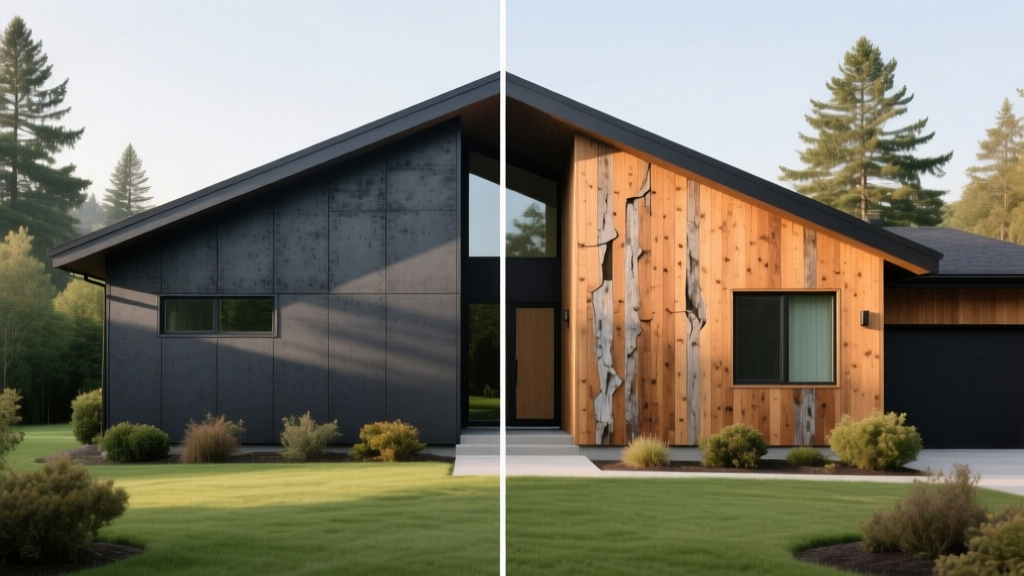
2026 Siding Material Types: Master Cost & Lifespan Matrix
The following matrix reflects national average installed costs for a standard 2,000-square-foot single-story exterior, factoring in 2026 labor rates and material pricing. Costs assume a standard tear-off of one existing layer and the installation of a basic synthetic weather-resistive barrier (WRB).
| Material Type | Material Cost (per sq. ft.) | Total Installed Cost (per sq. ft.) | Expected Lifespan | Maintenance Cycle |
|---|---|---|---|---|
| Vinyl (Standard to Premium) | $1.50 - $3.50 | $4.50 - $8.50 | 20 - 40 Years | Wash every 2-3 years |
| Fiber Cement (Lap/Vertical) | $3.00 - $6.00 | $8.50 - $14.00 | 30 - 50 Years | Repaint every 10-15 years |
| Engineered Wood (OSB-based) | $2.50 - $5.00 | $7.00 - $12.00 | 30 - 50 Years | Repaint every 5-10 years |
| Traditional 3-Coat Stucco | $2.00 - $4.00 | $8.00 - $13.50 | 50+ Years | Inspect/seal cracks annually |
| Metal (Corrugated/Panel) | $4.00 - $8.00 | $10.00 - $18.00 | 40 - 60 Years | Inspect fasteners every 5 years |
Deep Dive: Upfront Costs and Hidden Financial Traps
1. Fiber Cement: The Premium Workhorse
Fiber cement, dominated by brands like James Hardie (HardiePlank) and Allura, offers the aesthetic depth of wood with extreme fire and rot resistance. However, the financial friction lies in the installation. According to the James Hardie professional installation guidelines, cutting fiber cement generates crystalline silica dust. This mandates that contractors use specialized dust-collecting saws (like the Bosch iQ350) and N95 respirators, which increases labor overhead by 12% to 18% compared to wood or vinyl.
Furthermore, fiber cement is exceptionally heavy (roughly 2.3 lbs per square foot for lap siding). This weight limits how much material a crew can stage on scaffolding at once, slowing production rates. If you are installing pre-finished fiber cement (e.g., HardiePlank with ColorPlus Technology), you must budget an additional $1.50 to $2.50 per linear foot for factory-matched touch-up kits and specialized stainless-steel blind nails to prevent rust streaking.
2. Vinyl Siding: The Budget Standard with Thermal Caveats
Modern vinyl siding has evolved far beyond the brittle, low-grade plastics of the 1990s. Premium insulated profiles like CertainTeed Cedar Impressions or Mastic Quest offer rigid foam backing that improves R-value by up to R-3.0 and creates a flush, wood-like profile. The Vinyl Siding Institute (VSI) certifies products that can withstand wind loads up to 110 mph, making it a viable option even in coastal regions.
The hidden cost with vinyl is thermal expansion and substrate preparation. Vinyl expands and contracts up to 5/8 of an inch over a 100-degree temperature swing. If installed too tightly without proper nailing hem clearance, the panels will buckle and warp. Additionally, if your home's existing sheathing is uneven, vinyl will telegraph every dip and wave. Budgeting $1.50 per square foot for rigid foam fan-fold insulation under the vinyl is often mandatory to achieve a premium look, effectively erasing the material's initial cost advantage over engineered wood.
3. Engineered Wood: The Middle-Ground Contender
Engineered wood siding, primarily LP SmartSide ExpertFinish, is manufactured from wood strands bound with resins and treated with zinc borate to resist termites and fungal decay. It cuts and installs exactly like natural wood, meaning labor costs are significantly lower than fiber cement. No silica dust protocols or heavy-lifting penalties apply.
The primary financial risk with engineered wood is moisture wicking. If the bottom edges of the lap siding are not properly sealed with an acrylic caulk or if the ground clearance is less than the required 6 inches, the OSB core will absorb water, swell, and delaminate. Repairing swollen engineered wood requires full board replacement, not just patching, making strict adherence to the manufacturer's moisture management details non-negotiable.
4. Traditional Stucco: The Regional Specialist
Traditional 3-coat stucco (scratch, brown, and finish) over metal lath and asphalt-impregnated paper remains a dominant force in the Southwest and Florida. The material itself is cheap—primarily Portland cement, sand, and lime—but the labor is highly specialized and intensive. The cost of stucco is almost entirely driven by the scaffolding setup, the multi-day curing process between coats, and the artisan skill required to trowel a consistent finish.
The most common and expensive stucco failure occurs when contractors omit or improperly flash the weep screed at the foundation line. The weep screed allows moisture that penetrates the porous stucco to drain out of the wall cavity. If buried under soil or mulch, water wicks back into the wood framing, causing structural rot that often costs $15,000+ to remediate. Always verify weep screed placement before the scratch coat is applied.
Hidden Envelope Costs: What the Material Quote Doesn't Show
When soliciting bids for different siding material types, contractors often quote the cladding and basic labor, excluding critical envelope upgrades required to meet modern building codes. Budget for the following variables:
- Tear-off and Disposal: Removing existing wood shake or asbestos-containing siding can add $2.00 to $4.50 per square foot due to hazardous material handling and heavy dumpster fees.
- Sheathing Upgrades: Upgrading from standard OSB to an integrated weather barrier like Huber ZIP System sheathing adds roughly $1.25 to $1.75 per square foot. This eliminates the need for traditional housewrap and provides a superior drainage plane, which is highly recommended behind moisture-sensitive claddings like stucco and fiber cement.
- Trim and Soffits: Wrapping window casings, corner posts, and fascia with aluminum coil stock or composite trim (like AZEK) is rarely included in base siding quotes. Expect to add $2,500 to $4,500 to a standard 2,000 sq. ft. project for comprehensive trim work.
Climate Penalties and Regional Labor Variations
The geographic location of your project drastically alters which siding material types are financially viable. In high-wind coastal zones (HVHZ), local building codes often mandate impact-resistant cladding or specialized fastening schedules. For example, installing fiber cement in Miami-Dade County requires specific stainless-steel fasteners driven into structural studs rather than just the sheathing, increasing labor time by 20%.
Conversely, in the arid Southwest, the intense UV radiation degrades standard vinyl siding and dark-colored engineered wood prematurely. In these regions, traditional stucco or light-colored, reflective metal panels offer a vastly superior ROI because they do not require the frequent replacement or repainting that UV-damaged materials demand. For comprehensive data on wind and seismic ratings for exterior envelopes, consult the FEMA Building Science publications, which provide region-specific guidelines for material resilience.
The Contractor's Decision Framework
Selecting the right material requires matching your financial constraints with your property's physical environment. Use this framework to finalize your choice:
Choose Fiber Cement If: You are building a forever home, live in an area with high wildfire risk or severe hail, and have the budget to absorb the high initial labor and silica-mitigation costs. It offers the highest resale value premium in premium housing markets.
Choose Vinyl If: You are flipping a mid-tier property, working with a strict budget under $10,000 for a standard exterior, or need a low-maintenance solution for a rental property where tenant damage or frequent repainting is a concern.
Choose Engineered Wood If: You want the deep shadow lines and authentic texture of wood or fiber cement, but your local labor market lacks the specialized crews required for heavy fiber cement installation, or your home's framing cannot support the extreme dead load of masonry or thick cement products.
Choose Stucco If: You reside in a dry, high-heat climate (USDA Zones 8-10), prefer a seamless architectural aesthetic (like Spanish or Modern Minimalist), and have access to highly rated, multi-generational plastering crews who understand modern moisture-drainage planes.
Written by
David NakamuraDavid Nakamura is a licensed architect (AIA) and construction technology writer focused on sustainable building methods, mass timber engineering, and high-performance building envelopes. He holds a Master of Architecture from the University of Washington and is a certified Passive House Consultant (CPHC). David spent eight years at the Seattle firm Mithun, where he led the design of three LEED Platinum projects, before founding his own practice specializing in net-zero residential design. He serves on the editorial advisory board of GreenBuilder Magazine and has authored peer-reviewed papers on cross-laminated timber (CLT) connections for the Journal of Structural Engineering. In his spare time, David teaches woodworking at Pratt Fine Arts Center and kayaks the Puget Sound.
More from David Nakamura
View all
Construction Cost
Labor Cost to Build a Deck Per Sq Ft: 2026 Installation Guide
Discover the exact labor cost to build a deck per sq ft in 2026. This installation guide breaks down contractor rates, complexity factors, and hidden fees.
Aug 4, 2026

Construction Cost
How Much Does It Cost to Build a 3 Bedroom House? Financing Guide
Learn exactly how much it costs to build a 3 bedroom house and explore 2026 financing options, construction loan types, and budget frameworks for your build.
Aug 4, 2026

Construction Cost
Cost to Build a Tennis Court: 2026 Guide
How much does it cost to build a tennis court in 2026? Breakdowns for asphalt, concrete, and synthetic surfaces plus fencing and lighting.
Jul 30, 2026