Gypsum Board Ceiling Cost vs Alternatives: 2026 Guide
Compare the 2026 gypsum board ceiling cost against plaster, wood, and PVC. Includes material pricing, labor rates, and structural edge cases.
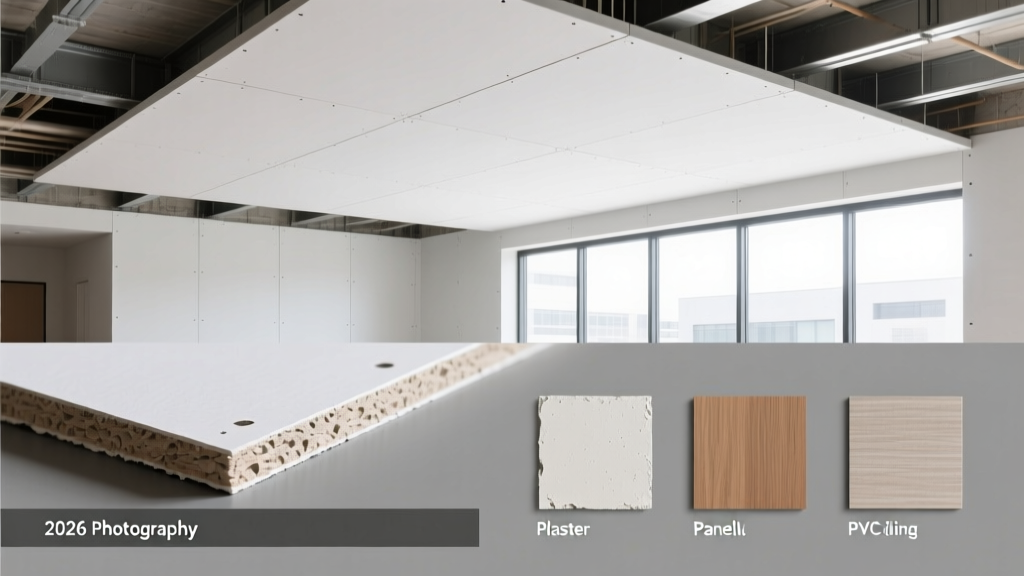
The True Gypsum Board Ceiling Cost: 2026 Material & Labor Breakdown
Calculating an accurate gypsum board ceiling cost requires separating raw material expenses from the highly variable labor rates associated with overhead finishing. In 2026, the shift toward ultralight panels has reduced physical strain on installers, slightly lowering labor times, while supply chain stabilization has kept material costs predictable.
Below is the current installed cost breakdown per square foot for a standard residential or light-commercial ceiling project, assuming a Level 4 finish and standard 9-foot ceiling heights.
| Cost Component | 1/2" Ultralight Standard | 5/8" Type X (Fire-Rated) |
|---|---|---|
| Material (Panels) | $0.45 - $0.65 / sq ft | $0.60 - $0.85 / sq ft |
| Fasteners & Joint Compound | $0.10 - $0.15 / sq ft | $0.12 - $0.18 / sq ft |
| Labor (Hanging) | $0.80 - $1.20 / sq ft | $0.95 - $1.40 / sq ft |
| Labor (Taping & Level 4 Finish) | $0.90 - $1.40 / sq ft | $0.90 - $1.40 / sq ft |
| Total Installed Cost | $2.25 - $3.40 / sq ft | $2.57 - $3.83 / sq ft |
For a standard 500-square-foot living room, expect a total gypsum board ceiling cost between $1,125 and $1,700 for standard board, or up to $1,915 if local building codes mandate 5/8-inch Type X fire-rated assemblies (such as National Gypsum Gold Bond® BRAND XP® Fire-Shield®).
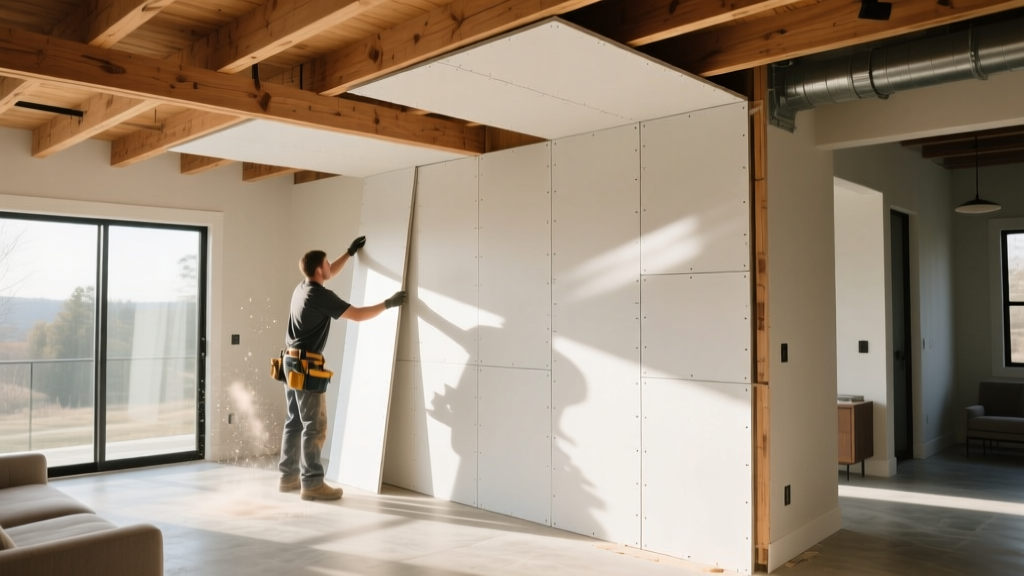
Head-to-Head: Gypsum vs. Plaster, Wood, and PVC Ceilings
To understand the market position of drywall, we must benchmark the gypsum board ceiling cost against common alternative materials. Each alternative carries distinct trade-offs in installation time, fire resistance, and long-term maintenance.
| Material | Total Installed Cost (2026) | Install Time (500 sq ft) | Fire Rating | Moisture Tolerance |
|---|---|---|---|---|
| Gypsum Board (Standard) | $2.25 - $3.83 / sq ft | 1 - 2 Days | Up to 1-Hour | Low (unless treated) |
| Wet Plaster (Veneer) | $10.00 - $18.00 / sq ft | 5 - 7 Days | High | Moderate |
| Wood Plank / Beadboard | $7.00 - $14.00 / sq ft | 2 - 3 Days | Very Low | Low |
| PVC / Vinyl Panels | $3.50 - $6.00 / sq ft | 1 Day | Very Low | High |
| Acoustic Drop Tile | $4.00 - $8.50 / sq ft | 1 - 2 Days | Moderate | Moderate |
The Verdict: Gypsum board remains the undisputed cost leader for seamless, paintable ceilings. While PVC panels compete on the lower end of the price spectrum and offer superior moisture resistance, they lack the structural rigidity, fire rating, and premium aesthetic of a properly finished gypsum surface. Wet plaster offers a harder, more monolithic finish but commands a 300% to 500% premium due to the scarcity of skilled tradespeople in 2026.
Structural Edge Cases: When Gypsum Ceilings Fail
The lowest material cost is irrelevant if the ceiling fails prematurely. Gypsum board ceilings are highly susceptible to gravity-induced sagging and joint fracturing if framing parameters are ignored.
Standard 1/2-inch gypsum board is only rated for ceiling joist spacing up to 16 inches on center (OC). If your framing is spaced at 24 inches OC, installing standard 1/2-inch board will result in visible sagging within 6 to 12 months, exacerbated by the weight of attic insulation. For 24-inch OC framing, you must upgrade to 5/8-inch board or use a specialized 1/2-inch sag-resistant product like CertainTeed ToughRock® Sag Defense or USG Sheetrock® Brand UltraLight Panels, which are engineered with reinforced fiberglass mats to span 24 inches safely.
Fastener Patterns and ASTM C840 Compliance
Over-screwing or under-screwing compromises the ceiling's integrity. Per industry application standards, ceiling fasteners must be spaced a maximum of 12 inches on center in the field and 8 inches on center at supported edges. Using drywall screws that are too long can blow out the paper face, creating a 'spinner' that provides zero holding power and requires a secondary fastener 2 inches away.
Hidden Costs That Inflate Your Budget
Contractor estimates often omit secondary prep work and specialized finishing requirements. When budgeting your gypsum board ceiling cost, factor in these frequent line-item additions:
- Level 5 Skim Coat ($1.25 - $1.75 / sq ft): A Level 4 finish is sufficient for flat paints and standard lighting. However, if the ceiling will receive gloss or semi-gloss paint, dark colors, or is illuminated by wall-washers or skylights, a Level 5 finish is mandatory to prevent joint photographing. This requires a thin skim coat of joint compound over the entire surface.
- Scaffolding and High-Ceiling Surcharges ($0.30 - $0.60 / sq ft): Ceilings above 12 feet require rolling scaffolding or hydraulic lifts. This drastically slows down the hanging and mudding process, triggering high-ceiling labor multipliers.
- Corner Bead Upgrades ($1.50 - $3.00 per linear foot): Standard metal corner bead is prone to denting. Upgrading to paper-faced metal bead (like Trim-Tex Magic Corner) or vinyl bead prevents edge cracking and denting but adds material and labor time.
- Waste Factor (10% - 15%): Ceilings with multiple penetrations (recessed lighting, HVAC registers, ceiling fans) or irregular angles generate significant offcuts. Always calculate material needs with a minimum 12% waste buffer.
Decision Framework: Which Ceiling Material Fits Your Project?
Use this conditional framework to determine if gypsum board is the correct specification for your specific environment, or if an alternative is justified.
Material Selection Flowchart
IF the space is a standard living area, bedroom, or hallway with standard 8-10 ft ceilings and climate control...
THEN specify 1/2" Ultralight Gypsum Board. It offers the best ROI, fastest installation, and seamless aesthetic.
IF the space is a garage, mechanical room, or multi-family separation requiring fire blocking...
THEN specify 5/8" Type X Gypsum Board. The added glass fibers provide a verified 1-hour fire rating per ASTM E119.
IF the space is an unconditioned bathroom, indoor pool enclosure, or basement with active water intrusion risks...
THEN ABANDON standard gypsum. Specify PVC Ceiling Panels or Fiberglass-Faced Gypsum (e.g., DensArmor Plus) paired with a suspended grid system to allow for moisture evaporation and panel replacement.
IF the design calls for exposed architectural warmth and budget allows...
THEN specify Wood Plank / Beadboard. Note that this requires a completely level sub-roof or furring strips, as wood will telegraph any framing undulations.
Industry Standards and References
Accurate estimating and installation require adherence to current manufacturing and trade guidelines. For detailed specifications on joint treatment and surface preparation, consult the Gypsum Association's GA-214 standard for recommended levels of finish. When selecting specific ultralight panels to reduce installer fatigue and sag-risk, review the technical data sheets for products like USG Sheetrock UltraLight Panels, which detail exact load-bearing and span limitations for overhead applications.
Written by
Priya KapoorPriya Kapoor is a real estate market analyst and construction economics researcher with expertise in housing affordability, development feasibility, and infrastructure investment. She holds a Master of Regional Planning from Cornell University and previously worked as a senior analyst at CBRE's Investment Properties group, where she modeled returns for $4B in mixed-use development pipelines. Priya now runs an independent research practice advising developers, municipalities, and REITs on construction cost forecasting and market timing. She publishes the quarterly "BuildMat Market Pulse" report tracking material price indices across 12 commodity categories. Based in Austin, TX, Priya serves on the board of Habitat for Humanity Austin and is a marathon runner.
More from Priya Kapoor
View all
Construction Cost
Cost to Build a 1600 Sq Ft Home in 2026: Full Breakdown
Accurate 2026 cost to build a 1600 sq ft home—material, labor, and regional pricing breakdowns included. Plan your budget with real-time estimates.
Aug 11, 2026

Wood & Lumber
Name the Types of Wood for Pressure Treatment and Preservation
Learn how to name the types of wood best suited for pressure treatment. Compare species treatability, chemical retention levels, and 2026 preservation costs.
Aug 4, 2026

Stone & Masonry
Stone Veneer Suppliers Lindenhurst: 2026 Cost Analysis
Analyze 2026 stone veneer costs in Lindenhurst, NY. Compare local supplier pricing, delivery fees, and Suffolk County installation labor rates.
Aug 4, 2026