Gypsum Board Fire Rating vs Alternatives: A Material Comparison
Compare the gypsum board fire rating against cement board, masonry, and calcium silicate. Find the best fire-resistant wall material for your build.

The Science Behind the Gypsum Board Fire Rating
When architects and contractors evaluate passive fire protection, the gypsum board fire rating remains the industry baseline for interior partitions and shaft walls. This dominance is not merely a product of cost; it is rooted in the chemical composition of the gypsum core. Gypsum is calcium sulfate dihydrate (CaSO4·2H2O), meaning approximately 21% of its weight is chemically bound water.
The Calcination Advantage
When exposed to fire, the heat energy is consumed by an endothermic reaction that converts the chemically bound water into steam. This process, known as calcination, keeps the temperature of the gypsum core at roughly 212°F (100°C) until all the water is driven off. Only after this calcination front moves entirely through the board does the temperature on the unexposed side begin to rise rapidly. This inherent thermal delay is what secures the standard 1-hour to 2-hour fire-resistance ratings (FRR) for gypsum assemblies.
However, specifying fire-rated assemblies requires looking beyond a single material. How does the gypsum board fire rating compare to non-combustible alternatives like cement board, calcium silicate, and concrete masonry units (CMU) when tested under real-world conditions?
Head-to-Head: Gypsum Board vs. Fire-Rated Alternatives
To understand material performance, we must differentiate between non-combustibility (a material that will not fuel a fire) and fire-resistance (an assembly's ability to contain a fire and limit heat transfer). The following matrix compares standard 5/8-inch Type X gypsum against common alternatives.
| Material | Core Mechanism | Typical Assembly Rating | Weight (per 4x8 sheet) | Approx. 2026 Material Cost |
|---|---|---|---|---|
| Type X Gypsum | Calcination (bound water) | 1-Hour (single layer) | ~70 lbs | $18 - $24 |
| Type C Gypsum | Calcination + Vermiculite/Fibers | 2-Hour (single layer) | ~74 lbs | $25 - $32 |
| Portland Cement Board | Thermal mass (no bound water) | Non-combustible, poor FRR | ~95 lbs | $35 - $45 |
| Calcium Silicate Board | Microporous insulation | 2 to 4-Hour (specialty) | ~60 lbs | $85 - $120 |
| Concrete Masonry (CMU) | Thermal mass + thickness | 2 to 4-Hour | ~3,000 lbs (per 100 sq ft) | $3.50 - $5.00 per block |
Deep Dive: Performance in Real-World Fire Scenarios
The Cement Board Misconception
A frequent error in value-engineering exercises is substituting Type X gypsum with cement board (such as USG Durock or James Hardie backer board) under the assumption that "cement doesn't burn, so it must be more fire-resistant." While cement board easily passes the ASTM E136 test for non-combustibility, it performs poorly in the ASTM E119 standard fire endurance test. Because cement board lacks chemically bound water, heat transfers through the panel rapidly. In a wall assembly, the unexposed side of a cement board partition will exceed the code-mandated 250°F temperature rise limit long before a comparable gypsum assembly, effectively failing the fire-resistance test unless backed by expensive mineral wool insulation.
Calcium Silicate: The High-Temperature Specialist
When the gypsum board fire rating maxes out—typically in high-heat industrial applications, elevator hoistways, or structural steel encasements exceeding 1,500°F—calcium silicate boards (like Promat PROMAXON) take over. Calcium silicate maintains its structural integrity at temperatures that would cause calcined gypsum to shrink, crack, and expose the framing. However, this comes at a 400% material premium and requires specialized cutting tools due to high silica dust generation, making it impractical for standard commercial tenant improvements.
The Hose-Stream Test: Structural Integrity Under Duress
Fire ratings are not just about heat; they are about structural survival. Following the furnace test in ASTM E119, fire-rated assemblies must often endure a hose-stream test to simulate the thermal shock and physical impact of firefighting efforts.
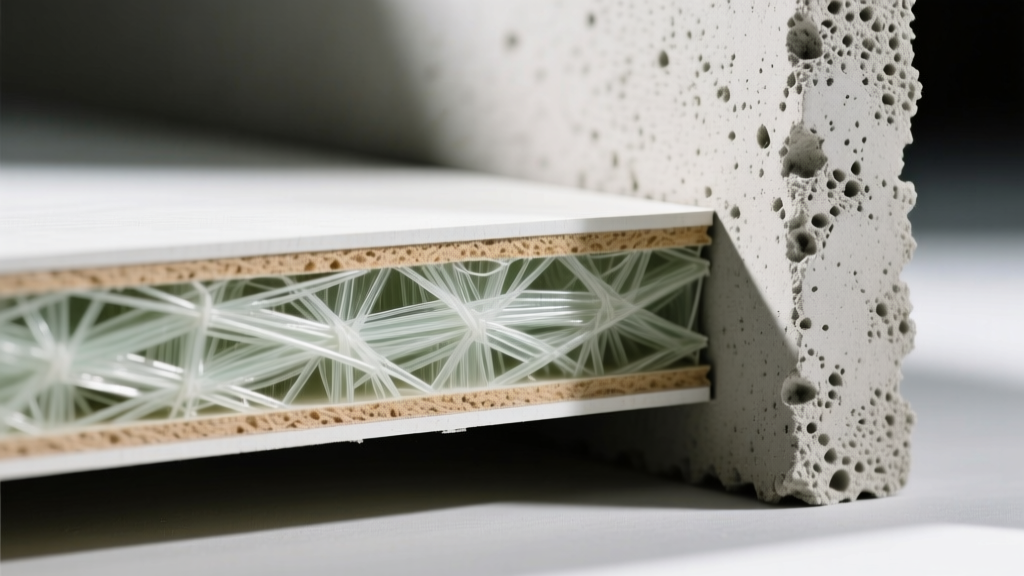
"Type C gypsum board incorporates vermiculite and increased glass-fiber reinforcement specifically to prevent core shrinkage during calcination. This ensures the board remains intact on the steel or wood studs during the hose-stream test, a failure point occasionally seen in unreinforced masonry or poorly fastened cementitious panels." — Fire Resistance Design Manual, Gypsum Association
Code Compliance and Assembly Design
It is critical to remember that there is no standalone "gypsum board fire rating." Fire ratings apply to assemblies—the combination of the board, the framing (wood or steel), the fastener type, the fastener spacing, and the joint treatment.
According to the NFPA 101 Life Safety Code and Underwriters Laboratories (UL) directories, a 1-hour rating for a steel-stud partition typically requires UL Design U419 or U465. These designs mandate specific 5/8-inch Type X boards (such as USG Sheetrock Firecode Core or National Gypsum Gold Bond XP Fire-Shield) installed with 1-1/4 inch Type S screws spaced exactly 8 inches on center at the joints and 12 inches in the field. Deviating from the specified fastener schedule or substituting standard joint compound for setting-type compound can void the assembly's legal fire rating.
Decision Framework: When to Choose What
Selecting the right fire-rated material requires balancing spatial constraints, structural load limits, and budget. Use this framework to guide your specification:
- Choose Type X Gypsum Board when: You need a standard 1-hour fire separation for commercial corridors, residential garages, or mechanical room enclosures. It offers the lowest installed cost and fastest framing schedule.
- Choose Type C Gypsum Board when: You require a 2-hour rating but want to minimize the wall thickness and weight. A single layer of 5/8-inch Type C on 2-1/2 inch steel studs achieves a 1-hour rating, while two layers achieve a 2-hour rating, saving significant floor space compared to double-layer Type X.
- Choose Concrete Masonry (CMU) when: The partition serves as a structural shear wall, an exterior fire barrier, or an acoustic barrier where mass is beneficial, and where floor loading capacity is not a constraint.
- Choose Calcium Silicate when: You are encasing structural steel columns/beams, lining industrial kilns, or building elevator shafts where ambient temperatures routinely exceed the structural limits of calcined gypsum.
The Impact of Moisture on Fire Ratings
In environments like commercial kitchens, indoor pools, or exterior soffits, moisture exposure can degrade the paper facers and core integrity of standard fire-rated gypsum. In these dual-threat environments, specify glass-mat gypsum panels (such as Georgia Pacific DensGlass). These panels utilize a fiberglass mat instead of paper and a moisture-treated core, maintaining their ASTM E119 fire-resistance ratings while resisting mold and moisture degradation—a critical intersection of building science that standard cement board cannot match without compromising thermal transfer limits.
Written by
Elena RodriguezElena Rodriguez is a civil engineer and technical writer specializing in concrete technology, masonry systems, and ASTM/ACI compliance. She earned her B.S. in Civil Engineering from Texas A&M University and spent a decade at a materials testing laboratory, performing over 2,000 concrete compressive strength tests and masonry prism evaluations. Elena is an ACI-certified Field Testing Technician (Grade I) and a member of ASTM Committee C12 on Natural Building Stone. She currently consults on forensic engineering cases involving concrete failures and moisture intrusion. Based in San Antonio, TX, Elena is a proud member of the Society of Women Engineers (SWE) and coaches her daughter's FIRST Robotics team.
More from Elena Rodriguez
View all
Walls & Panels
Cost Analysis: Light Gauge Steel Framing Advantages and Disadvantages
Evaluate light gauge steel framing advantages and disadvantages through a strict cost analysis lens, comparing material, labor, and lifecycle expenses.
Aug 4, 2026

Walls & Panels
Gypsum Board Types: Exact Specifications, Thickness & Dimensions
Compare standard, Type X, and moisture-resistant gypsum board types. Get exact specifications, thicknesses, dimensions, and ASTM standards for your project.
Aug 4, 2026

Fire Resistance
Best Fire-Resistant Outdoor Decking Materials: 2026 Buyer Guide
Discover the best fire-resistant outdoor decking materials for 2026. Compare Class A PVC, aluminum, and hardwood options for WUI compliance and safety.
Aug 4, 2026