2026 Gypsum Board Rate vs Alternatives: Cost Guide
Compare the 2026 gypsum board rate against plaster, cement board, and plywood. Discover true installed costs, material specs, and hidden fees.
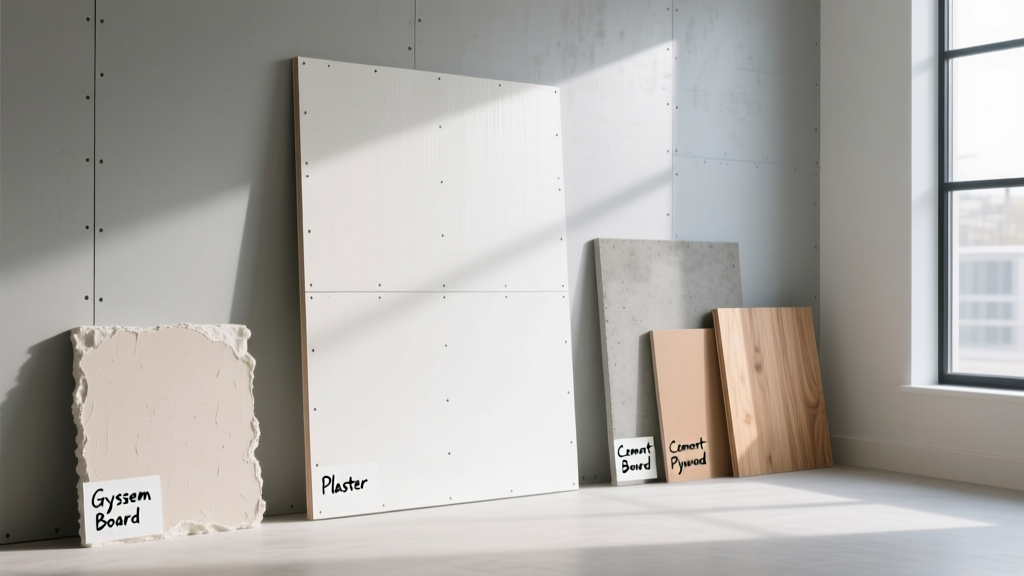
The 2026 Gypsum Board Rate: Material vs. Installed Costs
When budgeting for interior wall and ceiling cladding, the baseline gypsum board rate remains the most critical metric for contractors and homeowners. As of 2026, supply chain stabilizations have normalized the extreme price volatility seen in previous years, but labor shortages continue to push installed costs upward. Standard 1/2-inch gypsum board (such as USG Sheetrock UltraLight or CertainTeed ToughRock) currently averages $12.00 to $16.00 per 4x8 sheet for material only. However, the material cost is only a fraction of the total project expense.
Key Pricing Snapshot (Per Square Foot)
- Standard 1/2" Gypsum: $0.40 - $0.55 (Material) | $1.80 - $2.75 (Installed & Finished)
- 5/8" Type X (Fire-Rated): $0.55 - $0.75 (Material) | $2.40 - $3.50 (Installed & Finished)
- Moisture-Resistant (Green/Purple): $0.60 - $0.85 (Material) | $2.60 - $3.80 (Installed & Finished)
According to the Gypsum Association, modern gypsum panels manufactured to ASTM C1396 standards offer an unmatched balance of fire resistance, acoustic dampening, and cost-efficiency. Yet, specific architectural requirements—such as high-moisture environments, impact-resistant zones, or luxury acoustic demands—often force builders to evaluate alternatives. To determine if the premium for alternative materials is justified, we must compare the true lifecycle and installed rates against the gypsum baseline.
Head-to-Head: Gypsum Board vs. Top Wall Alternatives
Gypsum Board vs. Traditional Veneer Plaster
Veneer plaster systems apply a thin (1/16-inch) coat of plaster over a specialized moisture-absorbent gypsum base (commonly called "blue board"). While the material rate for blue board is only marginally higher than standard drywall (roughly $18.00 per sheet), the labor rate is where the budget diverges drastically.
A standard drywall crew can hang, tape, and apply a Level 4 finish to 1,000 square feet in roughly two to three days. A skilled plastering crew requires significantly more time for mixing, troweling, and curing. Consequently, while the gypsum board rate for a finished wall caps out around $3.00 per square foot, veneer plaster installed costs range from $6.00 to $11.00 per square foot. Plaster offers superior impact resistance and a monolithic, seamless aesthetic that eliminates fastener pops and joint banding, but it is rarely cost-justified outside of high-end residential restorations or commercial lobbies.
Gypsum Board vs. Cement Board (Durock / HardieBacker)
In wet areas like shower surrounds, steam rooms, and commercial kitchens, standard and even moisture-resistant gypsum board will eventually fail if exposed to direct, continuous water. Cement boards, such as USG Durock or James Hardie HardieBacker, are the standard alternative.
The material rate for 1/2-inch cement board is substantially higher, averaging $16.00 to $24.00 per 3x5 sheet (equating to $1.05 to $1.60 per square foot). More importantly, the installation labor rate spikes. Cement board is heavy, requires specialized carbide-tipped scoring tools or diamond-blade wet saws, and generates hazardous crystalline silica dust during cutting. Fastening requires corrosion-resistant screws and alkali-resistant mesh tape. Expect installed cement board rates to range from $4.50 to $7.00 per square foot before waterproofing membranes (like Schluter Kerdi or RedGard) are even applied. Use cement board strictly where direct water impingement occurs; using it for entire bathroom walls outside the wet zone is an unnecessary budget drain compared to purple moisture-resistant gypsum.
Gypsum Board vs. Structural Wood & Plywood Paneling
For accent walls, commercial feature walls, or areas requiring heavy sheer strength for mounting cabinetry, builders often look to plywood or MDF. Cabinet-grade birch or oak plywood panels cost between $80.00 and $150.00 per 4x8 sheet ($2.50 to $4.70 per square foot material only).
Beyond the raw material rate, wood alternatives introduce strict regulatory hurdles. The National Fire Protection Association (NFPA) and local building codes heavily restrict the use of combustible wood paneling in commercial egress paths and multi-family residential corridors unless treated with expensive intumescent fire-retardant coatings. Gypsum board, inherently non-combustible and capable of achieving 1-hour to 4-hour fire-resistance ratings per ASTM E119, bypasses these code violations entirely. When factoring in fire-treatment costs and potential insurance premium increases, the effective rate of wood paneling in commercial applications often triples.
The Master Comparison Matrix
The table below synthesizes the 2026 market rates and performance metrics across the most common interior cladding materials. Data reflects national averages for both residential and light-commercial applications.
| Material Type | Material Rate (per sq ft) | Installed & Finished Rate | Fire Rating (ASTM E119) | Moisture Tolerance | Primary Use Case |
|---|---|---|---|---|---|
| 1/2" Standard Gypsum | $0.40 - $0.55 | $1.80 - $2.75 | Non-combustible core | Low (Degrades) | Standard interior walls/ceilings |
| 5/8" Type X Gypsum | $0.55 - $0.75 | $2.40 - $3.50 | Up to 1-Hour (per assembly) | Low | Garages, stairwells, firewalls |
| Veneer Plaster (over Blue Board) | $0.80 - $1.20 | $6.00 - $11.00 | Non-combustible core | Medium | Luxury residential, historic retrofit |
| 1/2" Cement Board | $1.05 - $1.60 | $4.50 - $7.00 | Non-combustible | High (Impervious) | Shower surrounds, wet rooms |
| 3/4" Cabinet-Grade Plywood | $2.50 - $4.70 | $8.00 - $14.00 | Combustible (Requires treatment) | Low (Warping/Rot) | Feature walls, heavy-load mounting |
| Fiber-Reinforced Gypsum (e.g., Fiberock) | $1.20 - $1.80 | $4.00 - $6.50 | Superior impact & fire | High | Hospitals, schools, high-abuse zones |
Hidden Costs That Distort the Gypsum Board Rate
When evaluating the gypsum board rate against alternatives, estimators frequently overlook the "finishing tail"—the secondary costs required to make the raw material functional and code-compliant. According to construction cost analyses tracked by the National Association of Home Builders (NAHB), finishing and site logistics can add 30% to 45% to the base material estimate.
- Finish Levels (Level 4 vs. Level 5): A standard Level 4 finish (tape and three coats of joint compound) is included in baseline installed rates. However, if you are using gloss paints, dark colors, or installing under critical lighting (like large skylights), a Level 5 finish (a skim coat over the entire surface) is mandatory to prevent joint photographing. This adds $0.75 to $1.25 per square foot.
- Scaffolding and High Ceilings: Standard rates assume 8-foot to 10-foot ceilings. For vaulted ceilings or commercial atriums exceeding 12 feet, labor rates increase by 40% to 60% due to the need for scaffolding, mechanical drywall lifts, and the physical fatigue of overhead mudding.
- Disposal and Landfill Surcharges: Gypsum offcuts and tear-out debris are increasingly regulated. The EPA notes that decomposing gypsum in anaerobic landfill conditions releases hydrogen sulfide gas. Consequently, many municipal landfills charge premium tipping fees for drywall disposal, or ban it entirely, forcing contractors to pay for specialized recycling transport.
- Soundproofing Upgrades: If comparing standard gypsum to specialized acoustic alternatives, remember that achieving a high STC (Sound Transmission Class) rating with standard board requires buying resilient channels, acoustic sealant, and mineral wool insulation, which negates the initial material savings.
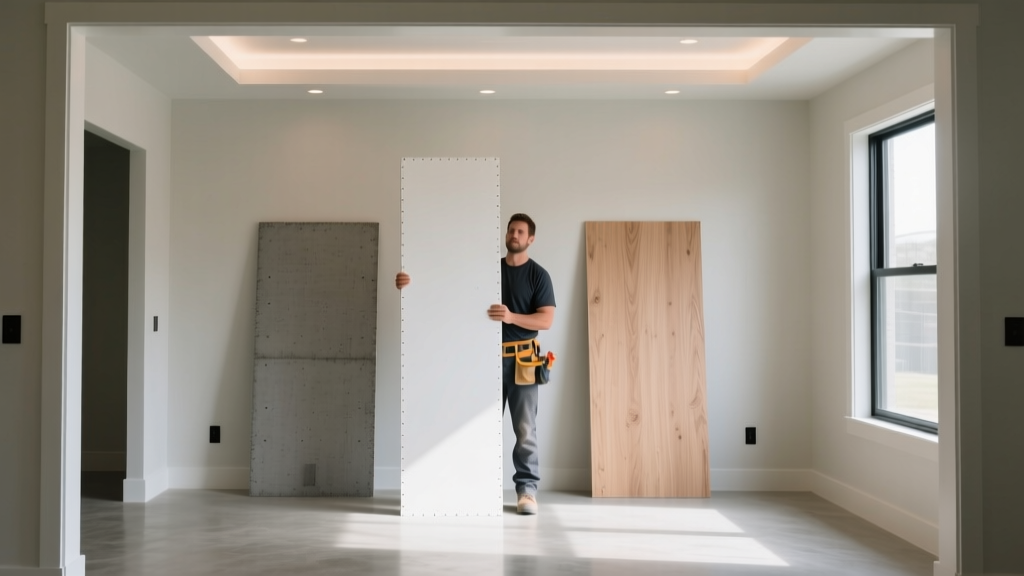
Decision Framework: Which Material Fits Your Build?
Do not default to alternatives simply because the base gypsum board rate seems too generic for a specialized space. Use this framework to dictate your material purchase:
The 80/20 Cladding Rule: Use standard or Type X gypsum board for 80% of your interior square footage to maintain budget integrity. Reserve premium alternatives strictly for the 20% of spaces where environmental conditions (water, impact, acoustics) guarantee gypsum failure.
- If the area is a shower enclosure or steam room: Bypass moisture-resistant gypsum entirely. Pay the premium for cement board or extruded polystyrene foam boards (like Wedi or Kerdi-Board), which are lighter, cut cleaner, and integrate directly with waterproofing membranes.
- If the area is a commercial corridor or hospital hallway: Standard gypsum will dent and puncture from gurneys and carts. Upgrade to fiber-reinforced gypsum (like USG Fiberock Abuse-Resistant) or fiberglass-mat faced panels (like Georgia-Pacific DensArmor). The material rate doubles, but it eliminates the need for expensive vinyl wall coverings or wainscoting.
- If you require a seamless, high-end architectural finish: Skip the Level 5 drywall finish, which is prone to hairline cracking at structural stress points. Invest in veneer plaster over blue board for a monolithic, rock-hard surface that ages gracefully in luxury builds.
- If mounting heavy commercial cabinetry or retail displays: Do not rely on standard gypsum and toggle bolts. Use 3/4-inch plywood blocking behind 1/2-inch gypsum, or switch to structural cementitious backer boards in the specific mounting zones to provide sheer strength without sacrificing the fire rating of the overall wall assembly.
Ultimately, the 2026 gypsum board rate remains highly competitive because the ecosystem of installers, tools, and finishing compounds is universally standardized. Alternatives will always command a premium not just in raw material costs, but in the specialized labor and secondary logistics required to execute them correctly.
Written by
Sarah WhitfieldSarah Whitfield is a chartered quantity surveyor (MRICS) and construction cost analyst with 15 years of experience in material pricing, procurement strategy, and project budgeting. She earned her degree in Construction Management from the University of Reading (UK) and has worked on projects ranging from $2M custom homes to $180M mixed-use developments across North America and Europe. Sarah currently leads cost estimating for BuildMat Insight, maintaining a proprietary database of 4,000+ material price points updated quarterly. She is a frequent contributor to RSMeans cost data panels and has presented at the International Cost Engineering Council (ICEC) congress. Based in Denver, CO, Sarah is an avid trail runner and volunteer mentor for Women in Construction.
More from Sarah Whitfield
View all
Wood & Lumber
What Are the Different Types of Wood? A Builder's Guide
Compare structural softwoods, finish hardwoods, and engineered lumber. Analyze Janka ratings, MOE values, and 2026 pricing for construction.
Aug 4, 2026

Walls & Panels
Steel Framing vs Wood Framing: Corrosion and Moisture Defense
Compare steel framing vs wood framing for moisture resistance. Learn about galvanized coatings, condensation risks, and corrosion protection strategies.
Jul 21, 2026

Stone & Masonry
How to Cut Stone Veneer: Wet Saw vs Grinder Comparison
Compare the best tools for cutting stone veneer. We review wet saws, angle grinders, and chop saws to help you achieve clean, chip-free cuts.
Jul 21, 2026