Full Outdoor Gypsum Board Sheathing Cost Analysis 2026
Detailed 2026 cost analysis for outdoor gypsum board sheathing. Compare material, labor, and installed prices for exterior glass mat panels.

The Reality of 'Outdoor Gypsum Board': Defining Exterior Sheathing
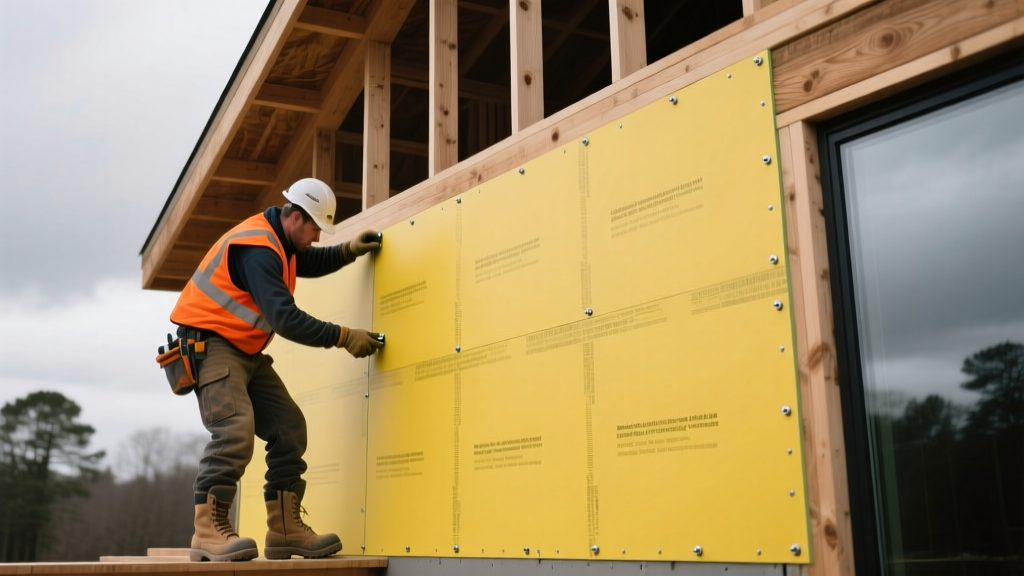
When architects, estimators, and contractors search for 'outdoor gypsum board,' they are almost never looking for standard paper-faced drywall. Standard interior gypsum board will rapidly disintegrate when exposed to exterior moisture and weather. Instead, the construction industry relies on glass mat water-resistant gypsum sheathing, classified under ASTM C1177. These specialized panels replace the traditional paper facing with woven fiberglass mats and utilize a silicone-treated, highly water-resistant gypsum core.
Exterior gypsum sheathing is primarily used as an underlayment beneath exterior cladding (brick, stucco, EIFS, or siding) and as a critical component in fire-rated exterior property line walls. Understanding the true cost of these materials requires looking beyond the base sheet price to include specialized fasteners, joint treatments, and labor premiums associated with exterior building envelope assemblies.
2026 Material Cost Breakdown by Brand and Thickness
The market for exterior glass mat gypsum is dominated by three major manufacturers: Georgia-Pacific (DensGlass), USG (Securock), and National Gypsum (Gold Bond XP). Pricing in 2026 reflects stabilized supply chains but increased costs for silicone treatments and fiberglass matting.
| Product Line | Thickness | Panel Size | Cost per Sheet | Cost per Sq. Ft. |
|---|---|---|---|---|
| GP DensGlass Standard | 1/2" | 4' x 8' | $26.50 - $29.00 | $0.82 - $0.90 |
| GP DensGlass Fireguard (Type X) | 5/8" | 4' x 8' | $38.00 - $44.00 | $1.18 - $1.37 |
| USG Securock Glass-Mat | 1/2" | 4' x 8' | $25.00 - $28.50 | $0.78 - $0.89 |
| USG Securock EXO (Type X) | 5/8" | 4' x 9' | $48.00 - $55.00 | $1.33 - $1.52 |
| National Gypsum Gold Bond XP | 5/8" | 4' x 8' | $34.00 - $39.00 | $1.06 - $1.21 |
Fire-Rated Exterior Assemblies: The Type X Premium
When building on tight property lines (zero-lot-line construction), municipal building codes often require exterior walls to have a 1-hour or 2-hour fire-resistance rating. Standard exterior sheathing cannot achieve this alone. You must specify Type X exterior gypsum sheathing, such as Georgia-Pacific DensGlass Fireguard. Expect to pay a 35% to 50% premium over standard non-rated exterior gypsum panels to achieve the necessary fire-stopping capabilities required by the Gypsum Association design manuals.
Labor and Installation Costs per Square Foot
Hanging exterior gypsum sheathing is generally performed by the framing crew rather than interior drywall finishers. Because the panels are heavier and stiffer than standard drywall, and because exterior work involves scaffolding and weather delays, labor rates are distinctly higher.
- Base Hanging Labor: $1.60 to $2.40 per square foot. This includes lifting, positioning, and initial fastening to wood or steel studs.
- Scaffolding & Access Premium: Add $0.30 to $0.60 per square foot for multi-story commercial or residential builds requiring pump jacks or tubular scaffolding.
- Joint Taping & Fluid Membrane Prep: If the sheathing is serving as the substrate for a fluid-applied water-resistive barrier (WRB), joints must be taped with alkali-resistant mesh and treated. Add $0.85 to $1.25 per square foot for this specialized prep work.
Fasteners and Accessories: The Hidden Cost Drivers
You cannot use standard interior drywall screws for outdoor gypsum board. The silicone-treated core and exterior environment demand corrosion-resistant fasteners. Using standard phosphated screws will result in rust bleeding through the exterior cladding and structural failure of the sheer wall.
Total Installed Cost: Outdoor Gypsum Board vs. Alternatives
To understand the true value proposition of exterior gypsum sheathing, it must be compared against traditional wood-based sheathing options like OSB (Oriented Strand Board) and CDX Plywood. While gypsum is more expensive upfront, it offers superior dimensional stability, mold resistance, and fire ratings.
| Sheathing Material | Material Cost / Sq. Ft. | Labor Cost / Sq. Ft. | Total Installed / Sq. Ft. | Max Weather Exposure |
|---|---|---|---|---|
| Standard OSB (7/16") | $0.45 - $0.60 | $1.20 - $1.60 | $1.65 - $2.20 | 30 - 60 Days |
| CDX Plywood (1/2") | $0.80 - $1.10 | $1.30 - $1.70 | $2.10 - $2.80 | 90 - 120 Days |
| Exterior Gypsum (1/2") | $0.78 - $0.90 | $1.60 - $2.40 | $2.38 - $3.30 | 6 Months |
| Type X Ext. Gypsum (5/8") | $1.18 - $1.52 | $1.80 - $2.60 | $2.98 - $4.12 | 6 - 12 Months |
Edge Cases and Failure Modes in Exterior Applications
Even with superior water resistance, outdoor gypsum board is not a waterproof cladding; it is a sheathing substrate. Improper handling during the construction phase leads to costly tear-outs and replacements. Be aware of these specific failure modes:
- Exceeding Exposure Limits: Standard glass-mat sheathing can typically withstand 6 months of direct weather exposure during construction. Premium variants extend this to 12 months. If the building envelope is left open beyond the manufacturer’s warranty period, the board's core can degrade, forcing a total replacement that instantly doubles your material costs.
- Improper Bottom Edge Clearance: Exterior gypsum sheathing must never touch the ground, concrete slab, or deck surface. Maintain a strict 1/2-inch to 1-inch gap at the bottom edge to prevent capillary action from wicking standing water into the silicone-treated core.
- Using Interior Joint Compound: If joints are being taped to create a continuous plane for a fluid-applied WRB, contractors sometimes mistakenly use standard interior setting-type compound. This will dissolve when exposed to rain. You must use exterior-grade joint treatment or specific flashing tapes compatible with the WRB membrane.
- Over-driving Fasteners: The fiberglass mat provides the structural tear-out resistance. If the framing crew over-drives the screws, breaking the glass mat surface, the holding power is compromised. The screw head should sit flush with the surface, dimpling the mat without cutting through it.
Expert Verdict: When to Specify Exterior Gypsum
Outdoor gypsum board sheathing commands a 30% to 50% higher installed cost compared to standard OSB. However, this cost is entirely justified—and often mandated—in specific building scenarios. Specify exterior glass-mat gypsum for commercial EIFS (Exterior Insulation and Finish Systems) applications, behind heavy masonry veneers where dimensional stability is critical to prevent brick cracking, and on all zero-lot-line property walls requiring a 1-hour or 2-hour UL fire rating. For standard residential wood-siding applications in dry climates, OSB remains the more cost-effective choice, but for high-performance, moisture-managed, and fire-rated building envelopes, exterior gypsum sheathing is the undisputed industry standard.
Written by
David NakamuraDavid Nakamura is a licensed architect (AIA) and construction technology writer focused on sustainable building methods, mass timber engineering, and high-performance building envelopes. He holds a Master of Architecture from the University of Washington and is a certified Passive House Consultant (CPHC). David spent eight years at the Seattle firm Mithun, where he led the design of three LEED Platinum projects, before founding his own practice specializing in net-zero residential design. He serves on the editorial advisory board of GreenBuilder Magazine and has authored peer-reviewed papers on cross-laminated timber (CLT) connections for the Journal of Structural Engineering. In his spare time, David teaches woodworking at Pratt Fine Arts Center and kayaks the Puget Sound.
More from David Nakamura
View all
Construction Cost
Labor Cost to Build a Deck Per Sq Ft: 2026 Installation Guide
Discover the exact labor cost to build a deck per sq ft in 2026. This installation guide breaks down contractor rates, complexity factors, and hidden fees.
Aug 4, 2026

Construction Cost
How Much Does It Cost to Build a 3 Bedroom House? Financing Guide
Learn exactly how much it costs to build a 3 bedroom house and explore 2026 financing options, construction loan types, and budget frameworks for your build.
Aug 4, 2026

Construction Cost
Cost to Build a Tennis Court: 2026 Guide
How much does it cost to build a tennis court in 2026? Breakdowns for asphalt, concrete, and synthetic surfaces plus fencing and lighting.
Jul 30, 2026