Light Gypsum Board vs Standard: Complete Product Guide
Compare light gypsum board to standard drywall. Explore top brands, weight specs, 2026 pricing, and ideal applications for your next construction project.

The Evolution of Lightweight Drywall Technology
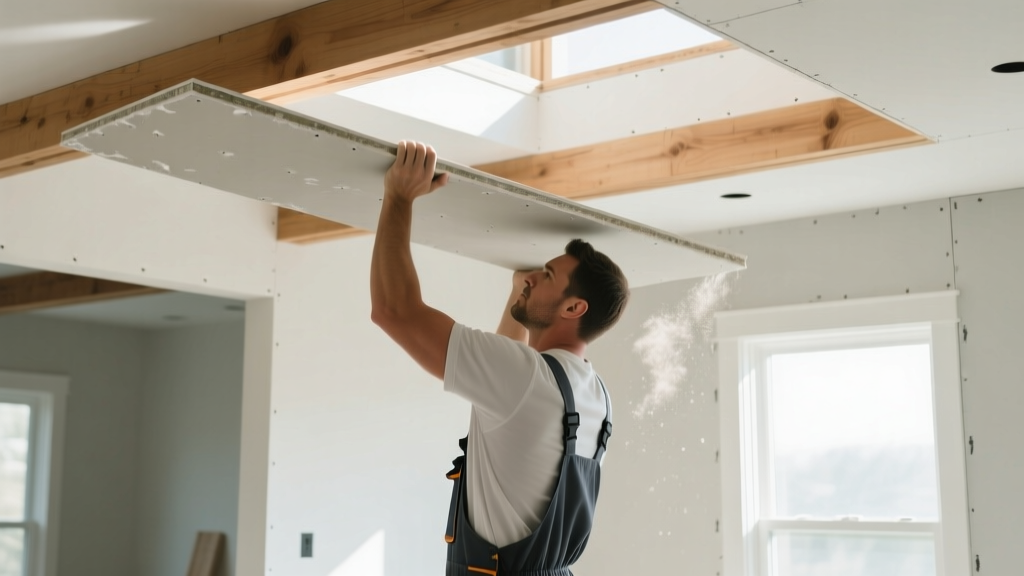
For decades, the 57-pound, 1/2-inch standard gypsum panel was the undisputed baseline for interior wall and ceiling construction. However, the physical toll on installation crews and the risk of ceiling sag prompted a material science revolution. Light gypsum board—often marketed as ultra-lightweight drywall—reduces panel weight by up to 30% without sacrificing structural integrity, fire resistance, or fastener holding strength. By fundamentally altering the chemical composition of the gypsum core, manufacturers have created a product that accelerates hanging times, reduces contractor fatigue, and minimizes ceiling framing requirements.
Quick Specification Snapshot
- Standard 1/2" Panel Weight: ~57 lbs (4x8 sheet)
- Light 1/2" Panel Weight: ~41 to 43 lbs (4x8 sheet)
- Weight Reduction: 25% to 30%
- Standard Thicknesses: 1/2-inch and 5/8-inch
- Core Additives: Expanded perlite, pregelatinized starch, fiberglass mesh
Core Chemistry: How Manufacturers Shed the Weight
The weight reduction in light gypsum board is not achieved by simply aerating the core or making it less dense in a way that compromises strength. Instead, manufacturers replace a portion of the heavy calcium sulfate dihydrate (gypsum) with expanded perlite—a lightweight, volcanic glass aggregate. To ensure the perlite binds securely to the remaining gypsum and the paper facers, the slurry is fortified with specialized pregelatinized starches and synthetic binders. Furthermore, fiberglass strands are integrated throughout the core to provide tensile strength, preventing the lighter panel from snapping under its own weight during ceiling installation.
This engineered core maintains the same dimensional stability and screw-holding capabilities as traditional boards, adhering strictly to Gypsum Association GA-216 standards for application and finishing.
Standard vs. Light Gypsum Board: Specification Matrix
Understanding the exact performance deltas between standard and lightweight panels is critical for specifying the right material for your project. The table below outlines the core differences based on current 2026 manufacturing specifications.
| Feature | Standard 1/2" Gypsum Board | Light 1/2" Gypsum Board | Performance Impact |
|---|---|---|---|
| Weight (4x8 Sheet) | 55 - 58 lbs | 41 - 43 lbs | Significantly easier handling; 1-person ceiling lifts are viable. |
| Sag Resistance (Ceilings) | Requires 16" OC framing | Rated for 24" OC framing | Reduces material and labor costs for ceiling joists/furring. |
| Sound Transmission (STC) | STC 33 (Single layer on wood) | STC 31-32 (Single layer on wood) | Slightly lower mass reduces baseline sound blocking. |
| Core Hardness | Dense, highly impact resistant | Softer, perlite-infused core | More susceptible to edge crushing if over-driven with screws. |
| Material Cost (2026 Avg) | $12.50 - $14.00 per sheet | $14.50 - $17.00 per sheet | 15-20% material premium, offset by labor and framing savings. |
Top Product Lines and Brand Specifications
The North American market is dominated by three primary manufacturers, each offering proprietary formulations of lightweight drywall. When sourcing materials, look for these specific product lines:
1. USG Sheetrock Brand UltraLight Panels
The pioneer of the lightweight category. USG's UltraLight panels weigh approximately 41 pounds per 4x8 sheet. They feature a proprietary foam-injected core that provides excellent sag resistance, allowing 1/2-inch panels to be installed on 24-inch on-center ceiling framing. USG also offers a Firecode X UltraLight variant, which incorporates glass fibers and vermiculite to achieve a 1-hour fire rating while still weighing less than standard 5/8-inch Type X board. Consult the USG Drywall Product Catalog for specific fire-resistance assembly numbers.
2. CertainTeed Easi-Lite
CertainTeed's Easi-Lite line boasts a 30% weight reduction compared to their standard boards. A key advantage of Easi-Lite is its enhanced core cohesion, which produces less dust during cutting and routing. It is highly favored by custom home builders where intricate ceiling trays and archways require extensive scoring and snapping.
3. Georgia-Pacific ToughRock Light
GP's entry into the lightweight space focuses on durability. While slightly heavier than USG's offering (closer to 44 lbs per sheet), ToughRock Light features a heavier paper facing that resists tearing during the scoring process, making it a preferred choice for crews that do heavy pre-cutting on the ground before hanging.
Acoustic and Structural Trade-Offs: Where to Avoid Light Board
While light gypsum board is a superior choice for 80% of residential and commercial applications, its reduced mass introduces specific physical limitations that architects and builders must account for.
Acoustic Limitations (The Mass Law)
In acoustics, the 'Mass Law' dictates that heavier barriers block more sound. Because light gypsum board contains expanded perlite and air pockets, it has less physical mass than standard gypsum. A single layer of 1/2-inch light board on standard wood studs yields an STC (Sound Transmission Class) of roughly 31, compared to 33 for standard board. Do not use lightweight board in isolation for party walls, home theaters, or mechanical room enclosures unless you are pairing it with decoupling clips, resilient channels, or viscoelastic damping compounds like Green Glue.
Abuse and Impact Resistance
The perlite-infused core is inherently softer than a dense calcium sulfate core. In high-traffic commercial corridors, hospital hallways, or school stairwells where carts and equipment frequently impact walls, light gypsum board will dent and crush more easily. For these zones, specify standard 5/8-inch abuse-resistant board or fiberglass-mat faced panels.
Installation Best Practices for Lightweight Cores
Hanging light gypsum board requires slight adjustments to crew habits. The most common failure mode on job sites is fastener over-driving, which crushes the softer perlite core and breaks the paper face, resulting in a 'spinner' screw that holds no weight.
- Select the Right Fasteners: Use 1-1/4-inch coarse-thread screws for wood framing and 1-inch fine-thread screws for light-gauge steel. Do not use standard drywall nails; the holding power in the lighter core is insufficient for nail pops over time.
- Calibrate Your Dimpler: Adjust the depth-setting collar on your drywall drill. The screw head should sit just below the paper surface without breaking the paper. If you hear a distinct 'crunch' and the drill spins freely, the core is crushed. Pull the screw and relocate it two inches away.
- Ceiling Framing Optimization: Take advantage of the 24-inch on-center ceiling rating. By spacing furring channels or joists at 24 inches instead of 16 inches, you reduce framing material costs and labor, easily offsetting the 15% premium paid for the lightweight panels.
- Cutting and Snapping: Use a sharp utility knife and a T-square. Because the core is softer, it snaps very cleanly. Avoid using a keyhole saw for long cuts, as it can tear the perlite core; use a router with a drywall bit or a snap-off blade instead.
Cost Breakdown and ROI Analysis
When evaluating light gypsum board, looking solely at the material invoice provides an incomplete financial picture. The true ROI is realized in labor efficiency and framing optimization.
2026 Field Data: A two-person hanging crew can install approximately 15% to 20% more square footage per day using 1/2-inch lightweight panels compared to 5/8-inch standard panels, primarily due to reduced fatigue and the ability to carry two 12-foot sheets simultaneously.
The Math: 1,000 sq. ft. Ceiling Project
- Standard 5/8" Board: Material: ~$180 | Framing (16" OC): ~$450 | Labor (2 days): ~$1,200 | Total: $1,830
- Light 1/2" Board: Material: ~$240 | Framing (24" OC): ~$320 | Labor (1.5 days): ~$900 | Total: $1,460
- Net Savings: $370 (20% overall project savings despite higher material cost).
Frequently Asked Questions
Does light gypsum board meet fire code requirements?
Standard 1/2-inch light gypsum board does not carry a Type X fire rating. However, manufacturers produce 5/8-inch and specialized 1/2-inch Firecode lightweight variants that meet ASTM E119 standards for 1-hour and 2-hour fire-resistance-rated assemblies. Always check the UL Design number on the board's end tape to verify compliance with your local building code.
Can I use light drywall in a bathroom?
Standard lightweight panels are not moisture-resistant and will degrade in high-humidity environments. For bathrooms, you must specify a lightweight moisture-resistant (MR) or glass-mat faced panel, such as USG's UltraLight Mold Tough or CertainTeed's Easi-Lite MR, which feature treated cores and water-repellent facers.
Do I need a special primer for lightweight drywall?
Yes. The perlite core and specialized starches can make the finished surface slightly more porous than standard drywall. To prevent 'joint banding' (where taped seams appear as dull streaks under paint), always prime light gypsum board with a high-solids PVA drywall primer or a heavy-bodied acrylic primer before applying your topcoat. For comprehensive finishing techniques, refer to the Fine Homebuilding Drywall Guide.
Written by
Sarah WhitfieldSarah Whitfield is a chartered quantity surveyor (MRICS) and construction cost analyst with 15 years of experience in material pricing, procurement strategy, and project budgeting. She earned her degree in Construction Management from the University of Reading (UK) and has worked on projects ranging from $2M custom homes to $180M mixed-use developments across North America and Europe. Sarah currently leads cost estimating for BuildMat Insight, maintaining a proprietary database of 4,000+ material price points updated quarterly. She is a frequent contributor to RSMeans cost data panels and has presented at the International Cost Engineering Council (ICEC) congress. Based in Denver, CO, Sarah is an avid trail runner and volunteer mentor for Women in Construction.
More from Sarah Whitfield
View all
Wood & Lumber
What Are the Different Types of Wood? A Builder's Guide
Compare structural softwoods, finish hardwoods, and engineered lumber. Analyze Janka ratings, MOE values, and 2026 pricing for construction.
Aug 4, 2026

Walls & Panels
Steel Framing vs Wood Framing: Corrosion and Moisture Defense
Compare steel framing vs wood framing for moisture resistance. Learn about galvanized coatings, condensation risks, and corrosion protection strategies.
Jul 21, 2026

Stone & Masonry
How to Cut Stone Veneer: Wet Saw vs Grinder Comparison
Compare the best tools for cutting stone veneer. We review wet saws, angle grinders, and chop saws to help you achieve clean, chip-free cuts.
Jul 21, 2026