What Is Type C Gypsum Board? Fire-Rated Selection Guide
Discover what is Type C gypsum board, its vermiculite core chemistry, 2026 pricing, and how to select the right fire-rated assembly for code compliance.

The Core Chemistry: What Is Type C Gypsum Board?
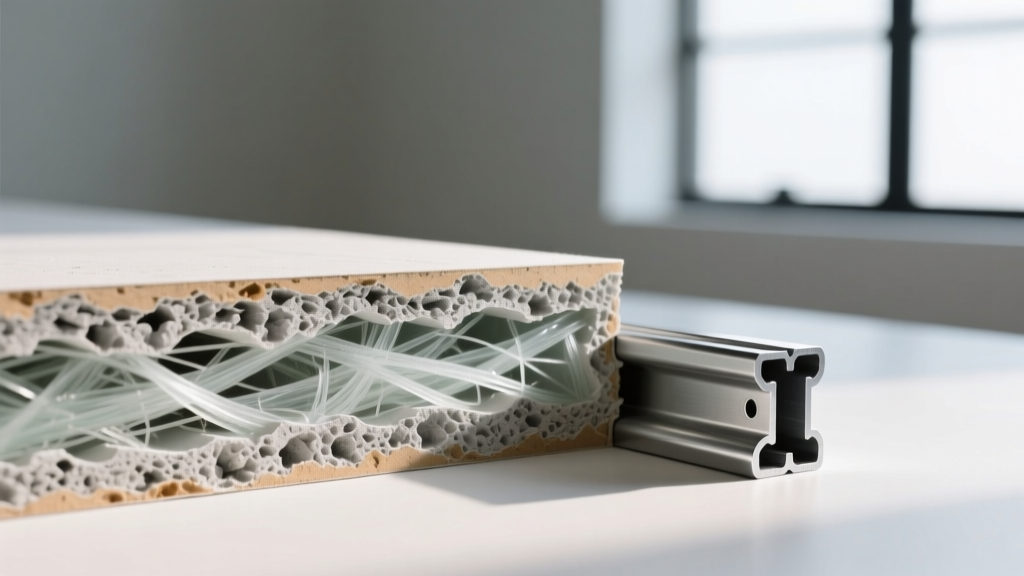
When architects and fire marshals require maximum passive fire protection without sacrificing leasable floor space, the answer often hinges on a specific material upgrade. If you are asking what is Type C gypsum board, the short answer is that it is an advanced, fire-resistant drywall panel engineered with a specialized core additive—vermiculite—that dramatically outperforms standard fire-rated drywall under extreme heat.
To understand why Type C exists, you must understand the failure point of standard gypsum. Gypsum is calcium sulfate dihydrate (CaSO4·2H2O). When exposed to fire, it undergoes calcination, releasing its chemically bound water (which makes up about 21% of its weight) as steam. This process keeps the wall temperature near 212°F (100°C) until the water is gone. Standard Type X drywall uses glass fibers to hold the calcined core together once the water evaporates. However, the loss of water causes the gypsum core to shrink and crack, eventually allowing flames to penetrate.
Type C solves the shrinkage problem. By integrating vermiculite—a hydrous phyllosilicate mineral—into the core alongside a higher density of glass fibers, the board undergoes a secondary reaction. When heated, vermiculite exfoliates and expands. This expansion perfectly compensates for the shrinkage of the calcining gypsum, maintaining a solid, unbroken thermal barrier that stays anchored to the framing studs far longer than Type X.
Type C vs. Type X vs. Standard: Performance Matrix
Selecting the right panel requires looking beyond the paper facing. The following matrix breaks down the physical and performance differences across the three primary gypsum categories according to Gypsum Association standards.
| Feature | Standard Gypsum | Type X (Fire-Rated) | Type C (Enhanced Fire) |
|---|---|---|---|
| Core Additives | Starch, paper fibers | Glass fibers | Glass fibers + Vermiculite |
| Calcination Shrinkage | Severe cracking | Moderate (held by glass) | Negligible (expands to fill) |
| Thickness for 1-Hour Wall | Not rated | 5/8 inch | 1/2 inch (in select assemblies) |
| Thickness for 2-Hour Wall | Not rated | Two layers of 5/8 inch | Two layers of 1/2 inch or one 5/8 inch |
| Weight (per 4x8 5/8" sheet) | ~52 lbs | ~70 lbs | ~74 lbs |
| Relative Material Cost | Baseline ($11-$14) | +30% ($15-$19) | +65% ($20-$26) |
Strategic Applications: Where Type C Delivers ROI
Type C is not necessary for every fire-rated partition. Its premium cost is justified in specific commercial and multi-family scenarios where space optimization and weight reduction are paramount.
1. High-Rise Shaft Walls and Stairwells
Elevator shafts and mechanical chases require 2-hour fire ratings. Using two layers of 5/8-inch Type X adds immense weight to the steel framing and consumes 2.5 inches of space per side. By utilizing a 1-inch or 1.5-inch Type C shaft wall assembly (such as UL Design U419), builders can achieve the 2-hour rating while reducing wall thickness by up to 20%, directly increasing the net rentable square footage of the building core.
2. Area Separation Walls
In townhomes and multi-family housing, 2-hour area separation walls are mandated by International Building Code (IBC) Chapter 7. Type C panels are frequently used as the liner panels in these shaft-wall assemblies because their superior shrinkage resistance ensures the structural integrity of the separation wall even if the adjacent framing collapses during a severe fire.
3. Horizontal Membranes and Protected Plenums
When fire ratings are required for ceiling assemblies protecting structural steel or floor trusses, gravity is the enemy. Type C's ability to resist sagging and core dropout at high temperatures makes it the mandatory choice for unprotected horizontal membrane designs.
2026 Market Pricing and Leading Product Lines
Material costs have stabilized in 2026, but regional logistics still impact final pricing. Expect to pay a 35% to 50% premium for Type C over standard Type X. Below are the dominant product lines specifying engineers rely on:
- USG Sheetrock Brand Firecode C: The industry benchmark. Available in 1/2-inch and 5/8-inch thicknesses. Features a proprietary core formulation that consistently achieves the highest UL design listings. Average cost: $22.50 per 4x8 sheet (5/8-inch).
- CertainTeed Firestop C: Known for its slightly lighter weight profile and excellent score-and-snap characteristics, reducing installer fatigue on large commercial jobs. Average cost: $21.00 per 4x8 sheet.
- Georgia-Pacific GP Gypsum Fireguard C: Often specified in government and institutional builds for its rigorous third-party testing and tight dimensional tolerances. Average cost: $23.00 per 4x8 sheet.
Installation Edge Cases: Where Type C Fails
The most advanced vermiculite core is useless if the installation compromises the assembly. Type C failures in the field almost always trace back to three specific installation errors:
- Fastener Over-Driving: Type C relies on the tension of the face paper to hold the calcined core to the stud. If installers set their screw guns too deep and break the paper face (a 'blown' screw), the board loses its mechanical connection. Fix: Use dimpled bugle-head Type S screws and calibrate screw guns daily. Any broken paper must be abandoned and a new fastener driven 2 inches away.
- Improper Joint Compound Selection: Standard all-purpose pre-mixed joint compound shrinks as it dries and can crack under thermal stress. For the first and second coats of a rated Type C assembly, you must use a setting-type compound (e.g., 45-minute or 90-minute Durabond) which cures chemically and provides a rigid, fire-resistant seal at the seams.
- Unsealed Penetrations: Cutting a hole for an electrical box or HVAC duct without installing an approved, fire-rated intumescent putty pad or collar voids the entire wall's rating. The vermiculite core cannot bridge an open gap.
Decision Framework: Do You Actually Need Type C?
Use this rapid framework to determine if Type C is required for your project or if Type X is sufficient:
Step 1: Check the architectural fire-rating schedule. Does it explicitly specify 'Type C' or call out a specific UL design that requires it? If yes, stop here. Buy Type C.
Step 2: Are you building a 2-hour area separation wall or an elevator shaft wall where maximizing interior square footage is financially critical? If yes, value-engineer the assembly using 1/2-inch Type C to save space.
Step 3: Is this a standard 1-hour corridor wall or a 2-hour stairwell enclosure where spatial footprint is not constrained? If yes, use 5/8-inch Type X. It is more cost-effective and easier to source locally.
Frequently Asked Questions
Is Type C gypsum board also moisture-resistant?
Not by default. Standard Type C panels will degrade if exposed to prolonged moisture. However, manufacturers offer hybrid panels (such as USG Mold Tough Firecode C) that combine the vermiculite core with a moisture-resistant, mold-inhibiting green or purple face paper. These hybrids carry a 15% to 20% additional cost premium but are essential for rated walls in commercial bathrooms or exterior shaft alignments.
Can I use standard drywall tape on Type C joints?
Standard paper tape is acceptable for many UL designs, but fiberglass mesh tape is generally prohibited in fire-rated assemblies unless specifically tested and listed in the UL design. Always default to paper tape embedded in setting-type compound for fire-rated joints.
Does Type C require special cutting tools?
No. The higher density of glass fibers and vermiculite makes the core slightly more abrasive, which will dull standard utility knife blades about 20% faster than Type X. Keep a fresh supply of heavy-duty snap-off blades on hand, or use a specialized gypsum router bit for high-volume cutouts.
Written by
David NakamuraDavid Nakamura is a licensed architect (AIA) and construction technology writer focused on sustainable building methods, mass timber engineering, and high-performance building envelopes. He holds a Master of Architecture from the University of Washington and is a certified Passive House Consultant (CPHC). David spent eight years at the Seattle firm Mithun, where he led the design of three LEED Platinum projects, before founding his own practice specializing in net-zero residential design. He serves on the editorial advisory board of GreenBuilder Magazine and has authored peer-reviewed papers on cross-laminated timber (CLT) connections for the Journal of Structural Engineering. In his spare time, David teaches woodworking at Pratt Fine Arts Center and kayaks the Puget Sound.
More from David Nakamura
View all
Construction Cost
Labor Cost to Build a Deck Per Sq Ft: 2026 Installation Guide
Discover the exact labor cost to build a deck per sq ft in 2026. This installation guide breaks down contractor rates, complexity factors, and hidden fees.
Aug 4, 2026

Construction Cost
How Much Does It Cost to Build a 3 Bedroom House? Financing Guide
Learn exactly how much it costs to build a 3 bedroom house and explore 2026 financing options, construction loan types, and budget frameworks for your build.
Aug 4, 2026

Construction Cost
Cost to Build a Tennis Court: 2026 Guide
How much does it cost to build a tennis court in 2026? Breakdowns for asphalt, concrete, and synthetic surfaces plus fencing and lighting.
Jul 30, 2026