Paperless Gypsum Board Specs: Dimensions, Thickness & Ratings
Explore exact paperless gypsum board specifications, including standard dimensions, thickness tolerances, ASTM ratings, and weight metrics for 2026 projects.

Core Composition and Material Standards
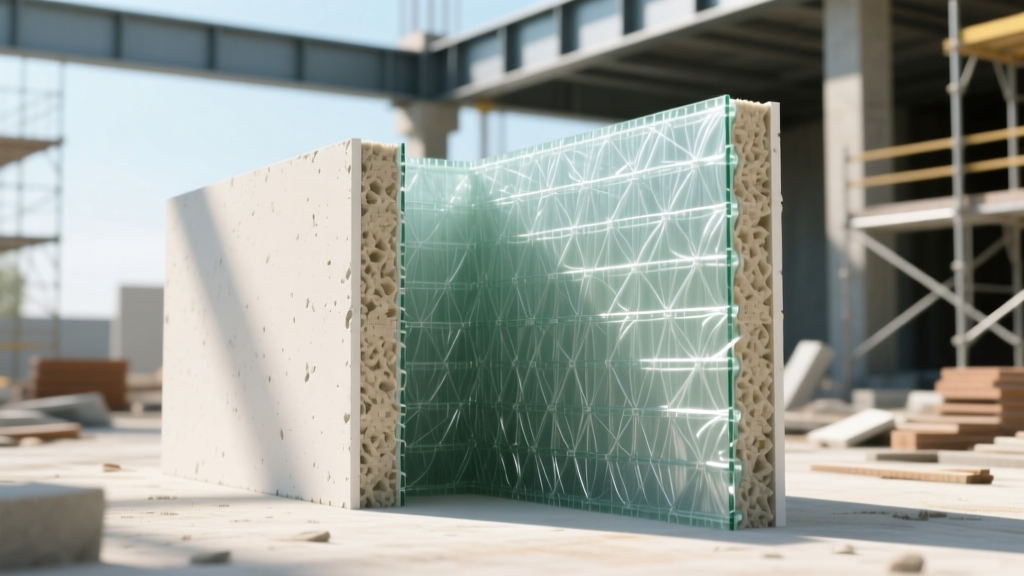
Paperless gypsum board, technically classified as glass mat gypsum board, replaces the traditional cellulose paper facing with a woven fiberglass mat. The core consists of a non-combustible, silicone-treated water-resistant gypsum formulation. This inorganic facing and treated core eliminate the food source for mold and provide superior moisture resistance compared to standard paper-faced drywall.
Standard Dimensions and Thickness Tolerances
Dimensional consistency is critical for maintaining flush planes in commercial and high-moisture residential applications. While custom lengths can be ordered for large-scale commercial builds, the vast majority of paperless gypsum board is manufactured in standardized imperial dimensions.
| Nominal Thickness | Actual Thickness | Standard Widths | Available Lengths | Approx. Weight (lbs/sq ft) |
|---|---|---|---|---|
| 1/2 inch | 12.7 mm (0.50 in) | 48 inches | 8, 9, 10, 12 ft | 2.2 - 2.4 lbs |
| 5/8 inch (Type X) | 15.9 mm (0.625 in) | 48 inches | 8, 9, 10, 12 ft | 2.6 - 3.0 lbs |
Dimensional Tolerances: Per ASTM C1396, the width tolerance is ±1/16 inch, and the length tolerance is ±1/8 inch. Thickness tolerance is strictly maintained at ±1/64 inch to prevent visible ridging at the joints when finished.
Fire, Moisture, and Mold Performance Metrics
The primary justification for specifying paperless gypsum board over standard drywall is its performance in hostile environments. The fiberglass mat will not wick water, and the silicone-treated core resists internal moisture migration.
Moisture and Mold Testing
- Water Absorption: ASTM C1177 requires that glass mat gypsum board absorb no more than 10% water by weight after a 2-hour surface exposure test. In practice, premium 5/8-inch boards often test between 3% and 5%.
- Mold Resistance: Tested via ASTM D3273. Paperless boards consistently achieve a score of 10 (the highest possible rating, indicating zero mold growth on the surface or edges after 4 weeks in a controlled high-humidity chamber).
- UV Exposure Limits: The fiberglass mat degrades under prolonged ultraviolet light. Most manufacturers specify a maximum outdoor exposure limit of 6 months before the board must be covered or replaced.
Fire Resistance (Type X Ratings)
When specified as Type X, 5/8-inch paperless gypsum board provides a 1-hour fire-resistance rating in standard wood-frame wall assemblies per ASTM E119. The surface burning characteristics consistently yield a Class A rating (Flame Spread Index ≤ 25, Smoke Developed Index ≤ 50) per ASTM E84.
Leading Product Models and Manufacturer Specs
Procurement requires specifying the exact manufacturer line, as core densities and mat weaves vary. The three dominant product lines in the North American market include:
- Georgia-Pacific DensGlass: The industry benchmark. Features a patented embedded fiberglass mat that minimizes fiber shedding during cutting. Available in 1/2-inch and 5/8-inch Fire-Shield Type X.
- USG Securock Glass-Mat: Known for a slightly smoother mat finish, which requires less primer when used as an interior tile backer. The 5/8-inch Type X variant includes enhanced glass fibers within the core for structural integrity under heat.
- National Gypsum Gold Bond Brand: Offers the Hi-Impact XP and Fire-Shield variants. Their specific formulation uses a denser core, resulting in a higher weight per square foot but offering superior impact resistance in commercial corridors.
Installation Clearances and Fastener Specifications
Because paperless gypsum board is frequently used as an exterior sheathing or in high-moisture interior zones, fastener selection and edge clearances are strictly regulated to prevent water intrusion and edge crumbling.
| Parameter | 1/2-Inch Board | 5/8-Inch Board |
|---|---|---|
| Minimum Screw Length | 1-1/4 inches | 1-5/8 inches |
| Screw Material | Hot-dipped galvanized or stainless steel (Type S or W) | |
| Field Spacing (Wood Studs) | 8 inches on center | 8 inches on center |
| Edge Spacing | 8 inches on center | 8 inches on center |
| Minimum Edge Clearance | 3/8 inch from board edges and ends | |
Cutting, Handling, and Joint Treatment
Working with paperless gypsum board introduces specific occupational hazards and finishing requirements that differ from standard cellulose-faced drywall.
Score-and-Snap vs. Sawing
The preferred method for cutting glass mat gypsum is the score-and-snap technique using a heavy-duty utility knife. Cutting through the dense fiberglass mat requires multiple passes compared to paper. If power sawing is necessary, it must be performed with a HEPA-filtered dust extraction system. The inorganic glass fibers become airborne when cut with rotary tools, posing a severe respiratory and dermal irritation hazard.
Joint Treatment Specifications
Standard paper drywall tape will not bond correctly to the fiberglass mat and lacks the necessary alkali resistance. Joint treatment requires:
- Tape: Alkali-resistant fiberglass mesh tape (minimum 2-inch width). The alkaline environment of setting-type joint compounds can degrade standard cellulose or non-treated glass mesh over time.
- Compound: Setting-type joint compounds (e.g., 45-minute or 90-minute chemical-setting) are mandatory for the first two coats to ensure a rigid, moisture-resistant bond. Standard air-drying topping compounds can be used for the final skim coat only.
- Primer: The porous nature of the fiberglass mat requires a high-build, alkali-resistant acrylic primer before applying interior paint or exterior weather-resistive barriers.
Cost and Procurement Metrics
Pricing for paperless gypsum board reflects the premium manufacturing process and specialized raw materials. As of early 2026, contractors should budget the following ranges for material costs (excluding labor and tax):
- 1/2-inch Standard Glass Mat: $22.00 to $28.00 per 4x8 sheet.
- 5/8-inch Type X Glass Mat: $28.00 to $36.00 per 4x8 sheet.
- Waste Factor: Due to the rigid nature of the board and the difficulty of cutting complex shapes without fraying the glass mat, procurement calculations should include a 12% to 15% waste factor, compared to the standard 10% for paper-faced drywall.
Always verify the UV exposure timeline on the manufacturer's technical data sheet before ordering. If your project schedule anticipates the sheathing being left exposed to the elements for more than 120 days, you must either order a specialized extended-exposure variant or plan to apply the weather-resistive barrier immediately upon installation.
Written by
Elena RodriguezElena Rodriguez is a civil engineer and technical writer specializing in concrete technology, masonry systems, and ASTM/ACI compliance. She earned her B.S. in Civil Engineering from Texas A&M University and spent a decade at a materials testing laboratory, performing over 2,000 concrete compressive strength tests and masonry prism evaluations. Elena is an ACI-certified Field Testing Technician (Grade I) and a member of ASTM Committee C12 on Natural Building Stone. She currently consults on forensic engineering cases involving concrete failures and moisture intrusion. Based in San Antonio, TX, Elena is a proud member of the Society of Women Engineers (SWE) and coaches her daughter's FIRST Robotics team.
More from Elena Rodriguez
View all
Walls & Panels
Cost Analysis: Light Gauge Steel Framing Advantages and Disadvantages
Evaluate light gauge steel framing advantages and disadvantages through a strict cost analysis lens, comparing material, labor, and lifecycle expenses.
Aug 4, 2026

Walls & Panels
Gypsum Board Types: Exact Specifications, Thickness & Dimensions
Compare standard, Type X, and moisture-resistant gypsum board types. Get exact specifications, thicknesses, dimensions, and ASTM standards for your project.
Aug 4, 2026

Fire Resistance
Best Fire-Resistant Outdoor Decking Materials: 2026 Buyer Guide
Discover the best fire-resistant outdoor decking materials for 2026. Compare Class A PVC, aluminum, and hardwood options for WUI compliance and safety.
Aug 4, 2026