Vinyl Covered Gypsum Board Cost Analysis & ROI Guide
Detailed cost analysis of vinyl covered gypsum board, including material pricing, installation labor, lifecycle ROI, and comparison to painted drywall.

The True Cost Dynamics of Vinyl Covered Gypsum Board
Vinyl covered gypsum board represents a fundamental shift in commercial wall assembly economics. Unlike standard drywall, which relies on post-installation finishing (taping, mudding, sanding, and painting) to achieve its final appearance and durability, PVC-laminated gypsum panels arrive at the job site pre-finished. This shifts the cost burden from on-site skilled labor to upfront material manufacturing. For facility managers, general contractors, and architects, understanding the true cost of vinyl faced drywall requires looking beyond the per-sheet price tag and analyzing the complete lifecycle, including hidden accessory costs, framing tolerances, and long-term maintenance savings.
Material Pricing Breakdown: 2026 Market Rates
The base material cost for vinyl covered gypsum board is significantly higher than standard paper-faced drywall. Pricing fluctuates based on core density, fire ratings, and the thickness of the vinyl laminate. According to industry data tracked by USG Corporation and regional distributors, commercial-grade vinyl-faced panels command a premium that reflects their specialized manufacturing process.
| Product Category | Thickness | Fire Rating | Avg. Cost per 4x8 Sheet | Cost per Sq. Ft. (Material Only) |
|---|---|---|---|---|
| Standard Vinyl-Faced | 1/2" | Standard | $48.00 - $58.00 | $1.50 - $1.81 |
| Type X Vinyl-Faced | 5/8" | 1-Hour (ASTM E119) | $65.00 - $82.00 | $2.03 - $2.56 |
| Mold/Moisture Resistant | 1/2" | Standard | $60.00 - $75.00 | $1.87 - $2.34 |
| High-Abuse / Impact Resistant | 5/8" | 1-Hour | $95.00 - $125.00 | $2.96 - $3.90 |
Compared to standard 1/2" paper-faced drywall, which typically costs $15 to $20 per sheet ($0.46 to $0.62 per square foot), the base material premium for vinyl covered gypsum board is roughly 250% to 400%. However, this raw comparison is misleading without factoring in the finishing materials required for standard drywall.
Installation Labor: The "No-Mud" Advantage
The most significant financial offset for the high material cost of vinyl faced gypsum is the drastic reduction in finishing labor. Standard drywall installation requires a multi-step finishing process: taping seams, applying three coats of joint compound, sanding, priming, and applying two coats of commercial-grade paint. In 2026, commercial drywall finishing and painting labor ranges from $3.50 to $5.50 per square foot.
Labor Cost Shift Framework
Standard Drywall Assembly: Hang ($1.20/sq ft) + Finish & Paint ($4.50/sq ft) = $5.70/sq ft total labor
Vinyl-Faced Assembly: Hang & Trim ($2.00/sq ft) + Zero finishing = $2.00/sq ft total labor
Net Labor Savings: $3.70 per square foot. This labor reduction effectively neutralizes the upfront material premium on most commercial projects over 5,000 square feet.
While vinyl covered gypsum board eliminates mudding and painting, it demands higher precision during the hanging phase. Installers must use specialized bugle-head screws designed not to tear the PVC face, and screw heads must be driven perfectly flush without breaking the paper core beneath the vinyl. Furthermore, panels are typically butted together using aluminum or vinyl H-channels, reveal trims, and outside corner guards rather than being taped. This trim installation requires meticulous measuring and cutting, adding roughly $0.80 per square foot to the base hanging labor rate.
Hidden Costs: Substrate Preparation and Framing Tolerances
A critical, often overlooked cost factor when specifying vinyl covered gypsum board is framing tolerance. Standard drywall joint compound can feather out and hide framing imperfections, bows, and twists up to 1/4 inch. Pre-finished vinyl panels are rigid and cannot be feathered. If the underlying metal studs or wood framing are out of plumb, the light will catch the deflection at the seams, and the rigid H-channel trims will fail to seat properly, resulting in a visibly flawed wall.
To mitigate this, framing contractors must adhere to strict tolerances—typically no more than 1/8 inch deviation in 10 feet. Achieving this in commercial metal stud framing often requires:
- Upgrading from standard 25-gauge studs to heavier 20-gauge or 18-gauge studs.
- Adding intermediate blocking or horizontal furring channels to prevent panel bowing.
- Increased layout and laser-leveling time for the framing crew.
Expect framing costs to increase by $0.40 to $0.85 per square foot to meet the stringent plumb and flat requirements necessary for a flawless vinyl-faced installation.
Accessory and Trim Pricing
Because you cannot mud and tape the seams, vinyl covered gypsum board relies entirely on a mechanical trim system. These accessories are typically extruded aluminum or rigid PVC and represent a mandatory line-item cost.
| Accessory Type | Function | Average 2026 Cost (per 10ft length) | Linear Foot Cost |
|---|---|---|---|
| Aluminum H-Channel | Vertical and horizontal panel joints | $28.00 - $36.00 | $2.80 - $3.60 |
| Outside Corner Guard | Protects and finishes external 90-degree corners | $32.00 - $45.00 | $3.20 - $4.50 |
| Inside Corner Piece | Finishes internal 90-degree corners | $22.00 - $28.00 | $2.20 - $2.80 |
| Top/Bottom U-Channel | Secures panel edges at floor and ceiling | $18.00 - $25.00 | $1.80 - $2.50 |
For a standard 10x10 foot room (400 sq ft of wall space), you will need approximately 80 linear feet of trim. At an average blended rate of $3.00 per linear foot, trim accessories will add $240 to the room's total cost, or roughly $0.60 per square foot of wall area.
Lifecycle Cost and ROI vs. Painted Drywall
The most compelling argument for vinyl covered gypsum board emerges in the operational phase of a building's lifecycle. The National Institute of Building Sciences emphasizes that facility maintenance and operational costs vastly exceed initial construction costs over a 50-year building lifespan. In high-traffic commercial environments—such as hospital corridors, school hallways, and modular housing—painted drywall is highly susceptible to scuffs, impact damage, and moisture degradation.
"Facility managers in healthcare and education sectors report that high-traffic corridors require spot-priming and repainting every 3 to 5 years to maintain hygiene standards and aesthetic baselines. The cumulative cost of these maintenance cycles routinely eclipses the initial premium paid for durable, wipe-clean wall surfaces."
20-Year Lifecycle Cost Matrix (Per 1,000 Sq. Ft. of Wall)
| Cost Category | Epoxy-Painted Standard Drywall | Vinyl Covered Gypsum Board (Type X) |
|---|---|---|
| Initial Material & Trim | $650 | $2,400 |
| Initial Labor (Hang, Finish, Paint) | $5,700 | $2,000 |
| Year 5 Repaint / Repair | $2,800 | $0 |
| Year 10 Repaint / Repair | $3,100 | $0 |
| Year 15 Repaint / Repair | $3,400 | $0 |
| 20-Year Total Cost | $15,650 | $4,400 |
As demonstrated by the matrix, the vinyl-faced assembly achieves a positive return on investment typically between years 4 and 6. Over a 20-year period, the facility saves over $11,000 per 1,000 square feet of wall space, while also eliminating the operational disruption and VOC emissions associated with interior repainting.
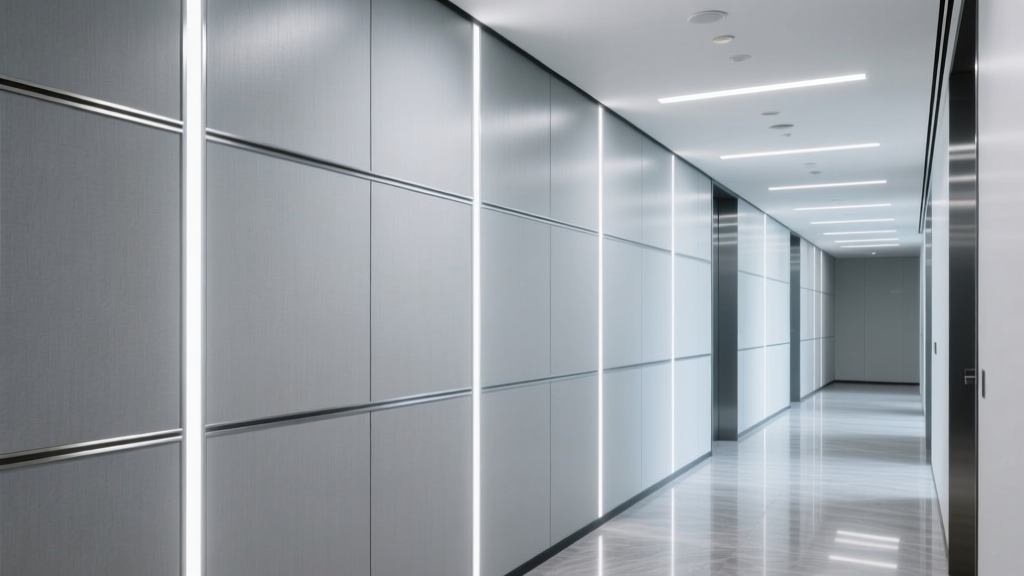
Decision Framework: When to Specify Vinyl-Faced Gypsum
Vinyl covered gypsum board is not a universal replacement for standard drywall. Its cost profile dictates specific use cases where the material properties justify the engineering and accessory requirements. Based on guidelines from The Gypsum Association and commercial facility standards, specify vinyl-faced panels when the following conditions align:
- High-Abuse Corridors: Hospitals, schools, and hotels where gurneys, carts, and luggage frequently impact walls. The PVC face resists tearing and scuffing far better than semi-gloss paint.
- Moisture-Prone Utility Areas: Commercial kitchens, laundry facilities, and indoor pool enclosures where humidity levels would cause standard paper-faced drywall to delaminate or harbor mold.
- Fast-Track Modular Construction: Prefabricated bathroom pods and modular hotel rooms where eliminating the drying time associated with joint compound and paint can shave weeks off the critical path schedule.
- Hygiene-Critical Environments: Cleanrooms, laboratories, and food processing facilities where walls must be frequently washed down with harsh chemical disinfectants without degrading the surface.
Expert Tips for Budget Optimization
To maximize the financial efficiency of a vinyl covered gypsum board installation, procurement and project management teams should implement the following strategies:
- Order Factory-Matched Trim: Never mix panel and trim manufacturers. The H-channels and corner guards are extruded to exact tolerances that match the specific thickness of the manufacturer's vinyl and gypsum core. Mixing brands results in loose fits, requiring expensive caulking that ruins the aesthetic.
- Utilize Standard Dimensions: Design ceiling heights to accommodate standard 4x8 or 4x10 panels horizontally. Vertical stacking of panels increases the linear footage of required H-channel trim by up to 30%, artificially inflating the accessory budget.
- Specify Foil Backers for Exterior Walls: When installing on exterior-facing stud cavities, ensure the vinyl-faced board includes an integrated foil backer. This acts as a vapor retarder, eliminating the need to install a separate 6-mil polyethylene sheeting, saving approximately $0.15 per square foot in material and labor.
Written by
Priya KapoorPriya Kapoor is a real estate market analyst and construction economics researcher with expertise in housing affordability, development feasibility, and infrastructure investment. She holds a Master of Regional Planning from Cornell University and previously worked as a senior analyst at CBRE's Investment Properties group, where she modeled returns for $4B in mixed-use development pipelines. Priya now runs an independent research practice advising developers, municipalities, and REITs on construction cost forecasting and market timing. She publishes the quarterly "BuildMat Market Pulse" report tracking material price indices across 12 commodity categories. Based in Austin, TX, Priya serves on the board of Habitat for Humanity Austin and is a marathon runner.
More from Priya Kapoor
View all
Construction Cost
Cost to Build a 1600 Sq Ft Home in 2026: Full Breakdown
Accurate 2026 cost to build a 1600 sq ft home—material, labor, and regional pricing breakdowns included. Plan your budget with real-time estimates.
Aug 11, 2026

Wood & Lumber
Name the Types of Wood for Pressure Treatment and Preservation
Learn how to name the types of wood best suited for pressure treatment. Compare species treatability, chemical retention levels, and 2026 preservation costs.
Aug 4, 2026

Stone & Masonry
Stone Veneer Suppliers Lindenhurst: 2026 Cost Analysis
Analyze 2026 stone veneer costs in Lindenhurst, NY. Compare local supplier pricing, delivery fees, and Suffolk County installation labor rates.
Aug 4, 2026