Types of Pressure-Treated Wood: 2026 Cost & Value Analysis
Compare 2026 costs and value of pressure-treated wood types. Learn AWPA use categories, chemical retentions, and pricing for deck framing.

The AWPA Use Category System: Decoding the Tags
Pressure-treated (PT) lumber is not a monolithic product. The difference between a deck that lasts 15 years and one that suffers structural rot in 5 years lies in the American Wood Protection Association (AWPA) Use Category stamped on the end tag. In 2026, understanding these categories is the single most critical factor in controlling long-term project costs. The AWPA standards classify treated wood based on its biological hazard exposure, dictating the exact chemical retention levels required to prevent decay and termite damage.
Always look for the 'UC' (Use Category) number on the end tag. UC3B is for above-ground applications (decking, railings), while UC4A is for ground contact (posts, structural framing near soil). Never substitute UC3B for UC4A in structural ground-contact scenarios, regardless of upfront savings.
2026 Cost Matrix: Price per Linear Foot by Use Category
Pricing for pressure-treated lumber fluctuates based on regional supply, chemical costs, and the underlying wood species. The table below reflects Q1 2026 national average retail pricing for Southern Yellow Pine (SYP), the most common PT species in North America.
| AWPA Category | Primary Application | MCA Retention (pcf) | 2026 Avg Cost (5/4x6x16') | 2026 Avg Cost (4x4x8' Post) |
|---|---|---|---|---|
| UC3B (Above Ground) | Deck boards, railings, joists | 0.15 | $14.50 - $16.00 | $9.00 - $11.00 |
| UC4A (Ground Contact) | Posts, beams, retaining walls | 0.25 | $17.50 - $19.50 | $12.50 - $14.50 |
| UC4B (Heavy Ground) | Critical structures, freshwater docks | 0.31 | Special Order | $18.00 - $22.00 |
| UC5A (Marine) | Saltwater bulkheads, pilings | 0.60+ | N/A | $45.00+ (per piling) |
Chemical Preservatives: MCA vs. ACQ in 2026
The days of Chromated Copper Arsenate (CCA) in residential construction are long over. Today's residential PT lumber relies primarily on copper-based systems without arsenic. Understanding the chemistry impacts both your material choices and your fastener budget.
Micronized Copper Azole (MCA)
MCA is currently the dominant preservative for brands like YellaWood and ProWood. By grinding copper into microscopic particles rather than dissolving it, manufacturers reduce the amount of copper needed while maintaining efficacy. MCA-treated wood is less corrosive to metal fasteners than older ACQ formulations, though hot-dipped galvanized (HDG) or stainless steel fasteners are still strictly required by building codes.
Alkaline Copper Quaternary (ACQ)
ACQ uses dissolved copper and a quaternary ammonium co-biocide. It is highly effective but notoriously corrosive to standard steel and even some galvanized coatings. If you are sourcing ACQ-treated lumber (often found in certain regional markets or specific agricultural grades), you must budget for G185 hot-dipped galvanized or 304/316 stainless steel connectors. Using standard zinc-plated joist hangers with ACQ will result in severe corrosion and structural failure within 3 to 5 years.
The Ground Contact Trap: A Value Analysis
The most common and costly mistake in residential deck building is using UC3B (Above Ground) lumber for structural posts embedded in concrete. From a pure material cost perspective, a UC3B 4x4 post is roughly $3.50 cheaper than a UC4A post. However, this initial saving triggers a catastrophic failure mode.
Concrete is porous and retains moisture. When a UC3B post is set in a concrete footing, the concrete acts as a wick, pulling ground moisture directly into the highly absorbent end-grain of the wood. Because UC3B only contains 0.15 pcf (pounds per cubic foot) of preservative, it cannot withstand this constant moisture load. The post will typically rot at the concrete interface within 5 to 8 years. Replacing a single structural post requires jacking the deck, cutting out the rotted section, and pouring new concrete—a repair that averages $450 to $600 per post in labor and materials. The $3.50 upfront saving costs you $500+ in remediation.
The Value Verdict: Always specify UC4A (Ground Contact) for any framing member within 6 inches of the ground, any post embedded in concrete, and any joists that will be covered by composite decking (which traps moisture and limits UV drying). The 20% to 25% premium on UC4A lumber yields an exponential return on investment by eliminating structural rot remediation.
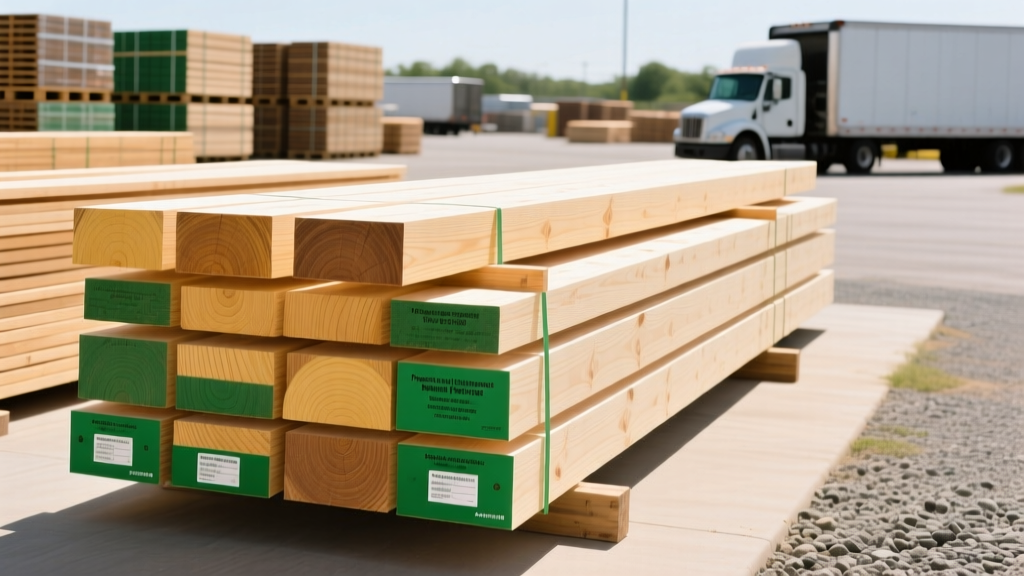
Wood Species and the Incising Factor
The species of wood used for pressure treatment drastically affects both the cost and the structural integrity of the final product. The treatment process requires the preservative chemicals to penetrate deep into the sapwood.
- Southern Yellow Pine (SYP): The gold standard for PT lumber in the Eastern and Southern US. SYP has a highly permeable sapwood that absorbs chemicals deeply and evenly without mechanical assistance. It is strong, stiff, and holds fasteners exceptionally well.
- Douglas Fir and Hem-Fir: Common in the Western US and Canada. These species have dense, impermeable heartwood and resistant sapwood. To force chemicals into the wood, mills must 'incise' the lumber—puncturing the surface with hundreds of tiny slits.
Structural Impact of Incising: According to the USDA Forest Products Laboratory, the incising process reduces the structural bending strength (Fb) and stiffness (E) of the lumber by approximately 5% to 10%. When engineering a deck or structural frame using incised Douglas Fir, you must apply this reduction factor to your span tables. Furthermore, incised lumber often costs 10% to 15% more than SYP due to the extra manufacturing step and regional shipping logistics.
Decision Framework: Which Type Should You Buy?
Use this practical framework to specify the correct pressure-treated wood for your 2026 construction projects, optimizing both budget and lifespan.
- Decking and Railings (Exposed to Sun/Air): Use UC3B. The rapid drying from sun exposure and airflow prevents decay, making the higher chemical retention of UC4A unnecessary and economically wasteful.
- Joists and Beams (Under Composite Decking): Use UC4A. Composite and PVC decking trap moisture against the joists and block UV drying. Standard UC3B joists under composite decking frequently suffer from premature fungal decay.
- Posts in Concrete or Direct Soil Contact: Use UC4A minimum. For critical load-bearing retaining walls or permanent agricultural structures, upgrade to UC4B.
- Freshwater Docks and Boat Houses: Use UC4B or UC5A. The constant splash zone and high biological hazard require maximum preservative retention.
- Saltwater Marine Environments: Use UC5C or specialized marine-grade timber. Standard copper treatments will leach rapidly in high-salinity water; marine grades often require creosote or heavy-duty dual-treatments regulated by the EPA.
'The cheapest lumber on the rack is often the most expensive wood you can buy if it's installed in the wrong hazard zone. Match the AWPA Use Category to the micro-climate of the specific framing member, not just the general project type.' — Structural Forensic Engineering Best Practices.
Written by
Elena RodriguezElena Rodriguez is a civil engineer and technical writer specializing in concrete technology, masonry systems, and ASTM/ACI compliance. She earned her B.S. in Civil Engineering from Texas A&M University and spent a decade at a materials testing laboratory, performing over 2,000 concrete compressive strength tests and masonry prism evaluations. Elena is an ACI-certified Field Testing Technician (Grade I) and a member of ASTM Committee C12 on Natural Building Stone. She currently consults on forensic engineering cases involving concrete failures and moisture intrusion. Based in San Antonio, TX, Elena is a proud member of the Society of Women Engineers (SWE) and coaches her daughter's FIRST Robotics team.
More from Elena Rodriguez
View all
Walls & Panels
Cost Analysis: Light Gauge Steel Framing Advantages and Disadvantages
Evaluate light gauge steel framing advantages and disadvantages through a strict cost analysis lens, comparing material, labor, and lifecycle expenses.
Aug 4, 2026

Walls & Panels
Gypsum Board Types: Exact Specifications, Thickness & Dimensions
Compare standard, Type X, and moisture-resistant gypsum board types. Get exact specifications, thicknesses, dimensions, and ASTM standards for your project.
Aug 4, 2026

Fire Resistance
Best Fire-Resistant Outdoor Decking Materials: 2026 Buyer Guide
Discover the best fire-resistant outdoor decking materials for 2026. Compare Class A PVC, aluminum, and hardwood options for WUI compliance and safety.
Aug 4, 2026