Cost to Build a Wood Deck: 2026 Material & Labor Breakdown
Analyze the true cost to build a wood deck in 2026. Detailed pricing for pressure-treated pine, cedar, and redwood, plus hidden labor and hardware expenses.
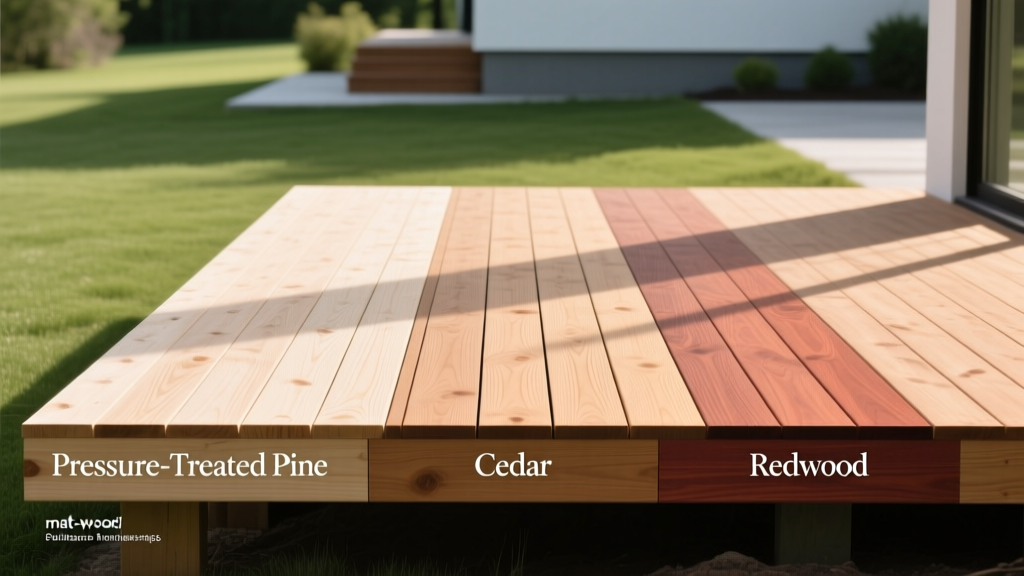
The Real Cost to Build a Wood Deck in 2026
Calculating the accurate cost to build a wood deck requires moving beyond simplistic square-foot averages. In 2026, the national average for a professionally installed, ground-level pressure-treated wood deck ranges from $22 to $32 per square foot. However, elevated decks requiring deep footings, complex stair stringers, or premium hardwoods like clear-grade redwood can push costs to $55 or more per square foot. Understanding the granular breakdown of lumber grades, structural hardware, and site-specific labor is critical for preventing budget overruns and ensuring code compliance.
Lumber Material Costs by Species and Grade
The decking surface accounts for roughly 35% to 45% of your total material budget. The choice of wood species and the specific grading standard dictate both the upfront cost and the long-term maintenance cycle. According to data from the USDA Forest Products Laboratory, natural durability varies drastically between sapwood and heartwood, directly impacting material selection for exterior exposure.
| Wood Species | Recommended Grade | Material Cost (per sq. ft.) | Expected Lifespan | Maintenance Frequency |
|---|---|---|---|---|
| Pressure-Treated Southern Yellow Pine | #2 Grade or Select Structural | $3.50 - $5.50 | 15 - 20 years | Annual cleaning, seal every 2 yrs |
| Western Red Cedar | Select Tight Knot (STK) or Clear | $7.00 - $11.00 | 20 - 25 years | Seal every 3 yrs |
| California Redwood | Construction Heart or Clear Heart | $9.50 - $16.00 | 25 - 30 years | Seal every 3-4 yrs |
| Tropical Hardwood (Ipe / Cumaru) | Select & Better (FSC Certified) | $14.00 - $22.00 | 40+ years | Oil annually (optional for color) |
When purchasing pressure-treated lumber, verify the AWPA (American Wood Protection Association) use category. Framing lumber in contact with the ground or concrete must be rated UC4A (Ground Contact), while above-ground joists and decking can use UC3B. Using UC3B lumber for posts embedded in concrete will result in premature rot and structural failure.
Structural Framing, Footings, and Hardware
A common miscalculation in deck budgeting is underestimating the substructure. The framing (beams, joists, and posts) and the footing system often cost as much as the decking boards themselves.
Footing Systems: Concrete vs. Helical Piers
Traditional poured concrete footings require digging below the local frost line (often 36 to 48 inches), forming Sonotubes, and waiting for the concrete to cure. In 2026, many contractors are shifting to helical piers (such as Techno Metal Post) for elevated decks. While a standard concrete footing costs $120 to $180 per pier in labor and materials, helical piers cost $250 to $350 per pier installed. However, helical piers eliminate excavation, curing time, and concrete truck fees, often resulting in a net savings on complex or sloped sites.
Modern building codes strictly prohibit attaching deck joists to house rim joists using only nails. You must use specialized ledger fasteners and lateral load brackets. Budget an additional $150 to $300 for structural screws (like 3-inch #10 GRK RSS) and Simpson Strong-Tie DTT2Z lateral tension devices to pass your local municipal inspection.
Corrosion-Resistant Hardware Requirements
The preservatives used in modern pressure-treated lumber (such as ACQ and MCQ) are highly corrosive to standard electroplated zinc hardware. You must specify G185 hot-dipped galvanized connectors or Type 304/316 stainless steel. Using standard joist hangers on treated lumber will result in severe corrosion within 3 to 5 years, compromising the deck's structural integrity. Always cross-reference your hardware with the AWC DCA 6 Prescriptive Deck Construction Guide to ensure code compliance.
Labor Rates and Project Phases
Labor typically accounts for 50% to 60% of the total cost to build a wood deck. In 2026, licensed and insured deck contractors charge between $55 and $95 per hour, or bid on a per-square-foot basis ranging from $12 to $25 per square foot for standard installations. Site accessibility, demolition of an existing structure, and terrain slope heavily influence the final labor bid.
Labor Cost Breakdown by Phase
- Site Prep & Demolition (10%): $400 - $1,200. Includes tearing down old structures, hauling away debris, and grading the soil.
- Layout & Footings (20%): $800 - $2,500. Digging, pouring concrete, or driving helical piers, and setting post bases.
- Framing & Substructure (35%): $1,500 - $4,000. Installing the ledger board, beams, joists (typically 16 inches on center), and blocking.
- Decking & Trim (25%): $1,200 - $3,500. Laying the deck boards, spacing them consistently (1/8 to 3/16 inch for PT pine to allow for shrinkage), and installing fascia.
- Railings & Stairs (10%): $500 - $3,000+. Stairs are highly labor-intensive, often costing $150 to $250 per tread to frame and finish correctly.
Long-Term Value and ROI Analysis
When evaluating the cost to build a wood deck, consider the return on investment at resale. According to Remodeling Magazine's Cost vs. Value Report, a midrange wood deck addition consistently recoups between 70% and 85% of its construction cost upon home sale, depending on the regional housing market. While composite decking requires less maintenance, wood decks often yield a slightly higher percentage ROI due to their lower initial construction costs, making them a highly efficient capital improvement for homeowners planning to sell within 5 to 10 years.
However, the 10-year total cost of ownership (TCO) shifts the math. A pressure-treated wood deck requires roughly $400 to $600 in cleaning and sealing materials every two years, plus 12 to 16 hours of labor. Over a decade, this adds $2,500 to $4,000 in maintenance costs, narrowing the gap between wood and premium composite materials.
Decision Framework: Choosing Your Deck Material
Which Wood Deck Fits Your Scenario?
Choose Pressure-Treated Pine if: You are building a large, ground-level deck on a strict budget, plan to move within 7 years, and do not mind annual power washing and bi-annual sealing.
Choose Western Red Cedar if: You want a premium, naturally rot-resistant aesthetic with a distinct aroma, are building in a dry climate, and are willing to pay a 40% premium over pine for better dimensional stability and less warping.
Choose Tropical Hardwood (Ipe) if: You are building a high-traffic commercial space or a luxury residential deck, require extreme scratch and dent resistance, and have the budget for specialized hidden fastener systems and carbide-tipped saw blades required for installation.
Frequently Asked Questions
Do I need a permit to build a wood deck?
In most municipalities, you need a building permit if the deck is attached to the house, serves a door, or is elevated more than 30 inches above grade at any point. Free-standing decks under 30 inches and under 200 square feet are often exempt, but local zoning laws regarding lot coverage and setbacks still apply.
What is the best joist spacing for wood decking?
For standard 5/4x6 wood decking installed at a 45-degree angle to the joists, you must space the joists 12 inches on center (OC) to prevent sagging. If installing the boards parallel (90 degrees) to the joists, 16 inches OC is the standard code maximum. Always check the span table for your specific wood species and grade.
How long should I wait to seal a new pressure-treated deck?
New pressure-treated lumber is saturated with liquid preservatives. You must wait for the wood to dry out and acclimate to your local humidity, which typically takes 30 to 90 days. Test the wood by sprinkling water on the surface; if it absorbs within 10 seconds, it is ready to be sealed. If the water beads up, wait another two weeks.
Written by
Marcus ChenMarcus Chen is a licensed structural engineer (PE) and building materials analyst with over 12 years of experience across residential, commercial, and industrial construction. He holds a Master of Science in Civil Engineering from UC Berkeley and spent six years at Thornton Tomasetti before transitioning to independent consulting and technical writing. Marcus specializes in material selection for seismic-prone regions, concrete reinforcement strategies, and lifecycle cost analysis. His work has been cited by the American Concrete Institute (ACI) and the Structural Engineers Association of California (SEAOC). When he is not on a job site or at his desk, you will find him hiking the Sierra Nevada or restoring a 1920s craftsman bungalow in Oakland, CA.
More from Marcus Chen
View all
Construction Cost
How Much Did the Eiffel Tower Cost to Build?
How much did the Eiffel Tower cost to build in 1889? We adjust for inflation and compare its budget to modern skyscraper construction.
Aug 4, 2026

Fire Resistance
What Is a Fire Resistant Material? Testing & Certification Guide
Discover what is a fire resistant material through ASTM and UL testing. Learn how fire ratings, certifications, and assemblies work in construction.
Aug 4, 2026

Construction Cost
How Much Did the Burj Khalifa Cost to Build?
How much did the Burj Khalifa cost to build? We break down the $1.5B project and extract 5 money-saving strategies for your next build.
Jul 30, 2026