2026 Cost and Value Guide to Various Types of Wood
Analyze the 2026 costs and lifecycle value of various types of wood, from structural softwoods and hardwoods to engineered timber options.

The 2026 Lumber Market: Beyond the Initial Price Tag
Evaluating the true cost of building materials requires looking past the initial invoice. When comparing various types of wood for structural framing, interior millwork, and exterior cladding, the lowest upfront price rarely equates to the highest lifecycle value. In 2026, material pricing has stabilized compared to the volatile pandemic-era peaks, but inflation in milling, transportation, and specialized treatments has shifted the value proposition. A premium upfront investment in higher-grade or modified timber often yields massive dividends in reduced waste, fewer structural callbacks, and extended maintenance cycles. According to the American Wood Council, understanding the specific design values and decay resistance of different species is critical for optimizing both structural integrity and project budgets.
Core Value Metrics for 2026
- Structural Value: Measured by bending strength (Fb) and modulus of elasticity (E) relative to board-foot cost.
- Finish Value: Measured by Janka hardness, dimensional stability, and refinishing lifespan.
- Exterior Value: Measured by natural decay resistance, warranty length, and required fastener compatibility.
Structural Softwoods: Framing Cost vs. Structural Value
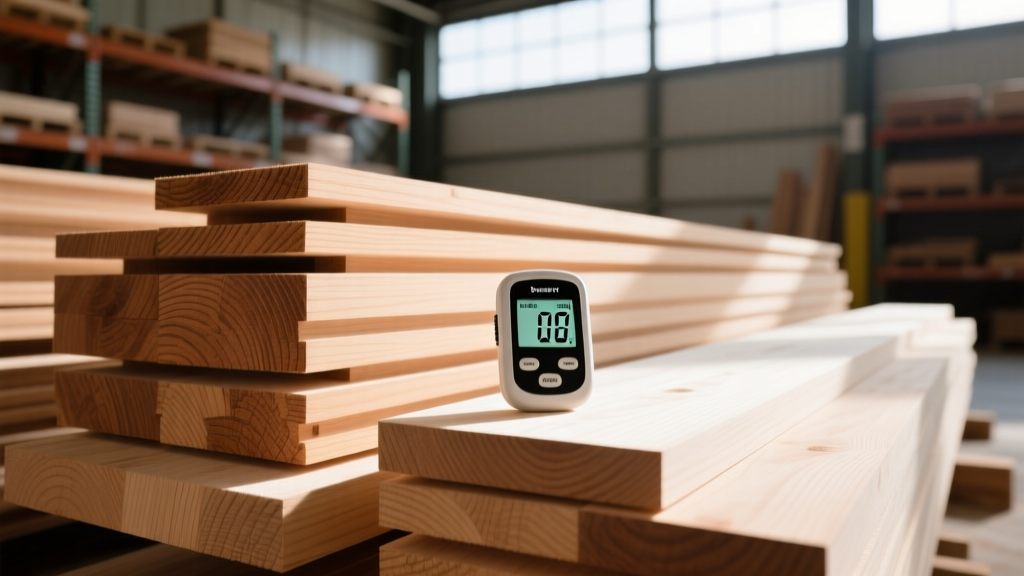
For framing, the debate usually centers on regional availability. However, specifying wood solely based on local commodity pricing ignores the engineering advantages of denser species. Upgrading from standard SPF (Spruce-Pine-Fir) to Douglas Fir or Southern Yellow Pine (SYP) increases material costs by 15% to 25%, but allows for wider joist spacing, longer spans, or shallower beam depths, which can offset the premium by reducing the total board footage required and lowering labor hours.
| Species & Grade | 2026 Avg. Cost (2x6x10) | Bending (Fb) psi | Stiffness (E) psi | Best Value Application |
|---|---|---|---|---|
| SPF #2 | $5.80 - $6.50 | 875 | 1,200,000 | Standard interior wall framing |
| SYP #2 | $6.90 - $7.80 | 1,100 | 1,600,000 | High-load floor joists, trusses |
| Douglas Fir #2 | $7.50 - $8.60 | 1,200 | 1,900,000 | Long-span beams, exposed rafters |
When designing floor systems, the higher stiffness (E) of Douglas Fir reduces floor bounce, a common complaint in modern open-concept homes. Paying an extra $1.50 per stud or joist for Douglas Fir eliminates the need for mid-span bridging or sistering, saving approximately $0.80 to $1.20 per linear foot in labor and hardware.
Finish Hardwoods: Lifecycle Cost of Interior Millwork
In interior applications, the value of various types of wood is dictated by wear resistance and dimensional stability. While exotic species like Brazilian Cherry offer extreme hardness, domestic hardwoods like White Oak and Hard Maple provide the optimal balance of cost, workability, and longevity for flooring and cabinetry.
The White Oak Premium and Tannin Management
White Oak has seen a sustained surge in demand for wide-plank flooring and custom millwork. In 2026, unfinished 3/4" x 5" White Oak flooring ranges from $8.50 to $12.00 per square foot. While this is 30% more than Hard Maple, White Oak’s closed-cellular structure (due to tyloses in the pores) makes it highly resistant to moisture penetration, reducing the risk of cupping in humid environments.
White Oak is rich in tannins. If you use standard steel nails or unsealed water-based finishes with high pH, the tannins will react, causing severe black staining (tannin bleed). Always specify 304 or 316 stainless steel cleats for installation, and apply a tannin-blocking sealer (like Zinsser B-I-N or a dedicated shellac-based barrier) before applying waterborne polyurethane.
Hard Maple: The High-Traffic Workhorse
For commercial spaces or high-traffic residential zones, Hard Maple (Janka hardness of 1,450 lbf) remains the undisputed value leader at $6.00 to $8.50 per square foot. Its tight, uniform grain resists denting better than many softer exotics, and its lighter color naturally masks surface scratches better than the high-contrast grain of Walnut (Janka 1,010 lbf), which costs upwards of $14.00 per square foot and dents easily.
"Lifecycle costing in hardwood flooring must account for refinishing cycles. A 3/4-inch solid plank can be sanded 4 to 6 times over a 50-year lifespan. An engineered veneer with a 2mm wear layer can only be refinished once, effectively halving its functional lifespan despite a similar upfront material cost."
Engineered & Modified Timber: The High-ROI Alternatives
The most significant shifts in lumber value over the last decade have occurred in engineered and chemically modified woods. The APA – The Engineered Wood Association notes that products like Laminated Veneer Lumber (LVL) and Glulam have largely replaced solid-sawn timbers in structural applications due to their predictable engineering values and lack of checking or warping.
Accoya vs. Pressure-Treated Southern Yellow Pine
For exterior decking, siding, and ground-contact applications, builders traditionally rely on Pressure-Treated (PT) SYP. However, the acetylation process used to create Accoya wood fundamentally alters the cellular structure, rendering it indigestible to fungi and insects without the use of toxic copper-based biocides.
| Material | 2026 Material Cost (per sq ft) | Expected Lifespan (Above Ground) | Dimensional Stability | Maintenance Cycle |
|---|---|---|---|---|
| PT SYP (Ground Contact) | $3.50 - $4.50 | 15 - 20 Years | Poor (High shrink/swell) | Annual sealing required |
| Accoya (Acetylated) | $12.00 - $15.50 | 50+ Years (Warranted) | Excellent (Swells 75% less) | Coatings last 2x-3x longer |
While Accoya costs roughly 300% more upfront than PT SYP, its value emerges in reduced maintenance and replacement. Because Accoya swells and shrinks up to 75% less than unmodified wood, exterior finishes and stains do not crack or peel at the same rate, extending the maintenance cycle from 2 years to 5 or 6 years. Over a 30-year mortgage, the labor savings in refinishing and the avoidance of a full deck rebuild make Accoya the superior financial choice for high-end residential projects.
The BuildMat Decision Matrix: Matching Wood to Project Scope
Selecting the right material requires aligning the project's performance requirements with the specific mechanical properties of the wood. Use this framework to avoid over-specifying (wasting budget) or under-specifying (inviting callbacks).
| Application Scenario | Recommended Wood Type | Value Justification |
|---|---|---|
| Interior non-load-bearing partitions | SPF #3 or Stud grade | Lowest cost; structural strength is irrelevant for partition walls. |
| Long-span floor joists (18'+) | LVL or I-Joists | Eliminates mid-span beams; perfectly straight, reducing subfloor prep labor. |
| Radiant heat subflooring | Engineered White Oak | Cross-ply construction prevents cupping from localized heat; excellent thermal transfer. |
| Exterior cladding in wet climates | Western Red Cedar or Accoya | Natural tannins (Cedar) or acetylation (Accoya) prevent rot without toxic leaching. |
Hidden Costs: Moisture, Acclimation, and Waste Factors
The most common point of budget failure when working with various types of wood is ignoring moisture content (MC) and yield waste. A cheap batch of hardwood flooring becomes incredibly expensive when 20% of it is scrapped due to warping, or when it fails after installation due to improper acclimation.
- Delivery and Acclimation Protocol: Never install solid or engineered wood directly off the truck. The HVAC system must be operational and maintaining normal living conditions (60-80°F, 30-50% relative humidity) for at least 7 to 10 days prior to installation. Use a pinless moisture meter to ensure the wood's MC is within 2% to 4% of the subfloor's MC.
- Calculating True Waste Factors: Standard parallel plank layouts require a 7% to 10% waste factor for end cuts and defective boards. However, if you are specifying diagonal, herringbone, or chevron patterns, you must increase your material order by 15% to 20%. The complex angle cuts generate significant offcuts that cannot be reused.
- Fastener and Hardware Upgrades: When using dense, acidic woods like White Oak, Cedar, or Redwood, standard electro-galvanized nails will corrode rapidly, leading to black streaks and structural failure. Budget an additional $0.40 to $0.75 per square foot for stainless steel or hot-dipped galvanized fasteners.
Sourcing Strategies for 2026
To maximize value, bypass big-box retail for finish materials. Local specialty lumberyards and direct-from-mill suppliers offer better grading consistency and can source specific cuts (like quartersawn White Oak for maximum stability) that retail chains do not stock. For structural framing, establish a volume-based pricing agreement with a regional distributor, locking in rates for the duration of a multi-phase build to insulate your budget from seasonal market fluctuations. By aligning the specific mechanical properties of the wood with the exact demands of the application, builders can drastically reduce lifecycle costs while delivering superior structural and aesthetic results.
Written by
Sarah WhitfieldSarah Whitfield is a chartered quantity surveyor (MRICS) and construction cost analyst with 15 years of experience in material pricing, procurement strategy, and project budgeting. She earned her degree in Construction Management from the University of Reading (UK) and has worked on projects ranging from $2M custom homes to $180M mixed-use developments across North America and Europe. Sarah currently leads cost estimating for BuildMat Insight, maintaining a proprietary database of 4,000+ material price points updated quarterly. She is a frequent contributor to RSMeans cost data panels and has presented at the International Cost Engineering Council (ICEC) congress. Based in Denver, CO, Sarah is an avid trail runner and volunteer mentor for Women in Construction.
More from Sarah Whitfield
View all
Wood & Lumber
What Are the Different Types of Wood? A Builder's Guide
Compare structural softwoods, finish hardwoods, and engineered lumber. Analyze Janka ratings, MOE values, and 2026 pricing for construction.
Aug 4, 2026

Walls & Panels
Steel Framing vs Wood Framing: Corrosion and Moisture Defense
Compare steel framing vs wood framing for moisture resistance. Learn about galvanized coatings, condensation risks, and corrosion protection strategies.
Jul 21, 2026

Stone & Masonry
How to Cut Stone Veneer: Wet Saw vs Grinder Comparison
Compare the best tools for cutting stone veneer. We review wet saws, angle grinders, and chop saws to help you achieve clean, chip-free cuts.
Jul 21, 2026