Comparing All the Types of Wood: Construction Cost & Value Guide
Analyze the cost and lifecycle value of all the types of wood for construction, from structural framing softwoods to premium hardwoods and engineered timber.
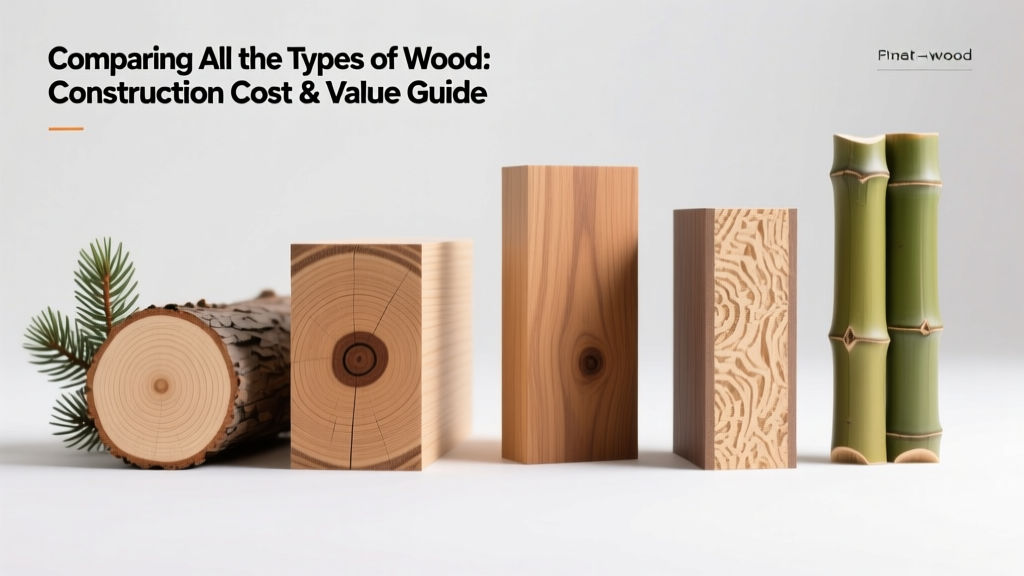
The Economics of Wood Selection in Modern Construction
Selecting building materials requires balancing immediate budget constraints against long-term structural performance and lifecycle maintenance. When evaluating all the types of wood available in the 2026 market, builders and architects must look beyond the initial price per board foot (BF) or linear foot (LF). True value is determined by yield, grading standards, moisture stability, span capabilities, and durability against biological degradation. According to the USDA Forest Products Laboratory Wood Handbook, the mechanical properties of wood vary drastically even within the same species based on growth ring density and moisture content at the time of milling.
Structural Framing: Softwood Pricing and Grade Value
Softwoods dominate the structural framing market, categorized primarily into three regional groups: Spruce-Pine-Fir (SPF), Douglas Fir-Larch (DF-L), and Southern Yellow Pine (SYP). The cost difference between these species is directly tied to their specific gravity and allowable design values (bending, tension, and shear).
| Species Group | Avg. Price (8-ft Stud) | Design Value (Fb) | Best Application | Value Proposition |
|---|---|---|---|---|
| SPF (South) | $3.65 - $4.10 | 1,100 psi | Interior non-load-bearing walls, sheathing | Lowest upfront cost; adequate for standard residential loads. |
| Southern Yellow Pine (SYP) | $4.25 - $4.90 | 1,500 psi | Floor joists, rafters, high-wind zones | High density and excellent fastener withdrawal resistance. |
| Douglas Fir-Larch (DF-L) | $5.10 - $5.85 | 1,500 psi | Long-span beams, multi-story framing, seismic zones | Superior dimensional stability and stiffness; reduces bounce in floors. |
When reviewing span tables provided by the American Wood Council (AWC), DF-L and SYP consistently allow for wider joist spacing (e.g., 19.2 inches on-center instead of 16 inches) or longer unsupported spans. Paying a 20% premium for DF-L can yield a 10% reduction in total board footage required for a floor system, offsetting the material cost while delivering a stiffer, higher-performing floor.
Architectural Millwork: Hardwood Cost vs. Durability
For interior finishes, cabinetry, and flooring, hardwoods are graded by the National Hardwood Lumber Association (NHLA) based on clear-face cutting yield, not structural strength. The primary grades are FAS (Firsts and Seconds), Select, and No. 1 Common. While FAS commands the highest price, No. 1 Common often provides the best value for cabinetry where smaller cut-offs are utilized.
The White Oak vs. Red Oak Value Proposition
Red Oak has historically been the baseline for American hardwood flooring and millwork, averaging $5.50 to $6.50 per BF for 4/4 (1-inch) rough lumber. White Oak, however, has surged to $8.50 to $10.50 per BF. Despite the 40% upfront premium, White Oak offers superior value in specific applications due to its closed-cell tyloses structure, which makes it impervious to water penetration. For exterior doors, wet-area millwork, or exterior siding (like Shou Sugi Ban treatments), White Oak's natural rot resistance eliminates the need for chemical preservatives, offering a lifecycle value that Red Oak cannot match.
Hard Maple (Janka hardness: 1,450 lbf) is highly desired for heavy-use countertops and gymnasium floors. However, it is prone to fungal staining (spalting and gray sticker stain) if not kiln-dried immediately after milling. When sourcing Hard Maple, specify 'kiln-dried to 6-8% moisture content' and inspect for surface checking, as buying cheap air-dried Maple often results in a 30% yield loss during surfacing.
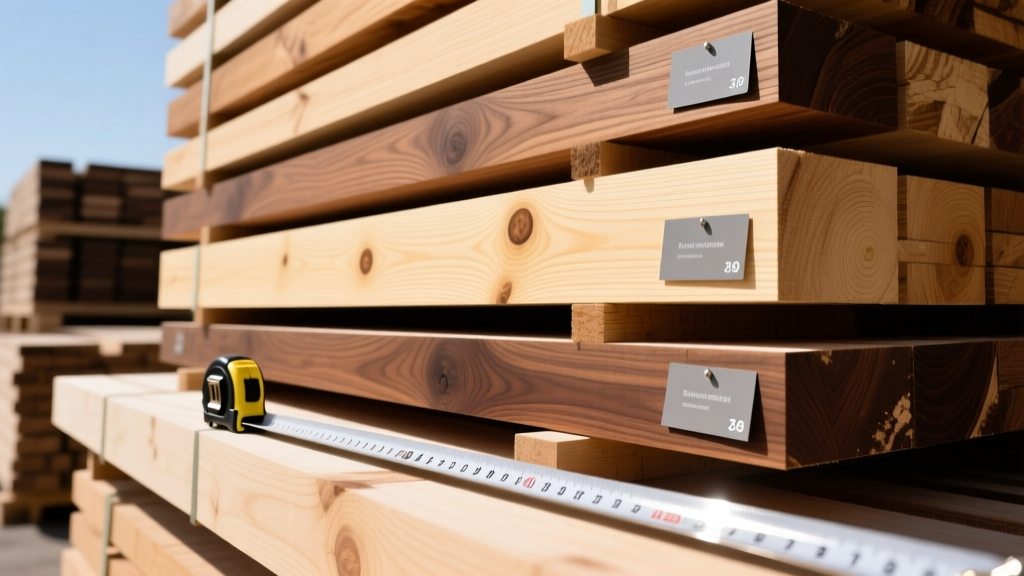
Exterior Applications: Decking and Siding Lifecycle Costs
Exterior wood is subjected to UV degradation, moisture cycling, and fungal attack. Evaluating exterior species requires calculating the cost per year of service life rather than the initial installation cost.
- Western Red Cedar (5/4x6 Decking): ~$3.50 per LF. Contains natural thujaplicins for decay resistance. Expected lifespan of 15-20 years with annual sealing. Cost per year: ~$0.20/LF.
- California Redwood (Clear Grade): ~$5.50 per LF. Superior dimensional stability with minimal warping. Lifespan of 20-25 years. Cost per year: ~$0.25/LF.
- Ipe (Brazilian Walnut): ~$13.00 to $16.00 per LF. Janka hardness of 3,680 lbf makes it virtually immune to scratching and denting. Class A fire rating. Expected lifespan of 40-75 years with no chemical treatment. Cost per year: ~$0.28/LF.
- Thermally Modified Ash (TMA): ~$8.50 per LF. Domestic hardwood baked at 400°F+ in an oxygen-deprived environment, altering its cellular structure to achieve a Class 1 durability rating (equivalent to tropical hardwoods). Expected lifespan: 30+ years.
While Ipe and Thermally Modified Ash carry steep initial price tags, their elimination of annual chemical sealing and replacement cycles makes them the most cost-effective choices for commercial projects or high-end residential builds where long-term maintenance budgets are strictly capped.
Mass Timber and Engineered Wood Products (EWP)
The commercial and multi-family construction sectors have heavily adopted Engineered Wood Products to solve the natural limitations of solid-sawn lumber, such as checking, twisting, and maximum length constraints. According to WoodWorks Mass Timber Resources, the use of EWPs accelerates project timelines, significantly reducing labor costs.
Comparing EWP Options
Laminated Veneer Lumber (LVL): Manufactured by peeling logs into thin veneers, drying them, and bonding them with structural adhesives. LVL beams cost approximately 20% to 30% more than equivalent solid-sawn Douglas Fir beams. However, LVLs are available in lengths up to 60 feet and depths up to 24 inches, eliminating the need for intermediate load-bearing walls or steel I-beams, which require specialized cranes and fireproofing.
Cross-Laminated Timber (CLT): Used for floor, wall, and roof panels in mass timber construction. CLT panels cost between $12 and $18 per square foot for the material. While the raw material cost is higher than traditional light-frame wood, CLT acts as both the structural system and the finished interior ceiling, eliminating the cost of drywall, taping, mudding, and painting on the underside of floor decks.
Hidden Cost Drivers: Moisture, Treatment, and Grading
Failure to specify the correct moisture content and treatment level is the most common cause of budget overruns and structural callbacks in wood construction.
- Moisture Content (MC) Specifications: Lumber stamped S-GRN (Surfaced Green) has a moisture content above 19% and is cheaper upfront. As it dries in place, it shrinks, causing drywall cracks, nail pops, and floor squeaks. Always specify S-DRY (Surfaced Dry, max 19% MC) or MC-15 (max 15% MC) for interior framing and millwork to prevent costly remediation.
- Pressure Treatment Chemistries: For ground-contact applications (UC4A and UC4B), Alkaline Copper Quaternary (ACQ) and Micronized Copper Azole (MCA) are standard. MCA-treated lumber is generally 10% to 15% more expensive than ACQ but is less corrosive to standard aluminum flashings and fasteners, saving money on hardware upgrades.
- Grade Stamp Verification: A 'Stud' grade stamp is only approved for vertical load-bearing walls at specific spacing. Using 'Stud' grade for horizontal rafters or joists is a code violation that will fail inspection, resulting in total material tear-out. Always verify the grade stamp matches the structural engineer's specifications.
Strategic Procurement Framework
To maximize value across a construction project, procurement decisions should follow a targeted framework based on the specific performance requirements of each building assembly:
If spanning long distances in a residential floor system → Use LVL or I-Joists to eliminate intermediate supports and reduce material count.
If building exterior decking in a high-traffic commercial zone → Use Ipe or Thermally Modified Ash to eliminate annual maintenance labor costs.
If framing interior non-load-bearing partitions → Use S-DRY SPF Stud grade to minimize weight and cost without sacrificing code compliance.
If specifying flooring for a moisture-prone entryway → Use White Oak or engineered hardwood with a plywood core; avoid solid Red Oak or Maple.
Ultimately, the lowest invoice price rarely equates to the lowest installed cost. By aligning the biological and mechanical properties of specific wood species with the exact environmental and structural demands of the project, builders can optimize both their immediate budgets and the long-term resilience of the structure.
Written by
Elena RodriguezElena Rodriguez is a civil engineer and technical writer specializing in concrete technology, masonry systems, and ASTM/ACI compliance. She earned her B.S. in Civil Engineering from Texas A&M University and spent a decade at a materials testing laboratory, performing over 2,000 concrete compressive strength tests and masonry prism evaluations. Elena is an ACI-certified Field Testing Technician (Grade I) and a member of ASTM Committee C12 on Natural Building Stone. She currently consults on forensic engineering cases involving concrete failures and moisture intrusion. Based in San Antonio, TX, Elena is a proud member of the Society of Women Engineers (SWE) and coaches her daughter's FIRST Robotics team.
More from Elena Rodriguez
View all
Walls & Panels
Cost Analysis: Light Gauge Steel Framing Advantages and Disadvantages
Evaluate light gauge steel framing advantages and disadvantages through a strict cost analysis lens, comparing material, labor, and lifecycle expenses.
Aug 4, 2026

Walls & Panels
Gypsum Board Types: Exact Specifications, Thickness & Dimensions
Compare standard, Type X, and moisture-resistant gypsum board types. Get exact specifications, thicknesses, dimensions, and ASTM standards for your project.
Aug 4, 2026

Fire Resistance
Best Fire-Resistant Outdoor Decking Materials: 2026 Buyer Guide
Discover the best fire-resistant outdoor decking materials for 2026. Compare Class A PVC, aluminum, and hardwood options for WUI compliance and safety.
Aug 4, 2026