Types of Wood Mites: A Lumber Identification and Treatment Framework
Discover the common types of wood mites infesting lumber. Use our diagnostic framework to identify moisture pests and select targeted borate treatments.

The Diagnostic Reality: Mites Do Not Eat Wood
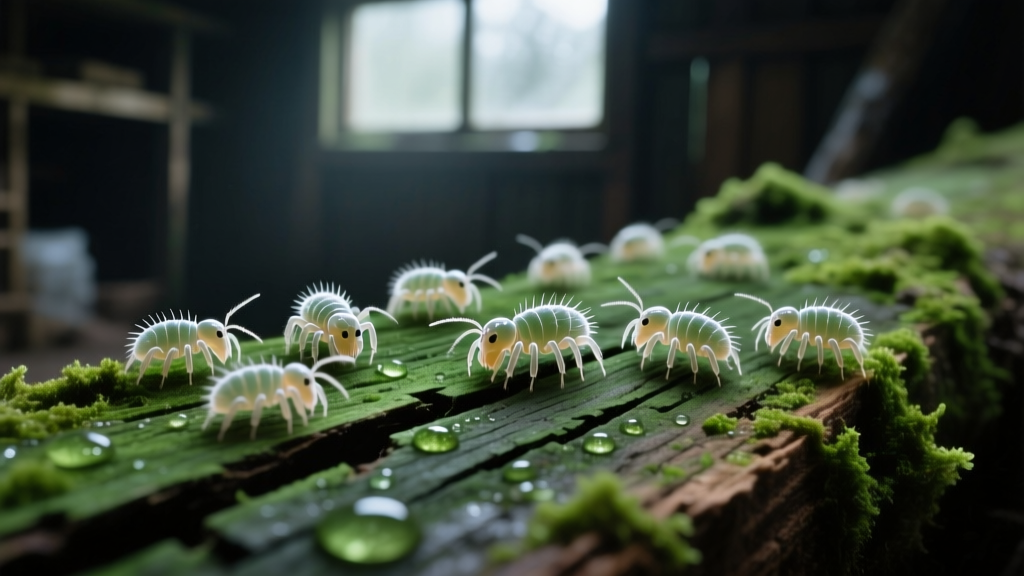
When builders, lumber yard managers, and homeowners encounter 'types of wood mites,' they are typically facing a secondary symptom of a primary moisture problem. Unlike subterranean termites or powderpost beetles, true mites (subclass Acari) lack the mandibles and gut flora required to digest cellulose or lignin. Instead, mites found on structural timber, framing lumber, and wood flooring are mycophagous (fungus-eating) or detritivores. They are present because the wood's moisture content (MC) and surface relative humidity (RH) have crossed the threshold for mold and fungal growth.
Accurate identification is the first step in our selection framework. Misdiagnosing a surface mite infestation as a structural wood-boring insect leads to unnecessary fumigation costs, while ignoring the underlying moisture vector guarantees recurring fungal decay.
Taxonomy Matrix: Identifying Mites and Mite-Like Pests on Lumber
To select the correct remediation protocol, you must first isolate the specific organism. The following diagnostic matrix separates true mites from commonly misidentified lumber pests.
| Organism Type | Scientific Name | Diet & Vector | Visual Identification | Structural Threat Level |
|---|---|---|---|---|
| Mold Mites | Tyrophagus putrescentiae | Aspergillus & Penicillium fungi on damp wood | 0.3mm, translucent/white, slow-moving, long setae (hairs) | None (Indicator of mold/moisture) |
| Bark Mites | Trombidiformes (Various) | Fungi and organic debris under raw log bark | Red or brown, slightly larger, found exclusively on bark | None (Removed during debarking/milling) |
| Storage/Grain Mites | Acarus siro | Starches in wood stickers, pallets, and sapwood | Pearly white, bulbous, found in lumber stack separators | None (Contaminates stored goods) |
| Booklice / Psocids (Misidentified) | Liposcelis spp. | Microscopic mold on drywall and framing lumber | 1-2mm, pale brown, rapid darting movement, distinct head | None (Indicator of >60% RH) |
| Powderpost Beetles (Misidentified) | Lyctus / Anobium spp. | Starch in hardwood sapwood and softwoods | Frass (sawdust) present, 1-2mm exit holes, actual wood loss | High (Compromises structural integrity) |
Moisture Thresholds: The Infestation Trigger Framework
Mite populations explode only when environmental parameters support their food source. According to the EPA's guidelines on moisture and mold, fungal growth requires specific moisture baselines. Because mites feed on this fungi, their presence is a biological hygrometer.
- < 15% MC (Kiln-Dried): Mite and mold survival is virtually impossible. Safe for interior framing and millwork.
- 15% - 19% MC: Surface mold may develop if ambient RH exceeds 80%. Mold mites can establish localized colonies in poorly ventilated lumber stacks.
- > 19% MC (Green/Unseasoned): Optimal range for decay fungi and explosive mold mite reproduction. Requires immediate intervention before enclosure.
To verify these thresholds, procurement managers must use pin-type resistance moisture meters (such as the Delmhorst J-2000 or Wagner Meters Orion 930) rather than pinless scanners, which can yield false positives from surface condensation or dense growth rings.
Treatment Selection Framework: Matching Protocol to Lumber State
Once you have confirmed the presence of fungus-feeding mites (and ruled out wood-boring beetles via the absence of frass), select your treatment based on the lumber's current state and intended application.
Scenario A: Green or Unseasoned Structural Timber
For heavy timbers, landscape ties, or framing lumber stored outdoors with an MC above 19%, surface mites indicate active fungal colonization. The objective is to halt fungal growth, which subsequently starves the mite population.
- Primary Intervention: Apply a liquid borate wood preservative. Products containing disodium octaborate tetrahydrate (DOT), such as Bora-Care or Tim-bor, penetrate the wood's water column. The National Pesticide Information Center notes that borates disrupt the enzymatic processes of both fungi and insects.
- Application Rate: Mix 40% DOT concentrate at a 1:1 ratio with water for a 1-gallon per 800-square-foot coverage rate on raw, absorbent lumber.
- Secondary Action: Restack lumber using 1-inch dry hardwood stickers spaced every 16 inches to promote cross-ventilation and drop the MC below 19%.
Scenario B: Kiln-Dried Interior Framing (Stored On-Site)
If mold mites or psocids appear on kiln-dried lumber (MC 12-15%) stored in a humid, unconditioned structure, the wood is absorbing ambient moisture. Chemical treatment is unnecessary and potentially harmful to indoor air quality.
- Primary Intervention: Environmental desiccation. Deploy commercial-grade desiccant dehumidifiers (e.g., Dri-Eaz or AlorAir) to drop the ambient RH below 50%.
- Mechanical Removal: Use HEPA-filtered vacuums to physically remove mite colonies and surface mold spores from the lumber stack. Do not use compressed air, which will embed spores deeper into the wood grain and distribute them across the job site.
- Surface Treatment: Wipe affected areas with a solution of 3% hydrogen peroxide or a commercial quaternary ammonium fungicide to kill the residual mold food source.
Scenario C: Finished Hardwood Flooring and Millwork
Mites found on finished wood products are almost always 'hitchhikers' from infested subfloors, damp crawlspaces, or contaminated packaging materials.
- Primary Intervention: Isolate the moisture vector. Inspect the crawlspace or concrete slab using a calcium chloride vapor emission test (ASTM F1869). If moisture vapor transmission rates (MVER) exceed 3 lbs/1,000 sq ft/24 hours, install an epoxy moisture vapor barrier before replacing flooring.
- Secondary Action: Seal all end-grains and unsealed backs of millwork with a polyurethane or penetrating oil sealer to block hygroscopic moisture absorption.
Preventative Procurement Standards
The most cost-effective way to manage the types of wood mites that plague lumber yards is to prevent their introduction through strict procurement standards.
- Reject Bark-Intact Lumber: Bark harbors bark mites and provides a microclimate for mold. Specify fully debarked, surfaced (S4S) or at least planar (S2S) lumber for interior applications.
- Mandate AWPA U1 Compliance: For any lumber designated for ground contact or high-moisture zones, require documentation that the wood has been treated to the American Wood Protection Association (AWPA) U1 standards. Pressure-treated lumber utilizing copper azole (CA-C) or alkaline copper quaternary (ACQ) is inherently resistant to the fungi that mites require.
- Inspect Stickers and Pallets: Storage mites (Acarus siro) frequently infest the wooden stickers used to separate lumber during air-drying. Require suppliers to use kiln-dried stickers or synthetic composite separators.
According to the University of Florida IFAS Entomology Department, mold mites and their eggs are highly susceptible to thermal shock. Specifying lumber that has undergone standard kiln-drying (where the core temperature reaches a minimum of 133°F for at least 30 minutes) guarantees a 100% mortality rate for all mite species and their eggs prior to delivery. Always request a kiln certificate for high-value hardwoods.
Frequently Asked Questions
Can wood mites bite humans or pets on a construction site?
True mold mites and bark mites do not bite humans or pets; they lack the mouthparts to pierce skin. However, heavy infestations can cause contact dermatitis or allergic reactions in sensitive individuals due to the accumulation of shed mite skins and fecal matter. If bites are occurring, the culprit is likely a different pest, such as bird mites or chiggers, which require a separate pest control protocol.
Will painting over mite-infested framing lumber trap them inside the walls?
Painting over active mold and mite colonies is a critical building science failure. The mites themselves are harmless, but the mold beneath the paint will continue to off-gas microbial volatile organic compounds (mVOCs) and degrade the wood if the moisture source remains. Always remediate the moisture issue, clean the surface with a HEPA vacuum and fungicide, and allow the wood to dry to <15% MC before applying any primer or encapsulant.
How do I differentiate between mite dust and powderpost beetle frass?
Mite 'dust' is actually a combination of shed exoskeletons, dead mites, and mold spores; it will smear when rubbed between your fingers and often has a musty, fungal odor. Powderpost beetle frass, conversely, is finely ground wood excrement. It feels like talcum powder or fine flour, does not smear, and will accumulate in distinct, conical piles directly beneath 1-2mm circular exit holes in the wood grain.
Written by
Elena RodriguezElena Rodriguez is a civil engineer and technical writer specializing in concrete technology, masonry systems, and ASTM/ACI compliance. She earned her B.S. in Civil Engineering from Texas A&M University and spent a decade at a materials testing laboratory, performing over 2,000 concrete compressive strength tests and masonry prism evaluations. Elena is an ACI-certified Field Testing Technician (Grade I) and a member of ASTM Committee C12 on Natural Building Stone. She currently consults on forensic engineering cases involving concrete failures and moisture intrusion. Based in San Antonio, TX, Elena is a proud member of the Society of Women Engineers (SWE) and coaches her daughter's FIRST Robotics team.
More from Elena Rodriguez
View all
Walls & Panels
Cost Analysis: Light Gauge Steel Framing Advantages and Disadvantages
Evaluate light gauge steel framing advantages and disadvantages through a strict cost analysis lens, comparing material, labor, and lifecycle expenses.
Aug 4, 2026

Walls & Panels
Gypsum Board Types: Exact Specifications, Thickness & Dimensions
Compare standard, Type X, and moisture-resistant gypsum board types. Get exact specifications, thicknesses, dimensions, and ASTM standards for your project.
Aug 4, 2026

Fire Resistance
Best Fire-Resistant Outdoor Decking Materials: 2026 Buyer Guide
Discover the best fire-resistant outdoor decking materials for 2026. Compare Class A PVC, aluminum, and hardwood options for WUI compliance and safety.
Aug 4, 2026