What Type of Wood Are Pallets Made From? Cost & Value Analysis
Discover what type of wood pallets are made from. Analyze 2026 costs, species durability, TCO frameworks, and ISPM-15 treatment impacts.

The Core Question: What Type of Wood Are Pallets Made From?
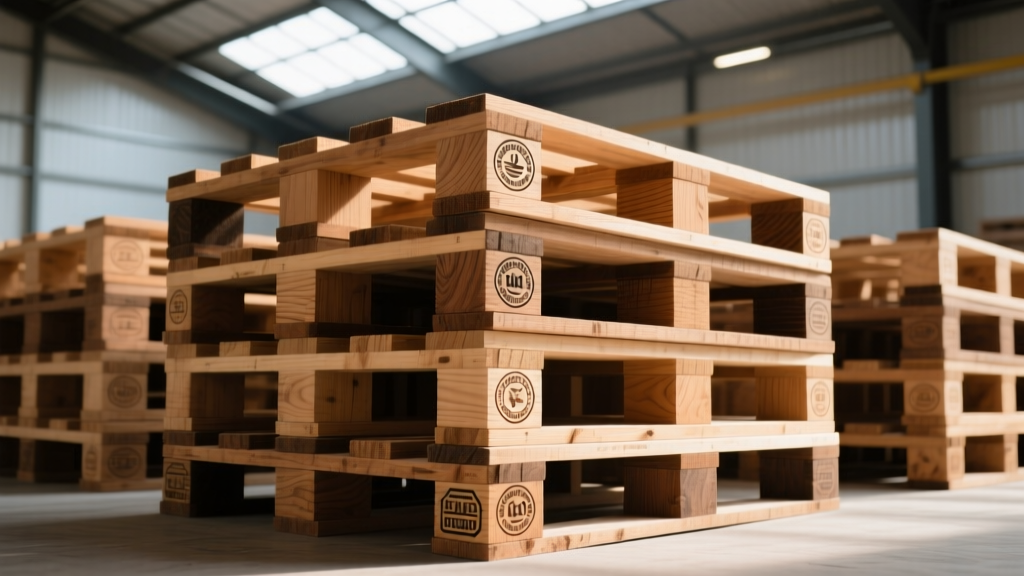
When supply chain managers, logistics coordinators, and construction procurement teams ask, "what type of wood are pallets made from," the answer extends far beyond a simple list of tree species. The global pallet industry consumes roughly 40% of all hardwood lumber and a significant portion of softwood lumber produced annually. The selection of wood species directly dictates the pallet's load capacity, fastener withdrawal resistance, moisture tolerance, and ultimate cost-per-trip.
In the North American market, pallet manufacturing is dominated by two primary categories: Southern Yellow Pine (SYP) for softwood applications and Oak (Red and White) for hardwood applications, supplemented by a wide array of mixed low-grade hardwoods (often referred to as "cull" or "pallet-grade" hardwoods). Understanding the material science and economic trade-offs of these species is critical for optimizing packaging budgets in 2026.
Species Breakdown & 2026 Cost Analysis
The choice between softwood and hardwood is rarely just about the purchase price; it is a calculation of density, stiffness (Modulus of Elasticity), and nail withdrawal strength. Research from the Virginia Tech Center for Packaging and Unit Load Design demonstrates that wood density directly correlates with fastener holding power, which is the primary failure point in pallet degradation.
| Wood Species / Group | Classification | Avg. Cost (48x40 GMA) | Avg. Density (lbs/ft³) | Expected Lifespan |
|---|---|---|---|---|
| Southern Yellow Pine (SYP) | Softwood | $14.00 - $19.50 | 35 - 38 | 3 - 5 Trips |
| SPF (Spruce-Pine-Fir) | Softwood | $12.50 - $16.00 | 26 - 29 | 1 - 3 Trips |
| Red Oak | Hardwood | $22.00 - $28.50 | 44 - 48 | 10 - 15 Trips |
| Mixed Hardwood (Maple, Elm, Hickory) | Hardwood | $18.00 - $24.00 | 40 - 50 | 8 - 12 Trips |
Note: Pricing reflects Q1 2026 wholesale market rates for standard 48x40 inch Grocery Manufacturers Association (GMA) stringer and block pallets, excluding specialized treatments or custom notching.
The Fastener Factor: Wood Density and Nail Withdrawal
A pallet is only as strong as its joints. The Virginia Tech Pallet Lab has extensively documented that smooth-shank nails pull out of low-density softwoods (like SPF) under dynamic forklift impacts. To mitigate this, manufacturers using SYP or SPF must utilize helical (screw) nails or ring-shank nails, which increases the fastener cost by roughly $0.40 to $0.80 per pallet. High-density hardwoods like Oak can securely hold standard smooth-shank nails, offsetting some of the premium paid for the raw lumber.
Treatment Protocols: ISPM-15 Compliance and Cost Impact
When sourcing wood for international shipping, the raw species is only half the equation. The wood must be treated to prevent the spread of invasive timber pests. The USDA APHIS enforces the ISPM-15 (International Standards for Phytosanitary Measures No. 15) regulation, which mandates specific treatments for all solid wood packaging materials.
Heat Treatment (HT) Economics
Heat treatment requires baking the assembled pallet wood to a core temperature of 56°C (132.8°F) for a minimum of 30 minutes. This process drives moisture content (MC) down to roughly 15-19%.
- Cost Adder: HT certification and processing adds $1.50 to $3.00 per pallet.
- Value Gain: Lower moisture content reduces the pallet's overall weight by 5-8%, yielding minor but compounding freight fuel savings. It also prevents mold growth and product contamination, which is non-negotiable for food, pharmaceutical, and electronics supply chains.
- Species Interaction: SYP responds exceptionally well to kiln-drying and heat treatment, resisting warping better than mixed hardwoods, which can split or check (crack) when subjected to rapid HT temperature spikes.
Total Cost of Ownership (TCO) Framework
Evaluating pallet wood strictly on initial purchase price is a critical procurement error. The true metric is the Cost-Per-Trip (CPT). Below is a decision framework for selecting wood species based on your supply chain model.
Scenario A: One-Way Export (Single Trip)
- Optimal Wood: SPF or low-grade SYP.
- Strategy: Minimize initial capital outlay. Use 5/8" thick deckboards instead of standard 3/4". Ensure ISPM-15 HT stamping.
- CPT Math: $14.00 purchase + $2.00 HT = $16.00 / 1 trip = $16.00 CPT.
Scenario B: Closed-Loop Manufacturing (Multi-Trip)
- Optimal Wood: Red Oak or high-density Mixed Hardwood.
- Strategy: Invest in 1-1/8" thick hardwood deckboards with chamfered edges to prevent forklift tine damage. Specify 9-block construction with lead boards.
- CPT Math: $26.00 purchase / 15 trips = $1.73 CPT (excluding minor repair costs).
Reclaimed Pallet Wood in Construction: Hidden Value or Hidden Cost?
Beyond logistics, pallet wood frequently enters the construction sector as reclaimed material for architectural features, temporary hoarding, or DIY structural elements. However, the "free" nature of reclaimed pallet wood often masks significant processing costs and structural liabilities.
Pros of Reclaimed Pallet Lumber
- Zero material acquisition cost (if sourced locally).
- Highly weathered SYP and Oak provide desirable rustic aesthetics.
- Diverts solid waste from landfills, contributing to LEED certification points for waste management.
Cons & Hidden Costs
- Labor Intensive: De-nailing and milling pallet wood costs roughly $25-$40 per hour in labor. A standard pallet yields only 8-10 board feet of usable lumber.
- Waste Factor: Expect a 30-40% waste factor due to splits, nail holes, and rot.
- Chemical Risks: Pallets stamped with "MB" or lacking clear origin markers may harbor toxic chemical residues, making them unsafe for interior residential use or garden beds.
Structural Grading Limitations
It is imperative to note that pallet lumber is not structurally graded by the American Lumber Standard Committee (ALSC). Pallet manufacturers utilize "pallet-grade" or "cull" lumber, which contains wane, knots, and slope-of-grain deviations that disqualify the wood from use in load-bearing construction framing. Never use reclaimed pallet wood for structural joists, headers, or load-bearing walls.
Sourcing Strategies for Maximum ROI
To optimize your pallet wood procurement in 2026, implement the following tactical adjustments:
- Leverage Regional Timber Yields: If your facility is located in the US South, specify SYP to avoid the freight costs of shipping Midwestern Oak. If you are in the Pacific Northwest, explore Douglas Fir alternatives, though verify nail-holding capacities with your manufacturer.
- Negotiate Component Thickness: Rather than accepting standard 3/4" (which is actually milled to 5/8" or 11/16" in the pallet industry), negotiate exact caliper measurements. A 1/16" reduction in deckboard thickness can yield a 6% reduction in raw wood costs without compromising static load limits.
- Audit Repair Programs: For hardwood block pallets, partner with a recycler that utilizes automated de-nailing and precision trimming. Properly repaired Oak pallets retain 85% of their original structural integrity at 40% of the cost of a new unit.
Frequently Asked Questions
Can pallets be made from engineered wood?
Yes. While solid sawn timber dominates, engineered wood products like Oriented Strand Board (OSB) and laminated veneer lumber (LVL) are increasingly used for pallet top decks and stringers. LVL stringers offer superior stiffness and eliminate the warping associated with low-grade softwoods, though they carry a 15-20% price premium over solid SYP.
Why do some pallets look blue or red?
Colored pallets (often blue, red, or brown) are typically part of a proprietary pooling system (e.g., CHEP, PECO, LPR). These are almost exclusively constructed from high-grade, heavy-duty hardwoods or specialized softwoods to withstand the rigors of continuous, multi-year pooling cycles. They remain the property of the pooling company and should never be repurposed or destroyed.
Written by
James ThorntonJames Thornton is a construction industry veteran with 25 years of hands-on experience in wood framing, lumber grading, and residential building codes. He started as a framing carpenter in rural Oregon, earned his ICC Residential Building Inspector certification, and eventually became a senior plan reviewer for the City of Portland Bureau of Development Services. James holds a B.S. in Wood Science & Technology from Oregon State University and is a certified lumber grader through the West Coast Lumber Inspection Bureau (WCLIB). He has inspected over 3,000 residential construction sites and authored the city's internal guide on advanced framing techniques (2x6 at 24" O.C.). James lives in Bend, OR, where he builds custom timber-frame cabins and competes in lumberjack sports.
More from James Thornton
View all
Insulation
Best Home Insulation Materials: Complete 2026 Guide
Compare top home insulation materials for 2026. Find R-values, installed costs per square foot, and best uses for fiberglass, spray foam, and mineral wool.
Aug 4, 2026

Sustainable Building
Certify Your Green Building Material for LEED and WELL
Step-by-step guide to certifying a green building material for LEED v5 and WELL v2. Master EPDs, HPDs, and VOC limits for 2026 project specifications.
Aug 4, 2026

Stone & Masonry
Veneer Stacked Stone Panels: Interior Design & Style Showcase
Discover how veneer stacked stone panels transform interiors. Explore modern design profiles, material pairings, and technical installation specs.
Aug 4, 2026