What Type of Wood is Poplar? Evaluating Structural Limits and Uses
Discover what type of wood poplar is, its mechanical properties, and why it is restricted from primary structural framing but used in engineered wood.

Botanical Classification vs. Mechanical Reality
When architects, engineers, or builders ask, what type of wood is poplar, the answer requires separating botanical taxonomy from structural engineering. Yellow poplar (Liriodendron tulipifera), also known as tulipwood, is botanically classified as a deciduous hardwood (an angiosperm). However, in the context of structural applications, its mechanical behavior closely mimics that of lighter softwoods.
With a Janka hardness rating of just 540 lbf and an average specific gravity of 0.42 (at 12% moisture content), yellow poplar is significantly softer and lighter than true structural hardwoods like oak or hickory. According to the Wood Database, its low density gives it a high strength-to-weight ratio, but it lacks the absolute load-bearing capacity and stiffness required for primary structural framing in modern commercial or residential construction.
Why Poplar is Excluded from Primary Structural Framing
Despite its favorable strength-to-weight ratio, you will not find yellow poplar stamped with a structural grade (such as Stud, No. 1, or No. 2) at a lumber yard. The exclusion of poplar from primary load-bearing applications—like wall studs, floor joists, and roof rafters—is driven by grading economics and code compliance rather than pure material failure.
The NDS and Visual Grading Limitations
The American Wood Council’s National Design Specification (NDS) for Wood Construction provides standardized design values for visually graded and Machine Stress Rated (MSR) lumber. Poplar is not commercially graded for structural framing for two critical reasons:
- Lack of Visual Grading Rules: Softwoods like Spruce-Pine-Fir (SPF) and Douglas Fir have distinct, easily identifiable grain patterns, knot structures, and slope-of-grain characteristics that allow certified graders to visually assess their structural integrity. Poplar’s grain is exceptionally uniform, and its strength-reducing characteristics (like tension wood or microscopic checks) are not easily visible to the naked eye.
- MSR Economic Viability: Machine Stress Rating requires passing lumber through mechanical deflection machines to measure the Modulus of Elasticity (E). Because poplar is a lower-value hardwood primarily harvested for furniture, cabinetry, and millwork, the cost of running it through MSR grading lines does not yield a profitable return compared to high-volume softwood mills.
Do not substitute ungraded yellow poplar for code-mandated structural framing lumber. Building inspectors will reject poplar for load-bearing walls or roof systems because it lacks the required grade stamp from an ALSC-accredited (American Lumber Standard Committee) grading agency.
Mechanical Properties: Poplar vs. Structural Softwoods
To understand where poplar fits into a structural engineer's toolkit, we must compare its baseline mechanical properties against standard framing lumber. The table below highlights the design values (dry use, normal duration) for Yellow Poplar compared to standard No. 2 grade softwoods.
| Species / Grade | Modulus of Elasticity (E) | Bending (Fb) | Janka Hardness |
|---|---|---|---|
| Yellow Poplar (Select Structural) | 1.58 x 10^6 psi | 1,450 psi | 540 lbf |
| Douglas Fir-Larch (No. 2) | 1.60 x 10^6 psi | 1,500 psi | 660 lbf |
| SPF (No. 2) | 1.40 x 10^6 psi | 1,150 psi | 510 lbf |
Note: While Poplar's baseline bending strength (Fb) is surprisingly competitive with SPF, the lack of standardized visual grading rules means engineers cannot legally apply these values in structural calculations for primary framing.
Approved Structural-Adjacent Applications
While banned from primary framing, yellow poplar is highly valued in structural-adjacent and secondary structural applications where its specific physical traits—stability, moderate weight, and excellent glue adhesion—are engineered into high-performance systems.
1. Engineered Wood Products (LVL and Plywood Cores)
Poplar is a premier species for rotary-peeled veneer. In the manufacturing of Laminated Veneer Lumber (LVL) and structural plywood, poplar is frequently used as the core or cross-banding material. Its uniform texture and low tendency to split allow for flawless glue lines. When sandwiched between high-strength face veneers (like Douglas Fir or Southern Yellow Pine), the poplar core provides dimensional stability and shear resistance without adding excessive dead weight to the structural panel.
2. Prefabricated Truss Gussets and Blocking
In roof truss manufacturing, structural integrity is concentrated in the top and bottom chords. The internal webbing and gusset blocks often utilize lower-grade or non-structurally stamped hardwoods. Poplar is heavily utilized for truss gusset blocks because it holds pneumatic staples and nails exceptionally well without splitting, ensuring the metal connector plates remain seated flush during the pressing process.
3. Concrete Formwork and Scaffolding Planks
Poplar’s resistance to warping and its relatively lightweight nature make it an excellent choice for reusable concrete formwork. Builders utilizing poplar plywood overlays or solid poplar framing for forms benefit from a material that is easy to strip, clean, and re-oil. Historically, poplar was also a preferred species for scaffold planks due to its light weight, though modern OSHA regulations now strictly mandate graded Southern Yellow Pine or manufactured aluminum for commercial scaffolding.
Fastening and Connection Design Parameters
When utilizing poplar in secondary structural connections, builders must adjust their fastening schedules. Because poplar is less dense than Douglas Fir, its fastener withdrawal values are lower.
- Nail Withdrawal: A standard 10d common nail driven into yellow poplar yields an approximate withdrawal design value of 45 lbs per inch of penetration. In Douglas Fir, this value is closer to 55 lbs per inch.
- Screw Retention: Poplar's interlocked grain can sometimes cause tear-out during high-torque lag screw installation. For structural shear walls or heavy blocking connections, pre-drilling pilot holes at 80% of the screw's shank diameter is mandatory to prevent localized splitting.
- Dowel Bearing Strength: For bolted connections, poplar's dowel bearing strength parallel to grain is approximately 4,800 psi, requiring engineers to specify larger washers or additional bolt rows to prevent the wood from crushing under the bolt head.
Moisture, Decay, and Environmental Limitations
The most critical failure mode for poplar in any structural or exterior application is its complete lack of natural decay resistance. The heartwood of yellow poplar is rated as non-durable to perishable regarding decay resistance, and it is highly susceptible to termite and powderpost beetle attack.
Never specify untreated poplar for sill plates, exterior blocking, or any application where the wood-to-moisture content will exceed 19%. If poplar must be used in damp environments (such as temporary exterior formwork), it requires pressure treatment with Alkaline Copper Quaternary (ACQ) or Copper Azole (CA-C), though its low permeability makes deep penetration difficult without incising.
2026 Market Pricing and Sourcing Guidelines
For builders and estimators sourcing materials in 2026, yellow poplar remains a premium-priced commodity compared to standard framing lumber, reflecting its primary market in the furniture and millwork industries.
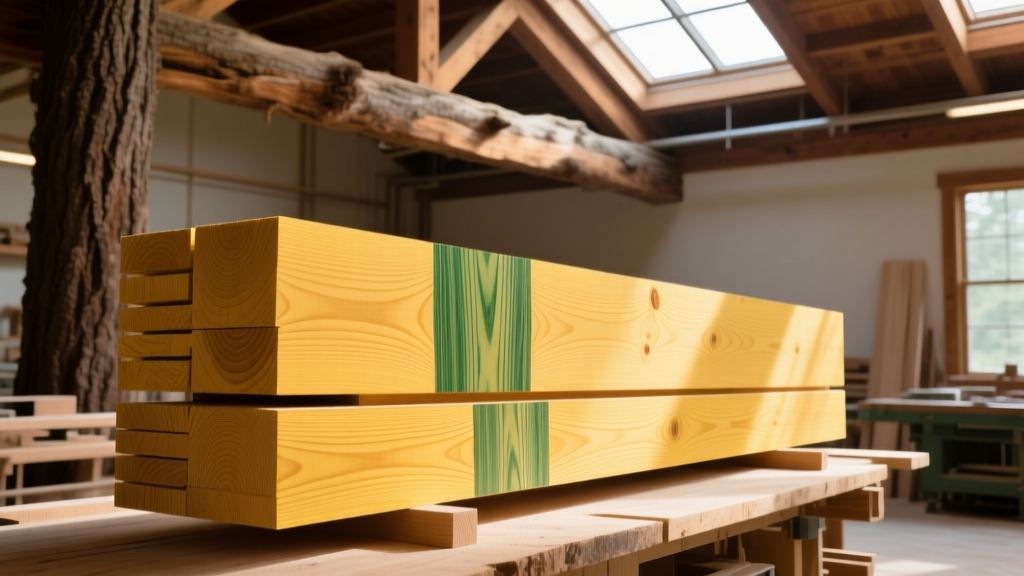
Current wholesale pricing for 4/4 (1-inch) rough-sawn yellow poplar ranges from $3.80 to $5.20 per board foot, depending on the presence of green/brown heartwood streaks (mineral stain) which lowers the grade for cabinetry but is perfectly acceptable for structural blocking or engineered cores. By contrast, standard SPF framing lumber remains in the $1.60 to $2.20 per board foot range.
The Builder's Decision Framework: If a project requires high-strength exposed beams, do not attempt to source structural poplar; specify Douglas Fir, Glulam, or LVL. However, if you are manufacturing interior non-load-bearing partition walls, fabricating truss gussets, or sourcing core material for custom structural panels, poplar offers superior dimensional stability, excellent machinability, and reliable glue adhesion that outperforms standard softwoods.
Written by
Elena RodriguezElena Rodriguez is a civil engineer and technical writer specializing in concrete technology, masonry systems, and ASTM/ACI compliance. She earned her B.S. in Civil Engineering from Texas A&M University and spent a decade at a materials testing laboratory, performing over 2,000 concrete compressive strength tests and masonry prism evaluations. Elena is an ACI-certified Field Testing Technician (Grade I) and a member of ASTM Committee C12 on Natural Building Stone. She currently consults on forensic engineering cases involving concrete failures and moisture intrusion. Based in San Antonio, TX, Elena is a proud member of the Society of Women Engineers (SWE) and coaches her daughter's FIRST Robotics team.
More from Elena Rodriguez
View all
Walls & Panels
Cost Analysis: Light Gauge Steel Framing Advantages and Disadvantages
Evaluate light gauge steel framing advantages and disadvantages through a strict cost analysis lens, comparing material, labor, and lifecycle expenses.
Aug 4, 2026

Walls & Panels
Gypsum Board Types: Exact Specifications, Thickness & Dimensions
Compare standard, Type X, and moisture-resistant gypsum board types. Get exact specifications, thicknesses, dimensions, and ASTM standards for your project.
Aug 4, 2026

Fire Resistance
Best Fire-Resistant Outdoor Decking Materials: 2026 Buyer Guide
Discover the best fire-resistant outdoor decking materials for 2026. Compare Class A PVC, aluminum, and hardwood options for WUI compliance and safety.
Aug 4, 2026