How to Select Different Types of Wood for Building Projects
Discover a practical framework for selecting different types of wood in construction. Compare structural timber, flooring, and exterior lumber grades.
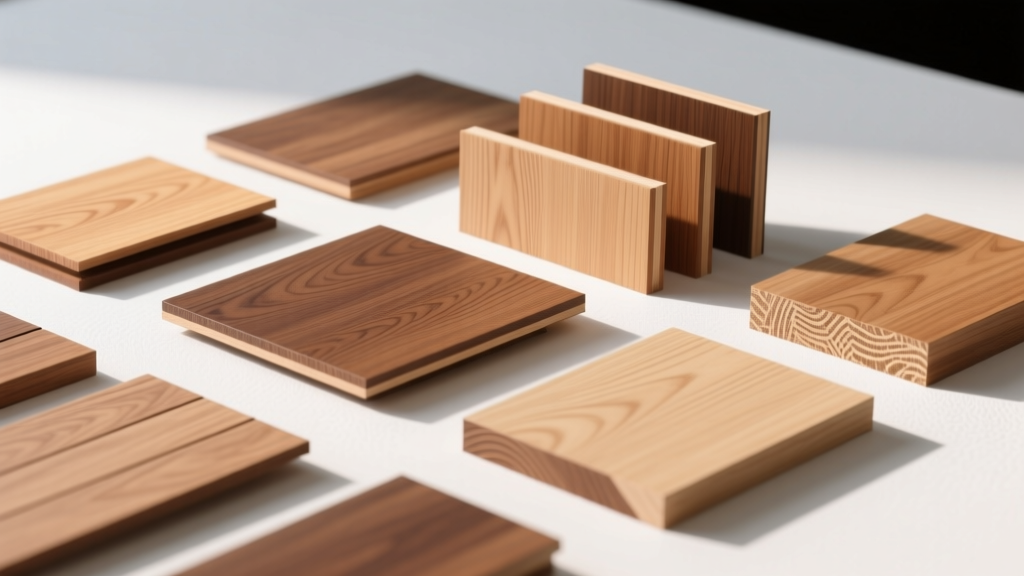
The Core Selection Matrix: Hardwood vs. Softwood in Construction
Selecting the correct lumber requires moving beyond basic aesthetic preferences and evaluating material properties against structural, environmental, and economic demands. In commercial and residential construction, the primary bifurcation is between softwoods (gymnosperms) and hardwoods (angiosperms). Softwoods, primarily harvested from coniferous trees like pine, spruce, and fir, account for roughly 80% of all structural timber used globally due to their rapid growth cycles, predictable grain, and high strength-to-weight ratios. Hardwoods, such as oak, maple, and walnut, are denser, more complex in cellular structure, and predominantly reserved for finish carpentry, heavy-duty flooring, and specialized architectural millwork where abrasion resistance and visual character are paramount.
When evaluating different types of wood for a building project, project managers and architects must apply a tripartite framework: structural load capacity, moisture and decay resistance, and surface durability. Misaligning a wood species with its intended application leads to catastrophic failures, ranging from joist deflection and fastener withdrawal to premature fungal decay and surface checking.
Structural Framing: Selecting Dimensional Lumber and Timber
For light-frame and heavy timber construction, the selection of dimensional lumber is governed by the National Design Specification (NDS) for Wood Construction. The most common structural species groups in North America are Spruce-Pine-Fir (SPF), Douglas Fir-Larch (DF-L), and Southern Yellow Pine (SYP). Selection between these depends on the required bending design value (Fb) and Modulus of Elasticity (E), which dictates stiffness and deflection limits.
| Species Group | Bending (Fb) psi | Modulus of Elasticity (E) psi | Specific Gravity (G) | Best Application |
|---|---|---|---|---|
| Southern Yellow Pine (SYP) | 1,500 | 1,900,000 | 0.55 | Heavy floor joists, high-load roof rafters, truss chords |
| Douglas Fir-Larch (DF-L) | 1,350 | 1,900,000 | 0.50 | Long-span beams, shear walls, seismic-resistant framing |
| Spruce-Pine-Fir (SPF) | 1,100 | 1,600,000 | 0.42 | Standard wall studs, interior non-load-bearing partitions |
According to WoodWorks, selecting DF-L or SYP for long-span floor joists minimizes bounce and deflection, a critical factor in modern open-concept residential designs where interior load-bearing walls are eliminated. SPF, while weaker in bending, is highly dimensionally stable and less prone to twisting, making it the optimal, cost-effective choice for vertical wall studs where compressive strength parallel to the grain is the primary load vector.
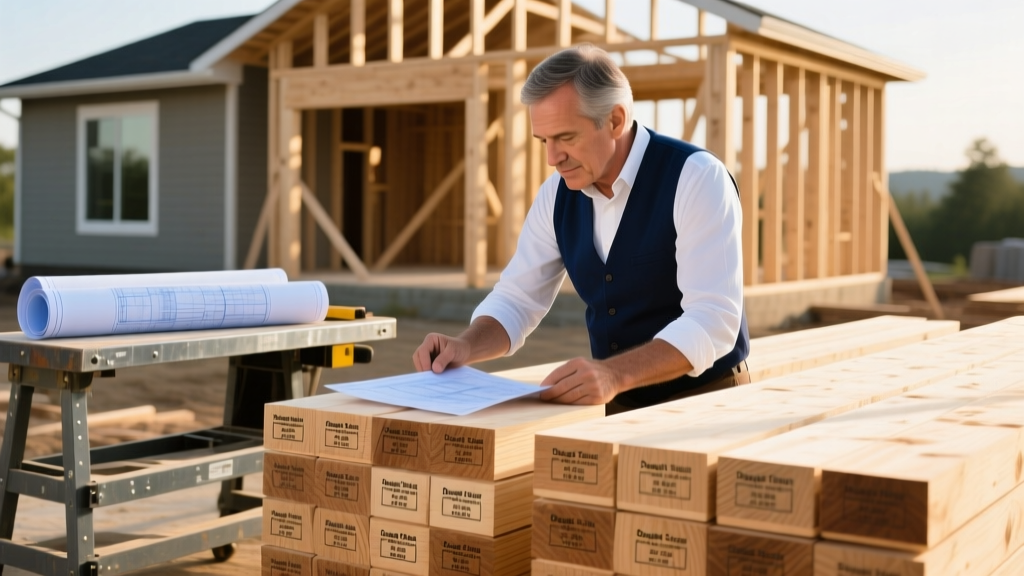
Exterior and Moisture-Exposed Applications
Wood deployed in exterior envelopes, decking, or ground-contact foundations faces biological degradation from fungi and insects. The selection framework here relies on the American Wood Protection Association (AWPA) Use Category system. Naturally rot-resistant species contain extractives (like thujaplicins in Western Red Cedar or tannins in White Oak) that deter decay, but their availability and cost often necessitate the use of pressure-treated softwoods.
- UC3B (Above Ground, Coated): Use for siding, fascia, and exterior trim. Western Red Cedar or Redwood are ideal here for natural stability and finish retention.
- UC4A (Ground Contact): Use for deck posts, retaining walls, and sill plates. Requires Pressure-Treated SYP with a minimum retention level of 0.40 pcf (pounds per cubic foot) of preservative (e.g., ACQ or Copper Azole).
- UC4B (Heavy Duty Ground Contact): Use for permanent wood foundations, piers in saltwater, or critical structural posts. Requires 0.60 pcf retention or specialized treatments like Creosote for industrial applications.
When specifying pressure-treated lumber, always verify the treatment tags. For modern construction, avoid legacy CCA (Chromated Copper Arsenate) treatments in residential settings, opting instead for micronized copper azole (MCA) or alkaline copper quaternary (ACQ). Note that ACQ-treated wood is highly corrosive to standard galvanized fasteners; you must specify hot-dipped galvanized (ASTM A153) or stainless steel hardware to prevent connection failure.
Interior Finishes: Flooring and Millwork
For interior applications subject to abrasion and impact, the selection framework shifts to the Janka Hardness Scale, which measures the force required to embed a 0.444-inch steel ball halfway into the wood. The Wood Database provides comprehensive testing data that informs flooring selection based on traffic expectations.
- Low Traffic (Bedrooms, Formal Dining): Black Cherry (950 lbf) or Black Walnut (1010 lbf). These offer rich aesthetics but dent easily under point loads like stiletto heels or dropped tools.
- Medium Traffic (Living Rooms, Hallways): Red Oak (1290 lbf) or Hard Maple (1450 lbf). Red Oak remains the industry baseline for residential hardwood flooring due to its optimal balance of hardness, workability, and stain absorption.
- High Traffic (Commercial, Kitchens, Entryways): Hickory (1820 lbf) or exotic species like Brazilian Walnut / Ipe (3680 lbf). While Ipe offers unmatched durability, its extreme density requires pre-drilling for all fasteners and specialized carbide-tipped saw blades, increasing installation labor costs by up to 30%.
Mass Timber: The Modern Structural Alternative
The 2024 and 2025 International Building Code (IBC) cycles have significantly expanded the allowable heights and areas for mass timber construction, making it a critical category for mid-rise commercial and multi-family projects. Selecting between Cross-Laminated Timber (CLT), Glued-Laminated Timber (Glulam), and Nail-Laminated Timber (NLT) depends on the structural element and architectural exposure.
CLT, manufactured by stacking and gluing kiln-dried lumber boards at 90-degree angles, provides exceptional bi-directional strength and is specified for floor slabs, shear walls, and roof diaphragms. Glulam, composed of parallel laminations of dimensional lumber, is engineered specifically for long-span beams, arches, and heavy columns. When architectural aesthetics are a priority, specify Architectural or Premium appearance grades for Glulam, which mandate tighter knot restrictions and limit the use of finger joints on exposed faces. For acoustic performance and rustic aesthetics in exposed ceilings, NLT offers a lower embodied carbon footprint compared to CLT, as it utilizes mechanical fasteners rather than energy-intensive structural adhesives.
Decoding the Lumber Grade Stamp
The physical selection of lumber on the job site requires the ability to decode the grade stamp inked on every piece of dimensional timber. Misreading moisture content indicators is a leading cause of post-construction drywall cracking and floor squeaks.
- S-DRY (Surfaced Dry): Indicates the wood was planed when its moisture content was 19% or less. Standard for exterior framing and general construction.
- MC15 (Moisture Content 15%): Surfaced at 15% moisture content or less. Mandatory for interior load-bearing partitions and floor joists in climate-controlled environments to minimize shrinkage after the HVAC system is activated.
- KD-HT (Kiln-Dried, Heat-Treated): Confirms the wood has been kiln-dried and heated to a core temperature of 56°C for at least 30 minutes. This is an ISPM 15 phytosanitary requirement for imported lumber, ensuring the eradication of wood-boring pests like the emerald ash borer or Asian longhorned beetle.
Furthermore, the stamp identifies the grading agency (e.g., WWPA for Western Wood Products Association, SPIB for Southern Pine Inspection Bureau) and the species. A stamp reading S-DRY 2 DF-L 1588 indicates a Douglas Fir-Larch board, surfaced at 19% moisture or less, graded as #2, with the mill identification number 1588. Specifying MC15 lumber for all interior framing in regions with high seasonal humidity differentials is a non-negotiable best practice to prevent structural callbacks.
Sourcing and Sustainability Certifications
Modern building frameworks, particularly those targeting LEED v4.1 or Living Building Challenge certifications, require rigorous chain-of-custody documentation. When procuring different types of wood for sustainable projects, specify lumber certified by the Forest Stewardship Council (FSC) or the Sustainable Forestry Initiative (SFI). FSC 100% indicates all wood originates from FSC-certified forests, while FSC Mix allows for a blend of certified and controlled recycled content. Always require the supplier to provide their FSC chain-of-custody certificate number at the time of bid, as procuring certified lumber post-facto can delay final building commissioning and jeopardize green building tax incentives.
Written by
David NakamuraDavid Nakamura is a licensed architect (AIA) and construction technology writer focused on sustainable building methods, mass timber engineering, and high-performance building envelopes. He holds a Master of Architecture from the University of Washington and is a certified Passive House Consultant (CPHC). David spent eight years at the Seattle firm Mithun, where he led the design of three LEED Platinum projects, before founding his own practice specializing in net-zero residential design. He serves on the editorial advisory board of GreenBuilder Magazine and has authored peer-reviewed papers on cross-laminated timber (CLT) connections for the Journal of Structural Engineering. In his spare time, David teaches woodworking at Pratt Fine Arts Center and kayaks the Puget Sound.
More from David Nakamura
View all
Construction Cost
Labor Cost to Build a Deck Per Sq Ft: 2026 Installation Guide
Discover the exact labor cost to build a deck per sq ft in 2026. This installation guide breaks down contractor rates, complexity factors, and hidden fees.
Aug 4, 2026

Construction Cost
How Much Does It Cost to Build a 3 Bedroom House? Financing Guide
Learn exactly how much it costs to build a 3 bedroom house and explore 2026 financing options, construction loan types, and budget frameworks for your build.
Aug 4, 2026

Construction Cost
Cost to Build a Tennis Court: 2026 Guide
How much does it cost to build a tennis court in 2026? Breakdowns for asphalt, concrete, and synthetic surfaces plus fencing and lighting.
Jul 30, 2026