Structural Pine Types of Wood: Framing and Load-Bearing Guide
Compare structural pine types of wood for load-bearing framing. Discover SYP, SPF, and engineered pine specs, span limits, and 2026 costs.

Engineering with Pine: Beyond the Generic 2x4
When structural engineers and framers specify pine, they are not referring to a single, uniform material. The genus Pinus encompasses over 120 species, but only a select few possess the mechanical properties required for load-bearing construction. Selecting the correct pine types of wood for structural applications dictates everything from floor joist spans to the lateral load resistance of shear walls. Misidentifying a pine species or substituting a low-density pine for a high-density variant can result in excessive deflection, fastener withdrawal failures, or catastrophic structural creep.
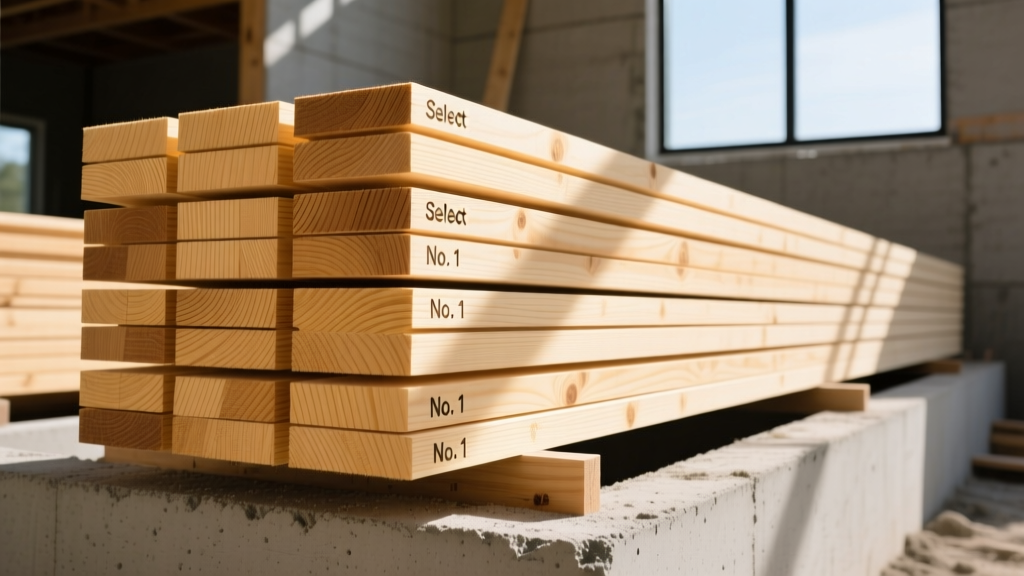
The Heavyweight: Southern Yellow Pine (SYP)
Southern Yellow Pine is not a single tree species but a commercial grouping of four principal pines: Loblolly, Shortleaf, Longleaf, and Slash. In North American construction, SYP is the undisputed king of softwood framing due to its exceptional density and fastener-holding capacity.
Mechanical Profile and Grading
According to the Southern Pine Council, SYP boasts the highest specific gravity among major structural softwoods, averaging 0.55 at 12% moisture content. This density translates directly to superior bending strength (Fb) and stiffness (Modulus of Elasticity, or E).
- #2 Grade SYP: The standard for residential wall studs and floor joists. Offers an Fb of 1,800 psi and an E of 1,800,000 psi.
- Select Structural SYP: Reserved for heavily loaded beams, rafters, and headers. Delivers an Fb of 2,800 psi and an E of 2,000,000 psi.
- Dense Select Structural: Used in commercial and heavy timber applications, pushing Fb values up to 3,300 psi.
Western Pines: Ponderosa, Sugar, and Lodgepole
Western pine species serve distinctly different roles in construction compared to their Southern counterparts. They are generally lower in density and are rarely used for primary load-bearing framing in modern stick-built homes, though they excel in specific niche applications.
Ponderosa Pine
With a specific gravity of just 0.40, Ponderosa pine is relatively soft. It lacks the bending strength required for long-span floor joists but is highly valued for roof sheathing, subflooring, and light-duty interior framing where extreme dimensional stability and minimal shrinking are prioritized over raw load capacity.
Sugar Pine
Sugar pine is the largest of the pine species, prized for its massive, clear, knot-free boards. Structurally, it is almost never used for framing. Its low shrinkage and excellent workability make it the premier choice for structural patterns, exterior siding, and custom millwork where tight joinery is required.
Lodgepole Pine
Lodgepole pine is straight-grained and moderately light (specific gravity 0.38). While it can be graded for structural framing, it is most commonly harvested and milled as part of the SPF (Spruce-Pine-Fir) grouping, which we will analyze below.
Structural Comparison Matrix: Pine Species
The following data, sourced from the USDA Forest Products Laboratory Wood Handbook, highlights the mechanical divergence between pine species. All values assume visually graded lumber at 19% maximum moisture content.
| Species Grouping | Specific Gravity (Oven-Dry) | Bending Strength (Fb - psi) | Stiffness (E - psi) | Primary Structural Use |
|---|---|---|---|---|
| Southern Yellow Pine (#2) | 0.55 | 1,800 | 1,800,000 | Floor joists, load-bearing walls, trusses |
| Southern Yellow Pine (Sel. Str.) | 0.55 | 2,800 | 2,000,000 | Headers, beams, heavy timber framing |
| Ponderosa Pine | 0.40 | 1,200 | 1,300,000 | Sheathing, light interior framing |
| Lodgepole Pine (in SPF) | 0.38 | 1,100 | 1,400,000 | Standard wall studs, roof rafters |
Decoding SPF: The 'Pine' in Spruce-Pine-Fir
In many North American markets, particularly in the Midwest and Northeast, builders purchase SPF (Spruce-Pine-Fir) framing lumber. The 'P' in this grouping primarily represents Lodgepole Pine and Eastern White Pine. SPF is graded and sold as a unified structural entity, meaning the engineer must design to the lowest common denominator of the group.
A standard #2 SPF 2x4 has an allowable bending stress (Fb) of roughly 1,100 psi to 1,315 psi, significantly lower than SYP. Consequently, substituting SPF for SYP in a structural design without recalculating spans will lead to undersized joists and excessive floor bounce. Always read the grade stamp; if the design specifically calls for SYP due to long spans, SPF is not an acceptable field substitution.
Engineered Structural Pine: LVL and Glulam
Modern structural engineering relies heavily on engineered wood products (EWP) to achieve spans that solid-sawn pine cannot match. Pine types of wood are the foundational raw material for these high-performance products.
Laminated Veneer Lumber (LVL)
LVL beams are manufactured by peeling pine logs into thin veneers, drying them, and bonding them with structural adhesives under high pressure. Southern Yellow Pine and plantation-grown Radiata Pine are the dominant species used in LVL production. Brands like Boise Cascade Versa-LVL and Weyerhaeuser Trus Joist utilize SYP and Radiata to achieve design bending stresses (Fb) exceeding 3,100 psi, making them ideal for garage headers, long-span floor beams, and ridge beams.
Glued Laminated Timber (Glulam)
Glulam consists of solid-sawn pine laminations bonded together. SYP glulam is heavily specified in commercial architecture, churches, and exposed timber-frame residential designs. The manufacturing process allows architects to specify massive, curved, or tapered structural members that are immune to the checking and warping typical of large solid-sawn timbers.
2026 Structural Pine Pricing and Procurement
Lumber markets have stabilized following the extreme volatility of the early 2020s. Below is the current wholesale-to-retail pricing landscape for structural pine types of wood as of early 2026. Prices reflect national averages for standard dimensional lengths (8 to 16 feet).
| Material Type | Grade / Specification | Avg. Cost per Linear Foot | Lead Time |
|---|---|---|---|
| SYP 2x4 Stud | #2 or Stud Grade | $3.80 - $4.30 | In Stock |
| SYP 2x10 Joist | #2 | $9.50 - $11.20 | In Stock |
| SYP 6x6 Post | #1 Structural | $18.00 - $22.50 | 1-2 Weeks |
| SYP LVL Beam | 1.75 in. x 11.875 in. | $14.50 - $17.00 | 1-3 Weeks |
| SPF 2x6 Framing | #2 | $6.10 - $7.40 | In Stock |
Frequently Asked Questions
Can I use Ponderosa Pine for load-bearing exterior walls?
While Ponderosa pine can be graded for structural use, its low specific gravity (0.40) means it has poor nail and screw withdrawal resistance compared to SYP or Douglas Fir. For load-bearing exterior walls that must resist high wind uplift or seismic shear forces, Ponderosa is generally not recommended. Engineers typically require SYP or Douglas Fir-Larch for shear wall nailing schedules.
Why does my SYP floor joist stamp say 'SPIB'?
SPIB stands for the Southern Pine Inspection Bureau. They are the grading agency responsible for establishing the visual grading rules and design values for Southern Yellow Pine. An SPIB stamp guarantees the lumber meets the structural thresholds outlined in the American Wood Council's NDS.
Is Radiata Pine structurally sound for framing?
Radiata Pine is rarely used for solid-sawn stick framing in North America, but it is a premier species for engineered wood. Plantation-grown Radiata is the primary feedstock for many LVL and plywood products due to its rapid growth, long fibers, and excellent adhesive bonding properties. When used in LVL form, Radiata pine is exceptionally strong and structurally reliable.
Written by
Priya KapoorPriya Kapoor is a real estate market analyst and construction economics researcher with expertise in housing affordability, development feasibility, and infrastructure investment. She holds a Master of Regional Planning from Cornell University and previously worked as a senior analyst at CBRE's Investment Properties group, where she modeled returns for $4B in mixed-use development pipelines. Priya now runs an independent research practice advising developers, municipalities, and REITs on construction cost forecasting and market timing. She publishes the quarterly "BuildMat Market Pulse" report tracking material price indices across 12 commodity categories. Based in Austin, TX, Priya serves on the board of Habitat for Humanity Austin and is a marathon runner.
More from Priya Kapoor
View all
Construction Cost
Cost to Build a 1600 Sq Ft Home in 2026: Full Breakdown
Accurate 2026 cost to build a 1600 sq ft home—material, labor, and regional pricing breakdowns included. Plan your budget with real-time estimates.
Aug 11, 2026

Wood & Lumber
Name the Types of Wood for Pressure Treatment and Preservation
Learn how to name the types of wood best suited for pressure treatment. Compare species treatability, chemical retention levels, and 2026 preservation costs.
Aug 4, 2026

Stone & Masonry
Stone Veneer Suppliers Lindenhurst: 2026 Cost Analysis
Analyze 2026 stone veneer costs in Lindenhurst, NY. Compare local supplier pricing, delivery fees, and Suffolk County installation labor rates.
Aug 4, 2026